
Last Updated on September 11, 2026 by Daniel Globe
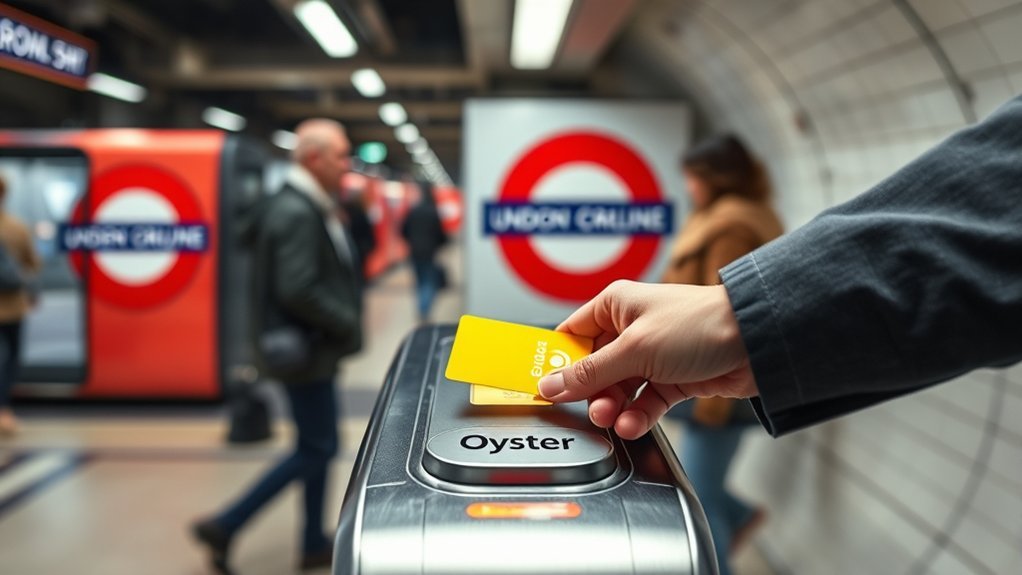
Tap and go is one of the easiest ways to travel around central London. In Zones 1-2, adults can use a contactless bank card, phone or watch, an Oyster card, or a Visitor Oyster card to pay as they travel on the Tube and other eligible services. The key is to use the same card or device, follow the correct touch rules, and understand the current fare caps.
Quick Answer
For most adults travelling in London Zones 1-2, contactless and Oyster charge the same pay as you go fares. In 2026, the adult Zones 1-2 daily cap is £8.90, while a typical rail journey crossing Zones 1 and 2 costs £3.60 peak or £3.10 off-peak. Oyster is more useful when you need eligible discounts.
Key Takeaways
- The 2026 adult pay as you go cap for Zones 1-2 is £8.90 per day with Oyster or contactless.
- A typical Zones 1-2 rail journey is £3.60 peak or £3.10 off-peak; exact fares can depend on the route and service.
- Touch in and out on Tube and rail journeys. On buses and trams, touch in only.
- Always use the same physical card or the same device throughout a journey and ideally throughout the day.
- Contactless is simplest for most adults, while Oyster can be better for eligible child, Young Visitor and Railcard discounts.
Disclosure: As an Amazon Associate I earn from qualifying purchases. Some links on this page are affiliate links, at no extra cost to you.
What Is Tap and Go on London Transport?
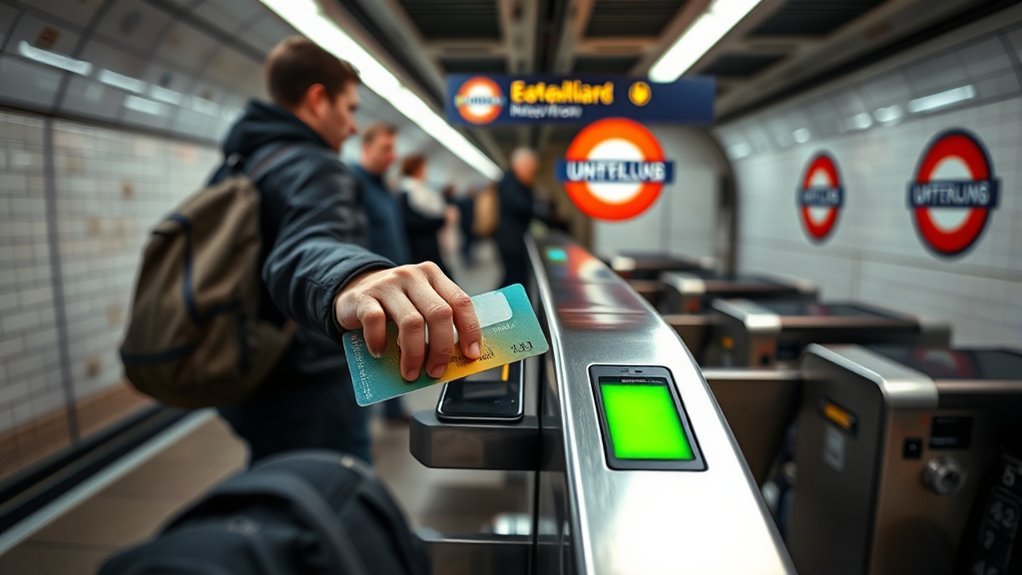
“Tap and go” is a common way to describe Transport for London’s pay as you go system. Instead of buying a separate ticket for every journey, you touch an Oyster card, contactless bank card, or compatible payment device on a reader and TfL calculates the appropriate fare.
You can use pay as you go on the Tube, DLR, London Overground, Elizabeth line, buses and many National Rail services in London. Contactless and Oyster are also accepted on London Trams, although the tram network itself is outside the central Zones 1-2 area.
For adult travel confined to Zones 1-2, TfL’s 2026 adult fare table sets the daily pay as you go cap at £8.90. This means eligible journeys continue to be recorded after you reach the cap, but you normally will not pay more for additional travel within the zones covered by that cap.
Each fare-paying traveller needs their own Oyster card, contactless card, or payment device. You cannot use one card to pay several people through a Tube gate. Children under 11 have separate free-travel rules when travelling with an eligible fare-paying adult.
How Oyster and Contactless Pay As You Go Work
Oyster and contactless use broadly the same adult pay as you go fare structure within Zones 1-2. On the Tube, DLR, London Overground, Elizabeth line and most National Rail journeys where pay as you go is accepted, touch in at the start and touch out at the end. On buses and trams, touch in only.
For adult Zones 1-2 travel in 2026, the daily pay as you go cap is £8.90 and the Monday-to-Sunday cap is £44.70.
- Oyster uses prepaid pay as you go credit, which you top up before or during your trip.
- Contactless records your journeys against the bank card or payment device you use and calculates the appropriate charges and caps.
- Oyster can hold up to £90 in pay as you go credit, although most visitors only need to load enough for the journeys they expect to make.
- Both Oyster and contactless can benefit from daily and Monday-to-Sunday capping when used correctly.
Pro Tip: Do not switch between a physical bank card, phone and smartwatch just because they are linked to the same bank account. TfL treats each card or device as a separate payment method, which can break journey matching and fare capping.
Oyster Card vs Contactless: Which Is Better?
For most adults making ordinary journeys in Zones 1-2, Oyster and contactless cost the same per journey and use the same adult daily cap. The real difference is convenience, prepaid budgeting and access to discounts.
| Feature | Contactless | Oyster |
|---|---|---|
| Adult Zones 1-2 daily cap | £8.90 | £8.90 |
| Top-up needed | No | Yes, unless Auto top-up is used |
| Selected Railcard discount | No | Yes, on a qualifying standard Oyster card |
| Young Visitor discount | No | Yes, on Oyster or Visitor Oyster for eligible 11-15-year-olds |
| Foreign-card fees | Issuer fees may apply | No bank transaction on every journey once credit is loaded |
| Best for | Most adults who want the simplest setup | Travellers who need eligible discounts or prefer prepaid credit |
Contactless usually wins on simplicity: there is no travel balance to top up and you can use a supported bank card, phone or watch immediately. Oyster is useful if you want prepaid spending or qualify for a discount that cannot be attached to contactless.
A standard Oyster card is different from a Visitor Oyster card. For example, selected National Railcard discounts can be added to a qualifying standard Oyster card, while Visitor Oyster cards have additional restrictions. TfL’s 2026 fares revision also set the Retail and Visitor Oyster card fee at £10.50 and made it non-refundable.
Using Tap and Go on the Tube
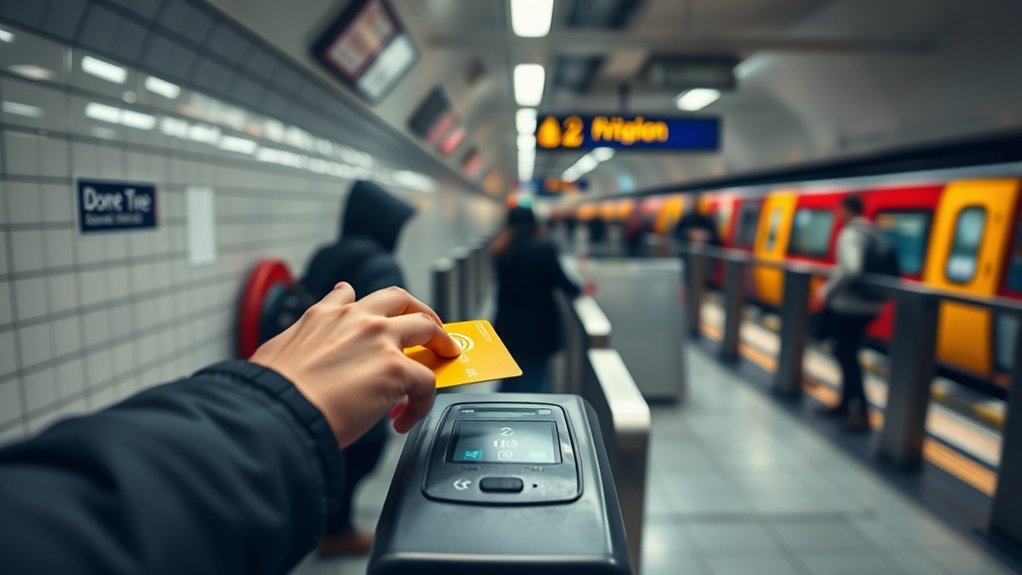
Using Oyster or contactless on the Tube is straightforward. Touch your card or device flat on the yellow reader when you enter the station, wait for the green light or open gate, and use the same card or device to touch out when you reach your destination.
- Touch in at the beginning of every Tube journey.
- Touch out at the end, even when the exit gates are already open.
- Use a free-standing yellow reader if a station has no gate at the entrance or exit.
- Keep contactless cards separate to prevent card clash.
- Check that your phone or watch has enough battery for the entire journey if you are using a mobile wallet.
Warning: Touching in with your phone and touching out with the physical card linked to that phone does not count as using the same payment method. TfL can record two incomplete journeys and charge maximum fares.
Contactless charges are calculated using TfL’s back-office journey records rather than a stored balance on the card itself. You can review contactless journeys through a TfL contactless account, while Oyster users can check their balance and journey history using TfL tools.
Where Tap and Go Works in Zones 1-2
Within Zones 1-2, pay as you go is widely accepted on the London Underground, DLR, London Overground, Elizabeth line, buses and most National Rail services where Oyster/contactless is enabled. These zones cover central London and much of the inner-city area that visitors commonly explore.
Accepted Services in Zones 1-2
You can use Oyster or contactless across the main TfL rail network in central London and on London buses. Exact fares can vary by route, direction, time and service, so use TfL’s fare finder when a journey has an unusual route or extends outside Zones 1-2.
- Tube: Oyster and contactless accepted; touch in and out.
- DLR: Oyster and contactless accepted; touch in and out.
- London Overground: Oyster and contactless accepted; touch in and out.
- Elizabeth line: Oyster/contactless accepted on relevant sections; special fares apply on some airport journeys.
- National Rail: Pay as you go is accepted on most participating London services.
- London buses: Touch in when boarding; there are no fare zones for ordinary bus fares.
- London Trams: Oyster/contactless are accepted, but the tram network itself is in south London rather than the central Zones 1-2 area.
Tube operating hours vary by line, station and day. Many services run from early morning until around midnight, while Night Tube operates on selected lines on Friday and Saturday nights. Check TfL before travelling if your trip is very early or late.
Tap Points and Rules
The location of the reader depends on the service. At Tube and rail stations, touch the yellow reader at the station entrance and again when leaving. On a London bus, touch the reader on the bus when you board. On a tram, TfL instructs passengers to touch the yellow reader at the tram stop before boarding and not to touch out at the destination.
Note: Wimbledon has special tram interchange instructions. When boarding a tram there, use the tram-only reader on Platform 10 even if you have already touched through the station gateline.
Tap and Go Peak vs Off-Peak Fares
For a standard adult rail journey crossing Zones 1 and 2 in 2026, the zonal fare is £3.60 peak and £3.10 off-peak. Exact fares may differ when a journey uses a special route or service, so TfL’s Single Fare Finder is the safest way to check a specific trip.
Peak Fare Times
For standard TfL pay as you go rail fares, peak periods are Monday to Friday from 06:30 to 09:29 and 16:00 to 18:59, excluding public holidays. Off-peak fares apply at other times.
- A standard journey crossing Zones 1 and 2 costs £3.60 at peak and £3.10 off-peak in 2026.
- The adult Zones 1-2 daily cap remains £8.90 even though individual rail fares increased in 2026.
- The current bus and tram Hopper fare is £1.75 when the same payment method is used correctly.
Off-Peak Savings
Moving a standard Zones 1-2 rail journey from peak to off-peak saves £0.50 at current 2026 fares. Weekends and public holidays are generally off-peak for these pay as you go fares.
However, the daily Zones 1-2 cap is £8.90 for both peak and off-peak capping. That means off-peak timing saves the most when you make only one or two rail journeys; once enough eligible journeys bring you to the daily cap, additional travel covered by that cap does not increase your total.
How Fare Capping Cuts Your Costs
Fare capping limits how much you pay when you make multiple eligible journeys with the same Oyster card or contactless payment method. For adults travelling only in Zones 1-2, the 2026 daily cap is £8.90.
- The TfL travel day used for daily capping runs from 04:30 to 04:29 the following morning.
- The adult Zones 1-2 Monday-to-Sunday cap is £44.70.
- You must continue touching in and out correctly after reaching a cap.
- If you travel beyond Zones 1-2, a higher cap may apply according to the zones used.
Three standard Zones 1-2 Tube journeys at current £3.60 peak or £3.10 off-peak fares are enough to reach the £8.90 daily cap, although the exact journey on which you reach a cap depends on your mix of fares and services.
The weekly cap is important for longer stays because it runs on a fixed Monday-to-Sunday period. It is not a rolling seven-day period beginning with your first journey. If your visit runs from Wednesday to Tuesday, your travel falls across two separate capping weeks.
Pro Tip: If you are staying for several days, use the same Oyster card or the same contactless card/device throughout the trip. Changing payment methods can prevent your journeys from being grouped together for the correct daily or weekly cap.
Not every transport service counts toward standard TfL caps. Premium or special services such as Heathrow Express, Gatwick Express, Southeastern high-speed services, London Cable Car and Thames Clippers River Bus have separate capping or fare rules. Check the specific service before assuming the Zones 1-2 cap applies.
Oyster Discounts for Children and Railcards
Oyster becomes especially useful when a traveller qualifies for a concession that cannot be added to ordinary contactless payment. TfL’s free and discounted travel guidance sets different rules according to age and eligibility.
- Children under 5: travel free with a fare-paying adult.
- Children aged 5-10: travel free on buses and trams. They can also travel free on Tube, DLR, London Overground, Elizabeth line and some National Rail services when accompanied by an eligible fare-paying adult, with up to four children per adult. A 5-10 Zip Oyster photocard provides additional independent-travel benefits.
- Visitors aged 11-15: can have a Young Visitor discount added to an Oyster or Visitor Oyster card. This gives 50% off adult-rate pay as you go fares for up to 14 days.
- 11-15 Zip Oyster photocard holders: receive free bus and tram travel plus discounted fares on other eligible TfL services according to the scheme rules.
- 16+ Zip Oyster photocard: eligible users can receive free or discounted travel under TfL’s 16+ scheme; eligibility requirements apply.
Selected National Railcards can also be linked to a standard Oyster card. Qualifying products include the 16-25 Railcard, 26-30 Railcard, Senior Railcard, HM Forces Railcard, Disabled Persons Railcard and Annual Gold Card under the applicable TfL rules. Most qualifying Railcard discounts reduce eligible off-peak rail pay as you go fares and caps by one third, while Disabled Persons Railcard rules also cover eligible peak travel.
These Railcard discounts are not added to an ordinary contactless bank card, and Visitor Oyster cards have different limitations. If a discount is the main reason you want Oyster, confirm that your specific Railcard or photocard qualifies before buying.
Common Tap and Go Mistakes to Avoid
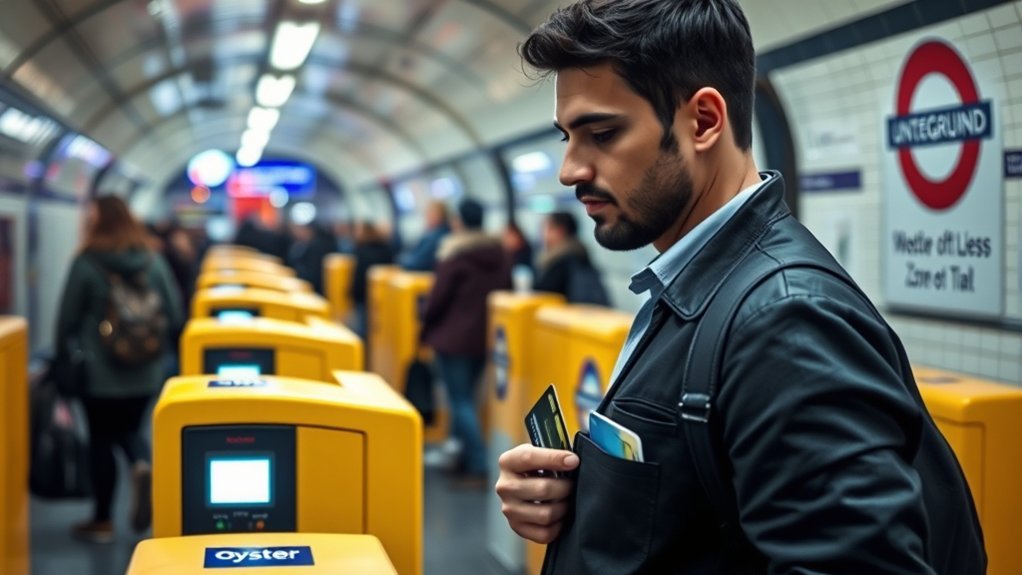
Most unexpected pay as you go charges come from an incomplete journey, using different payment methods, or presenting more than one card to the reader. TfL’s pay the right fare guidance explains the rules passengers should follow.
Missing Tap In or Tap Out
If you miss a touch in or touch out on the Tube, DLR, London Overground, Elizabeth line or participating National Rail services, TfL may record an incomplete journey and charge a maximum fare rather than the normal fare for the route you actually travelled.
- Touch in and out on Tube and rail journeys.
- Touch in only on buses and trams.
- Touch out even when station gates are open.
- Check your journey history if a charge looks wrong.
TfL sometimes automatically corrects incomplete journeys when your travel pattern makes the missing origin or destination clear. If the journey is not corrected, you may be able to request an incomplete-journey refund. TfL advises waiting at least 48 hours because many corrections are processed automatically.
Card Clash Problems
Card clash happens when a reader can detect more than one Oyster or contactless card. The reader may use a different card from the one you intended, causing an incorrect fare or leaving journeys split between two cards.
Take the card you intend to use out of your wallet or purse before touching the reader. If you are using a phone or watch, keep other contactless cards away from the reader. A green light confirms that the reader accepted the payment method, but you should still check your journey history if something seems wrong.
Switching Between a Card, Phone and Watch
A physical bank card and the digital version of that card in Apple Pay, Google Pay or another mobile wallet are not interchangeable for TfL journey matching. The same applies to a phone and smartwatch linked to the same account.
If you touch in with one device and out with another, TfL can treat them as separate journeys. Use one physical card or one specific device consistently.
Forgetting Pink Card Readers
Pink readers are used at selected interchange stations to show TfL which route you took when travelling around Zone 1 rather than through it. They are not entry or exit readers. If your route requires a pink reader, touch it while changing trains and still use the yellow readers at the beginning and end of the journey.
This is especially relevant when a fare depends on whether your route passed through Zone 1. TfL’s Single Fare Finder can tell you when a pink-reader route can reduce the fare.
Taking Too Long Between Touch In and Touch Out
TfL applies maximum journey times to Tube, DLR, London Overground, Elizabeth line and National Rail journeys. If the time between your entry and exit exceeds the permitted journey time, you can be charged two maximum fares. Long stops inside the network or accidentally touching in without travelling can therefore create unexpected charges.
Which Tap and Go Option Should You Choose?
Your best option depends more on convenience and discount eligibility than on the ordinary adult Zones 1-2 fare, because Oyster and contactless use the same £8.90 daily cap for standard adult travel.
- Choose contactless if you are an adult with a supported card or mobile wallet and want to start travelling immediately without buying or topping up a travel card.
- Choose standard Oyster if you prefer prepaid credit or qualify for an eligible Railcard, photocard or other Oyster-based discount.
- Consider Visitor Oyster if you want a prepaid card before arriving in London, while remembering that it does not support every discount available on a standard Oyster card.
- For children aged 11-15 visiting London, an Oyster or Visitor Oyster card with the Young Visitor discount can be much cheaper than adult contactless fares.
If your contactless card was issued outside the UK, most major supported cards work, but acceptance is not universal and your bank may charge overseas transaction or currency-conversion fees. TfL recommends checking with the card issuer if you are unsure. Oyster can avoid repeated foreign-card transactions once you have loaded credit.
Whatever method you choose, use it consistently. Correct touching matters more than whether the card says Oyster or Visa.
Frequently Asked Questions
What does Zone 1 and Zone 2 cover in London?
Zone 1 covers the central core of London, while Zone 2 forms the surrounding inner-London area. Most major central attractions are in Zones 1-2, but always check the TfL map for the exact zone of your starting and destination stations.
Is it cheaper to pay contactless or Oyster?
For ordinary adult pay as you go travel in Zones 1-2, Oyster and contactless use the same fares and £8.90 daily cap. Oyster can be cheaper when you qualify for an eligible child, Young Visitor or National Railcard discount that cannot be applied to ordinary contactless payment.
How much is Zone 1 to Zone 2 contactless in 2026?
A standard adult rail journey crossing Zones 1 and 2 is £3.60 peak or £3.10 off-peak under TfL’s 2026 zonal fare table. Exact fares can vary with the route, direction and service, so use TfL’s Single Fare Finder for a specific journey.
Do I need to tap twice on London buses?
No. Touch your Oyster card or contactless payment method once when you board the bus. Do not touch out when you leave. You also touch in only on London Trams, although tram passengers use the reader at the tram stop before boarding.
What happens if I forget to tap out on the Tube?
TfL may record an incomplete journey and charge a maximum fare. Check your journey history after at least 48 hours because TfL may automatically correct the journey. If it is not corrected and you are eligible, you can request an incomplete-journey refund.
Can I tap in with my phone and tap out with my physical bank card?
No. Even when the phone and physical card are linked to the same bank account, TfL treats them as different payment methods. Touch in and out with the same physical card or the same device.
When does the London weekly fare cap reset?
Pay as you go weekly capping uses a fixed Monday-to-Sunday week. For adult Zones 1-2 travel, the 2026 Monday-to-Sunday cap is £44.70. It is not a rolling seven-day cap starting on the day of your first journey.
Sources
- Transport for London — Adult rate prices 2026 — adult daily and Monday-to-Sunday caps for Zones 1-9.
- Transport for London — Best ways for visitors to pay — Oyster, contactless, Visitor Oyster and child travel guidance.
- Transport for London — How to pay the right fare — touch-in/out rules, same-card requirements, pink readers and card clash.
- Transport for London — Free and discounted travel — Zip Oyster, children and National Railcard discounts.
- Transport for London — Using London Trams — tram payment and touch-in rules.
- Transport for London — March 2026 fares revision — 2026 rail fare changes and Oyster card fee update.
Conclusion
For most adults travelling around London Zones 1-2, contactless is the simplest option, while Oyster becomes more useful when you need prepaid credit or qualify for an eligible discount. Both use the same £8.90 adult daily cap for standard Zones 1-2 travel in 2026.
The biggest money-saving rule is also the easiest to remember: use the same card or device, touch in and out correctly on rail journeys, and touch in only on buses and trams. Add off-peak travel, weekly capping and the right child or Railcard discount where applicable, and London pay as you go becomes both predictable and easy to manage.
