
Last Updated on July 28, 2026 by Daniel Globe
The best time to visit the British Museum is usually when the galleries first open or late in the afternoon. The Museum’s current visitor guidance identifies 10am–11am and the period after 4pm as generally quieter, while weekends, UK school holidays, bank holidays and the middle of the day are more likely to be busy. Friday late opening gives you extra evening hours, but special activities can make some Friday nights lively rather than quiet.
Quick Answer
For the best chance of a quieter British Museum visit, arrive at 10am when the galleries open or visit after 4pm. Weekdays are generally a safer choice than weekends. Fridays stay open until 8:30pm, but evening events can be busy. November and early December tend to be less crowded.
Disclosure: As an Amazon Associate I earn from qualifying purchases. Some links on this page are affiliate links, at no extra cost to you.
Key Takeaways
Key Takeaways
- The British Museum’s official guidance identifies 10am–11am and after 4pm as generally quieter visiting periods.
- Weekends, UK school holidays, bank holidays, Christmas and New Year periods are usually busier.
- The Museum is open 10am–5pm daily and until 8:30pm on Fridays; last entry is 4:45pm, or 8:15pm on Fridays.
- November and early December tend to be less crowded than busier periods of the year.
- Entry to the permanent collection is free. Booking a free timed ticket in advance gives priority entry during busy periods.
- The Museum is closed on 24–26 December. Check the official Visit page for exceptional closures or changed hours.
- Friday late opening gives you more time, but some galleries may be closed and special Friday activities can be busy or noisy.
Best Days of the Week to Visit
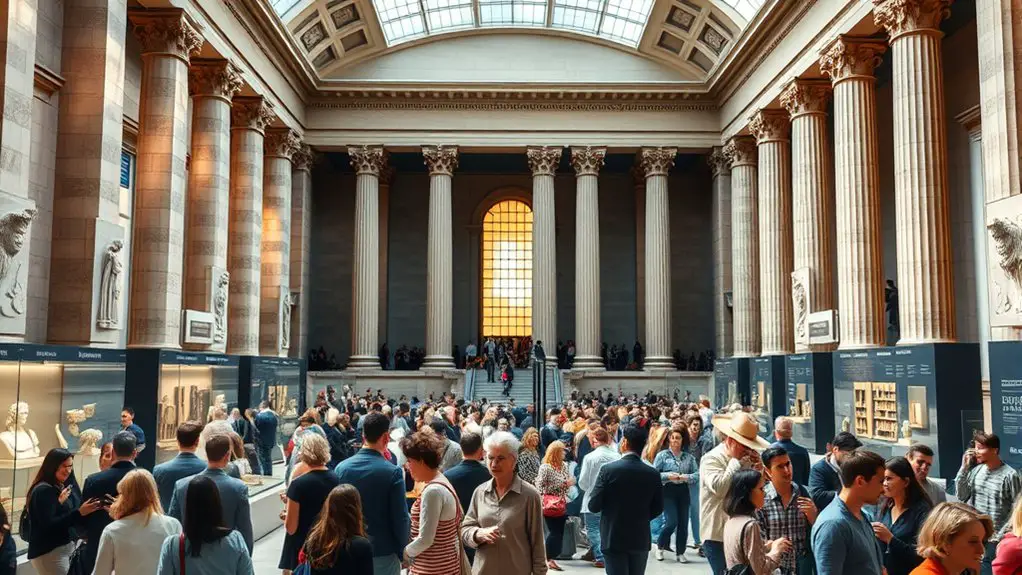
To make the most of a visit to the British Museum, start by choosing a weekday if your schedule allows. The Museum’s current accessibility and quieter-times guidance specifically identifies weekends as busier, along with UK school holidays and bank holidays.
There is not enough official evidence to say that Tuesday, Wednesday and Thursday are always quieter than Monday. A more reliable strategy is to combine a weekday visit with an early or late time slot.
Weekends can make popular areas harder to move through. If a Saturday or Sunday is your only option, arrive for the 10am opening and see your highest-priority objects first.
Optimal Times During the Day

Timing within the day matters as much as the date. According to the British Museum’s official Visit page, galleries are open 10am–5pm daily and until 8:30pm on Fridays. Last entry is normally 4:45pm, or 8:15pm on Fridays.
| Time of Day | What to Expect |
|---|---|
| 10–11am | One of the Museum’s officially identified quieter periods and the best window for popular galleries. |
| Middle of the day | Usually the busiest period in galleries, cafés and shops. |
| After 4pm | Another officially identified quieter period, although there is less time before standard closing. |
| Friday 5–8:30pm | Useful extended hours. Some galleries may close and scheduled activities can make parts of the Museum busy or noisy. |
For the most dependable crowd strategy, use the first hour after opening. After 4pm is also useful if you only need an hour or are visiting on Friday.
Note: Galleries begin clearing about 10 minutes before closing. On a normal day, that means a 4pm arrival gives you less than a full hour of gallery time.
Booking, Security, and Arrival Strategy
General admission to the permanent collection is free, but advance booking is still worthwhile. The Museum recommends reserving a free timed ticket because ticket holders receive priority entry during busy periods. Walk-up entry is available, but it depends on capacity and non-ticket holders may wait longer.
Every visitor should also allow time for security. Bags and personal items may be searched before entry.
Warning: Wheeled suitcases are not permitted anywhere on British Museum premises regardless of size. Large luggage over 40 × 40 × 50 cm or weighing more than 8 kg is also prohibited. Store large luggage before travelling to the Museum.
Entry is available from the Main entrance on Great Russell Street and the Montague Place entrance. Visitors with accessibility needs can use step-free routes, and staff can assist with accessible entry.
How Long Should You Spend at the British Museum?
You do not need to see the entire collection in one visit. The Museum publishes its own one-hour highlights trail and a three-hour trail covering major galleries and popular objects.
- About 1 hour: Best for a tightly focused highlights visit.
- About 3 hours: A good choice for first-time visitors who want a broader tour of major objects.
- Half a day or longer: Better if you want to read labels carefully, take breaks and explore several collections in depth.
For a short visit, start with your must-see object rather than spending your first hour wandering through the building.
Seasonal Variations and Crowds
Visitor levels change through the year, but the Museum’s current guidance is more specific than broad London tourist-season rules. It says that November and early December tend to be less crowded.
The same guidance identifies weekends, UK school holidays, UK bank holidays, Christmas and New Year as busier periods. This is more reliable for planning a Museum visit than assuming that every month from April through August will follow the same crowd pattern.
For the strongest combination of lower crowd risk and useful visiting time, choose a weekday at 10am, especially during November or early December.
Special exhibitions and one-off events can change the pattern, so always check the day’s programme before relying on a seasonal rule.
Special Events and Exhibition Schedules
Special exhibitions and Museum events can change how busy individual galleries, entrances and public spaces feel. Current British Museum guidance notes that the permanent galleries can become especially busy during the first and last weekends of a special exhibition.
- Check the Museum’s official exhibitions and events calendar before booking travel.
- Check the Visit page for planned gallery closures before leaving for the Museum.
- Paid special exhibitions require their own tickets even though permanent-collection admission is free.
- Friday events may increase noise and visitor numbers in parts of the building.
If your priority is an exhibition rather than the permanent collection, reserve the exhibition first and plan the rest of your visit around its timed entry.
Holidays and Peak Tourist Seasons
Major holidays and school breaks are among the most consistently busy times identified by the Museum. A weekday outside those periods is usually easier to navigate than a weekend or bank holiday.
Avoid Peak Holiday Crowds
To reduce your chance of encountering the heaviest crowds, prioritize:
- Weekday mornings at the 10am opening.
- Late afternoons after 4pm when a short visit is enough.
- Term-time dates rather than UK school holidays.
- Dates that do not coincide with a major exhibition’s first or last weekend.
- November or early December when your London dates are flexible.
Weekday Visits Are Quieter
Because weekends appear on the Museum’s own list of busier periods, weekdays are the safer choice for visitors who dislike crowds. However, a weekday during a major school holiday or special event can still be busy, so the time of day remains important.
Off-Season Advantages, Not Admission Discounts
Permanent-collection entry is free when the Museum is open, so there is no standard off-season discount for general admission. The benefit of visiting during a less crowded period is practical rather than financial:
- More space in galleries and public areas.
- Less competition around popular objects.
- A better chance to read labels without blocking other visitors.
- A more comfortable visit for people who find dense crowds difficult.
Tips for Visiting During School Holidays
School holidays are listed among the Museum’s busier periods, but families also gain access to activities and facilities that operate specifically on weekends and London Borough of Camden school holidays.
Book in Advance
- Reserve a free general-admission timed ticket before your visit.
- Book paid special exhibitions separately if you want to see one.
- Choose 10am when possible instead of a middle-of-the-day slot.
- Arrive at the time shown on your ticket rather than much earlier.
For normal general admission, advance booking provides priority during busy periods. Walk-up admission remains possible but depends on capacity. For Friday late opening, the Museum specifically recommends booking a timed slot in advance to guarantee entry for that evening.
Expect Crowds
School holidays can mean busy entrances, cafés and popular galleries. The Rosetta Stone in Room 4 is one of the Museum’s most popular objects, so visiting it early can save you from returning to the same busy area later.
Families can also check the official family-visits page for current Families Desk hours, explorer trails, backpacks and holiday activities.
Plan for Longer Visits
A busy day slows you down, so avoid building an itinerary that depends on moving rapidly from room to room.
- Choose a one-hour or three-hour official Museum trail if you want structure.
- Put your must-see rooms first.
- Allow for security and bag checks before your gallery time begins.
- Use the Museum map to avoid unnecessary backtracking.
How Weather Affects Visitor Numbers
Weather can influence how many people decide to visit London attractions on a particular day, but it is not a reliable British Museum crowd predictor. The Museum does not currently publish a rule saying rainy or cold days will be quieter.
For crowd planning, rely more heavily on the factors the Museum does identify: time of day, weekends, school holidays, bank holidays, Christmas and New Year periods, and major exhibition activity.
Note: Do not switch to a rainy day simply because you expect an indoor attraction to be empty. Check ticket availability and the day’s events instead.
Accessibility and Sensory Planning
The Museum provides step-free entry, lifts, accessible toilets, seating, wheelchairs and sensory resources. Its accessibility page also identifies quieter rooms and spaces that tend to be noisier or more crowded.
A free sensory map is available from the Information Desk. Visitors who need an easier-access route can speak to a Visitor Welcome colleague at either entrance.
The Museum lists Holborn and Russell Square stations at about a seven-minute walk and Tottenham Court Road at about a five-minute walk. Actual walking time will depend on your route and mobility.
Planning Around Major Museum Events
Museum events can make a visit more rewarding, but they can also change the normal crowd pattern. Decide whether you want to avoid events or attend them deliberately.
- Check the exhibitions and events calendar before choosing your date.
- Check planned gallery closures, especially when an individual room is essential to your visit.
- Use curator talks, tours and object-handling sessions when they match your interests.
- For a quieter experience, avoid the first and last weekends of major special exhibitions when possible.
Pro Tip: Friday late opening is best viewed as an extra-time strategy rather than a guaranteed quiet-time strategy. Check the Friday programme and gallery-closure list first, then book a free evening timed slot if the open galleries match what you want to see.
Frequently Asked Questions
Are there any days when the British Museum offers free guided tours?
Yes. Free volunteer-led eye-opener tours run at various times, subject to availability and cancellation. The Museum also offers free 20-minute spotlight tours during Friday late opening. Check the official tours-and-talks schedule before visiting.
How early should I arrive to avoid the largest crowds?
Book a 10am entry and arrive for your stated time. The Museum identifies 10am–11am as one of its quieter periods. Remember that all visitors may need to pass through security and a bag search before entering the galleries.
Is there a best time to visit for avoiding museum closures or maintenance?
The Museum is closed on 24–26 December. Individual galleries may close for maintenance, refurbishment, private events or safety reasons at other times, so check the planned gallery-closures section of the official Visit page shortly before your trip.
Do special exhibitions impact visitor numbers significantly?
They can. Current Museum guidance says permanent galleries can become especially busy during the first and last weekends of a special exhibition. Check the events calendar before choosing your date.
Are there specific times when certain galleries are less crowded?
The Museum identifies 10am–11am and the period after 4pm as generally quieter across the building. Its sensory guidance also lists individual spaces that tend to be quieter or noisier, so visitors who are sensitive to crowds can use the sensory map to plan a route.
Do I need to book a ticket for the British Museum?
Advance booking is recommended but walk-up visits are normally available subject to capacity. A free timed ticket for the permanent collection gives priority entry during busy periods. Paid special exhibitions require separate booking.
Is Friday evening always the quietest time to visit?
No. Friday late opening provides useful extra hours until 8:30pm, but special activities can make parts of the Museum busy or noisy, and some galleries are not open during late hours. Check the Friday late-opening page before relying on an evening visit.
Conclusion
The best time to visit the British Museum is not tied to one specific weekday. For the most dependable chance of lighter crowds, use the Museum’s own guidance: arrive between 10am and 11am or visit after 4pm, choose a weekday where possible, and avoid school holidays, bank holidays and major exhibition weekends. November and early December tend to be less crowded. Friday late opening is useful when you want more time, but check the event schedule and gallery closures before relying on it. Booking a free timed ticket, travelling without large luggage and choosing your must-see objects in advance will make the visit much easier.
Sources
- British Museum — Visit — current opening hours, ticketing, entry, security, luggage rules, gallery closures and facilities.
- British Museum — Accessibility at the Museum — quieter and busier times, seasonal crowd guidance, step-free access and sensory information.
- British Museum — Late Opening on Fridays — Friday hours, timed-entry advice and late-opening gallery availability.
- British Museum — Tours and Talks — free eye-opener and Friday spotlight tour information.
- British Museum — Family Visits — family facilities, school-holiday activities, pushchairs and Families Desk information.
- British Museum — Object Trails — official one-hour and three-hour visit routes.
