
Last Updated on July 25, 2026 by Daniel Globe
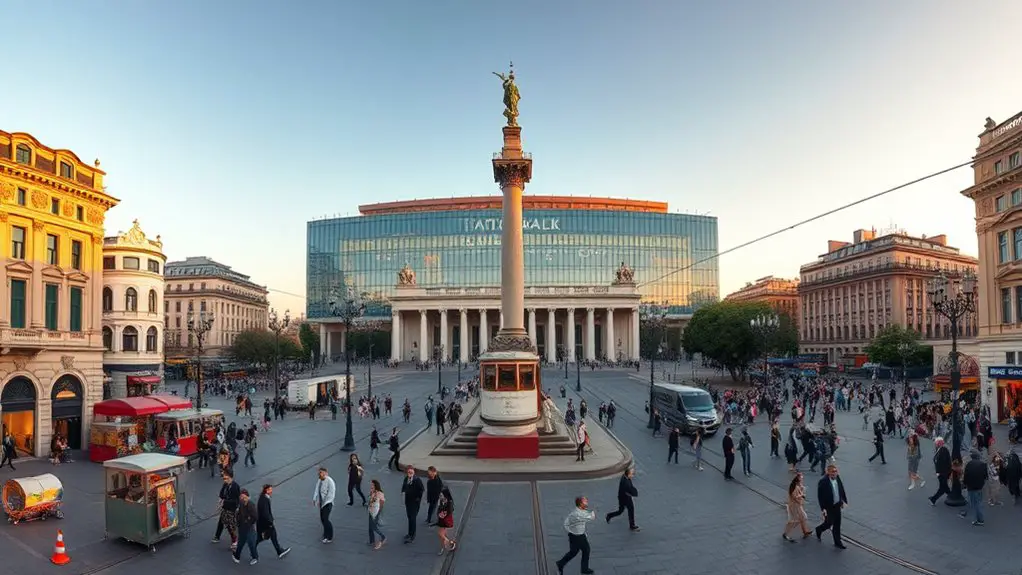
Taksim is one of Istanbul’s best-known public spaces, but its history reaches far beyond today’s shops, restaurants, nightlife, and transport links. The area takes its name from an Ottoman water-distribution system, later developed around military grounds, new roads, parks, cultural venues, and the Republic Monument. Over time, Taksim also became one of Türkiye’s most important spaces for public celebration, political memory, and civic protest.
Quick Answer
Taksim developed from an 18th-century Ottoman water-distribution point into one of modern Istanbul’s most symbolic public spaces. Its story runs through the Taksim Maksem, 19th-century military barracks and Pera expansion, the 1928 Republic Monument, Gezi Park, major political demonstrations, and its present role as a transport, culture, shopping, and nightlife center.
Key Takeaways
- The name Taksim refers to division or distribution and comes from the Ottoman water system that supplied parts of Beyoğlu.
- The area gained a major military role in the early 19th century with the Taksim Artillery Barracks.
- The Republic Monument, inaugurated in 1928, helped turn the square into a major ceremonial space of the Turkish Republic.
- The former barracks site became Gezi Park, which later became internationally known during the 2013 protests.
- Taksim remains politically symbolic, but demonstrations and even access to nearby transport stations can be restricted by authorities.
Disclosure: As an Amazon Associate I earn from qualifying purchases. Some links on this page are affiliate links, at no extra cost to you.
Taksim History Timeline
- 1730s onward: The Ottoman Taksim water system begins carrying and distributing water to neighborhoods around Beyoğlu.
- Early 1800s: The Taksim Artillery Barracks gives the area an important military function.
- 19th century: Pera and Beyoğlu expand with new roads, parks, theaters, apartment buildings, shops, and European architectural influences.
- 1928: The Republic Monument is inaugurated in Taksim Square.
- 1939–1940: The old artillery barracks are demolished during the redevelopment associated with urban planner Henri Prost.
- 1940s: Gezi Park takes shape on part of the former barracks site.
- May 1, 1977: More than 30 people die during a May Day gathering at Taksim Square, cementing its significance in Türkiye’s labor and political history.
- 2013: Opposition to redevelopment plans for Gezi Park develops into nationwide anti-government demonstrations.
- 2021: Taksim Mosque opens in May, and the rebuilt Atatürk Cultural Centre opens in October.
The Origins of Taksim: An Ottoman Water Distribution Point
Taksim’s name is tied directly to water. In Turkish, taksim means division or distribution. During the Ottoman period, water brought toward Beyoğlu was divided among different neighborhoods through a distribution structure known as a maksem.
Türkiye’s Ministry of Culture and Tourism dates the wider Taksim Water System to 1731–1839. These systems moved water from sources outside the dense city through dams, aqueducts, conduits, pressure-balancing structures, and distribution chambers.
The historic Taksim Maksem near the square is therefore more important to the area’s identity than the idea of a single “famous fountain.” It represents the infrastructure that gave the district its name.
Note: Taksim did not begin as the modern square visitors see today. Its identity developed gradually from an Ottoman water-distribution zone into a military, residential, commercial, cultural, and political center.
The 19th Century: Taksim’s Transformation
The 19th century was one of the most important periods in Taksim’s physical transformation. The surrounding Pera and Beyoğlu districts expanded as Istanbul adopted new roads, municipal services, entertainment venues, apartment buildings, parks, and transportation systems.
Urban Development and the Taksim Artillery Barracks
The Taksim Artillery Barracks, constructed in the early 19th century, gave the area a strong military identity. Its large courtyard and surrounding grounds occupied much of the site now associated with Gezi Park.
As Beyoğlu developed later in the century, the district became more closely integrated with Istanbul’s expanding urban network. Türkiye’s Ministry of Culture and Tourism records major 19th-century improvements in the wider area, including new roads, public parks, horse-drawn tramways, the Tünel railway between Karaköy and Pera, and a broad avenue extending from the Grande Rue de Pera—today’s İstiklal Avenue—toward the military district.
These projects helped turn Taksim from the edge of the built-up city into an increasingly important meeting point between residential, military, commercial, and entertainment districts.
Cultural Influences in Pera and Beyoğlu
As Pera and Beyoğlu expanded, the wider Taksim area became increasingly cosmopolitan. Embassies, churches, theaters, shops, hotels, cafés, publishing activity, and art workshops all contributed to a cultural life shaped by Muslim, Christian, Jewish, Ottoman, Levantine, and European communities.
Instead of treating Taksim as an isolated neighborhood, it is more accurate to see it as the northern end of a wider Beyoğlu cultural corridor.
- Theater: Venues in Pera helped establish Beyoğlu as one of Istanbul’s main entertainment districts.
- Art: Early art workshops and later galleries became strongly associated with the Pera and Beyoğlu area.
- Street culture: İstiklal Avenue developed into a major promenade lined with shops, cafés, cultural institutions, and public gathering spaces.
Those traditions continue today, although the businesses, audiences, and cultural institutions have changed many times.
Architectural Styles and Western Influence
The architecture around Beyoğlu and Taksim also changed dramatically during the 19th century. Rather than “modernist” architecture in the later 20th-century sense, the period brought strong Western-influenced and eclectic styles.
Neoclassical, Empire, Neo-Baroque, revivalist, and later Art Nouveau influences appeared across Istanbul as Ottoman patrons and architects combined new European fashions with local building traditions. Multistory apartment buildings and commercial structures became especially important in Beyoğlu toward the end of the century.
This architectural mix remains one reason a walk from Taksim along İstiklal Avenue and through the surrounding streets reveals such varied facades, churches, passages, apartments, and institutional buildings.
The Republic Era: Urban Development and Modernization
After the establishment of the Republic of Türkiye in 1923, Taksim gained even greater symbolic importance. Republican planners and officials increasingly treated the district as a space in which the identity of a modern city and nation could be expressed.
- The Republic Monument gave the square a powerful national symbol.
- Gezi Park introduced a major green public space after the demolition of the old barracks.
- Road, transit, and public-space projects strengthened Taksim’s role as a central transportation and gathering point.
The Republic Monument was inaugurated in 1928, helping establish Taksim Square as one of the most recognizable ceremonial spaces of the new Republic.
The Republic Monument
Standing at the center of the square, the Republic Monument was created by Italian sculptor Pietro Canonica and inaugurated in 1928. It commemorates the founding of the Turkish Republic and the figures associated with the War of Independence and the new state.
The monument changed how the surrounding space was used. Taksim became an increasingly important location for national ceremonies, public commemorations, celebrations, and political expression.
From the Artillery Barracks to Gezi Park
The old Taksim Artillery Barracks survived into the Republican period but were demolished around 1939–1940 as part of major redevelopment associated with French urban planner Henri Prost.
Gezi Park was created on part of the former barracks site. This transformation replaced a large military complex with open green space and became one of the defining changes in Taksim’s 20th-century landscape.
The Istanbul Research Institute’s historical work on Taksim traces this broader evolution from Ottoman water infrastructure and military space to the representative public square of the Republic.
Taksim Square: A Symbol of Political Movements
Taksim Square’s importance is not limited to architecture and tourism. For decades, it has been one of Türkiye’s most recognizable settings for public ceremonies, labor movements, protests, commemorations, and political disputes over who may use public space.
May Day 1977
One of the darkest moments in Taksim’s history occurred on May 1, 1977. A huge Labor Day gathering descended into violence and panic after gunfire was heard around the square. More than 30 people died, with victims killed by gunfire or during the resulting crush and chaos.
The event remains an important part of Türkiye’s labor history. It also helps explain why access to Taksim on May Day continues to carry exceptional political and symbolic weight.
The 2013 Gezi Park Protests
In May 2013, a relatively small protest began in opposition to redevelopment plans affecting Gezi Park. Police intervention against the demonstrators helped turn the local dispute into a much larger protest movement that spread across Türkiye.
Academic research on the 2013 Gezi demonstrations has examined participation, collective identity, political grievances, and experiences of police violence during the movement.
Several characteristics made the demonstrations especially memorable:
- Unity in diversity: Participants came from many social, cultural, and political backgrounds rather than a single organized group.
- Cultural expression: Humor, posters, music, street performances, and improvised art became visible features of the occupation and demonstrations.
- International attention: Images and discussion of events in Taksim circulated widely through international media and social networks.
Gezi Park consequently became more than a green space. It became part of a wider debate over urban development, political participation, policing, and the use of public space.
Historical Significance
Taksim’s political significance developed over many decades rather than through one event. Republican ceremonies, labor activism, May Day commemorations, public celebrations, and the 2013 Gezi protests have all added layers to the square’s meaning.
For many visitors, the Republic Monument is the most visible reminder of that political history. Gezi Park and the routes leading into the square carry additional memories connected to protest and civic action.
Political Gatherings Today
Taksim remains politically symbolic, but describing it simply as an unrestricted stage for demonstrations would be misleading. Authorities may limit access to the square during protests or major political events, and nearby roads or public transportation can also be affected.
Metro Istanbul has, for example, issued official notices temporarily closing Taksim station and the F1 Taksim–Kabataş funicular under orders from the Istanbul Governor’s Office.
- Diverse movements: Labor, environmental, civil-rights, and other political causes continue to associate Taksim with public expression.
- Symbolic actions: Wreaths, statements, memorial events, and attempts to reach the square may carry political meaning even when large demonstrations are restricted.
- Cultural expressions: Posters, music, art, and performance have historically accompanied political activity in and around Taksim.
Warning: Visitors should avoid demonstrations and large political gatherings. Official travel guidance notes that demonstrations can become unpredictable, while local authorities may close streets or transit stations with little notice. Check current local information before visiting during major political events or commemorative dates.
Cultural Landmarks: Museums, Theaters, and More
Taksim sits at the northern end of one of Istanbul’s richest cultural corridors. Some attractions stand directly on the square, while others commonly associated with a “Taksim visit” are actually in nearby parts of Beyoğlu.
Atatürk Cultural Centre
The Atatürk Cultural Centre, or AKM, faces Taksim Square and is one of the area’s most important cultural institutions.
The rebuilt complex opened on October 29, 2021. Its facilities include an opera hall, theater, gallery, multipurpose areas, library, children’s arts facilities, cinema, and other cultural spaces.
The renewed AKM reopened in 2021, restoring a major performing-arts institution to the eastern side of Taksim Square.
Nearby Beyoğlu Museums
The Pera Museum is in Tepebaşı, south of Taksim toward Şişhane. Its collections and temporary exhibitions make it a useful stop while exploring the wider Beyoğlu cultural district.
Istanbul Modern is also worth visiting, but it should not be described as being in Taksim itself. The museum is in Tophane, beside the Galataport area. Its official visitor information places it on Tophane İskele Caddesi.
Street art, independent galleries, historic passages, cinemas, churches, music venues, and performance spaces throughout Beyoğlu further connect Taksim to a much wider cultural landscape.
Taksim Mosque and the Changing Square
Taksim’s skyline changed again in the 21st century when Taksim Mosque opened for worship on May 28, 2021. The mosque now stands opposite the AKM and near the Republic Monument, adding another prominent architectural element to the square.
Together, the Republic Monument, Gezi Park, Taksim Mosque, AKM, hotels, transit entrances, and İstiklal Avenue show how different periods of Istanbul’s political, religious, cultural, and commercial history meet in one compact public space.
Street Life and Gastronomy: The Heartbeat of Taksim
Taksim’s historical significance does not mean it feels like a museum. The square and surrounding streets remain busy with commuters, shoppers, restaurant customers, performers, hotel guests, and nightlife crowds.
İstiklal Avenue is the main pedestrian route south from Taksim and has long been associated with cafés, restaurants, entertainment venues, shops, passages, and street food.
- Try simit, the sesame-coated bread ring sold throughout Istanbul.
- Look for döner and other grilled meat dishes at busy takeaway counters.
- Taksim is particularly associated with late-night foods such as the ıslak hamburger, or “wet burger.”
- Baklava and other Turkish sweets are widely available in pastry and dessert shops.
Food culture here has also changed with the neighborhood. Traditional eateries, meyhanes, international restaurants, coffee shops, fast-food counters, and contemporary dining venues now operate side by side.
After dark, bars, cafés, restaurants, performance venues, and busy side streets keep the wider Taksim and Beyoğlu area active late into the evening.
Frequently Asked Questions
What does the name Taksim mean?
Taksim means division or distribution. The name comes from the Ottoman water-distribution system and the Taksim Maksem, where water was divided for delivery to different parts of the surrounding city.
Why is Taksim Square historically important?
Taksim connects several major stages of Istanbul’s history: Ottoman water infrastructure, 19th-century military and urban development, Republican monuments and planning, the 1977 May Day tragedy, the 2013 Gezi Park protests, and the modern cultural life centered on İstiklal Avenue and the AKM.
What is the best time to visit Taksim?
Spring and autumn usually offer more comfortable walking weather than the hottest part of summer or the coldest winter days. Early morning is quieter for architecture and photography, while evenings show Taksim and İstiklal Avenue at their busiest. Check local news before visiting on days when demonstrations or major public events are expected.
Are there any local customs tourists should be aware of?
Normal courtesy goes a long way. Dress respectfully when entering mosques and follow posted rules about shoes, photography, and prayer areas. Avoid blocking busy sidewalks, ask before closely photographing individuals, and be respectful around political gatherings, memorials, and places of worship.
Is Taksim safe for tourists at night?
Taksim is a heavily visited nightlife and hotel district, but travelers should still use normal city precautions. Keep phones, wallets, and bags secure in crowded areas, use established transportation, and avoid demonstrations. The U.S. State Department’s Türkiye travel guidance advises increased caution and recommends avoiding demonstrations and crowds.
What currency is used in Taksim?
The local currency is the Turkish lira. Cards are accepted at many hotels, restaurants, and shops, but carrying some lira is useful for smaller purchases. When exchanging cash or using an ATM, review the displayed exchange rate and any fees before confirming the transaction.
How can I get to Taksim from Istanbul Airport?
From Istanbul Airport (IST), the M11 airport metro connects with the M2 line at Gayrettepe. From Gayrettepe, take the M2 toward Yenikapı and get off at Taksim. Airport coaches and licensed taxis are alternatives, with road travel times depending heavily on traffic.
How can I get to Taksim from Sabiha Gökçen Airport?
From Sabiha Gökçen Airport (SAW), the M4 metro runs directly from the airport. One rail option is to transfer to Marmaray at Ayrılık Çeşmesi, continue to Yenikapı, and then change to the M2 for Taksim. Airport coaches and taxis are also available, so the best choice depends on luggage, traffic, and your arrival time.
Sources
- Republic of Türkiye Ministry of Culture and Tourism — Fountains in Ottoman İstanbul — Taksim Water System dates, maksem distribution chambers, and Ottoman water infrastructure.
- Istanbul Research Institute — Taksim: The Heart of İstanbul — Taksim’s transformation from a water-distribution and military area into a major Republican public space.
- Atatürk Cultural Centre Official Website — the rebuilt AKM’s October 2021 opening and current cultural facilities.
- PubMed — Research on the 2013 Gezi Park Demonstrations — academic context on participation, collective identity, political orientation, and experiences during the protests.
- Metro Istanbul — M2 Yenikapı–Hacıosman Metro Line — Taksim station and connection with the M11 airport metro at Gayrettepe.
- U.S. Department of State — Türkiye Travel Advisory — current traveler precautions concerning demonstrations, crowds, security, and tourist areas.
