
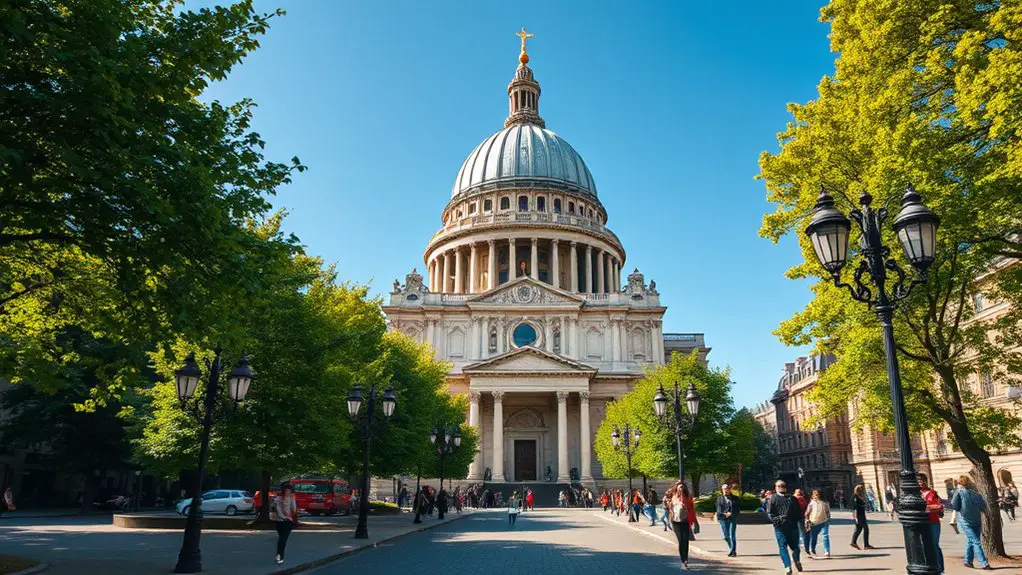
Last Updated on July 25, 2026 by Daniel Globe
To visit St. Paul’s Cathedral in London, plan your trip during weekday mornings or late afternoons for a quieter experience. Purchasing tickets online in advance guarantees entry and saves on general admission fees. Located in central London, the cathedral is easily accessible via public transit, including St. Paul’s Tube Station on the Central Line. Inside, visitors can explore Sir Christopher Wren’s masterpiece, climb the iconic dome for panoramic city views, descend into the historic crypt, and admire grand memorials. Remember to dress modestly, follow quiet etiquette, and note that Sundays are reserved for religious services rather than sightseeing.
Quick Answer
How do you best visit St. Paul’s Cathedral? Book time-slotted tickets online in advance to save money and skip long lines. Visit on a weekday morning at opening time (8:30 AM, or 10:00 AM on Wednesdays). Allow 2 to 3 hours to explore the main nave, crypt, and climb 528 steps to the Golden Gallery for London views.
Key Takeaways
- Book Online: Buying tickets directly from the official website offers discounted rates compared to walk-up entry.
- Optimal Timing: Visit during early weekday mornings to avoid peak tour group crowds.
- Transit Access: Use the London Underground Central Line to St. Paul’s Station or Blackfriars for direct access.
- Dome Climb Requirements: Reaching the highest gallery requires walking up 528 steps; ensure comfortable footwear.
- Respect Etiquette: Dress modestly (covered shoulders and knees) and observe silence in designated prayer zones.
At a Glance
| Recommended Duration | 2 to 3 Hours |
| Best Opening Hours | Mon–Sat 8:30 AM – 4:30 PM (Wed opens at 10:00 AM) |
| Physical Effort | Moderate to High (528 steps for dome climb) |
| Nearest Tube Station | St. Paul’s (Central Line, 2-min walk) |
Disclosure: As an Amazon Associate I earn from qualifying purchases. Some links on this page are affiliate links, at no extra cost to you.
Planning Your Visit and Best Time to Go

To make the most of your visit to St. Paul’s Cathedral, timing is key. The best visiting times are during weekday early mornings (around 8:30 AM opening) or late afternoons when tour bus crowds thin out, giving you a far more peaceful experience.
Seasonal factors also influence your visit: spring and early autumn bring pleasant weather and manageable visitor volumes. Summer months bring vibrant energy to the surrounding plazas but result in longer queue times for security and dome access.
Winter visits feature fewer tourists, and Sir Christopher Wren’s grand architectural features are dramatically illuminated in soft daylight. Note that sightseeing is closed on Sundays, as the cathedral is exclusively dedicated to worship and church services.
Pro Tip: Wednesday mornings open slightly later at 10:00 AM due to staff preparation. Plan your arrival for 8:30 AM on Mondays, Tuesdays, Thursdays, or Fridays to enter right as doors open.
Ticket Options and Entrance Fees
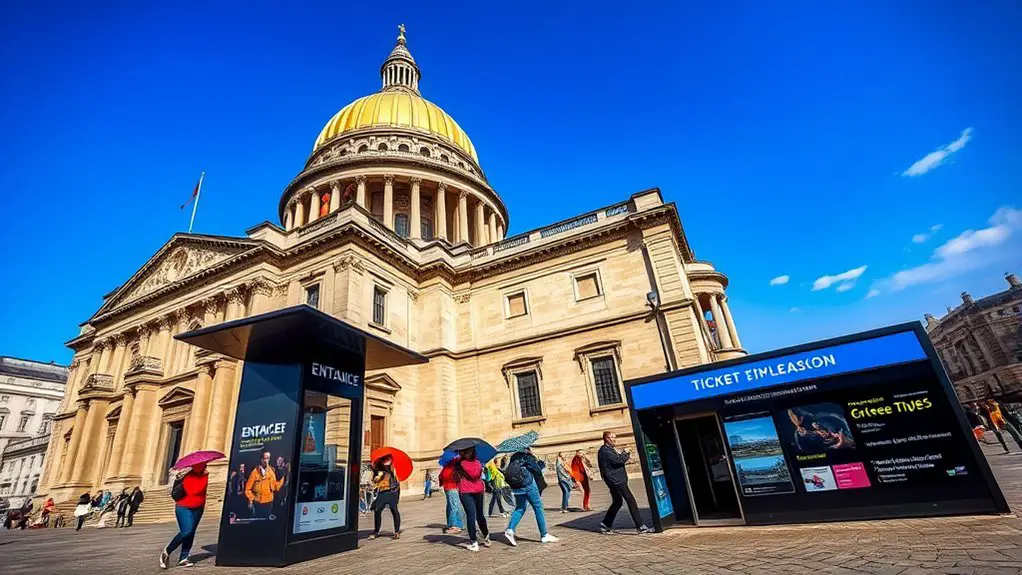
Multiple entry tickets are available when visiting St. Paul’s Cathedral. Standard admission covers access to the main floor (nave), the crypt, and the dome galleries.
Standard admission grants access to the cathedral floor, crypt, and dome climb galleries; purchasing online in advance unlocks discounted pricing over walk-up tickets.
Concession rates are available for seniors, students, and children, while family tickets offer additional savings. Group discounts apply when booking ahead for parties of 10 or more. Always check the official website to verify current seasonal pricing and advance booking time-slots.
Getting There: Location and Transportation Tips
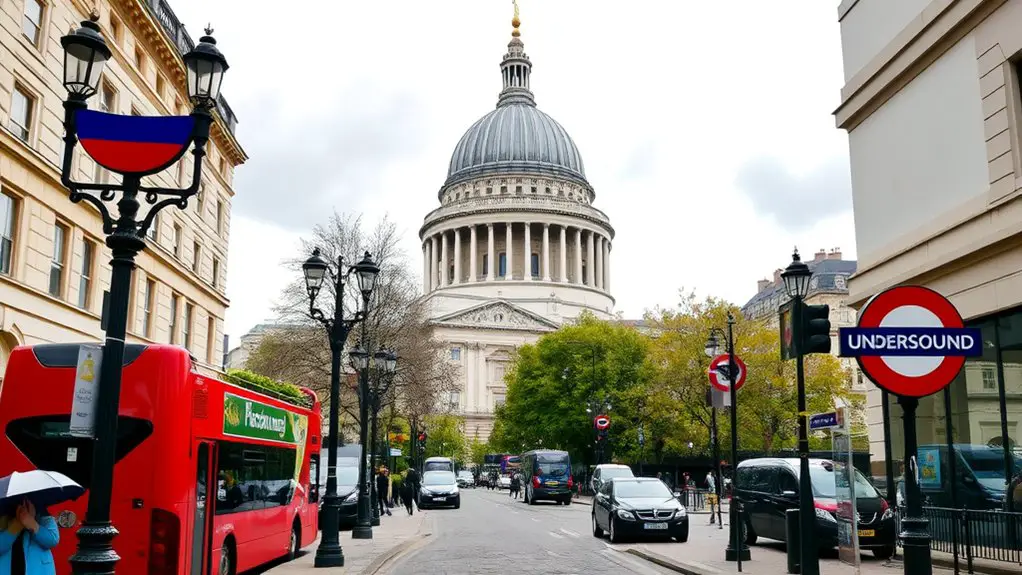
St. Paul’s Cathedral sits atop Ludgate Hill in the heart of the City of London, making public transportation the most efficient way to arrive.
Driving in central London involves Congestion Charge fees and very limited parking. Utilizing public transit via Transport for London (TfL) is strongly recommended.
- Underground (Tube): St. Paul’s Station (Central Line) is a 2-minute walk. Mansion House and Blackfriars (District and Circle Lines) are within a 5-minute walk.
- Bus Routes: Bus lines 4, 11, 15, 23, 25, 76, and 100 stop directly outside or near the cathedral grounds.
- Rail: City Thameslink and Blackfriars stations provide direct national rail access.
- Parking: If driving is unavoidable, use nearby multi-story parking garages such as Baynard House or Vintry Car Park.
Exploring the Main Features Inside the Cathedral
Stepping inside St. Paul’s Cathedral reveals soaring vaulting, massive stone piers, and historical monument design that forms a centerpiece of British history.
Iconic Dome Architecture
The cathedral’s defining feature is its triple-dome structure, engineered by Sir Christopher Wren following the Great Fire of London in 1666. The outer dome dominates London’s skyline, while the inner dome presents a harmonious visual space from the nave floor.
Warning: The dome climb involves 528 steps in total. The final staircases leading to the Golden Gallery are narrow, steep, and winding. It is not recommended for visitors with severe cardiovascular conditions, claustrophobia, or mobility impairments.
- Stone Gallery: Reached after 378 steps, offering an outdoor viewing platform around the base of the outer dome.
- Golden Gallery: Located at the highest point of the dome (528 steps), delivering unobstructed 360-degree views across London.
- Architectural Ingenuity: A hidden brick cone between the inner and outer masonry shells supports the massive 850-ton stone lantern above.
Historic Memorials and Art
The cathedral floor and extensive crypt house over 300 monuments dedicated to major figures in British military, cultural, and political history. Notable tombs and memorials include Lord Nelson, the Duke of Wellington, and Sir Christopher Wren himself, whose epitaph reads: “Reader, if you seek his monument, look around you.”
Artworks span centuries, combining classical mosaics with modern installations like Henry Moore sculptures and Bill Viola video art installations.
Guided Tours and Audio Guides
To deepen your understanding of the site, complimentary self-guided multimedia audio devices are included with standard admission tickets. These handheld guides offer interactive maps, historical footage, and multi-language commentary.
Guided walking tours led by cathedral experts run regularly throughout the day. These tours cover the main floor and crypt while highlighting key historical events, including royal weddings and national services.
Dress Code and Etiquette Guidelines
Because St. Paul’s is an active place of worship, maintaining appropriate attire and respectful behavior is strictly required.
Appropriate Attire Expectations
- Wear modest clothing covering shoulders, chests, and knees.
- Hats and caps must be removed inside by male visitors, except when worn for religious reasons.
- Avoid wearing overly casual or revealing beachwear.
Respectful Behavior Practices
Maintain low speaking volumes throughout your tour. Turn mobile phones to silent, and refrain from eating or drinking inside the nave and chapels. Certain designated chapels are reserved strictly for silent prayer and personal devotion.
Photography and Silence Rules
Personal non-flash photography is permitted on the main cathedral floor and crypt level for non-commercial purposes. However, photography is strictly prohibited during church services, musical performances, and inside specific private chapels. Video recording, tripods, and selfie sticks are not allowed.
Accessibility and Facilities
St. Paul’s Cathedral provides step-free entry via the North Transept via a modern wheelchair ramp and power door system.
Inside, an interior lift provides access between the main cathedral floor and the crypt. Accessible, gender-neutral restrooms are located in the crypt complex. While the high dome galleries are accessible only by stairs due to historical design constraints, multimedia touchscreens on the main floor allow visitors with physical limitations to view virtual gallery panoramas.
Nearby Attractions and Things to Do in the Area
Located in central London, St. Paul’s is within easy walking distance of several famous historic and cultural landmarks:
Stroll across the pedestrian-only Millennium Bridge toward Tate Modern and the Southbank cultural district.
- Millennium Bridge: A striking steel footbridge aligned directly with the cathedral’s south facade.
- Tate Modern: Located directly across the River Thames, hosting world-class modern and contemporary art exhibitions.
- Paternoster Square: Adjacent to the cathedral, offering outdoor dining, cafes, and historic monuments like the Temple Bar gate.
- Museum of London Docklands: Accessible via short transit rides to explore London’s rich history.
Tips for a Memorable and Respectful Experience
Arrive promptly at your selected ticket time slot, carrying only light personal bags. Large luggage and oversized backpacks exceeding standard carry-on dimensions are not permitted inside, and there are no left-luggage storage facilities on site.
Frequently Asked Questions
Are there special events or services held at St. Paul’s Cathedral?
Yes, St. Paul’s hosts daily choral services, including Choral Evensong (typically 5:00 PM Monday through Saturday and 3:00 PM on Sundays), which are free and open to the public. Special national services, organ recitals, and seasonal Christmas concerts also take place throughout the year.
Can I take photographs inside the cathedral?
Yes, photography without flash is permitted for personal use on the main cathedral floor and in the crypt. Photography is prohibited during services, recitals, and in designated quiet chapels. Tripods, selfie sticks, and flash equipment are forbidden.
Is there a gift shop or souvenirs available on-site?
Yes, the official Cathedral Shop is located in the crypt. It offers books, guidebooks, historical souvenirs, jewelry, and gifts. Purchases help support the maintenance and heritage preservation of the cathedral.
Are there restrictions for visitors with specific religious beliefs?
No, St. Paul’s Cathedral welcomes visitors of all faiths and backgrounds. Guests are simply asked to respect the active Christian worship environment by dressing modestly and maintaining quiet behavior during their visit.
What is the history behind the cathedral’s architecture and design?
The present English Baroque cathedral was designed by Sir Christopher Wren and built between 1675 and 1710 after its predecessor was destroyed in the Great Fire of London. It served as a symbol of national resilience, surviving the Blitz bombardment during World War II.
Conclusion
Visiting St. Paul’s Cathedral is an inspiring trip through London’s architectural, cultural, and spiritual heritage. By booking advance time-slot tickets, planning around peak hours, and observing visitor etiquette, you ensure a smooth and enriching experience exploring Sir Christopher Wren’s legendary landmark.
Sources
- St. Paul’s Cathedral Official Site — Ticket pricing, operating schedules, security rules, and worship hours.
- Transport for London (TfL) — Public transportation connections and tube station mapping.
- Visit London Official Guide — Tourist visitor accessibility details and nearby city landmarks.
- Historic England — Architectural designation and historical building records for St. Paul’s Cathedral.
