
Last Updated on July 29, 2026 by Daniel Globe
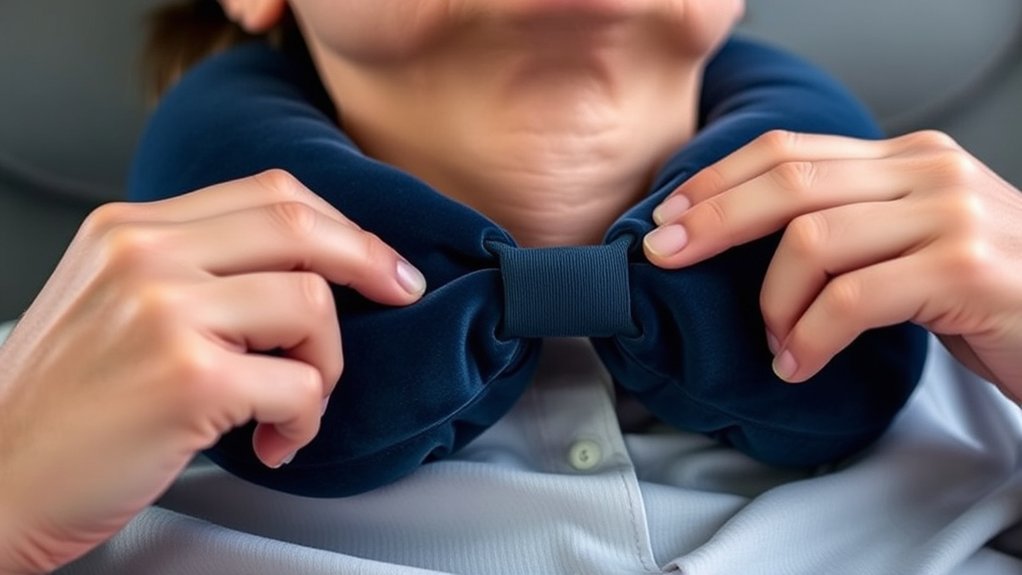
If your travel pillow feels too tight around your neck, do not try to tolerate the pressure. A good pillow should steady your head without pressing on your throat, limiting normal movement, or leaving painful marks. In most cases, you can improve the fit by loosening the closure, reducing air, changing the pillow’s height, or trying a different orientation.
Quick Answer
Loosen the strap or clasp, release a little air if the pillow is inflatable, and move the pillow lower on your shoulders. Start with the manufacturer’s recommended position, then test another orientation if your chin drops. Stop using it if it affects breathing, swallowing, circulation, or normal head movement.
Key Takeaways
- A travel pillow should feel supportive, not restrictive.
- There is no single correct orientation for every U-shaped, inflatable, wrap, or chin-support pillow.
- Bulky clothing, a protruding seat headrest, overinflation, or a twisted cover can make a pillow feel tighter.
- Replace the pillow when its structure, cover, valve, or closure no longer works safely—not on an arbitrary calendar.
At a Glance
| Time Required | 2–5 minutes |
| Difficulty | Easy |
| Tools Needed | None; the product instructions and a thin, clean pillowcase are optional |
| Cost | $0 for adjustments; replacement cost varies |
Why Does My Travel Pillow Feel Tight?

A travel pillow usually feels tight because its size, height, firmness, or closure does not match your neck and seated position. The pillow may also be sitting too high, pressing against your jaw, or being pushed forward by the seat’s headrest. A thick hoodie, high collar, headphones, or long hair trapped under the pillow can reduce the available space.
Inflatable pillows often feel restrictive when fully inflated. Memory foam models may feel too tall or firm, while scarf-style supports can feel tight when wrapped too firmly. The goal is a relaxed position with your head generally balanced over your torso and your shoulders at ease, consistent with OSHA’s general guidance on neutral seated posture.
Note: A pillow can feel snug without being too tight. The fit becomes a problem when it causes pain, throat pressure, numbness, restricted movement, or lasting skin marks.
Signs That Your Travel Pillow Needs Adjusting
Adjust or remove the pillow when you notice any of these signs:
- Pain, pinching, or growing pressure around your neck, jaw, or shoulders
- Difficulty turning your head enough to look comfortably from side to side
- Pressure against the front of your throat or under your chin
- Numbness, tingling, unusual coldness, or throbbing
- Deep red marks that do not fade soon after removal
- A headache or neck strain that begins or worsens while wearing the pillow
- Your head being pushed far forward by the pillow and seatback
Needing an occasional adjustment as you recline or change position is normal. Constantly fighting the pillow, however, usually means the shape, height, or size is a poor match.
Warning: Remove the pillow immediately if it makes breathing or swallowing difficult. Seek medical advice for severe or persistent neck pain, a new severe headache, altered vision, or weakness or numbness in an arm or hand. These symptoms should not be treated as a simple pillow-fit problem. See Gloucestershire Hospitals NHS guidance on neck pain.
Quick Fixes for a Comfortable Travel Pillow
- Loosen the closure completely. Put the pillow in place, then tighten it only enough to stop unwanted slipping.
- Release some air. For an inflatable model, deflate it in small amounts until it supports you without squeezing.
- Lower the pillow. Let more of its weight rest on your shoulders instead of crowding your jaw or throat.
- Change the orientation. Follow the product instructions first, then try a safe alternative position if the design allows it.
- Remove bulky layers. Take the pillow off a thick hood, high collar, scarf, or large headphones and test it again.
- Adjust your seat. Recline slightly when permitted and position the headrest so the pillow does not force your head forward.
Pro Tip: Test the pillow at home for 10–15 minutes in an upright chair while wearing the same jacket or hoodie you plan to use. Small fit problems are easier to fix before boarding.
A travel pillow should support your head without restricting breathing, swallowing, circulation, or normal head movement.
Position Your Travel Pillow for Maximum Comfort
The best position depends on the pillow’s design, your neck length, your sleeping direction, and the seatback. Do not rely on one universal rule such as “the opening must always face forward” or “the opening must always face backward.” Start with the manufacturer’s instructions, then make small changes while checking comfort and movement.
Correct Pillow Orientation
For a traditional U-shaped pillow, a common starting position is the thicker curved section behind your neck with the opening at the front. If your chin drops forward, some models can be reversed so the thicker section supports the chin. Side supports and wrap-style pillows are different: for example, Trtl’s official instructions place the curved support to one side of the head and advise adjusting the wrap to a secure but relaxed fit.
Whichever orientation you use, your head should not be forced sharply forward, backward, or sideways. Keep your face clear and make sure the pillow does not cover your mouth or press across your throat.
Adjusting Pillow Straps
Begin with the strap, toggle, snap, or hook-and-loop closure fully loosened. Set the pillow on your shoulders, then tighten in small steps. Stop as soon as the pillow stays in position. You should still be able to breathe, swallow, speak, and turn your head comfortably.
If the pillow loosens during the trip, check whether the closure is slipping or the pillow is riding over your clothing. Do not keep tightening a faulty strap. A closure that will not hold safely is a reason to repair or replace the pillow.
Experimenting With Placement
Move the pillow slightly higher, lower, left, or right to find where it supports your head without creating a pressure point. Try these adjustments one at a time:
- Rest more of the pillow on your shoulders.
- Move a side support closer to the direction your head naturally leans.
- Place a chin-support section under the jaw rather than across the throat.
- Reduce rear padding if the seat’s headrest already pushes your head forward.
- Use a thin, clean pillowcase only if the fabric irritates your skin; do not add bulky layers to an already tight fit.
Find the Right Travel Pillow Style for You
If adjustments do not solve the problem, the pillow style may be wrong for your body or seat. Match the design to the issue you are trying to fix:
- Inflatable pillow: Best when you want to change firmness and packed size. Avoid maximum inflation if it feels rigid or restrictive.
- Memory foam U-shaped pillow: Offers consistent cushioning but can be bulky behind the neck. Look for a lower rear profile if seatbacks push your head forward.
- Wrap or scarf-style support: Supports one side and may suit travelers who naturally lean left or right. It must not be wrapped tightly across the throat.
- Chin-support or front-closing pillow: May help with forward head drop, but the front section should sit under the jaw rather than press into the neck.
- Adjustable-height pillow: Useful when standard pillows are too tall or too short for your neck.
For a larger neck, look for a longer closure range, an open design, or a model sold in multiple sizes. For a shorter neck or smaller frame, choose lower sidewalls and a lower rear section. Fit matters more than the label “one size fits most.”
How Can I Adjust My Travel Pillow for Comfort?
Use this five-minute fit check before settling in:
- Set your seat first. Sit back with your shoulders relaxed and place the headrest at a comfortable height.
- Prepare the pillow. Loosen all closures, untwist the cover and straps, and partially deflate an inflatable model.
- Position the support. Put the thick or structured area where your head tends to drop—behind, beside, or under the chin, depending on the design.
- Secure it gently. Tighten only until the pillow stops sliding.
- Run a safety check. Breathe, swallow, speak, and turn your head. Remove or readjust the pillow if any action feels restricted.
- Test for several minutes. Lean as you expect to sleep and check for pressure, heat, forward head push, or skin irritation.
Experiment With Pillow Orientation for Better Support
Changing orientation can help, but use the pillow’s structure as your guide. If the rear section is thick and the seatback already pushes your head forward, turn the pillow only if the front becomes a safe chin rest and the closure still works correctly. If your head falls to one side, rotate the support toward that side rather than tightening the entire pillow.
Test one change at a time. A better orientation should reduce pressure and head movement without creating a new problem at the throat, jaw, ear, or shoulder. Return to the recommended position if reversing the pillow blocks your face, strains your neck, or makes the closure unstable.
How to Stay Comfortable on Long Journeys?
A travel pillow is only one part of seated comfort. Keep your head generally aligned with your torso, relax your shoulders, and change position periodically instead of holding one posture for hours. When it is safe and permitted, stand or walk occasionally.
- Move your ankles and tighten and release your calf muscles while seated.
- On long trips, walk when allowed; the CDC advises walking about every 2–3 hours and moving the legs while seated.
- Use an eye mask or earplugs if they help you rest, but keep safety announcements audible when required.
- Stay comfortably warm without placing thick clothing under the pillow.
- Keep water available and avoid using the pillow in a way that blocks your airway.
Note: Compression stockings are not a universal comfort accessory. The CDC advises travelers with additional blood-clot risk factors to discuss graduated compression stockings or medication with a doctor before travel.
Other Tips for Enhancing Travel Pillow Comfort
Small changes to the seat, clothing, cover, and pillow material can make a noticeable difference. Make only one adjustment at a time so you can tell what actually improves the fit.
Adjust Pillow Positioning
Check the relationship between the pillow and the seat. A high rear cushion may work in a flat-backed chair but push your head forward in an aircraft seat with a protruding headrest. Move the pillow lower, use more side support, or choose a lower-profile model. Keep the seat belt correctly positioned and never place the pillow where it interferes with the belt or head restraint.
Travel pillows are for resting passengers, not drivers. A driver needs unrestricted head movement and full awareness of traffic.
Experiment With Materials
Material affects heat, firmness, skin feel, and adjustability:
- Inflatable bladders provide the most direct firmness adjustment.
- Memory foam molds with warmth but is not automatically adjustable in height or circumference.
- Polyester fill is soft and compressible but may shift or flatten over time.
- Breathable covers can reduce heat buildup, while smooth removable covers are easier to clean.
If the fabric feels rough, use a thin washable cover rather than wrapping another scarf tightly around your neck. Stop using any material that causes a rash, swelling, or breathing symptoms.
Troubleshoot a Pillow That Became Tight Over Time
A pillow that suddenly feels tighter deserves inspection. Check for these common causes:
- The removable cover was put back on twisted or backward.
- The foam insert is folded, bunched, or not fully seated inside the cover.
- A strap has twisted, shortened, or caught in the fabric.
- An inflatable pillow has been filled more firmly than before.
- The cover shrank after washing or drying outside the care instructions.
- The foam, seam, valve, snap, or hook-and-loop closure is damaged.
Cleaning is not a reliable fix for tightness. Follow the exact care label because travel pillows are built differently. For example, Sea to Summit instructs users to close the valve, hand-wash, and air-dry its Aeros inflatable pillows, while Travelrest says to hand-wash its inflatable model without allowing water through the valve. Other pillows may have a removable machine-washable cover.
When to Replace Your Travel Pillow
There is no universal one- or two-year replacement deadline. Replace the pillow when it no longer holds a comfortable shape, the closure cannot stay secure, an inflatable valve leaks, the cover has shrunk or torn, the fill has developed hard lumps, or cleaning cannot remove persistent odor or contamination. Also replace it when the size or design consistently causes pain despite correct adjustment.
Frequently Asked Questions
Can I wash my travel pillow if it feels tight?
You can wash it only as the care label allows, but washing is not a dependable way to loosen the fit. Remove and wash only the cover when required, keep water out of foam or inflatable parts unless the manufacturer permits immersion, air-dry as directed, and reassemble the pillow without twisting the cover or straps.
Are there travel pillows designed for larger neck sizes?
Yes. Look for a longer adjustable closure, a more open front, multiple size options, or an inflatable design that lets you reduce firmness. Check the maker’s measurements rather than relying only on a “one size fits most” label.
How often should I replace my travel pillow?
Replace it based on condition, not a fixed number of years. Worn closures, leaking valves, torn covers, permanently flattened or lumpy fill, persistent odor, or repeated pain after correct adjustment are practical signs that replacement is due.
Is it normal for a travel pillow to feel tight after multiple uses?
A sudden change is not something to ignore. Check for overinflation, a shrunken or twisted cover, a folded foam insert, a shortened strap, or damage to the closure. Stop using the pillow if it remains restrictive after you correct those problems.
What materials are best for adjustable travel pillows?
Inflatable pillows provide the clearest firmness adjustment. Wrap-style pillows with long closures adjust around the neck, and adjustable-height supports can fit different neck lengths. Memory foam contours to the body but is not inherently adjustable unless the pillow also has straps, removable inserts, or a variable-height design.
What should I do if the pillow makes swallowing or breathing difficult?
Remove it immediately. Do not loosen it and keep sleeping if pressure remains around your throat. Seek urgent medical help for ongoing breathing difficulty, swelling, faintness, or other severe symptoms.
Can I wear a travel pillow while driving?
No. A driver needs unrestricted head movement, clear awareness, and correct contact with the vehicle’s seat and head restraint. Use a travel pillow only as a resting passenger and make sure it does not interfere with the seat belt.
Conclusion
A travel pillow that feels too tight is usually telling you that the closure, inflation, height, orientation, clothing, or seat setup needs to change. Loosen it, move it, and test your breathing and head movement before trying to sleep. If the pillow still presses on your throat or causes pain, choose a different size or style rather than forcing the fit.
Sources
- Occupational Safety and Health Administration: Good Working Positions — neutral head, neck, shoulder, and seated posture guidance
- Centers for Disease Control and Prevention: Blood Clots During Travel — movement, leg exercises, and compression-stocking precautions
- Gloucestershire Hospitals NHS Foundation Trust: Neck Pain — alignment principles and symptoms that warrant medical advice
- Trtl Travel: Frequently Asked Questions — model-specific positioning, fit, sizing, and washing instructions
- Sea to Summit: How to Wash an Aeros Inflatable Pillow — valve, hand-washing, drying, and storage care
- Travelrest: Ultimate Inflatable Travel Pillow — model-specific use and care instructions
