
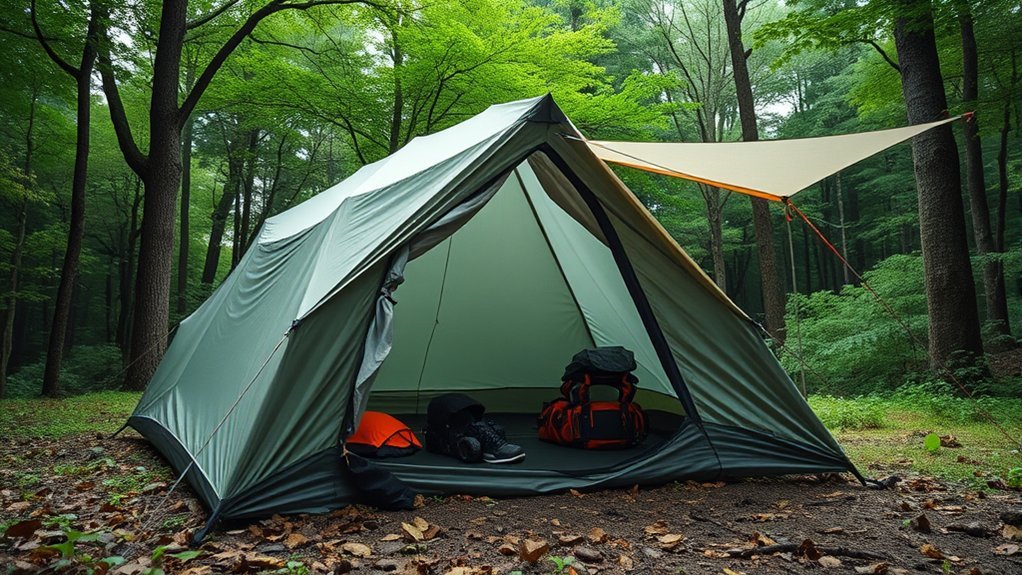
To prevent wet tent walls from soaking your gear, pitch your tent in shaded areas and keep it at least 200 feet from water sources to lower humidity. Set up on higher ground to avoid cold air pooling. Guarantee proper ventilation by using a double-wall setup and keeping gear away from tent walls. Avoid drying wet items inside the tent, as this increases moisture. Employ these strategies for better camping comfort and discover more tips to stay dry.
How Tent Condensation Is Created

When you camp in a tent, condensation can become a real issue, especially if warm, humid air from inside meets the cold fabric of the tent. This process occurs when the temperature difference between the inside and outside environments leads to moisture accumulation on the inner walls. Higher humidity levels markedly increase the likelihood of condensation, as warmer air can hold more moisture. Tent fabrics play an essential role in this dynamic; single-wall tents often trap moisture, while double-wall designs, featuring a breathable inner layer and a waterproof rainfly, typically mitigate condensation. To combat unwanted moisture levels, you should focus on proper ventilation. Opening vents and positioning your tent to face the wind allows humid air to escape, reducing the risk of water pooling on your gear. Understanding these principles can help you maintain a drier, more comfortable camping experience.
Pitch Your Tent in the Shade of a Tree
When you pitch your tent in the shade of a tree, you benefit from a warmer microclimate that helps reduce condensation. The air beneath trees tends to be less humid, keeping your tent walls drier. Just make certain to choose sturdy trees and check for any hazards overhead to guarantee a safe camping experience.
Ideal Tree Selection
Selecting the right tree to pitch your tent under can considerably enhance your camping experience by creating a warmer microclimate and reducing moisture buildup. Focus on sturdy tree types, like oaks or pines, which provide adequate coverage and stability. Guarantee a safe selection by avoiding trees with dead branches or “widow-makers” that could fall during storms or high winds. This precaution helps prevent hazards while you camp. Additionally, trees can redirect moisture, keeping condensation from forming on your tent walls. Camping under trees also minimizes morning dew, further protecting your gear. By choosing the right tree, you not only regulate temperatures but also gain protection from wind, creating a comfortable and dry environment for your outdoor adventures.
Warm Air Benefits
Choosing the right tree not only provides shelter but also offers significant benefits for managing moisture while camping. By pitching your tent in the shade of a tree, you can enjoy increased camping comfort and reduced condensation. Here are some key advantages:
- Warmer Air: The shaded area typically has higher temperatures, reducing moisture build-up.
- Condensation Control: Moisture collects on leaves instead of your tent walls, keeping your gear dry.
- Sun Protection: Natural shade shields you from direct sunlight, enhancing your overall experience.
- Safety: Ascertain the tree is sturdy and free from widow-makers to avoid hazards.
Utilizing these warm air benefits can transform your camping adventure into a more enjoyable and stress-free experience.
Don’t Camp Right Next to Water
When you camp too close to water, you increase humidity levels, which can lead to condensation on your tent walls. To avoid this, make sure to set up your tent at least 200 feet away from lakes, rivers, or streams. This distance helps create a more comfortable microclimate and reduces the risk of moisture accumulation.
Humidity Increase Risks
Camping too close to water sources can greatly elevate humidity levels, increasing the risk of condensation forming inside your tent. To effectively manage humidity and maintain moisture control, consider these tips:
- Choose Distance: Set up your campsite at least several feet away from lakes or rivers.
- Assess Wind Direction: Position your tent with the entrance facing away from water to minimize cold, moist air pooling.
- Utilize Natural Barriers: Use trees or hills as windbreaks to help reduce humidity exposure.
- Prioritize Ventilation: Keep tent flaps slightly open to encourage airflow, reducing condensation buildup.
Balancing scenic views with a drier environment is essential for enjoying your camping experience without the worry of damp gear.
Distance From Water Sources
Setting up your tent at least 200 feet away from water sources can greatly reduce the risk of condensation and dampness inside. Camping too close to lakes, rivers, or streams raises humidity levels, creating a damp microclimate that can soak your gear. This proximity not only increases moisture exposure but also subjects you to colder air, further enhancing condensation risks. Following these camping guidelines helps maintain a balanced humidity level, promoting a drier interior environment. By choosing a tent location further from water, you considerably decrease the likelihood of waking up to wet gear. Prioritizing distance from water sources is essential for a comfortable camping experience and guarantees your gear stays dry throughout your adventure.
Camp on Higher Ground
Choosing elevated terrain for your campsite can greatly reduce the likelihood of condensation forming on your tent walls. By camping on higher ground, you can leverage several elevation advantages that enhance your overall experience. Here are some practical camping strategies to evaluate:
- Prevent Cold Air Pooling: Cold air settles in low areas; staying elevated keeps warm air around you.
- Maintain Warmer Temperatures: Higher elevations often have a more stable, warmer climate, reducing moisture buildup.
- Minimize Dampness: By avoiding lower dips, you limit exposure to cooler, damp air that can affect your gear.
- Enhance Comfort: A consistent temperature inside your tent keeps you comfortable and your gear dry.
Embracing these elevation advantages not only fosters a better camping experience but also safeguards your gear from unwanted moisture. So, when selecting your next campsite, aim high!
Don’t Dry Wet Gear Inside the Tent
While it might seem convenient to dry wet gear inside your tent, doing so can dramatically increase humidity levels, leading to excessive condensation on the walls. This moisture buildup compromises tent hygiene and can make your camping experience uncomfortable. Instead, hang wet items outside under a tarp, where they can dry more effectively while avoiding soggy conditions inside your tent.
To enhance your camping comfort, consider packing a change of clothes. This way, you minimize the need to bring wet gear inside, further maintaining a drier environment. Preventing wet items from entering your tent is essential; it helps protect your gear and keeps the interior pleasant. By prioritizing outdoor drying techniques, you’ll guarantee your tent remains a cozy haven rather than a damp storage space. Embrace these practices, and you’ll enjoy a liberating camping experience, free from the perils of moisture.
Products Worth Considering
[HEAVY-DUTY WATERPROOF PROTECTION] Made with durable rip-stop fabric featuring polyethylene lamination on both sides for maximum water resistance. Keeps your gear, tent, firewood, and equipment completely dry in rain, snow, or harsh outdoor conditions
[HEAVY-DUTY WATERPROOF PROTECTION] Made with durable rip-stop fabric featuring polyethylene lamination on both sides for maximum water resistance. Keeps your gear, tent, firewood, and equipment completely dry in rain, snow, or harsh outdoor conditions
WATERPROOF & UV PROTECTION - Hammock Camping Tarp made of 210T ripstop polyester fabric with 2500 PU waterproof rating, enhanced the shelter's waterproof function and offers long-lasting protection, strengthen tear resistant & puncture resistant material without any worries. FREE SOLDIER Backpacking Tarp also can be put up as awning is effectively for blocking ultraviolet ray and protect your skin from the sun
Dry Your Tent Off
Before you pack your tent, make sure to wipe it down with a towel to remove excess moisture. Separating the rainfly from the inner tent not only aids in drying but also helps prevent mold and mildew buildup. This simple routine can greatly enhance your tent’s lifespan and keep your gear dry.
Wipe Before Packing
Wiping down your tent with a towel before packing is essential to remove excess moisture that can dampen your gear during transport. This step is vital for effective tent maintenance and moisture management. Here’s how to do it efficiently:
- Use a Microfiber Towel: It absorbs moisture better than regular towels.
- Focus on High-Moisture Areas: Pay attention to the rainfly and corners, which often hold water.
- Ensure Complete Drying: Check for any remaining damp spots before packing.
- Store Components Separately: Use separate stuff sacks to contain moisture and prevent it from spreading.
Separate Components for Drying
To effectively dry your tent and prevent moisture build-up, it is crucial to separate its components during the drying process. Begin by detaching the rainfly from the inner tent, allowing both parts to air out efficiently. This separation enhances tent maintenance, ensuring that moisture doesn’t linger in hard-to-reach areas. When packing up, use separate stuff sacks for wet components to minimize moisture transfer to other gear. During breaks or at your next campsite, take advantage of sunlight to dry your tent. Utilizing proper drying techniques not only reduces moisture but also prevents mold growth, keeping your gear safe and dry. Regularly drying your tent components creates a drier environment inside, enhancing your overall camping experience.
Give Your Tent Plenty of Room to Breathe
When you set up your tent, maximizing airflow is crucial for preventing condensation on the walls. To enhance tent ventilation and streamline moisture management, follow these steps:
- Pitch your tent properly: Guarantee a double-walled setup to create air circulation between the rainfly and inner wall, reducing moisture buildup.
- Avoid contact: Keep your gear away from tent walls to prevent moisture transfer and protect your belongings.
- Create a slope: Set up your tent with a slight incline to improve airflow and minimize condensation on surfaces.
- Utilize supports: Use sticks or poles under guidelines to achieve a steeper wall angle, distancing the tent walls from your gear.
Products Worth Considering
Extendable Pole: Extendable pole with a range of 24"-48" to meet any need; The set includes 4 green support rods with a material thickness of 0.4mm; 4 lengths of 24.8” of 19mm diameter metal pipe, 4 lengths of 15.7” of 16mm diameter metal pipe
Extendable Poles for Flexible Setup: Includes four mounting bars that adjust from 39" to 60", allowing flexible installation to fit different tent widths and fine-tune ventilation layouts
Quick & Effortless Setup: Pitch this pre-attached pole tent in just 60 seconds. Simply lift the center pole, press down, and secure the four corners. Designed for hassle-free setup and takedown, this camping tent packs down compactly so you can spend less time setting up and more time enjoying the outdoors.
Ventilation Is Your Best Friend
While you might think of your tent as a cozy shelter, proper ventilation is essential to prevent moisture buildup and guarantee a comfortable environment. Effective tent airflow is fundamental for moisture management. Start by opening vents, windows, and doors to enhance air circulation, allowing humid air to escape and reducing condensation on the walls. Position your tent to face the wind direction; this natural airflow helps push moist air out through the vents. Rolling back the rainfly and vestibule door creates additional openings, further decreasing the likelihood of moisture accumulation. Always make sure that your tent’s ventilation panels remain unobstructed by gear to maximize airflow. By prioritizing these ventilation strategies, you’ll create a drier and more pleasant living space inside your tent, ultimately protecting your gear from getting soaked and making for a more enjoyable camping experience.
Products Worth Considering
UV sheet Block Window: The enclosure is designed with a UV block window, which protects the resin prints from harmful UV rays while allowing you to monitor the printing progress and quality
INSTANT POP UP TECHNOLOGY: Pre-attached poles lock into place for setup in 2 minutes or less
12V Fan Filter System with Speed Control power adapter (Input: AC 100-240V 50/60Hz; Output: 3-12V, 2A): You can add this onto your enclosure to make the tent provide ventilation to prevent smoke and fumes buildup during printing. The speed control feature allows you to adjust the airflow according to your needs.
Need Some Extra Airflow? Here’s How
If you’re struggling with airflow in your tent, there are several effective strategies to enhance ventilation and combat moisture. By implementing these airflow techniques, you can create a more comfortable camping experience:
- Open all vents, windows, and doors of your tent to allow moist air to escape and promote circulation.
- Position your tent to face the wind direction, facilitating natural airflow that helps reduce condensation.
- Roll back the rainfly and vestibule door to maximize airflow and prevent moisture from building up on the walls.
- Ensure the rainfly doesn’t touch the inner walls; this prevents moisture trapping and reduces condensation risk.
Products Worth Considering
Efficient Cooling & Ventilation Kit: Includes AeroZesh T4 4” Inline Duct Fan, E12 Speed Controller, 4” Black Carbon Filter, and φ4” 8' Black Ducting; Ideal for moving and transporting air in various air circulation and ventilation projects; Allows for precise and easy control over the fan speed and airflow, stabilizing and optimizing your growth environment
Powerful Airflow: Delivers strong airflow up to 130 CFM, efficiently enhancing ventilation and removing exhaust; Ideal for grow tents, greenhouses, basements, bathrooms, kitchens, attics, and workshops
Excellent Odor Control: The air carbon filter is made of premium Australian virgin charcoal with an IAV of 1200+, which has a higher absorption rate and practicality, effectively eliminating odors and chemicals in grow tents and hydroponic rooms, indoor grow tents, bathrooms, basements and kitchens.
Reduce Tent Condensation With Alto and Telos Tent
To effectively reduce tent condensation, consider the advanced design features of the Alto and Telos tents, which prioritize breathability and airflow. These tents utilize a double-wall design that greatly enhances breathability, minimizing condensation compared to single-wall alternatives. With multiple ventilation panels and adjustable rainflies, they promote ideal airflow, preventing moisture buildup inside.
The unique geometry of both tents allows for increased air circulation, ensuring that tent walls don’t touch your sleeping gear, which reduces the risk of it getting wet. By focusing on higher ground camping, you can pitch your tent to avoid cold air pools that contribute to condensation. Additionally, the well-designed vestibules offer extra storage space while enhancing ventilation, further mitigating humidity levels. With these features, you can enjoy a drier, more comfortable camping experience, liberating you from the worries of wet gear.
Products Worth Considering
TENTS FOR CAMPING 2 PERSON: With two D-Shaped doors and two vestibules to accommodate up to two people. Weight: 5.5lb(2.5kg). Interior floor dimensions: 88.6x53.1in(225x135cm), interior height: 43.3in(110cm).
Roomy 6 People Family Tent: Spacious design offers enough room for 6 people family, with a size 10' x 9' x 78"(H) (90 sq ft),2 air mattresses or 6 sleeping bags are well fit in the tent,78 inch center height is enough for you to stand up changing.
【Durable and High-Quality Material】: BISINNA Camping tent are made with high quality Material. The INNER TENT made with 190T Polyester Taffeta+B3 No-see-um Mesh; RAINFLY made by 190T Polyester Taffeta and guarantees PU2000mm water-resistant; TENT POLES made with lightweight and durable 7001 space aluminum, can supports most heavily wind rain.
Frequently Asked Questions
What Materials Are Best for Minimizing Tent Condensation?
To minimize tent condensation, choose breathable fabrics and moisture-wicking materials. These materials allow moisture to escape while preventing dampness from accumulating, ensuring a more comfortable camping experience and keeping your gear dry during your adventures.
How Can I Improve Ventilation in a Single Wall Tent?
Improving ventilation in a single wall tent can reduce condensation by up to 50%. Use airflow strategies like opening vents, utilizing mesh panels, and employing ventilation techniques to maximize air circulation and maintain a comfortable environment.
What Are the Signs of Excessive Moisture in a Tent?
You’ll notice excessive moisture in your tent through moisture detection, like damp walls, water droplets, or condensation effects on the fabric. Regularly check for these signs to maintain a comfortable camping environment and prevent gear damage.
Can I Use a Tarp to Reduce Tent Condensation?
A tarp can considerably enhance your camping experience by reducing condensation. When you stretch it above your tent, you create a barrier that captures moisture, boosting tarp effectiveness and keeping your gear dry and protected.
How Often Should I Check My Tent for Leaks?
You should check your tent for leaks at least once a season during maintenance. Regular leak detection guarantees you’re prepared for unexpected weather, keeping your gear dry and enhancing your outdoor experience. Stay proactive!
Conclusion
By following these tips, you can keep your gear dry and your camping experience enjoyable, even in damp conditions. Think of your tent as a well-breathing organism; it needs air circulation to thrive. Prioritizing ventilation, choosing the right campsite, and avoiding drying wet gear inside will all help minimize condensation. With a little foresight and effort, you’ll create a cozy, moisture-free environment that lets you focus on the beauty of the great outdoors.