
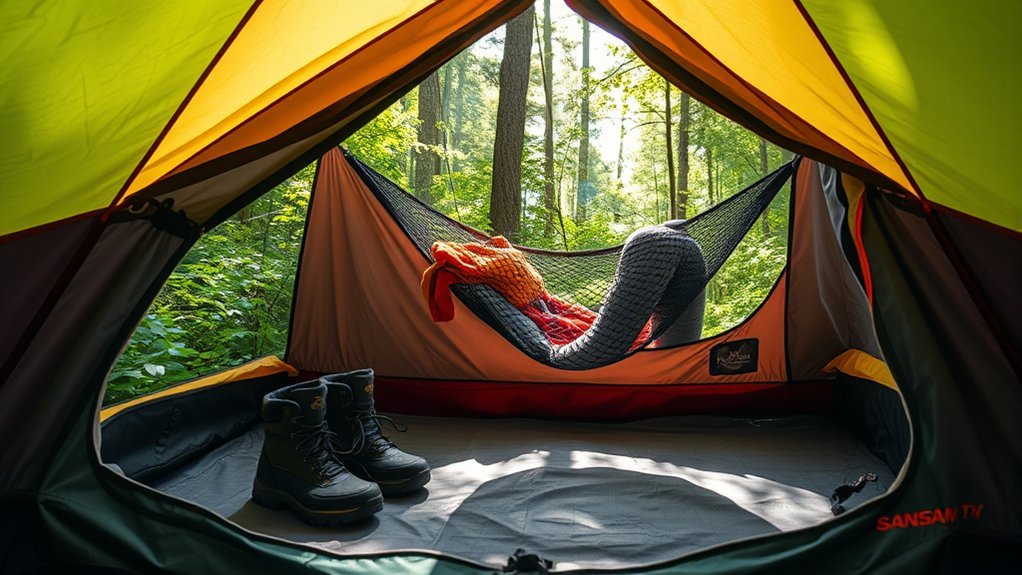
To prevent wet gear from soaking your tent floor, store wet items in sealed trash bags or dry sacks to create a moisture barrier. Elevate wet gear using gear lofts or on a small table, and utilize vestibules for storage to avoid affecting your sleeping area. Keep your tent well-ventilated by opening both vestibules during the day and regularly inspect and dry gear outside. Following these tips will help guarantee a dry, comfortable camping experience, and there’s more to explore on this topic.
Understanding the Risks of Storing Wet Gear

When you store wet gear inside your tent, you not only increase humidity but also heighten the risk of condensation forming on the tent floor. This can create a damp sleeping environment, making your outdoor experience uncomfortable. Prolonged exposure to moisture can also lead to severe moisture damage, compromising the tent’s waterproof coatings and seam tape. Over time, this can result in disintegration and reduced waterproof capabilities, leaving you vulnerable to the elements.
Additionally, wet gear promotes mold and mildew growth, which can harm both your health and your equipment. Metal components, such as tent poles, are at risk of rusting and corrosion, diminishing their strength and lifespan. To mitigate these condensation risks, it’s essential to store wet items outside the tent or in separate dry bags. This simple step can help guarantee your tent remains a dry and safe haven during your adventures.
Best Practices for Isolating Wet Items
To effectively isolate wet items in your tent, start by storing them in sealed trash bags or dry sacks. This creates an essential moisture barrier that prevents any transfer to the tent floor. Whenever possible, keep wet gear elevated off the ground using gear lofts, small tables, or hanging systems to minimize contact with the fabric. Utilize vestibules effectively; these areas are designed for gear storage and can handle some moisture without affecting your main sleeping space. Additionally, lay down a footprint or ground tarp under your tent to provide extra protection against moisture seepage from wet items. Regularly inspect and dry any damp gear before bringing it inside. The less time wet items spend in your tent, the lower the risk of soaking the floor. Following these best practices guarantees your tent remains dry and comfortable, enabling your outdoor adventures to be truly liberating.
Products Worth Considering
High Quality: The waterproof dry bag is made of polyester and PU coating, smooth surfacing, waterproof and durable, keep your gear dry
Three lightweight, waterproof dry sacks for backpacking, kayaking, or adventure travel; includes 2-, 4-, and 8-liter bags
USEFUL 5L&15L&25L SET: This set includes 3 different sizes of bags (5L,15L,25L) to meet all your needs, whether you're packing small personal items or larger items like clothes and shoes.
Techniques for Elevating Gear Inside Your Tent
While camping, keeping your gear elevated inside your tent is essential for maintaining a dry and comfortable environment. Utilizing gear hangers and tent loops can greatly minimize moisture transfer. Here are some effective techniques:
| Technique | Description |
|---|---|
| Use Gear Hangers | Hang your gear from tent loops to keep it off the floor. |
| Camp Pad or Inflatable Pad | Place backpacks on a sleeping pad for added insulation. |
| Tarp or Footprint | Set up gear on a tarp to catch moisture before it reaches the tent. |
| Designated Dry Area | Use a small tarp or blanket to organize and elevate gear, enhancing airflow. |
Products Worth Considering
Durable and strong :Our campsite rope storage is made of premium nylon material with sturdy stitching will hold 150 lbs, the ring hook is made of high quality and durable light aircraft aluminum alloy, S Buckle&6 Clothes Pins is made of stainless steel
【22-Loop Versatile Hanging System】 This camping hanging rope features 22 evenly spaced loops for flexible gear attachment, perfect for hanging hats, gloves, water bottles, and small camping essentials. The 20.4ft length can be easily adjusted to fit various campsite setups
Durable: Strong breathable fabric. Each shelf has a thickened board. Can hold up to 30lbs
Utilizing Dry Sacks for Moisture Management
When it comes to moisture management, choosing the right size dry sack is essential for effectively containing wet gear. You’ll want to focus on proper sealing techniques to guarantee no moisture escapes, while also organizing your gear efficiently for quick access. This approach not only keeps your tent dry but also enhances your overall camping experience.
Products Worth Considering
Keep Your Gear Organized: A set of 5 ultralight Dry Sacks in Five Different Colors and Sizes (3L,5L,10L,15L,20L), so you can easily recognize the contents. Best design for food, clothes, hats, and all of the outdoor gear.
Product Material: Dry bag is made of polyester and PU coating. The waterproof bag can effectively block moisture in light rain or humid environments to ensure that the items remain dry, but it is not recommended to soak in water for a long time
High Quality: The dry bag are made of polyester and PU coating, waterproof and durable
Choosing the Right Size
Selecting the right size dry sack is essential for effective moisture management in your tent. You want a dry sack that fits your gear snugly, minimizing movement and preventing moisture transfer to the tent floor. Opt for waterproof sacks with a roll-top closure to keep moisture out during wet conditions. Lightweight, compressible dry sack sizes are ideal, as they can easily pack into tight spaces, maximizing your tent’s floor area. Consider using multiple smaller sacks for different gear types, enhancing organization and allowing easy access without exposing everything to moisture. Always place your dry sacks on a groundsheet or elevated surface inside the tent to further reduce the risk of water soaking through from below.
Sealing Techniques for Dryness
To guarantee your gear stays dry, mastering sealing techniques is essential when using dry sacks for moisture management. Start by selecting waterproof dry sacks made from durable materials, as these act as effective moisture barriers against rain and humidity. When packing wet items, utilize proper sealing methods—roll the top tightly and secure the closure to minimize moisture transfer. Position your dry sacks away from the tent walls and floor to prevent direct contact that could lead to seepage. Regularly check and dry out any wet gear before storing it in the sacks, reducing the risk of mold and mildew during extended trips. These practices make certain your tent remains a sanctuary of dryness, even in damp conditions.
Organizing Gear Efficiently
Efficiently organizing your gear is essential for maintaining a dry and functional camping environment, especially when using dry sacks for moisture management. These waterproof barriers keep wet gear separate, preventing moisture transfer to your tent floor. Choose lightweight, durable sacks and color-code them for quick identification. Store wet items outside your tent or in a vestibule to protect your sleeping area.
| Gear Type | Dry Sack Color | Storage Location |
|---|---|---|
| Clothing | Blue | Outside the tent |
| Cooking Gear | Green | Vestibule |
| Sleeping Gear | Red | Inside the tent |
| Electronics | Yellow | Dry sack in tent |
| Miscellaneous | Orange | Vestibule |
Regularly inspect your dry sacks for wear to maintain effective moisture management.
The Importance of Ventilation in Your Tent
Ventilation plays an essential role in maintaining a comfortable and dry environment inside your tent, especially during extended trips. The ventilation benefits are clear: reducing humidity levels minimizes condensation buildup, which helps prevent a wet tent floor. To enhance airflow, utilize tents with multiple ventilation panels and vestibules. Positioning your tent away from water sources is a simple yet effective airflow technique that greatly decreases moisture accumulation. Opt for a double-wall tent design, as it allows for better breathability compared to single-wall options. Additionally, store gear outside the living space and keep sleeping areas elevated to further assist in maintaining a dry tent floor. By focusing on these ventilation strategies, you can create a more pleasant camping experience, free from the discomfort of dampness and sogginess. Prioritize proper airflow to enjoy the liberation of a dry, welcoming tent environment.
Products Worth Considering
Roomy 6 People Family Tent: Spacious design offers enough room for 6 people family, with a size 10' x 9' x 78"(H) (90 sq ft),2 air mattresses or 6 sleeping bags are well fit in the tent,78 inch center height is enough for you to stand up changing
Spacious 6 Person Tent with 72" Center Height: Our camping tent near-vertical wall design creates generous headroom, allowing most adults to stand comfortably. At 11'x7' with 72" center height, this tents for camping provides ample space for 6 campers with gear
Dark Tent: The blackout camping tent is perfect for sleeping in and allows you to have privacy on outdoor adventures.Dark space technology 99% UV protection reduces heat for comfortable rest at any time.
Strategies for Drying Gear Outside
To effectively dry your gear outside, start by utilizing tarp setups to keep moisture from the ground at bay. Elevating wet items using drying racks or hanging them from trees maximizes airflow and speeds up the drying process. This approach not only keeps your gear organized but also prevents additional dampness from seeping into your tent.
Gear Elevation Techniques
When you’re out in the wilderness, keeping your gear dry can be challenging, especially in damp conditions. Elevating your gear is essential. Use gear lofts or hang items from tree branches to keep them off the tent floor, reducing moisture transfer. Here’s a quick guide:
| Method | Equipment Needed | Benefits |
|---|---|---|
| Gear Lofts | Tent loft | Keeps gear organized and dry |
| Hanging Branches | Rope, carabiners | Utilizes nature for drying |
| Portable Drying Rack | Lightweight rack | Air circulation for rapid drying |
| Trekking Poles | Trekking poles, cord | DIY drying line for airflow |
Additionally, consider waterproof bags for wet items. These techniques guarantee your tent remains a dry haven, allowing you to focus on your adventure.
Utilize Tarp Setup
While elevating your gear is essential for keeping it dry inside your tent, utilizing a tarp setup can enhance your efforts to protect and dry equipment outside. Here are three effective strategies:
- Choose the Right Tarp Materials: Select durable, waterproof tarps that extend beyond your tent’s perimeter for maximum coverage against rain.
- Optimize Tarp Configurations: Position the tarp at an angle to facilitate water runoff, preventing pooling that could seep into your tent area.
- Create a Drying Station: Hang wet items from lines strung between the tarp’s supports. This allows for better airflow, boosting drying efficiency.
Organizing Your Tent for Maximum Airflow
Organizing your tent effectively can greatly enhance airflow and reduce moisture buildup. Start by considering your tent layout. Position wet gear in the vestibule area instead of inside the tent to minimize moisture transfer to the floor. Elevate sleeping gear using a sleeping pad or platform to prevent contact with any moisture that may seep through.
Utilize breathable storage solutions, like mesh bags, which allow airflow around your gear, reducing condensation buildup. Keep your gear arrangement spacious; avoid overcrowding by leaving space between items for better airflow. During the day, open both vestibules to facilitate cross-ventilation, enhancing air circulation and helping dry any trapped moisture from the tent floor. By implementing these strategies, you’ll create a more breathable environment that keeps your tent dry and comfortable, allowing you to enjoy your outdoor adventures without the worry of wet gear.
Products Worth Considering
🔴Spacious and Convenient: ❗⚠️CHECK THE SIZE BEFORE BUY⚠️❗With a size of 11,8 х7.48'', our mesh drawstring bag small provides ample space for all your belongings without leaving behind unpleasant smells
Colorful & Practical Set:Get 6 colorful mesh drawstring bags (pink, orange, black, red, blue, yellow), Each 14x18 inch bag provides ample space for storage, Different colors make it easy to distinguish bags for various uses like gym, laundry, or toys
【Durable and Breathable】Made with strong tear-resistant mesh fabric and Oxford fabric, the mesh fabric is elastic with a smooth feel, while the Oxford fabric used for the bottom of the bag provides dirt and water resistance. The drawstring with a cord lock can protect clothing from falling out.
Keeping Your Sleeping Area Dry
To keep your sleeping area dry, it’s crucial to take proactive steps before settling in for the night. Here are three key strategies:
- Use a Sleeping Pad: Elevate your sleeping gear off the ground with a sleeping pad. This adds insulation and keeps you above any potential water pooling on the tent floor.
- Create a Moisture Barrier: Place a footprint or groundsheet beneath your tent to act as an additional waterproof barrier, preventing moisture from seeping up from the ground.
- Choose the Right Location: Set up your tent on a slight incline, if possible. This will allow any water to run away from your sleeping area instead of pooling underneath.
Additionally, regularly check for condensate and dry any moisture that accumulates inside your tent, particularly around your sleeping area. These practices will guarantee a much drier, more comfortable night’s sleep.
Daily Maintenance Tips for Tent Care
Maintaining your tent daily is key to preventing moisture buildup and prolonging its lifespan. Start by keeping wet gear outside or in a designated dry bag to stop moisture transfer to the tent floor. Utilize a footprint or groundsheet beneath your tent; this adds an effective barrier against ground moisture. Elevate wet items using a pack or other gear, promoting airflow and reducing direct contact with the tent floor.
During the day, regularly air out and dry your wet gear to minimize dampness nearby. A microfiber towel can be invaluable; use it to wipe down any wet equipment before bringing it inside. This simple step greatly aids in moisture control. By incorporating these tent maintenance practices, you’ll enhance your camping experience and guarantee your tent remains a dry, comfortable sanctuary.
Community Tips for Managing Wet Gear
How can you effectively manage wet gear while camping? Keeping your gear dry in wet weather is essential for a comfortable experience. Here are some community tips for effective gear storage:
Effective management of wet gear is crucial for a comfortable camping experience in rainy conditions.
- Isolate Wet Gear: Use dry bags or trash bags to keep damp items away from your tent floor, preventing moisture transfer.
- Elevate and Hang: Utilize a gear loft or tent hooks to hang wet items. This promotes airflow and decreases the risk of moisture seeping into the tent.
- Use a Groundsheet: Always place a groundsheet or footprint under your tent. This barrier helps to keep the floor dry even with wet gear inside.
Frequently Asked Questions
What Should I Do if My Gear Gets Wet Unexpectedly?
If your gear gets wet unexpectedly, take quick action. Use preventative measures like packing dry bags and moisture-wicking materials. Spread items out to dry quickly, ensuring your gear stays functional and your experience remains enjoyable.
Can I Use a Tarp to Protect My Gear Outside?
Yes, using a tarp’s benefits include protecting your gear from rain and organizing it effectively. Lay the tarp flat, then arrange your gear on top, ensuring everything stays dry and accessible during your outdoor adventures.
How Do I Clean and Dry Wet Gear Efficiently?
To clean and dry wet gear efficiently, use gear maintenance techniques like wiping off excess moisture, hanging items in a well-ventilated area, and employing drying techniques such as using fans or sunlight for faster results.
Are There Specific Materials That Dry Faster for Camping Gear?
When you’re camping, quick drying fabrics like nylon or polyester and moisture wicking materials work wonders. They help keep your gear lightweight and dry, ensuring you can enjoy your adventure without the soggy hassle.
What Weather Conditions Should I Be Cautious of While Camping?
You should be cautious of rainy conditions and high humidity levels while camping. Wet weather can lead to gear dampness, impacting your comfort and safety. Always check forecasts and prepare accordingly to stay dry and safe.
Conclusion
By implementing these strategies, you can greatly reduce the risk of wet gear soaking your tent floor. Did you know that nearly 70% of campers experience issues with moisture affecting their gear? Keeping your equipment dry not only enhances your comfort but also prolongs the life of your tent. Remember to regularly ventilate and organize your space for ideal airflow. With these practical tips, you can enjoy a drier, more enjoyable camping experience.