

Last Updated on July 30, 2026 by Mason Reed
A tent vestibule gives you covered space outside the sleeping area of a tent. Campers commonly use it for boots, backpacks, trekking poles, and wet outerwear that would otherwise crowd the tent floor. Its value depends on its size, door placement, ventilation, and pitch, so a larger vestibule is not automatically the best choice for every trip.
Quick Answer
A tent vestibule is the covered, usually floorless area outside a tent door, formed by the rainfly or a model-specific accessory. It works like a small mudroom for boots, packs, and wet gear. It improves organization and weather protection, but it is not a safe place to operate a camping stove.
Key Takeaways
- Most vestibules are floorless extensions of the rainfly and do not count as sleeping capacity.
- Front, side, dual, and extended vestibules offer different balances of access, storage, weight, and weather coverage.
- Keep a clear path to the tent door and avoid pressing packs or wet clothing against the rainfly.
- Never operate a fuel-burning stove, grill, heater, lantern, or charcoal device in a tent or vestibule.
- Clean the fabric gently and dry it completely before storage to protect its seams and waterproof coating.
Disclosure: As an Amazon Associate I earn from qualifying purchases. Some links on this page are affiliate links, at no extra cost to you.
What Is a Tent Vestibule?
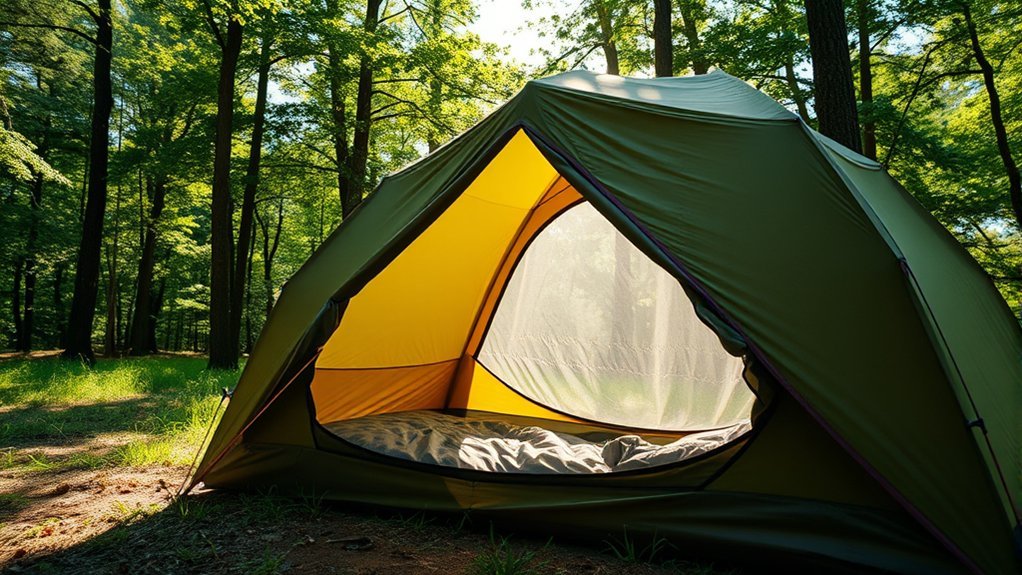
A tent vestibule is the sheltered area between the inner tent door and the outer edge of the rainfly. It is outside the main sleeping compartment but still covered by tent fabric. On many backpacking tents, the vestibule appears when the rainfly is attached and staked away from the tent body.
Most vestibules have no sewn-in floor. This lets you place muddy boots and damp equipment on the ground without bringing the mess inside. Some large family and base-camp tents use a more enclosed porch design, while certain models accept an extended or accessory vestibule.
A vestibule is different from the tent interior because it is not intended as a sealed sleeping room. It also differs from a simple awning: an awning mainly provides overhead shade or rain cover, while a vestibule usually extends closer to the ground and encloses more of the area beside the door.
Key Benefits of a Tent Vestibule
The main benefit is separation. A vestibule creates a transition area between wet ground and the clean sleeping compartment.
- Gear storage: Packs, shoes, trekking poles, helmets, and empty cookware can stay out of the sleeping area.
- Mud control: You can remove dirty footwear before entering the tent.
- Weather protection: A correctly pitched rainfly can shield equipment from light rain, dew, and some wind-driven weather.
- Easier clothing changes: The covered area gives you a place to remove a wet jacket or rain pants before climbing inside.
- Better use of floor space: Moving bulky equipment outside leaves more room for sleeping pads and occupants.
- Dryer sleeping area: Keeping soaked equipment out removes one source of interior moisture, although ventilation is still necessary to manage condensation.
Note: A vestibule is weather-protected, not guaranteed waterproof. Runoff, ground moisture, splash, an open door, wind-driven rain, damaged seam tape, or poor tension can still wet stored gear.
Types of Tent Vestibules
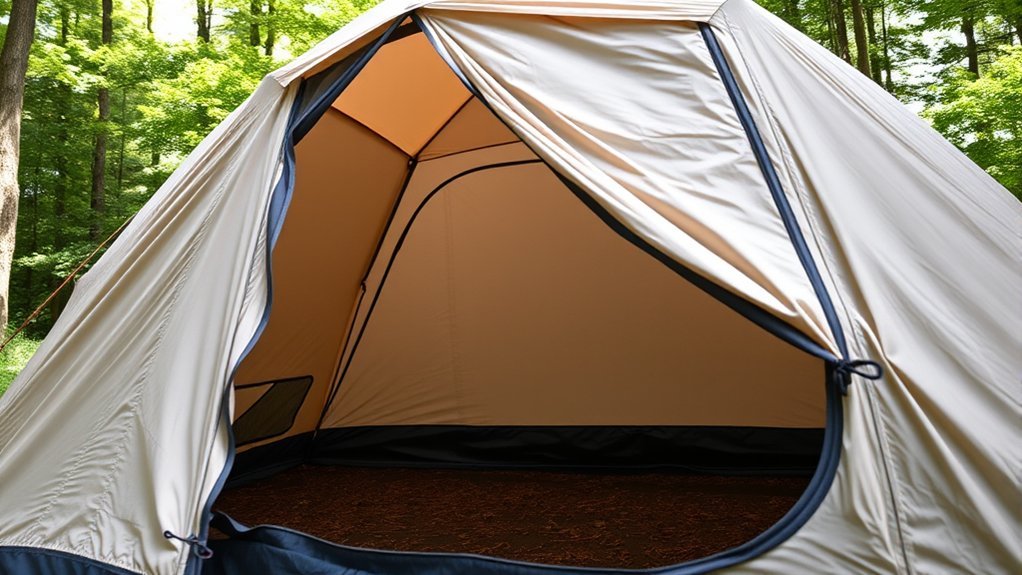
At a Glance
| Front Vestibule | Simple covered storage at the main entrance, but poorly placed gear can block access. |
| Side Vestibule | Convenient side entry with space beside the doorway, common on backpacking tents. |
| Dual Vestibules | Separate storage and exits for two occupants, with a modest increase in fabric, stakes, and weight. |
| Accessory or Extended Vestibule | More room for base-camp gear or chairs, but compatibility is model-specific and the added fabric is heavier. |
Front Vestibules
A front vestibule extends from the main entrance. It can provide efficient storage on a small tent, but a pack placed directly in front of the door may make entry difficult. Store equipment to one side whenever the shape allows it.
Side Vestibules
A side vestibule creates covered space alongside the sleeping compartment. It often allows you to sit inside the tent while putting on boots and can make it easier to move around stored gear.
Dual Vestibules
Tents with two doors often have one vestibule on each side. Each occupant can use a separate entrance and storage area, which reduces climbing over another person or moving equipment during the night.
For a current size example, the MSR Hubba Hubba LT 2 lists two side vestibules, each measuring 8 square feet. The current Big Agnes Copper Spur UL2 also uses two side vestibules and doors that can be supported in an awning-style position.
Accessory and Extended Vestibules
An extended vestibule can add substantial covered storage to a family, expedition, or base-camp tent. These accessories normally fit only specified tent models and production generations. Matching the brand name alone is not enough; check the exact model, capacity, and year before buying.
Note: Manufacturers can change pole geometry, clips, zippers, and attachment points without changing the general product-family name. Confirm accessory compatibility with the current manufacturer specification.
How to Choose the Right Vestibule Design
Do not judge a vestibule only by its promotional photos. Compare the specifications and think about how you will move through the space when it contains wet gear.
- Check the listed area: Manufacturers may list one total area or separate measurements for each side. Confirm which method is being used.
- Count the doors: Two people usually benefit from two doors and two vestibules because each person has an independent exit.
- Study the doorway: Look for a path that remains usable when a backpack and shoes are stored outside.
- Consider your trip: An ultralight solo hiker may prefer one small vestibule, while a family or winter camper may value a larger sheltered entry.
- Compare weight and packed size: More fabric, zippers, guylines, and poles add weight and take up pack space.
- Look at ventilation: Dual zipper sliders, high vents, and roll-back door panels make airflow easier to manage.
- Check weather coverage: Low edges can block splash and wind, while higher edges may improve airflow but expose more of the ground.
- Verify compatibility: Buy an accessory vestibule only when the manufacturer lists your exact tent as compatible.
How to Set Up and Organize a Tent Vestibule
- Pitch the tent body first: Assemble the poles and square the tent before attaching or tensioning the rainfly.
- Attach the rainfly correctly: Match the fly’s doors, corners, buckles, and vents to the tent body.
- Stake the vestibule outward: Pull it far enough to create usable space without overstretching the zipper or fabric.
- Align the seams: Adjust the corners and stake point until the fly is centered and no panel is sagging against the inner tent.
- Keep the doorway clear: Leave a direct route from the sleeping compartment to the outside.
- Place gear deliberately: Put boots near the edge with soles down and keep packs under the deepest part of the fly.
- Protect ventilation: Do not pack equipment against vents or seal every opening unless conditions require it.
- Recheck the pitch: Wet nylon can relax, and soft soil can loosen stakes. Retension the vestibule after rain or a major temperature change.
Pro Tip: Practice loading the vestibule at home. Place your normal backpack and footwear inside it, then enter and exit the tent in the dark. This quickly reveals whether the advertised area is genuinely usable.
Cooking in a Tent Vestibule
Warning: Never operate a fuel-burning camping stove, grill, heater, lantern, charcoal device, or open flame inside a tent or vestibule. Opening a zipper does not eliminate the risks of carbon monoxide poisoning, fire, burns, fuel spills, or melted tent fabric.
The Centers for Disease Control and Prevention warns against using portable camping stoves inside tents. A vestibule remains a partly enclosed area made from thin combustible or heat-sensitive fabric, so it should not be treated as an outdoor kitchen.
Cook in a fully open area that meets the stove manufacturer’s clearance instructions. A separate tarp may offer rain cover only when it is high enough, open on the sides, stable, and safely separated from flames and hot exhaust. Follow campground fire restrictions and never leave a burning stove unattended.
In bear and other wildlife country, do not cook, eat, or store food, trash, toiletries, or scented cookware in the vestibule. The National Park Service advises campers not to keep food in tents and to secure scented items as soon as they reach camp. Required storage methods and distances vary by location, so check the rules for the specific park or land manager.
Tips for Maximizing Tent Vestibule Use
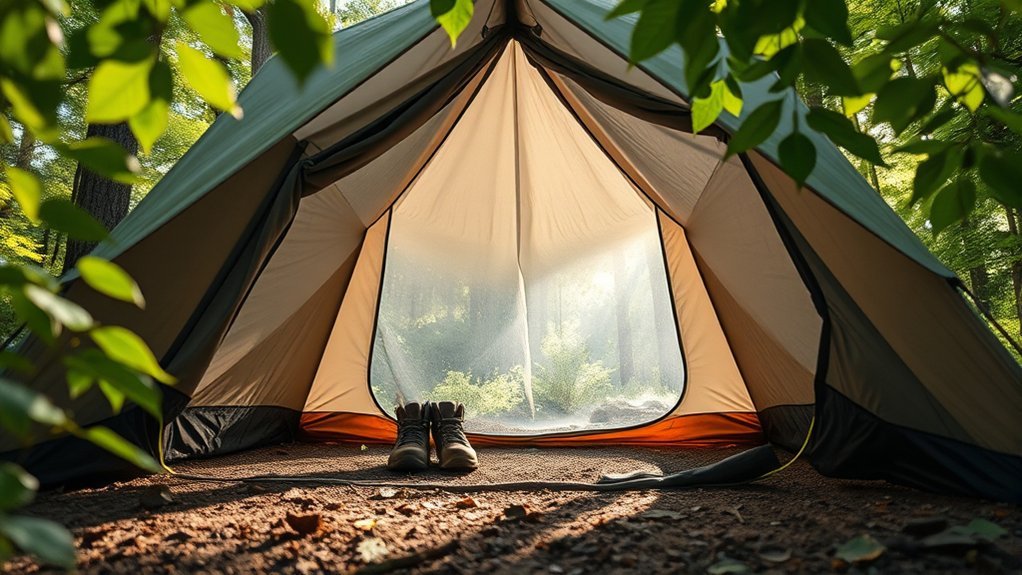
- Protect the exit: Keep at least one clear route from the inner door to the outside.
- Use zones: Place footwear near the edge, frequently used items near the door, and bulky packs farther to the side.
- Keep fabric separated: Do not let hard gear, buckles, or trekking-pole tips press against the rainfly.
- Manage wet equipment: Shake off rain before storing clothing and avoid piling wet fabric where it blocks airflow.
- Use dry bags: Electronics, insulation, and other water-sensitive equipment need their own protection even under a vestibule.
- Vent from a protected side: When conditions allow, open the leeward vent or top of the zipper without exposing the sleeping area to direct rain.
- Secure loose items: Wind can move lightweight shoes, bags, and clothing out from under the fly.
- Use furniture only in large vestibules: A chair or small table may fit an extended car-camping vestibule, but it should never block the door, zipper, stakes, or guylines.
- Remove snow and pooled water: Added weight can stretch the fabric and reduce headroom or ventilation.
Drawbacks and Limitations
A vestibule improves organization, but it also introduces trade-offs:
- Extra weight: Larger rainflies, poles, stakes, and zippers add to the packed load.
- More campsite space: Vestibule stake points may extend beyond a small tent pad.
- Additional setup: The fabric must be centered, staked, and tensioned correctly to work well.
- Possible condensation: Wet equipment and restricted airflow can leave moisture on the underside of the rainfly.
- No secure floor: Mud, insects, runoff, and small animals can enter most vestibules from below.
- Limited security: Equipment stored outside the sleeping compartment is more exposed to theft, wildlife, and wind.
- Door obstruction: A poorly shaped or overloaded vestibule can make a fast exit difficult.
Cleaning and Maintaining a Tent Vestibule
The vestibule is normally part of the rainfly, so use the tent manufacturer’s care instructions. The general process is simple:
- Shake off loose dirt, leaves, and sand.
- Wipe dirty areas with cool or lukewarm water and a nonabrasive cloth or sponge.
- Use an approved tent cleaner or a small amount of mild, fragrance-free soap only when necessary.
- Rinse away all cleaning residue.
- Pitch or hang the fly in a shaded, ventilated location until it is completely dry.
- Inspect the zipper, seams, stake loops, clips, and waterproof coating before storage.
Do not machine-wash or machine-dry the rainfly. Harsh detergent, bleach, stain remover, aggressive scrubbing, and dryer heat can damage coatings, seam tape, and lightweight fabric. The REI tent-care guide also recommends using a seam sealer or coating formulated for the tent’s specific fabric. Silicone-treated nylon and polyurethane-coated fabric require different products.
If water enters near a seam, determine whether the cause is loose tension, damaged seam tape, a puncture, or a failing coating before applying a treatment. Applying a general waterproofing spray without identifying the material may produce poor adhesion or uneven performance.
Frequently Asked Questions
Can I use a tent vestibule for pets?
A pet can rest in a vestibule briefly while supervised, but most vestibules are not escape-proof, insulated, or fully enclosed. Keep the animal restrained and under your control, follow local campsite rules, and do not leave a pet unattended. The National Park Service camping-with-pets guidance recommends keeping pets leashed and protected from wildlife.
How do I clean a tent vestibule?
Brush away dry debris, then spot-clean the fabric with cool or lukewarm water and a soft cloth. Use an approved tent cleaner or mild fragrance-free soap when needed. Rinse it thoroughly and let it air-dry completely in the shade before packing it away.
Are tent vestibules waterproof?
They are better described as weather-protected. A sound, correctly pitched rainfly should shed rain, but wind-driven water, ground runoff, splash, condensation, open edges, damaged seams, and worn coatings can still wet the vestibule or its contents.
Can I attach a vestibule to any tent?
No. Most accessory vestibules are designed for a specific tent model, capacity, and production generation. Check the manufacturer’s compatibility list and attachment system before purchasing. A generic tarp can create an awning, but it does not become a fitted vestibule.
How much extra space does a vestibule provide?
There is no universal amount. Check the manufacturer’s listed vestibule area and whether the number applies to one side or the combined total. As one current example, the MSR Hubba Hubba LT 2 lists two 8-square-foot vestibules. Shape and door clearance determine how much of that area is practical for storage.
Can I cook in a tent vestibule if the door is open?
No. An open door does not remove the risks of carbon monoxide, fire, burns, fuel spills, and heat damage. Operate camping stoves and other fuel-burning devices in a fully open cooking area that meets the appliance manufacturer’s clearance requirements.
Can I sleep in a tent vestibule?
A standard vestibule is not intended as sleeping space. It is normally floorless, less protected from insects and runoff, and may not provide a safe emergency exit. Use the tent’s rated sleeping compartment rather than counting vestibule area as extra capacity.
Conclusion
A tent vestibule works best as a simple transition space between the campsite and your sleeping area. Choose a design that provides enough storage without blocking the door, pitch it with proper tension, and keep ventilation openings clear. Use it for boots, packs, and wet outerwear—not for flames, fuel-burning equipment, food storage, or unattended pets. With sensible organization and regular care, a vestibule can keep the tent interior cleaner and make poor-weather camp routines much easier.
Sources
- Centers for Disease Control and Prevention — Carbon Monoxide Safety — supports the prohibition on portable camping stoves inside tents.
- National Park Service — Storing Food in Bear Country — supports keeping food and scented items out of tents and vestibules.
- National Park Service — Camping With Pets — supports restraint, supervision, and wildlife-safety guidance.
- REI Co-op — Tent Care Basics — supports cleaning, drying, seam inspection, and coating-care recommendations.
- MSR — Hubba Hubba LT 2 Specifications — provides a current example of dual vestibule design and listed vestibule area.
- Big Agnes — Copper Spur UL2 Specifications — provides a current example of dual side vestibules and awning-style doors.
