
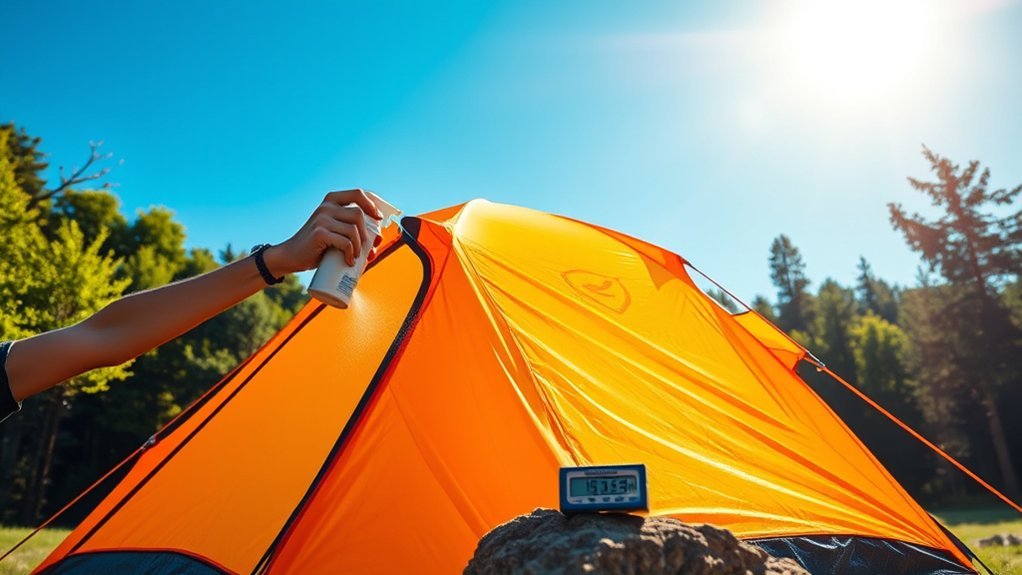
To prevent UV damage on your tent fabric, consistently apply UV protective coatings and choose high-quality materials, like treated polyester. Regularly inspect for signs of damage, such as discoloration or thinning. Make sure to use a sturdy sunshade during setup and store your tent in a cool, dry place to minimize exposure. Implementing these practices helps preserve your tent’s integrity and longevity. There’s more to learn about effective maintenance and proper storage solutions.
Understanding UV Damage and Its Effects on Tent Fabric

When you set up your tent for a weekend getaway or a long camping trip, it’s easy to overlook the damage that UV rays can inflict on the fabric. Prolonged exposure to UV radiation can lead to significant UV radiation effects, including discoloration, thinning, and reduced water resistance. Over just one season, without proper protective measures, your tent’s fabric durability can decline dramatically, making it more prone to rips and tears. Factors like high altitude and geographic location, particularly in the southern hemisphere, can intensify this damage. It’s essential to recognize early signs of UV damage, such as fading and brittleness, so you can implement protective strategies effectively. By understanding how UV rays impact your tent fabric, you empower yourself to take proactive steps, ensuring your gear remains reliable and extends its lifespan for your adventures ahead.
Choosing the Right Material for UV Resistance
Choosing the right material for your tent is crucial, especially if you want to protect it from UV damage. High-quality polyester or specially treated polyester blends are excellent choices, as they offer superior UV resistance compared to nylon, which is more vulnerable to sun exposure. Look for tents that feature UV-resistant coatings to enhance fabric durability and extend the tent’s lifespan.
Additionally, pay attention to the denier rating; higher denier fabrics provide better UV protection and overall durability, making them ideal for frequent outdoor use. Tents constructed from breathable canvas with UV-filtering properties can greatly lower internal temperatures, improving comfort while safeguarding the fabric from degradation. By selecting the right materials, you guarantee your tent not only withstands UV damage but also enhances your outdoor experience, allowing you to fully embrace your adventures.
Products Worth Considering
Product Information: This 17oz/500ml tent waterproofing spray utilizes advanced Nano FIB-SHIELD technology. It is designed to protect tents, sofas, leather, shoes, and more from water, stains, and UV damage, ensuring your outdoor gear stays protected
Packaging details: You will get a transparent package, which includes 25 elastic rope balls, which are easy to carry and store.
Pop-Up Canopy with Bag: Setup within minutes with no tools required, this camping canopy has an instant pop-up design. Its carrying bag fits your car's trunk, letting you bring your canopy tent camping, hiking, to cookouts, or garden barbeques.
Applying UV Protective Treatments
When applying UV protective treatments to your tent fabric, it’s essential to choose suitable products that enhance durability without compromising breathability. Use proper application techniques, ensuring even coverage while avoiding interference with existing coatings like DWR. Always test the treatment on a less vital area first to confirm compatibility and effectiveness.
Products Worth Considering
Spray on to outdoor gear made of plastic, vinyl, or neoprene to protect it from UV damage and sun deterioration
303 UV Protectant brightens surfaces and keeps them looking newer, longer. This formula provides superior UV protection for any rubber, finished leather, plastic, vinyl, eisenglass, PVC, gel coat & fiberglass surfaces. Not for use on unfinished leathers (such as suede), fabrics (canvas) or floorings.
Ultimate Protection – 303 Marine Aerospace Protectant Provides Superior Protection Against The Sun'S Damaging Uv Rays. This Protector Spray Repels Dust, Dirt, And Staining While Also Helping To Prevent Fading And Cracking, To Keep Marine Surfaces Looking Newer, Longer.Fit Type: Universal Fit
Choosing Suitable Treatments
To protect your tent fabric from UV damage effectively, it’s vital to apply suitable UV protective treatments. Consider UV treatment options like McNett’s UV Tech or Atsko, specifically formulated for synthetic fabrics, to enhance UV resistance and prolong your tent’s lifespan. Always test any treatment on a small, inconspicuous area first to verify compatibility and prevent damage. Be mindful when applying UV treatments over existing Durable Water Repellent (DWR) coatings, as this may compromise breathability. If you frequently face high UV exposure, make it a habit to retreat your tent regularly. Finally, always follow the manufacturer’s guidelines for application and drying times to guarantee peak effectiveness and maintain your tent’s fabric integrity.
Application Techniques
Start by confirming your tent fabric is clean and dry before applying any UV protective treatment. This step maximizes adhesion and effectiveness. Use suitable application methods, such as a spray or sponge, to distribute the treatment evenly across the fabric. Avoid oversaturation; complete coverage is key. Before full application, test the treatment on a small, inconspicuous area to check for compatibility. Follow the manufacturer’s instructions for curing times, as these can vary. To maintain peak protection against UV damage, reapply the treatment regularly—typically every few months or after extensive sunlight exposure. This treatment frequency confirms your tent fabric remains shielded and ready for your next adventure, empowering you to enjoy the great outdoors without worry.
Testing and Compatibility
Before applying any UV protective treatment to your tent fabric, testing for compatibility is essential to guarantee peak performance. Start by using treatments like McNett’s UV Tech or Atsko products on less vital gear to assess their effectiveness. Make sure these treatments won’t interfere with existing Durable Water Repellent (DWR) coatings, as this could impact breathability and overall performance. Check product reviews and manufacturer guidelines to understand how these UV treatments interact with various fabric types, especially synthetic materials like nylon and polyester. Given the increased risk of UV damage from frequent outdoor use, regular compatibility testing and reapplication are imperative. Always follow application instructions to avoid compromising both UV protection and other fabric properties like water repellency.
Best Practices for Tent Storage
To effectively protect your tent from UV damage, store it indoors in a cool, dry place like a closet or basement. Before putting it away, make certain to clean and dry it thoroughly, then use an opaque, breathable bag for storage. Additionally, rotate the tent’s position every few months to guarantee even exposure and prevent fading in one area.
Products Worth Considering
LARGE CAPACITY: 46 x 12.5 x 12.5 Inches, with storage capacity of 30Gal, ideal for travel or storing foldable strollers and sports gear.
Dimensions when full: 52" x 12" x 16" (L*W*H) with extra-large capacity, COOLBEBE travel bag with roomy interior for storing items. Ideal for camping, hunting and sport travel and even fits for umbrella style strollers
Pack your tent in our ALPS Mountaineering Tent Bag and you're ready for you next campout
Indoor Storage Solutions
When storing your tent indoors, choosing a cool, dry location is essential for preventing UV damage and mold growth. Avoid areas near windows or glass doors where sunlight can penetrate. Here are some best practices for tent organization:
- Use opaque storage containers or breathable fabric bags to shield against UV exposure.
- Keep the tent clean and completely dry before storage to prevent mold.
- Loosen all zippers and straps to reduce seam tension during storage.
- Rotate the tent’s position every few months to distribute UV impact evenly.
- Regularly check for signs of UV damage or wear.
Following these tips guarantees your tent remains ready for your next adventure, maintaining its integrity through proper indoor storage solutions.
Clean and Dry
Indoor storage methods lay the groundwork for your tent’s longevity, but proper cleaning and drying practices are equally important. Start with thorough tent cleaning; use a mild, non-abrasive cleaner and lukewarm water to eliminate dirt, sap, and bird droppings. Once cleaned, verify the tent is completely dry to prevent mold growth and fabric degradation during storage. Remember to loosen all zippers, straps, and guy lines to reduce seam tension. Store your tent in a cool, dry location, avoiding direct sunlight and damp conditions. This protects it from UV damage and moisture-related issues. Following these drying techniques will help maintain your tent’s integrity, verifying it’s ready for your next adventure without the risks of fabric deterioration.
Rotate Storage Orientation
While proper cleaning and drying are essential for your tent’s longevity, rotating its storage orientation is equally important in preventing UV damage. By switching the tent’s position every few months, you can evenly distribute UV exposure, minimizing fading and weakening in specific areas. Here’s how to effectively manage your tent’s storage:
- Turn storage bags inside out periodically for even exposure.
- Avoid heavy objects atop the tent to prevent pressure points.
- Check stored tents regularly for signs of UV damage.
- Implement a rotation schedule based on storage frequency.
- Ascertain all protective coatings are intact during storage.
Regular Cleaning and Maintenance Techniques
To protect your tent from UV damage, regular cleaning and maintenance are essential. Start with tent cleaning using a soft brush and a mild, non-abrasive cleaner mixed with lukewarm water. This removes dirt, sap, and bird droppings that can contribute to fabric degradation. Verify your tent is completely dry before storage to prevent mold growth. Regularly inspect for UV damage signs, like discoloration or thinning fabric. Treat any mold spots immediately with Liquid Mold Remover.
Here’s a simple maintenance schedule to follow:
| Task | Frequency | Notes |
|---|---|---|
| Clean the tent | Every 3 months | Use soft brush and mild cleaner |
| Inspect for damage | Monthly | Look for discoloration or thinning |
| Store properly | After each use | Cool, dry place away from sunlight |
Following these techniques will help extend your tent’s lifespan and combat UV damage effectively.
Products Worth Considering
Clean Window Screens Without Removing: Double-sided brush design lets you clean both sides of the screen simultaneously — no need to remove the mesh. Long bristles reach deep into screen holes to lift embedded dust and grime.
Clean Window Screens Without Removing: Double-sided cleaning brush design lets you clean both sides of the window screen without removing it. Long bristles work like a crevice cleaning brush, reaching deep into mesh holes to lift dust, pollen, and grime.
The only cleaner designed to protect against UV damage and revitalize water repllency of all weatherproof textiles
Utilizing Tent Accessories for Additional Protection
Regular maintenance alone can’t guarantee your tent’s longevity against UV damage. To further safeguard your investment, consider utilizing tent accessories that enhance protection. Here are some essential items:
- Stout Tent Sunshade: Filters UV rays, cooling the interior by about 10 degrees.
- Protective Footprint: Shields the tent floor from ground hazards and prevents water seepage.
- Double Wall Tents: Features 360-degree screens for improved ventilation, reducing moisture buildup.
- Guy Lines: Regular checks maintain proper tension distribution, minimizing stress on fabric and zippers.
- UV-Resistant Storage Bags: Protect your gear from prolonged UV exposure during storage.
Incorporating these protective gear elements not only enhances your tent’s durability but also provides peace of mind. By actively using these tent accessories, you can greatly mitigate UV damage, guaranteeing your outdoor adventures remain enjoyable and worry-free.
Products Worth Considering
Durable & Waterproof: The camping tarp is made of high-quality 420D Oxford cloth, combined with professional waterproof treatment, to provide long-lasting durability. Protect you and your belongings from moisture
Durable & Waterproof: The camping tarp is made of high-quality 420D Oxford cloth, combined with professional waterproof treatment, to provide long-lasting durability. Protect you and your belongings from moisture
A MUST FOR TENT: An extra tent tarp doesn't just give you extra waterproofing, it is used as ground cloths under tents to prevent wear and tear. Ther's no question that an insulated tent footprint is a great idea to help protect your investment, definitely the choice to extend your tent’s life
Long-Term Care Strategies for Tent Longevity
Ensuring your tent lasts for many adventures requires a proactive approach to long-term care. To maximize tent longevity, start by establishing maintenance schedules that include regular applications of UV protective coatings. This step is essential in resisting degradation from harmful rays. Store your tent in a cool, dry place, away from direct sunlight; indoor storage effectively minimizes UV damage.
When setting up, use a sunshade to shield your tent from prolonged exposure, which can lower the interior temperature and protect the fabric. Proper ventilation during use is equally important to reduce moisture accumulation, preventing mold growth that can deteriorate fabric over time. Finally, conduct routine inspections for signs of UV damage, like discoloration or thinning fabric. Catching these issues early allows for timely repairs, ensuring your tent remains a reliable companion for all your outdoor adventures.
Frequently Asked Questions
How Often Should I Reapply UV Protective Treatments?
You should reapply UV protective treatments every six months to a year, depending on usage. Regular inspections will help you determine UV treatment frequency, ensuring your protective coating options remain effective against damaging sunlight.
Does UV Damage Affect Tent Waterproofing?
UV degradation can weaken your tent’s waterproof integrity, like sunlight fading a vibrant painting. Regularly treating your fabric with UV protectants helps maintain its durability, ensuring your adventures remain dry and enjoyable despite the elements.
Can I Use Regular Fabric Protectants for Tents?
You can’t use regular fabric protectants for tents. Different fabric types require specific treatments for effective tent care. Always choose products designed for outdoor gear to guarantee proper protection and maintain your tent’s longevity.
What Are Signs of UV Damage on Tent Fabric?
You’ll notice faded color and weakened fibers contrasting with your tent’s original vibrancy. These signs indicate UV damage, compromising its structural integrity and longevity, ultimately impacting your outdoor adventures and experiences.
Is It Safe to Camp in Uv-Intense Areas With My Tent?
Camping in UV-intense areas isn’t inherently unsafe, but you should take precautions. Limit exposure during peak hours, seek shaded spots, and guarantee your tent’s UV protection is adequate to maintain camping safety and minimize UV exposure risks.
Conclusion
By taking proactive steps to prevent UV damage, you can greatly extend the life of your tent fabric. While some might think it’s too much effort, implementing these strategies is simpler than you’d expect and pays off in the long run. With the right materials, protective treatments, and proper care, your tent will withstand the sun’s harsh rays, ensuring many enjoyable outdoor adventures. Don’t let UV damage ruin your camping experience—protect your gear and enjoy the great outdoors!