

Last Updated on July 29, 2026 by Mason Reed
Moisture on a wall, ceiling, window, pipe, or basement floor can come from indoor condensation or from water entering through plumbing, roofing, drainage, or the building envelope. The location offers clues, but the timing and pattern matter more. A short, systematic check can help you choose the right fix before stains, damaged finishes, or mold spread.
Quick Answer
Condensation usually forms on cold surfaces when indoor air is humid, so it often appears on windows, pipes, exterior walls, or several nearby surfaces. A leak is more likely when one spot worsens after rain or plumbing use, returns in the same place, or produces staining, soft materials, dripping, or a changing water meter.
Key Takeaways
- Condensation depends on humidity and surface temperature; leaks depend on a water source and pathway.
- Timing is one of the best clues: compare moisture with rain, showers, appliance use, heating, and cooling.
- Use a hygrometer, a water-meter check, and a correctly interpreted foil test before making repairs.
- Thermal cameras can locate suspicious temperature patterns, but a moisture meter should confirm them.
- Stop active water quickly and dry damp materials as soon as possible to reduce damage and mold risk.
At a Glance
| Time Required | 20–30 minutes for the first inspection; 24–48 hours for a foil test |
| Difficulty | Easy to moderate; hidden roof, plumbing, or foundation problems may need a professional |
| Tools Needed | Flashlight, paper towels, painter’s tape, aluminum foil, hygrometer, and optionally a moisture meter |
| Cost | About $0–$50 for basic checks, depending on which tools you already own |
Disclosure: As an Amazon Associate I earn from qualifying purchases. Some links on this page are affiliate links, at no extra cost to you.
Understanding Condensation and Leaks
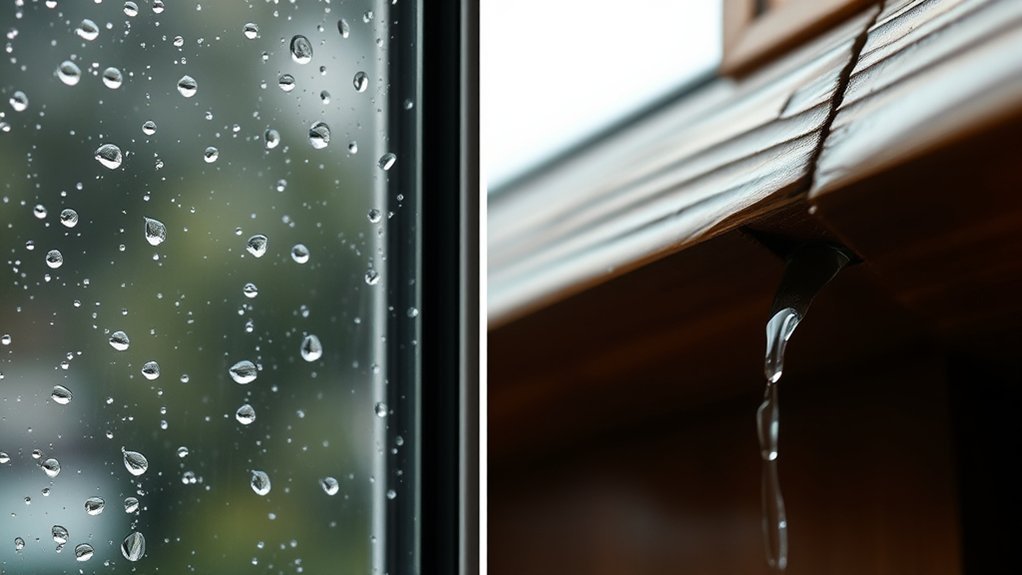
Condensation forms when water vapor in the air reaches a surface cold enough for the vapor to become liquid. That is why droplets often appear on cold window glass, uninsulated water pipes, concrete walls, toilet tanks, and poorly insulated exterior surfaces. The U.S. Environmental Protection Agency recommends keeping indoor relative humidity below 60%, ideally between 30% and 50% when practical.
A leak is liquid water escaping from plumbing or entering through the roof, siding, windows, foundation, or drainage system. Water can also move through porous masonry by capillary action or travel along framing before it becomes visible. As a result, the wet spot may not be directly below the true source.
Do not rely on appearance alone. A plumbing leak can create a broad damp patch, while condensation can be concentrated at one cold corner or thermal bridge. The strongest diagnosis combines pattern, timing, humidity, weather, plumbing use, and tool readings.
Condensation vs. Leak: Main Differences
| Clue | More Typical of Condensation | More Typical of a Leak |
|---|---|---|
| Pattern | Beads, film, or dampness on cold or nonporous surfaces; may affect several similar areas | A recurring stain, drip path, softened material, swollen trim, or water collecting in one area |
| Timing | Appears during showers, cooking, humid weather, cold snaps, or HVAC changes | Appears after rain, snowmelt, fixture use, appliance cycles, or even when indoor humidity is normal |
| Location | Windows, cold pipes, exterior corners, bathrooms, basements, and other cool surfaces | Below plumbing, near roof penetrations, around windows, at foundation cracks, or beside appliances |
| Humidity response | Improves when humidity falls, airflow increases, or the surface becomes warmer | Continues until the water source or entry path is repaired |
| Water meter | No change when all fixtures and water-using appliances are off | A change can indicate a hidden supply-side plumbing leak |
How to Diagnose the Moisture Source
1. Start With Safety
Do not touch wet electrical equipment, outlets, fixtures, or wiring, and do not stand in water while approaching a breaker panel. If water is near electricity, a sagging ceiling, contaminated water, or a rapidly spreading area, keep people away and call the appropriate professional.
Warning: A bulging or sagging ceiling can release water and damaged material without warning. Do not puncture it or stand beneath it. Shut off the suspected water source only if you can do so safely.
2. Dry, Mark, and Document the Area
Blot the surface dry, outline the edge of a stain lightly with painter’s tape, and take a dated photo. Note the room temperature, relative humidity, weather, and recent activities such as showering, cooking, laundry, dishwasher use, or HVAC operation. Recheck the spot at the same times over the next day.
3. Measure Indoor Humidity
Place a hygrometer near the affected area but not directly against a wet surface or supply vent. A reading above 60% supports a humidity problem, but a lower reading does not rule out condensation on an unusually cold surface. In cold weather, window condensation may require a lower indoor humidity target than it would during mild weather.
4. Compare Moisture With Rain and Plumbing Use
- After rain or snowmelt: inspect roofing, flashing, gutters, downspouts, window wells, siding joints, grading, and foundation cracks.
- After a shower or appliance cycle: inspect supply lines, drain connections, valves, caulk joints, pans, and nearby ceilings or walls.
- Without obvious use: turn off all fixtures and water-using appliances, then compare the water-meter reading before and after a two-hour no-use period. The EPA WaterSense program says a changing meter probably indicates a leak.
5. Perform the Foil Test Correctly
- Choose a flat section of masonry or wall where surface condensation or moisture movement through the material is suspected.
- Dry the surface, then tape a square of aluminum foil tightly over it. Seal all four edges.
- Leave it undisturbed for 24–48 hours under normal room conditions.
- Check both sides. Moisture on the room-facing side points toward condensation from indoor air. Moisture on the wall-facing side points toward moisture moving through or from behind the wall.
Note: The foil test is a screening clue, not proof of a specific leak. It may miss intermittent problems, and it cannot identify whether wall-side moisture comes from rain, groundwater, a pipe, capillary movement, or vapor diffusion.
6. Use Moisture Tools Carefully
A pin or pinless moisture meter can compare the suspicious area with a known-dry section of the same material. Use the same meter mode and material setting for both readings. A thermal camera can help locate a cool or warm pattern, but it does not see water through a wall. Teledyne FLIR recommends confirming a thermal pattern with a moisture meter because insulation gaps, air leaks, sunlight, and HVAC effects can produce similar temperature differences.
Pro Tip: Compare the damp area with a nearby dry control area. A single moisture-meter number is less useful than a clear difference between similar materials measured under the same conditions.
Key Indicators of a Leak
A leak is more likely when moisture tracks back to a specific water event, source, or pathway. No single clue is conclusive, but several clues together justify prompt investigation.
| Indicator | What It May Mean | Next Action |
|---|---|---|
| Water after rainfall | Roof, flashing, window, siding, grading, gutter, or foundation entry | Inspect the exterior and drainage path during or soon after rain |
| Consistent damp spot | A recurring pipe leak, drain leak, or repeated exterior entry point | Trace nearby fixtures and compare moisture readings over time |
| Peeling paint, soft drywall, swelling, or mold | Longer-term wetting or repeated moisture exposure | Find and stop the source before refinishing the surface |
| Visible stream or dripping | Active roof, plumbing, appliance, or drainage failure | Shut off the source if safe and arrange urgent repair |
| Water-meter movement with no water use | Possible hidden supply-line or fixture leak | Check toilets, fixtures, irrigation, and concealed plumbing |
| Musty odor in one enclosed area | Hidden damp material or mold behind finishes | Inspect cavities carefully or hire a qualified inspector |
Signs That Point to Condensation

Condensation often appears as fog, beads, a thin film, or widespread dampness on surfaces cooler than the surrounding air. Common locations include window glass and frames, cold-water pipes, toilet tanks, mirrors, metal ductwork, basement walls, and poorly insulated exterior corners.
It is especially likely when moisture appears during showering, cooking, indoor clothes drying, humid summer weather, or cold outdoor weather. If the moisture decreases after running an exhaust fan, lowering humidity, insulating a cold pipe, or warming the surface, condensation is the stronger explanation.
However, condensation does not have to be uniform. A single cold bridge, missing insulation area, or blocked-airflow corner can create one concentrated patch. Likewise, a wet basement wall can involve both condensation and water moving through masonry at the same time.
Common Problem Areas and What to Check
Windows and Exterior Walls
Moisture on the room side of several windows usually points toward indoor humidity and cold glass. One isolated wet frame after rain may indicate failed exterior sealant, flashing, or drainage. Check whether the moisture is on the glass surface, between panes, inside the trim, or below the opening.
Bathrooms and Kitchens
Fogged mirrors and droplets after bathing or cooking are typical condensation. A stain below a tub, shower valve, sink, dishwasher, or refrigerator may be a plumbing or drain leak. Run one fixture at a time while watching the area below and beside it.
Basements and Foundations
Warm, humid outdoor air can condense on cool basement walls and floors, especially in summer. The University of Minnesota Extension warns that opening basement windows to warm, humid air can make this worse. Water trickling, standing water, a damp ring near the base of a wall, or moisture that follows rainfall points more strongly toward drainage, groundwater, capillary movement, or foundation entry.
Attics, Roofs, and Ceilings
A ceiling stain that grows after rain suggests roof or flashing entry. Frost, damp roof decking, or widespread wetness during cold weather can result from indoor air leaking into a cold attic and condensing. Inspect only from a safe, stable access point; do not walk on unsupported ceiling material.
Solutions Based on Diagnosis
If the Problem Is Condensation
- Use bathroom and kitchen exhaust fans that vent outdoors.
- Vent clothes dryers outdoors and correct disconnected or blocked ducts.
- Run an air conditioner or dehumidifier when needed, and monitor the result with a hygrometer.
- Insulate cold-water pipes and other safely accessible cold surfaces.
- Improve air circulation around cold corners by opening interior doors or moving furniture slightly away from exterior walls.
- Address missing insulation and uncontrolled air leakage with climate-appropriate building-envelope work.
- In a cool basement during humid summer weather, avoid bringing in warm, damp outdoor air simply to “ventilate” the space.
If the Problem Is a Plumbing or Appliance Leak
- Shut off the fixture or branch supply if the leak is active and the valve is safe to reach.
- Repair worn seals, supply lines, valves, traps, drain connections, appliance hoses, or condensate drains as appropriate.
- Do not close the wall or replace finishes until the cavity and materials are dry.
- Use a licensed plumber for concealed pipes, repeated pressure loss, inaccessible valves, or repairs beyond your skill level.
If Water Enters Through the Roof, Wall, or Foundation
- Repair roofing, flashing, siding, window details, or exterior joints at the entry point rather than coating the interior stain.
- Clean and repair gutters, extend downspouts away from the foundation, and correct soil that slopes toward the house.
- Repair window wells, drains, sump systems, and foundation cracks based on the actual water pathway.
- Treat interior waterproof coatings as limited symptom control, not a substitute for correcting drainage or exterior entry.
Stop the water source first, then dry wet materials as quickly as possible—ideally within 24–48 hours—to reduce the chance of mold growth.
Preventive Measures for Long-Term Protection

Inspect roof coverings, flashing, plumbing connections, appliance hoses, gutters, downspouts, window wells, and foundation drainage on a regular schedule. After major storms or freezing weather, look for new stains, loose materials, blocked drainage, and changes in sump-pump operation.
Use a hygrometer to track indoor relative humidity. Aim for 30%–50% when practical and keep it below 60%; lower the setting if cold-weather condensation appears. Exhaust moisture outdoors, keep air-conditioning drain lines clear, insulate cold surfaces, and avoid drying clothes indoors without adequate moisture removal.
Keep roof runoff away from the foundation. Correct settled soil that directs water toward the house, maintain gutters, and extend downspouts to a safe discharge point. Before finishing a basement or covering a previously damp wall, confirm that the moisture source has been corrected through more than one weather cycle.
When to Call a Professional
Arrange professional help when you have an active concealed leak, repeated water entry, a rising water meter you cannot trace, wet electrical components, a sagging ceiling, sewage or contaminated water, structural movement, extensive or recurring mold, or moisture that returns after basic repairs. Depending on the source, the right professional may be a licensed plumber, roofer, HVAC technician, foundation or drainage specialist, electrician, building-envelope consultant, or qualified mold remediator.
If you see or smell mold, fix the moisture problem rather than relying on routine air sampling. The Centers for Disease Control and Prevention advises removing the mold and correcting the water source; it does not recommend routine home mold testing.
Sources
- U.S. EPA: A Brief Guide to Mold, Moisture and Your Home — humidity targets, condensation control, drying, and moisture prevention
- U.S. EPA WaterSense: Fix a Leak Week — water-meter and household plumbing leak checks
- University of Minnesota Extension: Moisture in Basements — condensation, drainage, capillary movement, and basement troubleshooting
- CDC: Mold — health context, prevention, cleanup, and home-testing guidance
- Teledyne FLIR: Detecting Water Leaks With Thermal Imaging — thermal-camera limitations and moisture-meter confirmation
- Ready.gov: Flood Safety — electrical safety around water
Frequently Asked Questions
Can I prevent condensation without improving ventilation?
Yes. You can lower indoor humidity with an air conditioner or dehumidifier, insulate accessible cold surfaces, raise the surface temperature, and improve air circulation. However, bathrooms, kitchens, and clothes dryers still need proper exhaust because source control is usually more effective than removing moisture after it enters the room.
How can I identify the source of a leak?
Match the moisture with rain, fixture use, appliance cycles, and water-meter movement. Inspect above and beside the visible stain because water can travel along pipes, framing, and fasteners. Confirm suspicious areas with a moisture meter, then open finishes only when necessary and safe.
Are certain materials more prone to condensation?
Yes. Metal, glass, concrete, tile, and other surfaces that stay cooler than the surrounding air often show condensation first. The deciding factor is not the material name alone; it is whether the surface temperature falls below the air’s dew point.
What tools can help detect hidden leaks?
Useful tools include a hygrometer, flashlight, water meter, pin or pinless moisture meter, inspection camera, and thermal camera. A thermal image is not proof of water, so verify suspicious temperature patterns with a moisture meter or direct inspection.
How does humidity affect condensation in a bathroom?
A shower adds water vapor quickly. When that humid air touches a cooler mirror, window, wall, or pipe, droplets form. Run an outdoor-vented exhaust fan during bathing and long enough afterward for the mirror and surfaces to clear, then check that the fan and duct are actually moving air outdoors.
Can condensation appear in only one spot?
Yes. Missing insulation, a metal fastener, an exterior corner, blocked airflow, or another thermal bridge can make one small area colder than the rest of the wall. Check humidity and surface temperature before assuming that every isolated patch is a leak.
How long should I leave foil on a damp wall?
Leave the foil sealed in place for 24–48 hours. Moisture on the room-facing side suggests condensation; moisture on the wall-facing side suggests moisture moving through or from behind the surface. Repeat the test if the problem is intermittent or weather-dependent.
Conclusion
The difference between condensation and a leak is rarely proven by one stain or one tool. Condensation follows humidity and cold surfaces; leaks follow a water source and pathway. Track timing, measure humidity, check the water meter, interpret the foil test correctly, and confirm suspicious areas before repairing finishes. Most importantly, stop active water and dry affected materials promptly so a small moisture problem does not become a larger repair.
