

Last Updated on October 27, 2026 by Mason Reed
The best camping lantern for you depends on where you camp and how much light you need. A small solar lantern works well inside a tent, while a brighter rechargeable model is better for cooking, group campsites, and power outages. This guide compares seven LED camping lanterns based on brightness, battery life, portability, charging options, and weather resistance.
Quick Answer: The Coleman Classic Recharge 800 is a practical choice for general camping. The COAST EAL22 stands out for emergency brightness, while the Luci Outdoor 2.0 suits lightweight backpacking. Choose the LuminAID Survivor when solar charging and backup power for your phone are priorities.
Affiliate disclosure: This article contains Amazon affiliate links. We may earn a commission from qualifying purchases at no extra cost to you.
Top Picks
| Category | Product | Main Strength |
|---|---|---|
| Best Simple Solar Backup | LuminAID PackLite Nova USB | Lightweight, inflatable design |
| Best Ambience Lantern | BioLite AlpenGlow 500 | Adjustable white and multicolor lighting |
| Best Emergency Brightness | COAST EAL22 | Up to 1,250 lumens |
| Best General Camping Rechargeable | Coleman Classic Recharge 800 | Bright, rechargeable campsite lighting |
| Best Solar Phone Charger | LuminAID Survivor | Solar lighting and dual device charging |
| Best Hand-Crank Emergency Backup | Goal Zero Lighthouse 600 | USB, hand-crank, and optional solar charging |
| Best Packable Solar Lantern | Luci Outdoor 2.0 | Compact design with USB-C charging |
How We Selected These Camping Lanterns
We compared manufacturer specifications and available product information to identify useful camping lanterns for different needs. This is a specification-based comparison, not a hands-on laboratory test.
Our main factors were brightness, runtime, battery type, charging options, weight, weather resistance, and ease of use. We also considered whether each lantern offers practical features such as red lighting, phone charging, or a compact inflatable design.
Important: Maximum lumens and maximum runtime usually refer to different brightness settings. A lantern that runs for many hours on low may last only a few hours at full brightness. Actual performance depends on battery condition, temperature, brightness setting, and charging conditions.
Manufacturer specifications were used where available. We did not independently verify every Amazon listing’s current price, rating, review count, or stock status.
Chart transparency: The original sentiment and customer-preference graphics are retained below. Their underlying review samples and calculation methods were not supplied, so they should not be treated as independently verified customer research or product scores.
LuminAID PackLite Nova USB

Best for: Lightweight camping, tent lighting, emergency kits, and anyone who wants a simple solar lantern.
The LuminAID PackLite Nova USB gives you portable lighting without carrying a bulky lantern. Its inflatable body folds down for storage and produces a soft, diffused glow when opened.
It delivers up to 75 lumens and offers solar and Micro-USB charging. According to LuminAID’s published specifications, the lantern can run for up to 24 hours on its lowest setting. That makes it useful for tent lighting and low-brightness overnight use.
However, 75 lumens is modest compared with larger campsite lanterns. It is better for personal lighting than illuminating a large cooking area. Unlike some larger LuminAID models, the PackLite Nova USB cannot charge a phone.
Who Should Buy This?
Choose this lantern if you want a light, compact backup for backpacking, short camping trips, or emergency storage. It is particularly useful when packed size matters more than maximum brightness.
Who Should Avoid This?
Consider a brighter model if you need to illuminate a group campsite or work area. Choose a lantern with a built-in power bank if charging your phone is essential.
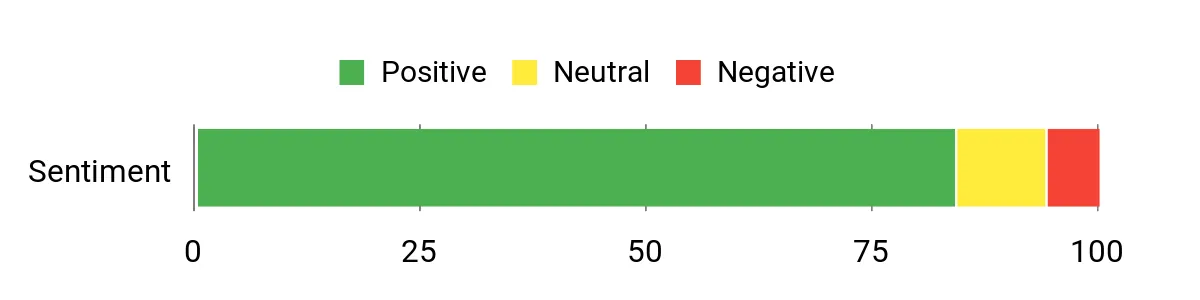
Original Sentiment Chart
The following historical graphic was included in the original article. Its underlying review data and methodology have not been independently verified.
Aesthetic Appeal
The translucent inflatable body creates a gentle, even glow. Its simple design fits both minimalist camping setups and family tents. The lantern also folds flat, making storage easier.
Safety Features
The PackLite Nova USB is listed with IP67 dust and water protection. This rating indicates protection against dust and temporary immersion under specified test conditions. It does not mean the lantern should be left underwater indefinitely.
Its LED light produces little operating heat compared with traditional fuel-burning lanterns. Keep the battery and charging connection away from excessive heat and follow the manufacturer’s instructions.
Key Benefits
- Inflatable, lightweight design for easy packing
- Up to 75 lumens of adjustable white light
- Solar and Micro-USB charging options
- Up to 24 hours of runtime on low
- IP67-rated protection for outdoor conditions
Buying consideration: Its built-in solar panel is convenient, but charging depends on direct sunlight. Fully charge the lantern before leaving home instead of relying only on solar charging during your trip.
BioLite AlpenGlow 500

Best for: Campsite ambience, family camping, reading, and adjustable lighting.
The BioLite AlpenGlow 500 combines practical campsite illumination with colorful lighting modes. You can switch between warm white, cool white, single-color, and multicolor settings to match different activities.
Its 500-lumen maximum output provides more light than most small inflatable lanterns. BioLite’s ChromaReal LED technology is designed to improve color rendering, which can help when preparing food or reading maps.
The manufacturer specifies approximately five hours of runtime on high and up to 200 hours on the lowest setting. The lantern uses Micro-USB for recharging and includes a USB-A output for charging compatible small devices.
Who Should Buy This?
Choose the AlpenGlow 500 if you want one lantern that handles everyday campsite lighting while adding warm or colorful ambience. It works well on picnic tables, inside larger tents, and during relaxed evenings outdoors.
Who Should Avoid This?
It is less suitable if your main priority is the lowest possible backpack weight. It also lacks a built-in solar panel, so you need access to USB power for recharging.
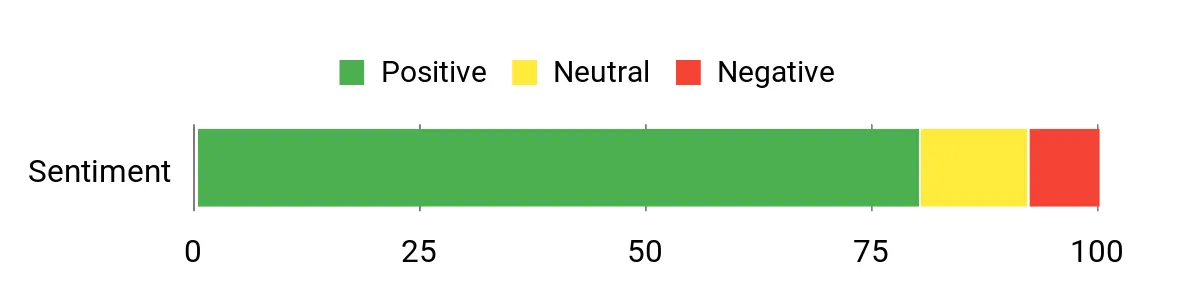
Original Sentiment Chart
This legacy sentiment graphic is retained from the original article. Its data collection and scoring method could not be verified.
Aesthetic Appeal
The lantern has a modern, rounded design with a diffused upper section. Its adjustable colors are useful for creating a comfortable atmosphere without relying on harsh white light all evening.
Safety Features
The AlpenGlow 500 carries an IPX4 water-resistance rating. This means it can withstand splashing water, but it is not designed for immersion. Keep its charging port protected and avoid leaving it exposed during heavy rain.
Its enclosed rechargeable battery and LED lighting make it convenient for normal outdoor use. Follow the manufacturer’s charging and temperature instructions.
Key Benefits
- Up to 500 lumens of brightness
- Multiple white and multicolor lighting modes
- ChromaReal LED technology for improved color rendering
- Up to 200 hours on low and approximately five hours on high
- USB-A output for charging compatible devices
- IPX4 splash resistance
Buying consideration: The 200-hour maximum runtime applies to a very low brightness setting. Do not expect that duration while using its brightest or most colorful modes. Its charging input is Micro-USB, not USB-C.
COAST EAL22

Best for: Emergency preparedness, large campsite lighting, car camping, and bright task lighting.
The COAST EAL22 is designed for situations where you need strong, wide-area lighting. Its maximum output reaches 1,250 lumens, making it the brightest model in this comparison based on the listed manufacturer specifications.
It provides warm and cool white light, plus red and flashing red modes. These options help you switch between regular campsite tasks and emergency signaling.
The lantern supports three D batteries or a compatible COAST ZX1010 rechargeable battery pack. This flexibility is valuable during extended outages when USB charging may not be available.
According to COAST, runtime reaches approximately nine hours on high, 17 hours on medium, and 135 hours on low. Its longer runtime requires a lower output setting.
Who Should Buy This?
Choose the EAL22 if brightness, flexible battery power, and emergency lighting are more important than carrying a small lantern. It is a useful choice for car camping, home backup kits, and group campsite tasks.
Who Should Avoid This?
At approximately 34.6 ounces before considering every possible battery configuration, this is not a first choice for ultralight backpacking. It is also larger than inflatable camping lanterns.
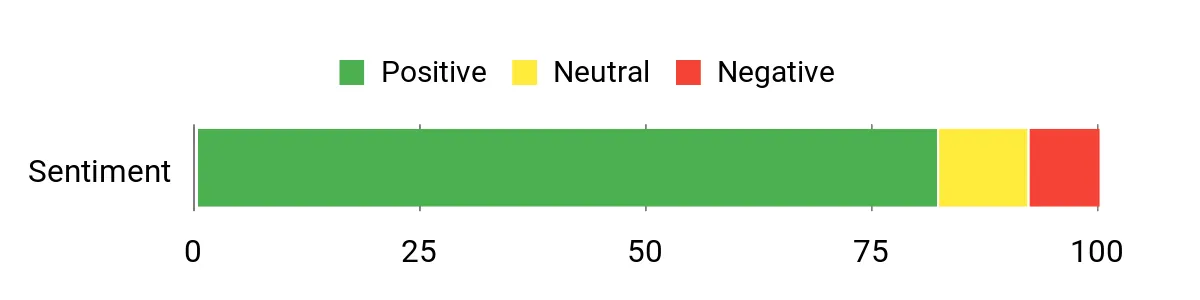
Original Sentiment Chart
This historical graphic comes from the original article. Its underlying review sample and scoring method were not independently verified.
Aesthetic Appeal
The EAL22 favors a rugged, functional design over decorative styling. Its diffuser spreads light across a wider area, while its handle and hanging options help position the lantern for different tasks.
Safety Features
COAST specifies an IP54 rating for dust and water resistance. This means the housing provides limited protection against dust intrusion and splashing water. It is not fully waterproof and should not be submerged.
The red flashing mode can improve visibility during emergencies. However, it is not a substitute for dedicated emergency communication equipment.
Key Benefits
- Up to 1,250 lumens for wide-area lighting
- Warm and cool white lighting options
- Red and flashing red modes for signaling
- Up to 135 hours of runtime on low
- Compatible with three D batteries or the appropriate rechargeable pack
- IP54-rated dust and splash resistance
- Flexible hanging and positioning options
Buying consideration: Check the exact Amazon package contents before ordering. Battery inclusion can vary by listing, and the compatible rechargeable battery pack may need to be purchased separately.
Coleman Classic Recharge 800

Best for: General camping, family campsites, car camping, and household emergency lighting.
The Coleman Classic Recharge 800 offers a useful balance of bright output and convenient charging. Its familiar lantern shape makes it easy to carry, hang, or place on a table.
The lantern reaches 800 lumens on high, with 300-lumen medium and 100-lumen low settings. These levels help you use brighter light for cooking and campsite tasks while saving battery power during quieter activities.
Coleman specifies up to five hours of runtime on high, 15 hours on medium, and 45 hours on low. The built-in rechargeable lithium-ion battery has a stated capacity of 4,800 mAh.
The lantern includes a charging cable and a port for charging compatible personal devices. It can also provide device power while the lantern is in use, although doing so will reduce the energy available for lighting.
Who Should Buy This?
Choose the Coleman Classic if you want a straightforward rechargeable lantern for weekend trips and home emergencies. Its adjustable output, hanging handle, and device-charging ability make it practical for many campers.
Who Should Avoid This?
Consider a solar lantern if you will be away from USB charging for several days. Backpackers who count every ounce may prefer an inflatable model.
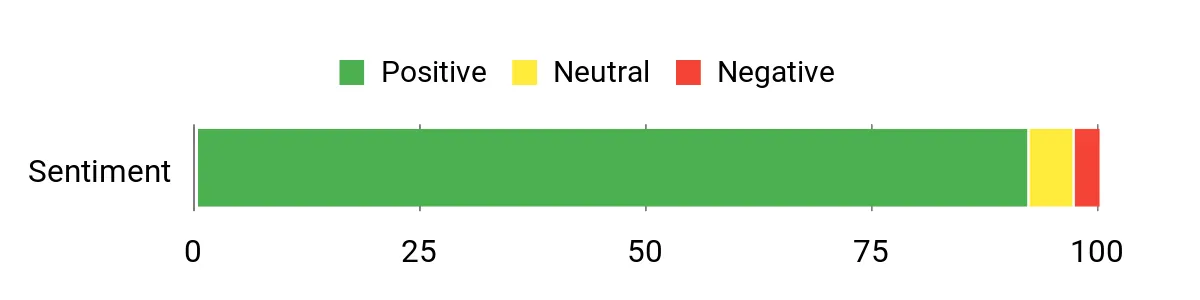
Original Sentiment Chart
This legacy sentiment graphic is preserved from the original article. The underlying customer-review data have not been independently verified.
Aesthetic Appeal
The lantern has a classic Coleman-inspired shape with a large carrying handle. Its practical design suits campsites where you need a light that can sit securely on a table or hang above a work area.
Safety Features
Coleman lists IPX4 splash resistance and impact resistance up to one meter. These features help the lantern handle normal campsite conditions, but they do not make it suitable for underwater use.
Its LED lighting avoids the open flame and combustion risks associated with fuel-burning lanterns. Keep the rechargeable battery away from excessive heat and use the recommended charging equipment.
Key Benefits
- 800-lumen high, 300-lumen medium, and 100-lumen low modes
- Up to five hours on high and 45 hours on low
- Built-in 4,800 mAh rechargeable battery
- USB charging with device-charging capability
- IPX4 water resistance and impact-resistant construction
- Large hanging handle with an integrated carabiner feature
- Manufacturer-listed three-year limited warranty
Buying consideration: This model works best when you can recharge it between trips. If you expect several days without electricity, bring a compatible power bank or another backup lighting option.
LuminAID Survivor

Best for: Emergency kits, off-grid camping, solar lighting, and backup device charging.
The LuminAID Survivor combines a camping lantern, phone charger, and directional flashlight in one device. It is useful when you want fewer separate items in your emergency kit.
It offers up to 600 lumens and includes adjustable lighting with white, warm white, and red options. Its built-in flashlight provides a more focused beam when you need to see farther than a normal lantern allows.
The Survivor uses a 6,000 mAh rechargeable battery and includes two USB charging ports for compatible devices. Its integrated solar panel provides another charging option when regular electricity is unavailable.
Manufacturer specifications indicate approximately 100 to 130 hours of runtime at the lowest brightness. At maximum output, runtime is much shorter.
Who Should Buy This?
Choose the Survivor if you want one product for lighting and emergency phone charging. Its combination of solar input, USB charging outputs, and a flashlight makes it useful for longer trips and household preparedness.
Who Should Avoid This?
It is heavier and bulkier than a basic inflatable lantern. If you only need a small tent light, a simpler model may be easier to carry.
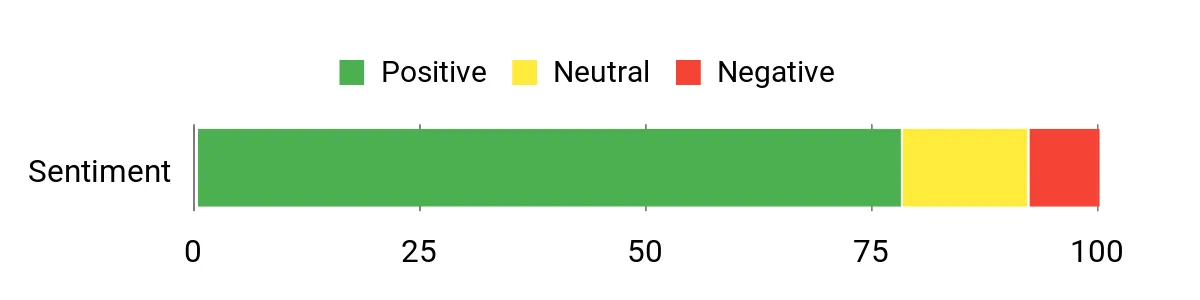
Original Sentiment Chart
The following graphic was part of the original article. Its sentiment figures and source methodology were not independently verified.
Aesthetic Appeal
The Survivor uses a translucent inflatable body with a twist-to-open design. Its simple shape provides diffused lighting while allowing the lantern to compress for storage.
Safety Features
The Survivor is listed with IP67 dust and water protection. Its sealed construction is designed for outdoor conditions, but charging connections should be kept dry before use.
Charge indicators help you monitor remaining battery power. This is valuable when preparing for an outage or planning how much lighting time remains.
Key Benefits
- Up to 600 lumens of adjustable lighting
- 6,000 mAh rechargeable battery
- Two USB ports for charging compatible devices
- Integrated solar panel for off-grid recharging
- Approximately 100 to 130 hours of runtime on low
- Built-in directional flashlight
- Inflatable design with IP67-rated protection
Buying consideration: LuminAID indicates that a complete solar recharge can require approximately 24 to 30 hours of direct sunlight. That is a substantial charging period. Charge the lantern by USB before your trip, and treat solar power as a supplemental option.
Charging phones also reduces the battery power available for lighting. Do not depend on the lantern as your only emergency communication power source.
Goal Zero Lighthouse 600

Best for: Emergency preparedness, car camping, backup lighting, and people who want several charging methods.
The Goal Zero Lighthouse 600 offers a useful combination of adjustable lighting and backup charging options. It produces up to 600 lumens and allows you to illuminate one side or both sides of the lantern.
Its main advantage is charging flexibility. You can recharge the internal battery from USB, use a compatible external Goal Zero solar panel, or generate a small amount of power with the built-in hand crank.
Goal Zero states that one minute of hand cranking can provide approximately ten minutes of lighting on a low setting. This makes the crank useful for short emergency lighting needs, although it is not a practical replacement for regular charging.
The lantern also includes USB output for charging compatible small devices. Its rechargeable battery has a listed capacity of 5,200 mAh.
Who Should Buy This?
Choose the Lighthouse 600 if you want an emergency lantern with multiple ways to restore power. It is particularly useful for home outage kits and car camping.
Who Should Avoid This?
It may not suit ultralight backpackers because it weighs approximately 1.1 pounds. It also lacks a built-in solar panel, so solar charging requires a separate compatible panel.
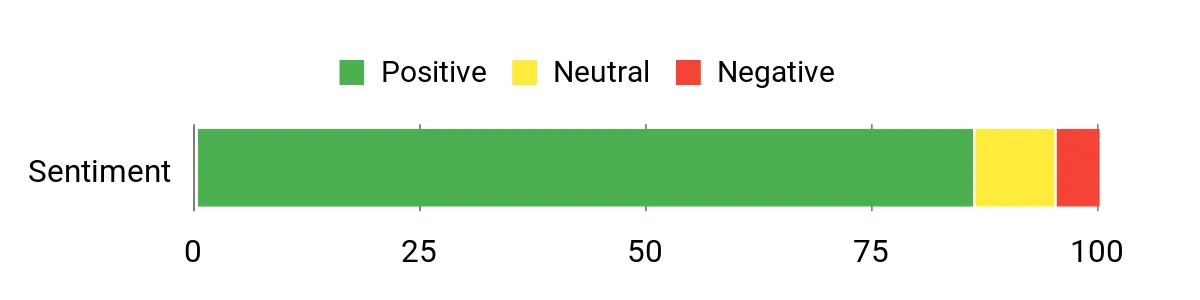
Original Sentiment Chart
This historical sentiment graphic is retained from the source article. Its underlying customer data and calculation method could not be verified.
Aesthetic Appeal
The Lighthouse 600 has a practical design with folding legs and a built-in handle. Its adjustable lighting allows you to direct more light toward the area you are using instead of illuminating everything at maximum power.
Safety Features
The lantern uses an enclosed rechargeable battery with charging and low-battery protection. Its folding legs provide a convenient standing position.
No verified immersion rating was found for this model. Keep it sheltered during heavy rain and protect charging connections from water.
Key Benefits
- Up to 600 lumens of adjustable lighting
- USB charging and built-in hand crank
- Optional solar charging with a compatible external panel
- USB output for compatible personal devices
- One-sided lighting option to conserve power
- Up to 320 hours on a very low one-sided setting
- Folding legs and a convenient carrying handle
Buying consideration: Goal Zero lists approximately 2.5 hours of runtime with both sides operating on high, compared with up to 320 hours on a low one-sided setting. Plan around your actual brightness needs rather than the maximum runtime figure.
If solar charging is important, remember that the compatible solar panel is a separate accessory unless a specific bundle includes it.
Luci Outdoor 2.0

Best for: Backpacking, lightweight camping, tent lighting, and compact emergency kits.
The Luci Outdoor 2.0 is designed for campers who want useful light without carrying much extra weight. Its inflatable body collapses flat, while the integrated solar panel and USB-C charging input give you two ways to recharge.
It produces up to 75 lumens of cool white light. The manufacturer lists up to 24 hours of runtime on low and approximately six hours on high.
At around 4.4 ounces, the lantern is particularly attractive for backpacking and travel. Its low weight and compact packed size make it easy to carry as a secondary light.
Product-name note: The original MPOWERD Luci Outdoor 2.0 is now represented in BioLite’s Luci lineup under the Luci Original Clear name. Check the linked listing for the exact model and features before purchasing.
Who Should Buy This?
Choose this lantern if you want a lightweight solar lantern for a tent, small campsite, or travel bag. Its USB-C input is convenient if you already carry compatible charging cables.
Who Should Avoid This?
It is not the best choice for lighting a large group campsite. Its modest output is more suitable for personal illumination than demanding outdoor tasks.
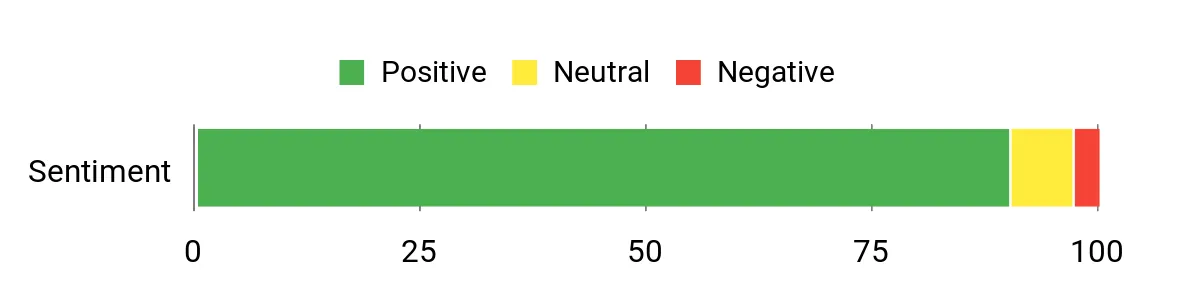
Original Sentiment Chart
The following graphic is preserved from the original article. Its review sample and sentiment analysis were not independently verified.
Aesthetic Appeal
The clear inflatable body provides a simple, modern look. It spreads light around the tent rather than producing a narrow flashlight-style beam.
Safety Features
The Luci Outdoor 2.0 carries an IP67 rating for dust and water protection. Its inflatable design also helps protect the lighting components during normal handling.
The lantern uses an enclosed rechargeable battery and low-heat LEDs. Protect the charging port and avoid exposing the battery to excessive heat.
Key Benefits
- Lightweight inflatable design of approximately 4.4 ounces
- Solar and USB-C charging options
- Up to 75 lumens of cool white light
- Up to 24 hours on low and six hours on high
- IP67-rated dust and water protection
- Compact storage for backpacking and travel
Buying consideration: Solar charging can take approximately seven hours in suitable direct sunlight. USB-C charging is faster, making it the more predictable option when you need a full battery before leaving home.
How to Choose the Best Camping Lantern
The best camping lantern is not always the brightest one. Your choice should depend on the size of your campsite, how you travel, and how often you can recharge or replace batteries.
1. Choose the Right Brightness
Brightness is measured in lumens. For personal tent lighting, a lower-output lantern may provide enough illumination without causing glare.
- Under 100 lumens: Useful for tent lighting, relaxing, and basic personal tasks.
- 100 to 500 lumens: A versatile range for everyday campsite activities.
- 500 to 1,000 lumens: Useful for larger tents, group areas, and cooking tasks.
- Over 1,000 lumens: Helpful when you need strong area lighting or emergency illumination.
These ranges are general guidance, not fixed performance standards. Beam design, diffusion, and placement also affect how useful the light feels.
2. Compare Battery Runtime at the Same Brightness
A lantern may advertise hundreds of hours of runtime, but that figure often applies to its dimmest setting.
Look for high, medium, and low runtime figures. If you regularly cook after dark, the runtime at a useful medium or high setting matters more than the maximum runtime printed on the package.
3. Understand the Charging Options
Camping lanterns use several power systems. Each comes with different advantages.
- USB-C rechargeable: Convenient when you already carry modern charging cables and a power bank.
- Micro-USB rechargeable: Reliable when you have the correct cable, but less convenient if your other devices use USB-C.
- Solar rechargeable: Useful for extending off-grid operation, although cloudy weather and poor panel positioning slow charging.
- Replaceable batteries: Practical for emergencies because you can store compatible spare batteries.
- Hand-crank charging: Provides limited emergency power when other charging options are unavailable.
4. Check Weight and Packed Size
If you carry your gear in a backpack, weight and storage size are important. Inflatable lanterns are especially useful because they collapse into compact shapes.
For car camping, a larger lantern may be worth the extra weight if it provides better output, longer useful runtime, or additional charging options.
5. Understand Water-Resistance Ratings
Camping lanterns often include an ingress protection or IP rating. These ratings describe protection against dust and water under specific test conditions.
- IPX4: Protection against splashing water from different directions.
- IP54: Limited dust ingress protection and splash resistance.
- IP67: Dust-tight construction and protection against temporary immersion under specified conditions.
Even when a lantern has a strong IP rating, charging ports and seals require care. Avoid exposing charging connections to water, and follow the manufacturer’s instructions before charging a wet device.
6. Decide Whether Phone Charging Matters
A lantern with USB output can help charge a phone or another small device. This can be helpful during outages or when camping away from electrical hookups.
However, the lantern’s battery must support both lighting and device charging. Using it as a power bank reduces the remaining lighting time.
If your phone is essential for navigation or communication, carry a dedicated power bank as well.
Before You Buy: Quick Checklist
- Check maximum lumens and runtime at useful brightness levels.
- Confirm whether the lantern uses USB-C, Micro-USB, solar, or replaceable batteries.
- Check whether charging cables, batteries, or solar panels are included.
- Compare packed weight and size if you plan to backpack.
- Read the exact water-resistance rating.
- Confirm whether the USB port charges devices or only recharges the lantern.
- Check the manufacturer’s warranty and return terms.
- Verify the current product version, Amazon price, and seller before ordering.
FAQ
How Do I Choose the Right Camping Lantern?
Start with how you plan to use it. For backpacking, prioritize low weight and compact storage. For family camping, look for adjustable brightness and sufficient runtime for evening tasks. For emergencies, consider replaceable batteries, multiple charging methods, and useful low-output settings.
Are Solar and Rechargeable Lanterns Reliable?
Solar and rechargeable lanterns can be dependable when their charging limits are understood. A USB-rechargeable lantern provides predictable charging when electricity or a power bank is available. Solar charging depends on panel size, sunlight, and weather conditions.
Charge your lantern before leaving home. Carry a backup power source if you will spend several nights without electricity.
What Do IP Ratings Mean for Camping Lanterns?
IP ratings help you understand dust and water protection. IPX4 provides splash resistance, IP54 adds limited protection against dust, and IP67 indicates stronger dust and water protection under defined test conditions.
These ratings do not guarantee protection against every type of damage. Keep charging connections dry and avoid unnecessary immersion.
How Many Lumens Do I Need for Camping?
A lantern under 100 lumens can work well inside a small tent. Around 100 to 500 lumens offers more flexibility for normal campsite activities. Larger groups and demanding tasks may benefit from 500 lumens or more.
Use lower settings when possible to reduce glare and extend battery life.
Can I Charge My Phone with a Camping Lantern?
Only lanterns with a suitable device-charging output can charge phones. The LuminAID Survivor, BioLite AlpenGlow 500, Coleman Classic Recharge 800, and Goal Zero Lighthouse 600 offer device-charging functionality.
The LuminAID PackLite Nova USB and the Luci Outdoor 2.0 do not provide the same phone-charging function. Their USB connections are used to recharge the lanterns.
Is a Solar Lantern Better Than a Battery-Powered Lantern?
Neither is always better. Solar lanterns can be useful when you have regular access to sunlight. Replaceable-battery lanterns let you restore power quickly with spare batteries. USB rechargeable models are convenient when you have access to a power bank or electrical outlet.
For emergency preparedness, having more than one charging method can reduce the risk of being left without light.
Customer Preferences
Different campers need different lighting features. Backpackers often prioritize low weight and small packed size, while family campers may prefer higher brightness and adjustable output.
Emergency preparedness creates another set of priorities. Replaceable batteries, hand-crank charging, and device-charging capability can become more important than decorative lighting modes.
These are practical buying considerations rather than verified results from a customer survey.
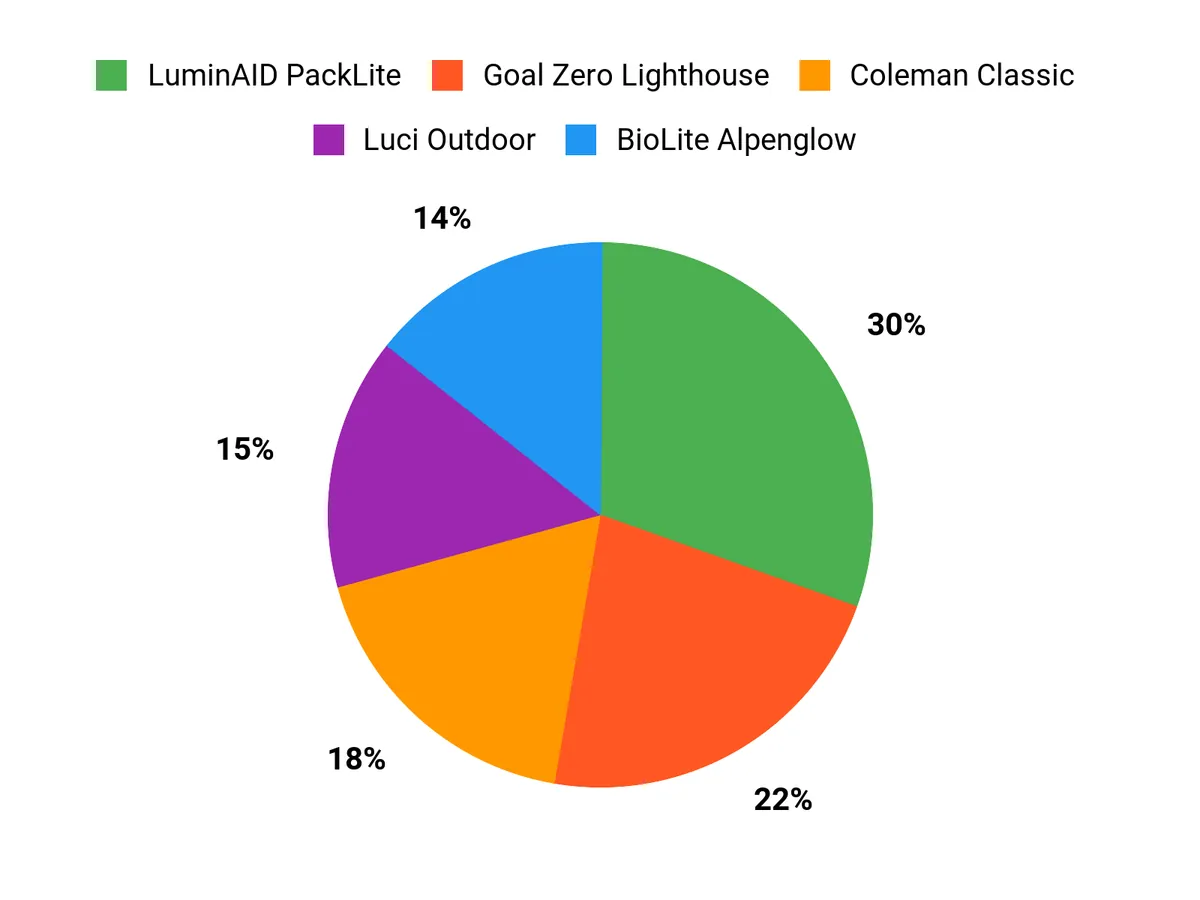
Note: This chart is retained from the original article. Its source data and methodology were not provided for independent verification.
Wrapping Up
The right camping lantern should match your actual lighting needs, not simply offer the highest advertised lumen number.
For most general camping situations, the Coleman Classic Recharge 800 offers a useful combination of adjustable brightness, rechargeable power, and straightforward operation.
If emergency brightness is your priority, the COAST EAL22 provides up to 1,250 lumens and supports more than one battery option.
For backpacking and compact travel, the Luci Outdoor 2.0 and LuminAID PackLite Nova USB offer lightweight inflatable designs with solar charging.
The LuminAID Survivor is worth considering when you need both solar lighting and device charging. The Goal Zero Lighthouse 600 offers additional emergency flexibility through its hand crank, while the BioLite AlpenGlow 500 is a strong option for adjustable white and colorful campsite lighting.
Before buying, compare the runtime at your preferred brightness setting and confirm that the charging method fits your trips. These two details can matter more than maximum output alone.
Camping Lantern Comparison Table
| Product Name | Image | Best For | Power Source | Light Output | Battery Life |
|---|---|---|---|---|---|
| LuminAID PackLite Nova USB |
|
Simple solar backup | Solar, Micro-USB | 75 lumens max | Up to 24 hours on low |
| BioLite AlpenGlow 500 Lantern |
|
Ambient and multicolor lighting | Rechargeable, Micro-USB | 500 lumens max | 5 hours high; up to 200 hours low |
| COAST EAL22 Dual Color LED Light |
|
Emergency brightness | 3 D batteries or compatible rechargeable pack | 1,250 lumens max | 9 hours high; up to 135 hours low |
| Coleman Classic Recharge 800 LED Lantern |
|
General camping | Built-in rechargeable battery | 800 lumens max | 5 hours high; up to 45 hours low |
| LuminAID Survivor Solar Lantern |
|
Solar lighting and phone charging | Solar, USB rechargeable | 600 lumens max | Approx. 100–130 hours on low |
| Goal Zero Lighthouse 600 Light |
|
Hand-crank emergency backup | USB, hand crank, optional external solar panel | 600 lumens max | 2.5 hours both sides high; up to 320 hours one side low |
| MPOWERD Luci Outdoor 2.0 |
|
Packable solar lighting | Solar, USB-C | 75 lumens max | 6 hours high; up to 24 hours low |
Specifications are based on available manufacturer information. Runtimes are approximate and depend on brightness settings and operating conditions. Product versions and included accessories may vary by seller.
This roundup is reader-supported. When you click through Amazon affiliate links, we may earn a referral commission on qualifying purchases.
