
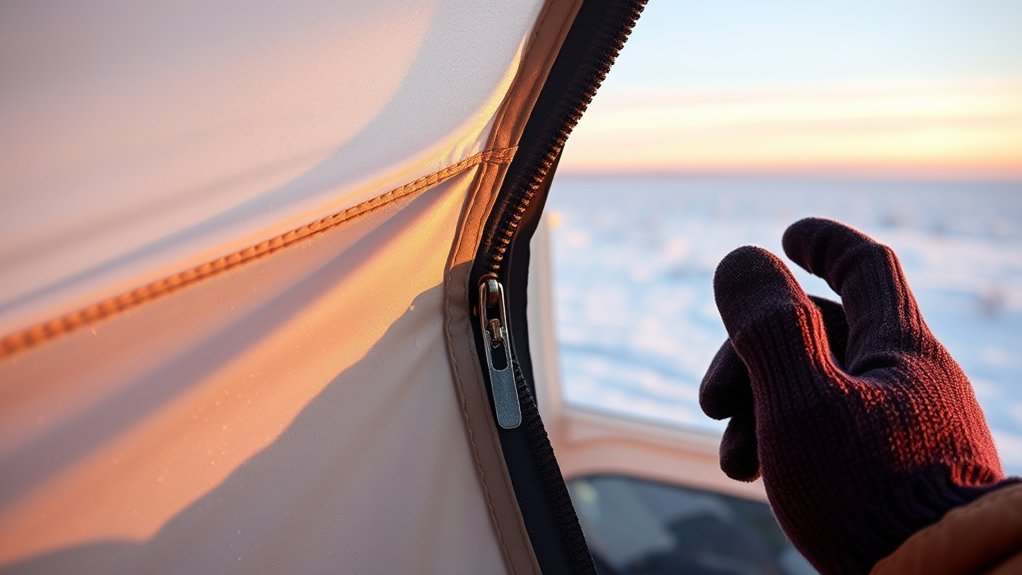
To prevent your tent zippers from freezing, regularly maintain and clean them. Use a soft brush to remove dirt, and apply a non-L-based lubricant like zipper wax or silicone spray to boost smooth operation. If a zipper does freeze, gently warm it and avoid forcing it open to prevent damage. Before your next trip, make sure you’re well-prepared with the right techniques and supplies to keep your zippers functioning seamlessly in the cold. Learn more about effective camping tips!
Understanding the Importance of Zipper Maintenance

When you’re camping in cold weather, maintaining your tent zippers is essential to secure easy access and functionality. Regular cleaning of the zippers helps remove dirt and debris that can cause sticking or freezing. This simple maintenance task boosts zipper durability and guarantees smooth operation when you need it most. Aim to perform zipper maintenance frequently, especially before your trip, so you can enjoy a hassle-free experience.
Applying non-L-based lubricants, like zipper wax or silicone spray, helps create a moisture barrier that prevents freezing. Alternatively, rubbing graphite from a pencil onto the zipper teeth serves as an effective lubricant. If you encounter a frozen zipper, gently warming it with your hands or a cloth can help unstick it. By prioritizing zipper maintenance, you’re not just enhancing functionality; you’re also liberating yourself from the frustrations of battling cold-weather camping challenges.
Choosing the Right Lubricant for Cold Weather
How can you guarantee your tent zippers stay functional in freezing temperatures? Choosing the right lubricant is key. Natural alternatives like graphite from a pencil or specialized cold-weather lubricants can enhance zipper performance by creating a barrier against moisture.
| Lubricant Type | Description | Best Use |
|---|---|---|
| Graphite | A natural alternative, easy to apply | Quick fix for freezing zippers |
| Zipper Wax | Non-L-based, prevents moisture | Pre-trip application |
| Silicone Spray | Effective for smooth operation | Regular maintenance |
Before your cold-weather camping trips, apply your chosen lubricant to guarantee zippers remain functional and easy to use. Regular maintenance, including reapplication, is essential for smooth operation and to minimize the risk of zippers sticking in harsh conditions.
Products Worth Considering
SMOOTH & EFFORTLESS GLIDE - Our lubricant ensures zippers and snaps operate seamlessly, preventing damage caused by jams extending their lifespan
Perfect Zipper Solution: Zipper-Ease ensures a smooth glide, preventing sticking and snagging for hassle-free zipping every time.
【Quality Zipper Lubricant】: Still worried about rusty clothing zippers? Still upset that your zippers are running slow, Gulfmew zipper lubricant can solve these problems; Our zipper lubricant meets your zipper lubrication needs by providing long-lasting rust and corrosion protection, ensuring that zippers work with long lasting lubrication, preventing friction and minimizing wear and tear
How to Clean Your Tent Zippers
Keeping your tent zippers clean is essential for preventing sticking and freezing in cold weather. Start by regularly brushing off dirt and debris with a soft brush. This basic cleaning technique helps maintain smooth operation. Next, use a damp cloth to wipe down the zipper teeth, ensuring no grime or moisture gets trapped, which could freeze later.
For a deeper clean, soak the zipper in a mild soap and water mixture, then rinse and dry completely. After cleaning, apply a non-L-based lubricant like zipper wax or silicone spray to create a moisture barrier. Don’t forget to inspect your zippers periodically for wear or damage, using appropriate zipper tools to address any issues quickly. By following these steps, you’ll keep your tent zippers functioning smoothly, allowing you to focus on enjoying your adventures without zipper troubles.
Products Worth Considering
Safe and Natural Material:When opening the product, you may notice some powder on the surface. This is simply natural cornstarch from the inside, which can seep out during shipping due to shaking or compression. It is completely non-toxic, safe, and harmless.
NOTICE: Please confirm your zipper size and type before purchase. If you don't know how to repair zipper or pulls, please don't buy the kit.
Complete All-in-One Tent Repair Kit: The FixNZip FixATent Essentials kit combines multiple campground must-haves into a single tent repair kit designed for fast, reliable fixes in the field. This comprehensive gear repair kit for camping includes tools to address tent zipper repair, tent pole fixes, mesh damage, and general wear, giving you the confidence to handle unexpected issues without carrying separate, costly components.
Techniques for Unsticking Frozen Zippers
If your zipper gets stuck in the cold, start by gently warming it with your hands or a cloth to melt any ice. Regularly applying a lubricant, like zipper wax or silicone spray, can also keep it functioning smoothly. These simple techniques can save you from frustration during your outdoor adventures.
Products Worth Considering
Lubricate, clean, and quickly unzip zippers on outdoor gear; features a non-toxic, silicone-free formula that works in all water temperatures
FIXES STUCK & STIFF ZIPPERS IN SECONDS — No more tugging, yanking, or forcing stubborn zippers. Simply glide the wax stick along the zipper teeth and experience immediately smoother operation. Works on zippers that are stuck, corroded, or just hard to pull.
Reliable and Practical: our zipper lube provides long lasting lubrication for smooth and effortless zipper operation; No more frustrating moments or struggles with stuck or jammed zippers; Just apply it to the zipper teeth to prevent sticking and keep them moving effortlessly
Warm Up Zipper
When temperatures drop and your tent zipper freezes, warming it up gently can make all the difference. Avoid forcing the zipper open, as that can cause damage. Instead, use these techniques:
- Warm cloth: Hold a warm cloth against the zipper for a few minutes to melt the ice.
- Gentle pressure: Apply gentle pressure while moving the zipper back and forth to help it loosen.
- Hand warmth: Use your hands to warm the zipper directly by rubbing it, transferring your body heat.
These simple methods can effectively unstick your zipper, allowing you to access your tent without hassle. Regular cleaning will also help prevent future freezing, so stay proactive and enjoy your outdoor adventures!
Apply Lubricant Regularly
To keep your tent zippers functioning smoothly in cold weather, apply lubricant regularly. Seasonal lubrication is crucial to create a moisture barrier, preventing freezing. Use specialized cold-weather zipper lubricants, or opt for non-L-based alternatives like zipper wax or silicone spray. You can also rub graphite from a pencil along the zipper teeth to reduce friction and enhance performance. Don’t forget to clean your zippers regularly to remove dirt and debris that may exacerbate freezing issues. Before heading out on your cold-weather adventures, verify zippers are well-lubricated as a preventive measure. If a zipper does freeze, gently warm it with your hands or a cloth to unstick it without damaging the mechanism.
Selecting the Best Stakes for Winter Camping
Choosing the right stakes for winter camping is essential for guaranteeing your tent remains securely anchored in icy conditions. To enhance stability and prevent ice buildup, consider the following:
- Stake Materials: Select stakes made from aluminum or coated steel, as they resist ice accumulation better than plain metal.
- Anchorage Depth: Opt for longer stakes designed for winter camping. These can penetrate below frozen ground layers for improved anchorage.
- Design Features: Look for stakes with designs that minimize ice buildup, enhancing their effectiveness in cold conditions.
Before securing your stakes, remember to prepare the ground by clearing away snow. This step improves contact with the ground and reduces freezing issues. Additionally, using fabric or plastic under the stakes can serve as an insulator, preventing direct contact with frozen surfaces. By choosing wisely, you’ll guarantee your tent stays put, no matter how icy it gets.
Products Worth Considering
【Tent Stakes Kit】- Stakes set includes 8 pack forged steel tent pegs (8in long/2oz each) and a carry bag. Tent stakes are available in rocky place desert snowfield and grassland.
Quality materials:Ground stakes made of carbon steel material, the galvanized coating on the surface ensures that they remain rust-resistant even when exposed to rain and moisture, Won't bend or break under pressure, thus guaranteeing long-lasting durability.
Upgraded Heavy Duty Camping Stakes: Made of high-quality forged S45C steel, completely get rid of the snapping and bending, more durability, they are corrosion resistance
Preparing the Ground for Effective Stake Placement
After securing the right stakes for winter camping, preparing the ground for effective stake placement is essential. Start by clearing away snow from the staking area; this improves contact between your stakes and the ground, enhancing stability and reducing the chance of ice buildup. Consider using fabric or plastic under the stakes for ground insulation, minimizing direct contact with frozen surfaces and preventing ice formation around them.
Make sure your tent fabric is dry and taut to reduce moisture accumulation, which can create freezing conditions around the stakes. Opt for long stakes designed for winter camping to anchor below the frozen layers of ground, providing better stability in cold conditions. Proper ground preparation, including snow removal and selecting the right stake material, greatly aids effective stake placement and overall tent security. By taking these steps, you’ll make certain a more secure and enjoyable winter camping experience.
Tips for Regular Zipper Care and Maintenance
While enjoying your winter camping adventure, maintaining your tent zippers is critical to prevent them from freezing. Different zipper types require specific care, so keep this maintenance frequency in mind:
- Clean Regularly: Remove dirt and debris that can cause zippers to stick. A clean zipper is a happy zipper.
- Lubricate Before Trips: Apply non-L-based lubricants like zipper wax or silicone spray before heading out to keep moisture at bay.
- Use Graphite as a Natural Lubricant: A simple pencil can enhance your zipper’s smooth operation in cold conditions.
If you encounter a stuck zipper, gently warm it with your hands or a cloth before applying lubricant. This will help it function better and reduce the risk of freezing. By following these tips, you’ll guarantee your zippers work smoothly, allowing you to focus on enjoying the great outdoors.
Products Worth Considering
Release stuck zippers on wetsuits tents jackets sleeping bags and luggage with this multipurpose 2-in-1 formula
COMPREHENSIVE PROTECTION FOR LONGER LIFESPAN: It offers anti-corrosion, anti-rust, anti-oxidation, sealing and waterproof functions, protecting zippers and snaps from damage. Especially for snaps on travel trailer or ship canvas, this lubricating grease prevents rust, extends service life and facilitates disassembly and assembly
Release stuck zippers on wetsuits tents jackets sleeping bags and luggage with this multipurpose 2-in-1 formula
Enhancing Your Overall Camping Experience
Proper care of your tent zippers not only guarantees they function smoothly but also sets the stage for an enjoyable camping experience. To enhance your overall adventure, start by regularly applying specialized cold weather zipper lubricants before your trips. This creates a moisture barrier that keeps zippers operating seamlessly. Keeping zippers clean from dirt and debris is equally essential; it prevents sticking and guarantees zipper functionality in cold conditions.
If you encounter a frozen zipper, gentle warming techniques, like rubbing it with your hands or a cloth, can unstick it, giving you easy access to your tent. Additionally, choose aluminum or coated steel stakes to minimize ice buildup, enhancing tent stability. Finally, prepare your campsite by clearing snow and using insulating materials under stakes. This will prevent ice formation, ensuring a secure tent setup and a more comfortable outdoor experience. Enjoy the great outdoors, liberated from zipper woes!
Frequently Asked Questions
Can I Use Regular Oil on Tent Zippers?
You shouldn’t use regular oil on tent zippers. For zipper maintenance tips, opt for silicone or paraffin-based lubricants instead. These lubricant alternatives keep zippers functioning smoothly without attracting dirt or causing damage.
How Often Should I Lubricate My Tent Zippers?
You should lubricate your tent zippers every few months, especially if you use your outdoor gear frequently. Regular zipper maintenance can extend their lifespan by up to 50%, keeping your adventures hassle-free and enjoyable.
Are There Specific Brands of Zipper Wax Recommended?
For YKK zippers, try using silicone lubricants like McNett Zip Care or Zipper Wax. These products effectively reduce friction and help keep your zippers functioning smoothly, ensuring a hassle-free camping experience.
What Materials Are Best for Cleaning Tent Zippers?
For effective zipper maintenance, use a soft brush or cloth for dirt, mild soap and water for grime, and vinegar for stubborn spots. These cleaning solutions keep your tent zippers functional and prolong their life.
Do Temperature Fluctuations Affect Zipper Performance?
Yes, temperature fluctuations can affect zipper performance. In cold weather, zippers might stick or freeze. Regular zipper maintenance, like cleaning and lubrication, helps guarantee smooth operation, allowing you to enjoy your outdoor adventures without hassle.
Conclusion
By following these tips, you can keep your tent zippers functioning smoothly, no matter how cold it gets. Imagine reaching for that stubborn zipper only to find it gliding effortlessly instead of freezing shut. With the right lubricant and maintenance, you’ll guarantee your camping experience remains enjoyable and hassle-free. So, as you prepare for your next adventure, remember: the secret to a cozy night under the stars starts with those little zippers. Don’t let them freeze you out!