
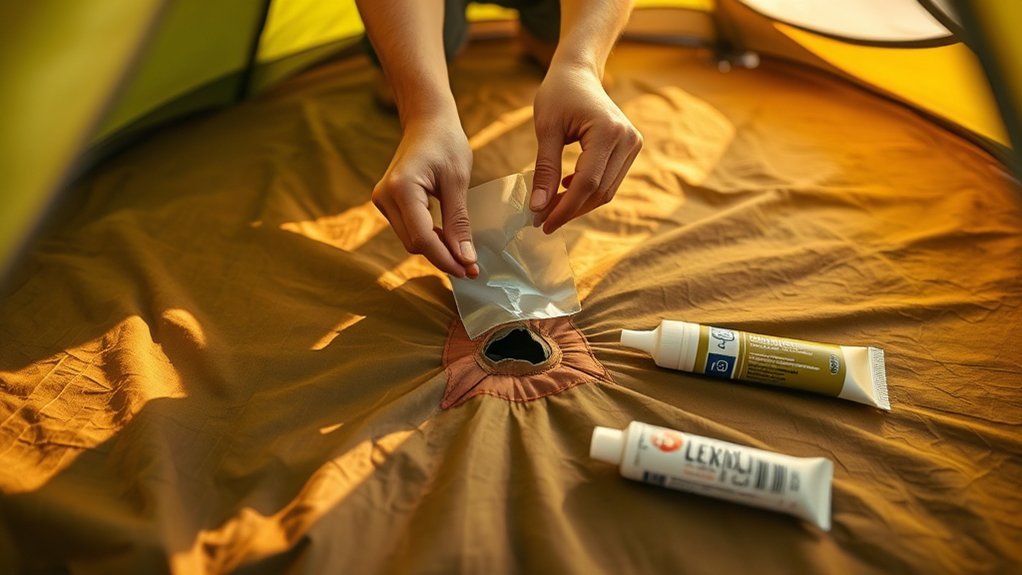
To patch a tent floor, start by cleaning small holes with rubbing alcohol and applying silicone seam sealant for a quick fix. For larger tears, stabilize with packing tape, cut a patch with rounded corners, and secure it with the sealant, using wax paper to hold it down while it cures. Always guarantee thorough cleaning for a strong bond, and apply generous sealant. Maintain your tent regularly to prevent further damage, and explore additional tips to enhance your repair skills.
Understanding the Importance of Tent Floor Repairs

When you camp, the tent floor acts as your first line of defense against moisture and debris, making its repair vital. A compromised tent floor can lead to water leaks and pest intrusion, putting your camping safety at risk. Regularly inspecting for tears or holes is significant; it not only prolongs your tent’s lifespan but also guarantees a comfortable sleeping environment.
Effective tent maintenance involves promptly addressing any damage you find. Using high-quality repair techniques, like silicone seam sealant and self-adhesive patches, can create durable fixes that withstand outdoor conditions. This proactive approach not only saves you money on replacements but also aligns with sustainable practices by reducing waste. By prioritizing tent floor repairs, you’re investing in your outdoor experience, allowing you to enjoy your time in nature without unnecessary disruptions. Make those repairs a part of your camping routine, and you’ll enhance both comfort and safety.
Materials Required for Small Hole Repairs
To effectively repair small holes in your tent floor, you’ll need a few essential materials. Start with rubbing alcohol and a clean cloth for proper cleaning, then choose a reliable sealant like silicone seam sealant for the repair. Finally, select a backing material, such as packing tape or masking tape, to support the area during the sealing process.
Products Worth Considering
Permanent seal: This Gorilla tape creates a permanent bond that instantly seals out air, water, and moisture
Seal up to 85 sq. ft. of nylon tent floors, rainflies and tarps with this 4 fl oz tent sealer; previously known as Tent Sure
Seal up to 60 ft of seams on tents, tarps and awnings with this water-based seam sealant; cures in 2 hours at room temperature
Essential Cleaning Supplies
Before starting any repair on a tent floor, gather essential cleaning supplies to guarantee a successful fix. You’ll need rubbing alcohol and a clean cloth for effective cleaning techniques, making sure the area around the hole is free from dirt and moisture. Next, have silicone seam sealant on hand, such as Gear A brand, to seal small holes efficiently. Use packing, Scotch, or masking tape as backing support on the opposite side of the hole; avoid duct tape. Verify the area is dry before applying the sealant, and allow it to cure for several hours for a durable repair.
| Cleaning Supply | Purpose |
|---|---|
| Rubbing Alcohol | Clean the area |
| Clean Cloth | Wipe and dry the surface |
| Silicone Seam Sealant | Seal the hole |
| Packing/Masking Tape | Provide backing support |
Sealant Options Available
Choosing the right sealant can greatly impact the success of your tent floor repair. For small holes, consider silicone seam sealants, like the Gear A brand, known for their effective sealing and durability. Before applying any sealant, clean the area around the hole with rubbing alcohol and a cloth to guarantee proper adhesion. Use packing tape, Scotch tape, or masking tape as backing on the opposite side of the tent floor to support the repair. After dabbing sealant over the hole, check coverage after 20 minutes; complete curing may take several hours. For added durability, apply sealant on both sides of the repair once the initial application has cured. Select your sealant types wisely for long-lasting repairs.
Backing Material Choices
When repairing small holes in a tent floor, selecting the right backing material is essential for a successful fix. Use different tape types such as packing tape, Scotch tape, or masking tape on the opposite side of the hole. Before applying the backing, clean the area with rubbing alcohol and a clean cloth. Make sure the backing material is larger than the hole, as this provides ideal patch size and prevents further tearing. Firmly press the backing against the fabric to guarantee stability and support for the sealant application. Avoid using duct tape, as it may not adhere properly, potentially compromising your repair. With the right materials, you’ll make certain your tent floor remains durable and functional.
Step-by-Step Guide to Repairing Small Holes
To effectively repair small holes in your tent floor, you’ll need specific materials and a clear process. Start by gathering rubbing alcohol, packing tape, and silicone seam sealant. Then, follow the outlined steps to guarantee a durable and effective patch.
Products Worth Considering
PROFESSIONAL-GRADE STRENGTH: GleamGlee Flexible Repair Glue is a powerful, professional-grade adhesive designed specifically for tent repairs and surface sealing. Unlike regular glues, it’s both highly flexible and waterproof, making it perfect for fixing gaps, tears, and holes in a variety of materials such as nylon, vinyl, and canvas. This glue forms a durable, long-lasting bond, ensuring your gear stays in top condition during camping trips and outdoor adventures.
Seal up to 85 sq. ft. of nylon tent floors, rainflies and tarps with this 4 fl oz tent sealer; previously known as Tent Sure
Seal up to 24 ft of seams with 1.5 oz of this durable, clear adhesive that bonds permanently to silicone-treated (silynylon) tents
Necessary Materials for Repairs
Repairing small holes in a tent floor requires a few fundamental materials to guarantee a durable fix. Start with rubbing alcohol and a clean cloth for proper surface preparation, ensuring ideal adhesion of your sealant. You’ll need silicone seam sealant to fill the hole effectively and packing or masking tape to provide backing support.
Begin by cleaning the area around the hole with rubbing alcohol, then apply packing tape on the opposite side. Dab silicone seam sealant over the hole, covering it completely. After about 20 minutes, check your coverage. For enhanced repair longevity, consider applying sealant on the opposite side once the initial application has cured. These steps are essential for effective tent maintenance and ensuring your gear withstands the elements.
Repair Process Steps
Before you start the repair, make certain you’ve gathered all necessary materials and prepared the workspace. First, clean the area around the small hole with rubbing alcohol and a clean cloth to guarantee proper adhesion of the sealant. Next, apply packing tape as a backing on the opposite side of the tent floor for added support during the repair process. Dab the hole with silicone seam sealant, ensuring it completely covers the hole and overlaps the edges for a robust seal. After 20 minutes, check the repair to confirm the sealant has adequately covered the hole, but allow several hours for full curing. For enhanced durability, consider applying sealant on the opposite side after the initial repair has cured.
Preparing for Larger Tear Repairs
When tackling a larger tear in your tent floor, it’s crucial to start with a clean area; use rubbing alcohol and a clean cloth to eliminate dirt and any adhesive residue. This sets the stage for effective repair techniques that will last, ensuring your adventures remain uninterrupted.
- Stabilize the fabric by applying packing tape to the back of the tear.
- Cut a patch that’s at least one inch larger than the hole, with rounded corners to prevent peeling.
- Apply silicone seam sealant on one side of the patch, ensuring thorough coverage for a strong bond.
- Place wax paper on top of the patch, weigh it down, and let it cure for 6 to 8 hours.
Products Worth Considering
【High-Quality Laminate Floor Repair Kit】Our wood floor furniture repair kit is made of safe resin, and the vinyl floor wax has fast drying characteristics. vinyl floor repair kit can be used to repair the most popular colors and surfaces of reinforced wood flooring. It can also be used to restore laminate, vinyl, hardwood, furniture, and more
Reliable material: Our down jacket repair patch are different from others in that backpacking patch kit are made of nylon material and specially selected with the best adhesive in the market, so clothing patches patches are very durable and safe to use
Repair rips and tears on tent or bug screens, mosquito netting and no-see-ums instantly; no heat required
Essential Materials for Larger Repairs
For larger repairs, you’ll need key materials like rubbing alcohol, silicone seam sealant, and self-adhesive nylon patches. Start by cleaning the area thoroughly, then prepare your patch with sharp scissors. Finally, stabilize the fabric and guarantee a strong bond by applying weight during the curing process.
Products Worth Considering
【Strong Adhesion】After investigating the viscosity of various nylon repair tapes / outdoor gear patches, the glue we use is almost the best on the market. We have increased the volume of glue by 20% compared to traditional products. Nylon repair patch is a real sense of strong self-adhesive, stick more firmly, not easy to fall off, repair more natural. At the same time can be removed without residue
Waterproof Durable: Nylon self-adhesive outdoor repair tape is wear-resistant and scratch-resistant. The fabric surface is waterproof, comfortable to use, not easy to wear out, can patch for clothes and outdoor tents, etc. The patches are firm and durable and moderately flexible and can blend well with nylon fabrics such as down jackets, umbrellas and tents, with a long service life.
PEEL and STICK PATCHES - Airhead Tear-Aid fabric and Vinyl repair patch it provides and airtight, watertight repair of towable tubes, boat covers, tents, awnings, sleeping bags, cushions, fishing waders, cicyle tubs, pool liners, rafts, kiteboard bladders and more
Required Repair Materials
To effectively tackle larger repairs on a tent floor, you’ll need a set of essential materials. Having the right tools not only empowers you but also guarantees a lasting fix. Here’s what you should gather:
- Rubbing alcohol and a clean cloth for surface cleaning.
- Silicone seam sealant and self-adhesive nylon patches for effective adhesion.
- Sharp scissors to cut patches at least one inch larger than the tear.
- Clear packing tape to stabilize the fabric during repair.
These materials are vital for successful tent repair techniques and patch material considerations. Equip yourself properly, and you’ll not only restore your tent but also reclaim your adventures in the great outdoors.
Preparing the Repair Area
After gathering the necessary materials, preparing the repair area is the next vital step. Start by cleaning the damage with rubbing alcohol and a clean cloth to guarantee proper adhesion for your patch placement. Use clear packing tape on the back side of the hole to stabilize the fabric before you begin patching. Cut your self-adhesive nylon patch to be at least one inch larger than the hole, rounding the corners to prevent peeling later on. Once you’ve applied seam sealant to one side of the patch, place wax paper on top and add a weight. This will stabilize the patch during the curing process, which should take 6 to 8 hours. Proper repair timing is key for lasting results.
Applying the Patch
When tackling larger repairs on a tent floor, it’s crucial to have the right materials at hand. Gather these items to guarantee patch longevity and effective adhesive techniques:
- Rubbing alcohol for cleaning the damaged area.
- Self-adhesive nylon patches for strong adhesion.
- Silicone seam sealant to create a durable bond.
- Clear packing tape to stabilize the fabric.
Start by cleaning the area with rubbing alcohol. Apply packing tape behind the hole before cutting a patch at least one inch larger, with rounded corners. Spread silicone seam sealant on one side of the patch, then place it over the hole. Cover with wax paper and apply weight to hold it in place while it cures for 6 to 8 hours, assuring a lasting repair.
Cleaning the Area Before Patching
Cleaning the area around the damage is essential for a successful tent floor patch. Start by using rubbing alcohol and a clean cloth to thoroughly clean the affected area. This cleaning technique removes dirt, grime, and any adhesive residue that could compromise the bond of your patch. It’s vital to guarantee the surface is free from contaminants, as this directly impacts the effectiveness of the adhesive types, like silicone seam sealant, you’ll be using.
Once cleaned, allow the area to dry completely. Moisture can interfere with adhesion, leading to a failed repair. For small holes, remember to apply backing tape on the opposite side of the tent floor after cleaning. This stabilizes the fabric and supports the patch during the repair process. By following these steps, you’re setting yourself up for a durable and effective fix, allowing you to reclaim your outdoor adventures with confidence.
Cutting and Applying the Patch Correctly
With the area around the damage prepped and dry, you’re ready to cut and apply the patch. Follow these steps for ideal patch durability:
- Cut the Patch: Make sure it’s at least one inch larger than the hole, with rounded corners to prevent peeling.
- Use Sharp Scissors: Creating a clean edge helps improve adhesion and durability—every detail counts!
- Clean the Area: Use rubbing alcohol to remove dirt and adhesive residue for better bonding; a clean surface is essential.
- Apply Sealant: Spread silicone seam sealant evenly on one side of the patch before placing it on the tent floor to guarantee a strong seal.
These adhesive techniques will enhance your patching efforts, giving you the freedom to explore the great outdoors without worry. Achieving a reliable patch means reclaiming your adventures!
Products Worth Considering
【Strong Adhesion】After investigating the viscosity of various nylon repair tapes / outdoor gear patches, the glue we use is almost the best on the market. We have increased the volume of glue by 20% compared to traditional products. Nylon repair patch is a real sense of strong self-adhesive, stick more firmly, not easy to fall off, repair more natural. At the same time can be removed without residue
Effort and Money Saver - Breliter Repair Patch Kit is a strong repair tool for Sealing the breakage on inflatables and outdoor equipment, waterproof and weather resistant, work super even in the hot summer. Perfectly repair the puncture and leakage of the air mattress, swimming Pool, tent, canvas, canopy, pool floats, air bed and inflatable toys.
Instant Repairs – Fix rips, holes, and tears fast with peel-and-stick patches; no sewing, ironing, or heat needed.
Securing the Patch During Curing
To guarantee the patch adheres properly while curing, you need to secure it effectively. Start by placing a piece of wax or release paper over the patch to prevent it from sticking to weights or surfaces. Then, use a weight—like a heavy book or rock—to stabilize the patch, ensuring it adheres evenly during the curing time. Press down firmly on the patch to eliminate any air bubbles, which could jeopardize patch longevity. Allow the patch to cure undisturbed for 6 to 8 hours to form a strong bond with the tent floor. It’s essential to check periodically that the weight remains in place and that the patch isn’t shifting during this curing process. By following these steps, you can enhance the effectiveness of your repair, ensuring your tent floor is robust and ready for your next adventure.
Tips for Ensuring a Strong Bond
Establishing a strong bond during your tent floor repair involves several key steps that can greatly enhance the patch’s effectiveness. To maximize patch longevity and guarantee a reliable fix, follow these adhesive techniques:
- Clean Thoroughly: Use rubbing alcohol to wipe away dirt and adhesive residue around the hole. This promotes ideal adhesion.
- Add Support: Place packing tape on the opposite side of the tent floor for stability during the patching process.
- Seal Generously: Apply silicone seam sealant generously, covering the hole and extending beyond its edges to create a robust bond.
- Cure Completely: Allow the sealant to cure fully for several hours before using the tent. Premature use can jeopardize the bond’s integrity.
Maintaining Your Tent After Repairs
After you’ve patched your tent floor, maintaining it properly is essential for maximizing its lifespan and ensuring effective repairs. First, allow the sealant to cure completely—this can take several hours to overnight. Regular inspections are vital; check for new signs of wear or damage, as proactive tent maintenance prevents larger issues from developing.
After repairs, gently clean the tent floor with mild soap and water to maintain its integrity and prolong the patch‘s lifespan. Store your tent in a cool, dry place away from direct sunlight to avoid fabric deterioration and maintain the effectiveness of your repairs. Additionally, using a ground tarp or footprint under your tent adds an extra layer of protection against potential tears and abrasions. Following these durability tips will keep your tent in top shape, ready for your next adventure.
Frequently Asked Questions
Can I Use Regular Tape Instead of Packing Tape?
You can’t use regular tape for tent repair; it won’t hold up against moisture and wear. Instead, choose specialized tape types designed for durability, ensuring your tent remains functional and protected in the great outdoors.
What if My Patch Doesn’T Adhere Properly?
If your patch doesn’t adhere properly, reassess your patching techniques and adhesion factors. Clean the area thoroughly, guarantee it’s dry, and consider using stronger adhesives or fabric patches for better results. Don’t settle for less!
How Do I Know if the Patch Is Durable?
To gauge patch durability, check adhesion strength and examine the patch material. Look for signs like flexibility, resistance to wear, and compatibility with your tent fabric. These durability indicators guarantee your patch withstands the elements effectively.
Can I Wash the Tent After Patching?
Yes, you can wash your tent after patching. Curiously, proper tent maintenance can prolong a tent’s lifespan by up to 50%. Just use gentle detergents and avoid harsh chemicals to preserve your patching techniques.
How Often Should I Check for Damages?
You should check your tent for damages regularly, ideally before and after each trip. Following a tent inspection frequency of every few months helps guarantee longevity, while damage prevention tips keep your equipment in top shape.
Conclusion
By taking the time to patch your tent floor, you’re not just mending a tear; you’re weaving a safety net for countless adventures ahead. With the right materials and techniques, you can guarantee your tent stands strong against the elements, like a fortress protecting you beneath the stars. Regular maintenance will keep your gear in top shape, ready to embrace the great outdoors. So, gear up, patch up, and let your adventures unfold without a hitch!