
Last Updated on July 28, 2026 by Ethan Caldwell
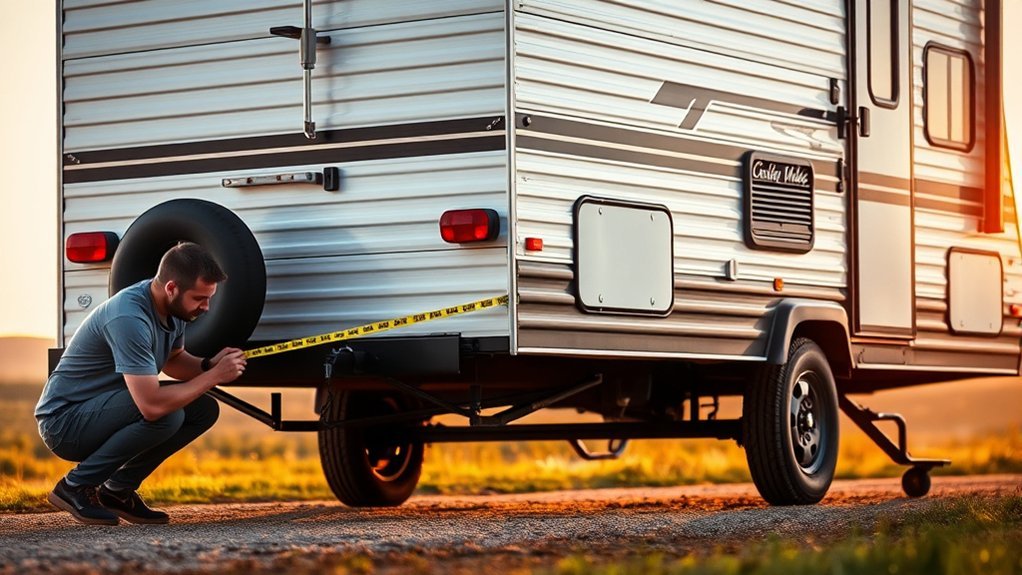
You measure a travel trailer in two ways: box length and overall length. First, measure the main body from the rear bumper to the front wall, excluding the tongue and hitch. Then measure again to the tip of the hitch or tongue for the full exterior length. Use a straight tape on level ground and compare your result with manufacturer specs. Check height, width, and campsite limits too, since small differences can affect fit and clearance.
Quick Answer
A travel trailer’s true length is measured from the rear bumper to the front wall (box length), then extended to the tip of the hitch coupler or tongue (overall length). Most trailers run 12–35 feet overall. Always measure yourself rather than trusting the model number, since manufacturer specs can differ from the real footprint by 2 to 5+ feet.
Key Takeaways
- Box length excludes the hitch; overall length includes it — always confirm which number a spec sheet or campsite listing requires.
- Model numbers frequently reflect interior living space or box size only, understating true bumper-to-hitch footprint by 2–5+ feet.
- Measure overall height to the tallest fixed rooftop point (including AC units and antennas) and add a 6-inch safety buffer for low bridges.
- Standard legal highway width is 8.5 feet (102 inches); remember to measure expanded slide-outs separately for campsite clearance.
- Verify your own physical measurements on flat pavement before booking a campsite or checking tow vehicle capacities.
Disclosure: As an Amazon Associate I earn from qualifying purchases. Some links on this page are affiliate links, at no extra cost to you.
How Long Is a Travel Trailer?
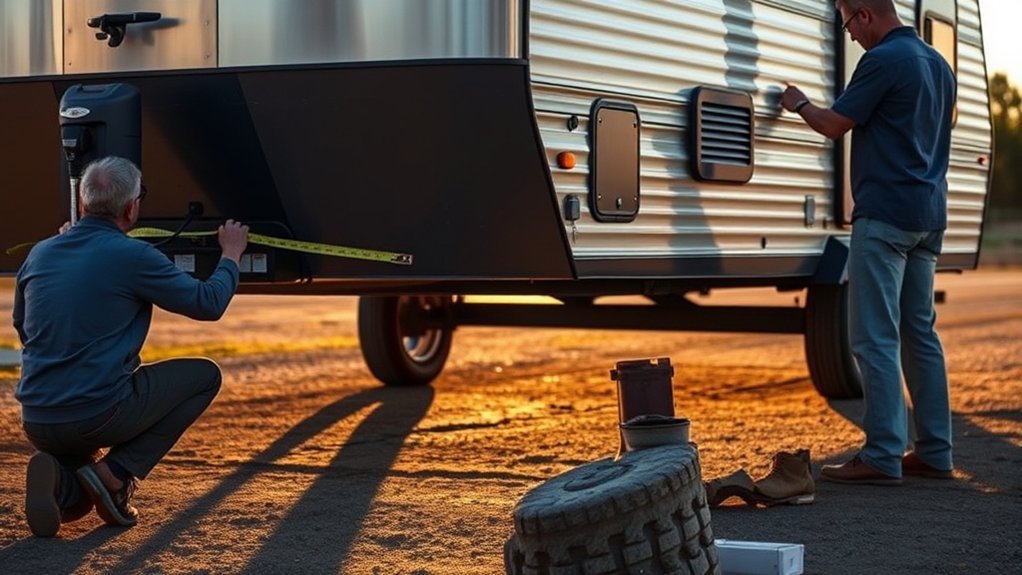
How long is a travel trailer? You’ll usually see travel trailers range from 12 to 35 feet, and the exact length depends on trailer type and floor plan layout. Manufacturers often list two numbers: box length, which covers the main enclosed living space, and overall length, which includes exterior hardware like the A-frame tongue, hitch coupler, and rear bumper. That distinction matters because your rig’s true footprint affects where you can park, tow, and camp.
You measure length from the rear bumper to the front of the body box when you need internal living specs. Add-ons like awnings, spare tire mounts, ladders, or bike racks can extend the total size further, so verify those separately. Knowing the real length helps you match towing capacity to the trailer you want and confirm it will fit comfortably at your chosen campground.
At a Glance
| Time Required | 10–15 minutes for a full length, width, and height check |
| Difficulty | Easy — simple two-person tape measure procedure |
| Tools Needed | Long tape measure (25 ft+), a helper, notepad or smartphone |
| Cost | Free, assuming standard tape measure availability |
Measure the Trailer Body First
Start with the trailer body itself: measure from the rear bumper to the front wall of the main box, leaving the tongue and hitch out of the total for an accurate reading. Use a straight, taut tape measure so it doesn’t sag and distort the number. Keep the trailer on level ground, since sloped terrain can throw off your reading by several inches. If you have extras like a rear ladder or spare tire mount, note where they sit, but keep your primary focus on the main body length for this baseline step.
Record the number in feet and inches, as feet serve as the standard unit for RV length listings. This gives you a clean baseline that matches how most spec sheets describe usable living area.
Pro Tip: Measure with the trailer unhitched and level on flat pavement rather than grass or gravel — uneven ground can tilt the body and add or subtract several inches from your measurement.
Include the Hitch and Tongue
Now add the hitch and tongue to get the trailer’s true overall length. You’ve already measured the body, but that number alone doesn’t tell the full story when parking or towing. Start at the rearmost point (including bumpers or mounted spare tires) and measure straight to the center tip of the hitch coupler — that’s the total length you will actually pull, back up, and store. Box length alone leaves out the hitch tongue, and skipping it can lead you to underestimate driveway fit, misjudge a campsite pad, or run into towing clearance problems.
Confirm the coupler head is fully included in your measurement for total accuracy. That matters when you plan routes, back into tight campsites, or check storage yard limits. Also note tongue weight capacity according to Recreation Vehicle Industry Association (RVIA) guidelines, since front hitch hardware directly impacts how the trailer balances behind your tow vehicle.
How to Measure Step by Step
- Park the trailer on level, flat pavement and unhitch it from the tow vehicle.
- Measure from the rear bumper (or rearmost accessory) to the front wall of the box — this is your box length.
- Extend the tape from the rearmost point to the tip of the hitch coupler — this is your overall length.
- Measure from the ground vertically to the highest fixed rooftop point (including AC shrouds and antennas) for total height.
- Measure across the widest exterior point (fenders or body walls) for total travel width, then measure again with slide-outs extended.
- Record all numbers in a reference note and compare them against manufacturer spec sheets, state towing rules, and campsite restrictions.
Compare Manufacturer Specs
When you compare manufacturer specs, watch for the gap between box length and overall length — some brands list the body only, while others report bumper-to-hitch dimensions. You’ll often see differences of several feet, so use model numbers and brochure spec sheets as a starting point, then verify against your own physical measurements before deciding what fits your driveway or tow vehicle.
Spec Length Variations
Travel trailer specs can be misleading because manufacturers frequently market the box length or floor plan interior size, leaving out the tongue, rear bumper, and exterior wall thickness. That creates a gap between advertised and real overall length that can exceed 5 feet once hitch hardware and rear accessories are factored in. Model numbers frequently echo the box size rather than total exterior length, so treat brochure numbers as estimates until verified.
Verify Actual Dimensions
Before trusting a brochure or sales listing, compare published figures with tape measure results. Measure from coupler tip to rear bumper to reveal hidden tongue extensions and bumper overhangs. You can search the year, make, and model plus “exterior specifications” on the official manufacturer site to double-check published figures, as some brands omit optional rear ladders or heavy-duty hitches from base specifications.
Why Model Numbers Can Mislead
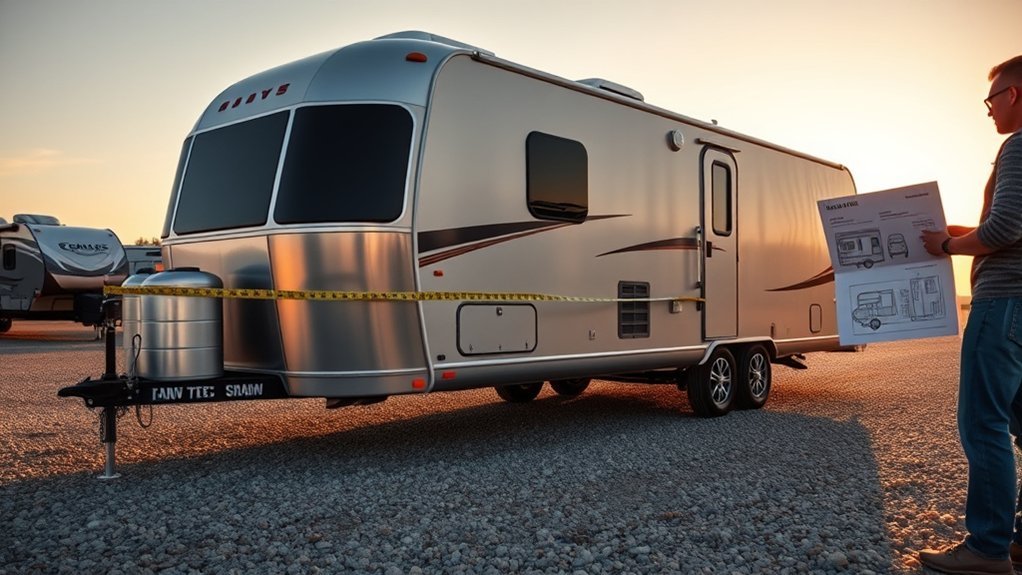
Model numbers are notorious for causing confusion because they typically reflect interior floor plan length or rounded body size rather than full bumper-to-hitch length. For instance, a trailer labeled as a “21FK” or “19RBS” might suggest a compact 19-to-21-foot rig, yet measure 24 to 26 feet overall once the front tongue structure, V-nose wedge, and rear bumper mounts are included.
Some manufacturers also use interior floor plan length to designate models, which ignores front and rear exterior wall thickness entirely. V-nose designs, extended generator platforms, and heavy-duty front couplers widen the discrepancy further. Never assume the badge on the side of the trailer represents its true exterior footprint.
Note: Exterior width, tongue weight, and total combined vehicle length matter just as much as trailer length. Check your tow vehicle’s Gross Combined Weight Rating (GCWR) and your state’s maximum towing length limits before taking to the highway.
Measure Height and Clearance
Length dictates parking space, but height determines route safety. Measure vertically from the ground to the trailer’s highest fixed rooftop point — do not stop at the roofline itself. Be sure to measure up to air conditioner shrouds, roof vents, satellite dishes, or solar panel mounts. Do not rely on factory spec sheets alone, as optional rooftop accessories added by dealers or prior owners are often excluded from published height numbers.
Most travel trailers stand between 10 and 13.5 feet tall when parked on level ground. In the United States, the federal highway minimum vertical clearance standard is 14 feet, but older bridges, urban underpasses, fuel station canopies, and rural tree branches can drop well below that standard. Always add at least a 6-inch safety buffer to your total measured height to avoid costly overhead contact.
Warning: Never rely on standard automobile GPS applications for route planning — many fail to flag low overpasses or weight-restricted roads. Use an RV-specific GPS app or manually verify overhead clearances on unfamiliar secondary roads.
Measure Width and Slide-Outs
Trailer width is another critical dimension that directly affects highway legality and campsite navigation. Standard travel trailer body widths typically range from 7 feet (for ultra-light compact models) to 8 feet or 8.5 feet (102 inches) for full-size conventional trailers. In almost all US states, 8.5 feet is the maximum legal vehicle width permitted on highways without requiring a wide-load permit.
When measuring width for travel, measure from the outer edge of one wheel fender to the other, or across the widest side molding. Don’t forget that extended side mirrors on your tow vehicle add to your overall driving width on narrow roads.
For campsite setup, you must measure your trailer’s width with all slide-outs fully extended. A trailer with an 8-foot body width can easily expand to 11 or 13 feet wide once main living room and kitchen slide-outs are pushed out. Check that campsite power pedestals, trees, and picnic tables leave enough clearance for full extension on both sides of the pad.
Combined Length and Specialty Trailers
When planning long road trips, remember that state DOT regulations govern total combined length — the total bumper-to-bumper distance of your tow vehicle and travel trailer connected together. Most state limits cap maximum combined length between 60 and 65 feet, though some western states permit up to 75 feet. Exceeding combined length limits can result in fines or restricted highway access.
Specialty travel trailers require extra measurement precautions:
- Pop-Up / Expandable Campers: Measure both closed travel length (hitch to bumper) and fully opened campsite length (end-to-end bed slide extension), which can add 4 to 8 extra feet.
- Toy Haulers: Measure with the rear ramp door closed for travel, then measure with the ramp door lowered down into deck or loading mode to ensure adequate campsite rear depth.
- A-Frame & V-Nose Trailers: Take care to measure from the tip of the V-nose to the hitch coupler center, as the angled front alters weight distribution and tongue length calculations.
Match Trailer Length to Campsites
Check each campsite’s posted length limit before booking, as site pads vary drastically depending on region and park age. Measure your trailer from the rearmost point to the tip of the tongue coupler, including rear-mounted bike racks or cargo boxes, so you know your true overall footprint. Give campground booking agents your overall measurement up front so they match you with an appropriately sized pad.
Check Site Length Limits
Campground site limits vary widely. Private RV parks and modern resorts frequently offer pull-through sites fitting rigs up to 45 or 50 feet. However, National Park Service campgrounds and state park facilities constructed decades ago often feature tighter back-in pads capped near 25 to 30 feet. Contact park management directly or check detailed campsite photos online to verify pad length, turning radius clearance, and tree overhangs before committing.
Booking Best Practices and Clearance
To ensure smooth arrivals and avoid ruined reservations, apply these booking habits:
- Verify whether the posted campsite limit refers to pad length only or total combined vehicle length (truck + trailer).
- Factor in extended accessories like rear cargo trays, ladder-mounted spare tires, and front electric tongue jacks.
- Reserve early during peak travel seasons, especially when booking sites capable of accommodating trailers over 30 feet.
The gap between a trailer’s advertised box length and its true overall length can exceed 5 feet — enough to turn a site that looked like a perfect fit into an unusable space.
Avoid Common Measurement Mistakes
To prevent costly mistakes on the road or at the campground, avoid these common measurement blunders:
- Relying solely on model codes: Assuming a 24-foot model code equals 24 feet of exterior length is the most frequent mistake RVers make.
- Ignoring rear overhangs: Bumper-mounted spare tires, generator boxes, ladder racks, and extended bike carriers add critical inches to overall length.
- Measuring on uneven surfaces: Sloped driveways or unlevel campsites flex suspensions and distort height and length measurements.
- Forgetting rooftop equipment: Measuring height to the roof fiberglass while ignoring rooftop AC shrouds or TV antennas leads to dangerous low-bridge incidents.
- Measuring tape sag: Allowing a long tape measure to sag in the middle can falsely shrink your length reading by several inches. Always use a helper or rigid tape.
Frequently Asked Questions
How do I tell the length of a travel trailer?
Measure from the rear bumper to the front wall for box length, then extend the tape measure from the rearmost point to the tip of the hitch coupler for overall length. Always measure on flat ground rather than relying solely on the model name or brochure badge.
What is the 3-3-3 rule for RVs?
The 3-3-3 rule is a driving-pace guideline: drive no more than 300 miles per day, arrive at your site by 3 PM, and stay at least 3 nights before moving on. It is designed to reduce driver fatigue rather than define trailer dimensions.
What is the 4-4-4 rule for RVs?
The 4-4-4 rule is a relaxed pacing guideline: drive no more than 400 miles per day, arrive by 4 PM, and stay at least 4 nights at each stop. Like other travel rules, it helps manage road trip fatigue.
What is the 2-2-2 rule for RVs?
The 2-2-2 rule is a beginner-friendly pacing guideline: drive no more than 200 miles per day, arrive by 2 PM, and stay at least 2 nights at each stop. It is especially popular with new RVers and larger setups.
Conclusion
Now that you know how to measure a travel trailer properly, you can skip the guesswork and book your trips with confidence. Measure the body for usable floor space, extend your tape to include the hitch tongue and rear accessories for overall footprint, and verify height and width clearances before hitting the road. Taking ten minutes with a tape measure ensures your rig fits every bridge, highway, and campsite pad without surprises.
Sources
- Federal Highway Administration — Standard highway vertical clearance and design guidelines
- National Park Service — Campground specifications and vehicle length restrictions
- Recreation Vehicle Industry Association (RVIA) — Standards for RV manufacturing and dimensions
- Cruise America — Overview of 3-3-3, 4-4-4, and 2-2-2 travel pacing rules
- RVshare — Comparison of RV driving distance guidelines and safety limits
