
Last Updated on July 29, 2026 by Mason Reed
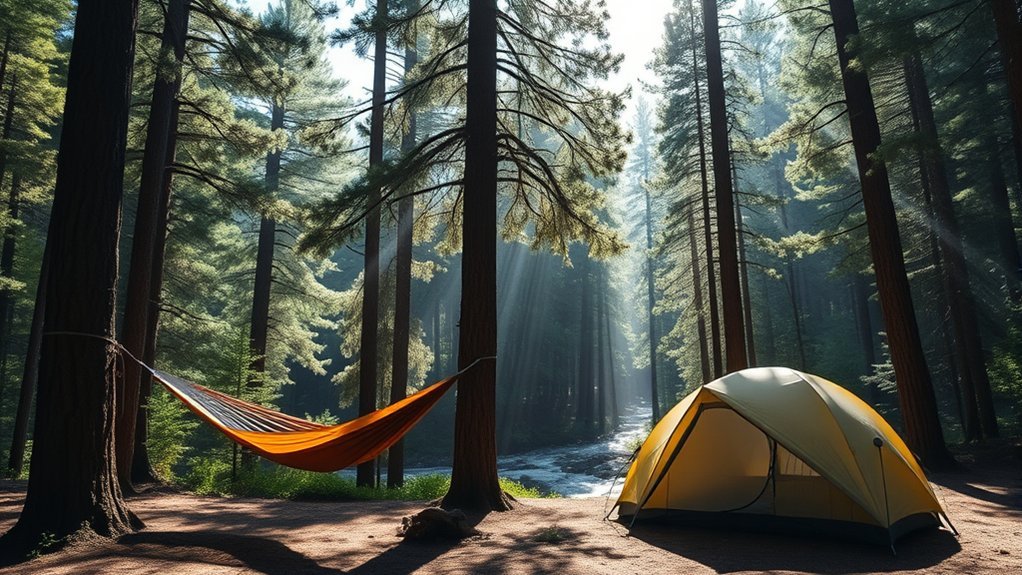
Hammock camping and tent camping can both provide a comfortable night outdoors, but they solve different problems. A hammock works best where legal, healthy trees are available and you value a compact, elevated sleep system. A tent is the safer all-around choice for treeless sites, groups, privacy, and campers who want familiar bedding and enclosed storage.
Quick Answer
A hammock is usually better for solo campers on wooded, uneven terrain who enjoy a suspended bed and can manage a tarp, bug net, and underquilt. A tent is usually better for couples, families, treeless campsites, privacy, and flexible sleeping positions. The best choice depends on the complete sleep system, not the shelter alone.
Key Takeaways
- Choose a hammock for wooded, sloped, rocky, or wet ground where hammock use is allowed.
- Choose a tent for treeless areas, groups, privacy, easier gear organization, and more sleeping-position freedom.
- A complete hammock system needs suspension, a tarp, bug protection, and bottom insulation when conditions require them.
- Compare total weight and cost, including insulation and weather protection, rather than comparing a bare hammock with a complete tent.
- Check local rules, inspect trees and overhead branches, use wide tree-friendly straps, and keep the hammock low.
At a Glance
| Best all-around choice | Tent camping |
| Best for uneven ground | Hammock camping, when suitable anchors are available |
| Best for couples or families | Tent camping |
| Warm-weather airflow | Hammock camping |
| Cold-weather simplicity | Tent camping; hammocks need careful bottom insulation |
| Treeless terrain | Tent camping |
| Lowest possible pack weight | Either; compare complete systems for the expected weather |
| Budget winner | Depends on included parts and gear you already own |
Disclosure: As an Amazon Associate I earn from qualifying purchases. Some links on this page are affiliate links, at no extra cost to you.
Comfort Comparison: Hammocks vs. Tents
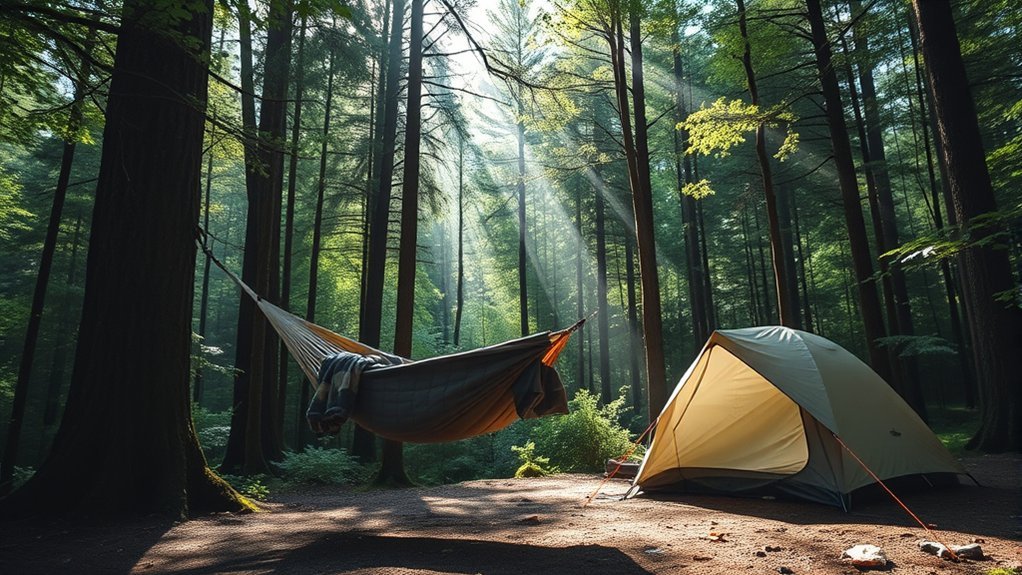
Comfort is personal, so neither shelter wins for everyone. A gathered-end hammock supports your body in a curved fabric bed. Many campers find that comfortable because rocks, roots, and small slopes no longer press through a sleeping pad. Other campers dislike the enclosed feel or need time to find the right hang.
A tent gives you a flat floor and lets you use a familiar sleeping pad, pillow, and sleeping bag. It is usually easier for side sleepers, stomach sleepers, couples, children, people who move often at night, and campers who need room to sit up, dress, or organize gear.
Hammock Comfort
For a flatter lay, do not sleep straight along the centerline. Lie at a slight diagonal and adjust the suspension until the fabric supports you without a hard ridge behind your knees. Hammock length, width, fabric, and design all affect comfort, so test the exact model before a long trip.
Air flows under a hammock as well as over it. That feels pleasant on a warm night, but it can pull heat from your back when temperatures drop. An underquilt or properly fitted sleeping pad is therefore part of the sleep system, not just an optional luxury.
Tent Comfort
A tent provides more freedom to change positions and more room for bedding. A thick sleeping pad can smooth minor bumps and add insulation from the ground. The trade-off is that you must find a reasonably level, durable surface that is not in a low spot where rainwater may collect.
Tents also offer more privacy and enclosed space. That matters at busy campgrounds, during bad weather, or when more than one person shares the shelter.
The most comfortable shelter is the one you have tested with your actual sleep gear before the trip.
Setup Simplicity: Quick and Easy Choices
A hammock can be quick to hang after practice, especially on rocky or sloped ground. However, a complete setup may include straps, a ridgeline, a tarp, stakes, a bug net, and an underquilt. Each part needs correct tension and placement. A tent may have more rigid parts, but many modern models pitch in a familiar, repeatable way.
Tree spacing is not a universal 12-to-15-foot rule. The useful distance depends on the hammock length, suspension range, anchor size, and the manufacturer’s instructions. Before packing a hammock, check whether it is allowed. The National Park Service advises campers to review local rules because some parks restrict tying equipment to trees.
Basic Hammock Setup
- Check the rules: Confirm that hammocks are allowed and note any required strap width or tree-size limits.
- Inspect both anchors: Use healthy, sturdy trees or approved anchors. Avoid dead, leaning, damaged, or loose-barked trees.
- Look overhead: Do not camp beneath dead limbs, broken tops, or other falling-branch hazards.
- Use wide straps: Leave No Trace recommends 1-inch-wide straps to reduce the risk of girdling a tree.
- Start with a relaxed hang: A suspension angle near 30 degrees is a common starting point. Keep the hammock’s lowest point around chair height, test it gently, and adjust for comfort.
Pro Tip: Practice the complete setup at home, including the tarp and insulation. A dry backyard test is the best time to discover a short ridgeline, incompatible bug net, slipping buckle, or cold spot.
Basic Tent Setup
Choose an established or durable site with enough room for the tent and guylines. Clear only loose sticks, stones, and sharp debris; do not dig trenches or damage vegetation. Pitch the tent according to the manufacturer’s instructions, stake the corners, tension the rainfly, and place any footprint fully beneath the tent floor so it cannot collect runoff.
A freestanding tent is easier to move after pitching and can work where stakes are difficult to place. A trekking-pole or non-freestanding tent may be lighter, but it depends more on secure stakes and careful tension.
Weather Resistance: Battling the Elements
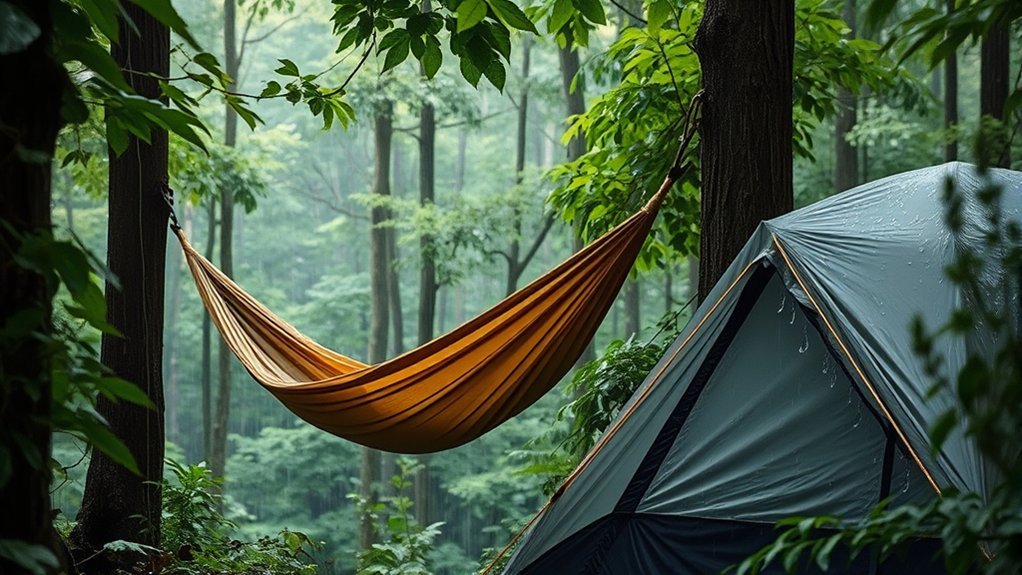
Weather protection depends more on the complete system and the quality of the pitch than on the shelter category. A tent uses a rainfly, sealed or sealable seams, a waterproof floor, stakes, and guylines. A hammock uses a tarp with enough length and side coverage, a ridgeline, secure stakes, and protection that keeps rain from following the suspension toward the hammock.
Rain Protection
A tent usually gives beginners simpler full-side coverage. Keep the rainfly tensioned, open protected vents, and avoid letting the inner wall touch the fly. Do not rely on a hydrostatic-head number alone; seam construction, fabric condition, floor design, wind, and pitch all affect whether water enters.
A hammock tarp can provide excellent rain protection when it extends beyond both ends of the hammock and is pitched low enough for the conditions. In wind-driven rain, close the tarp sides, secure every required tie-out, and keep the hammock high enough to avoid splashing but low enough to limit injury if the suspension fails.
Wind, Condensation, and Cold
- Wind: Tents present more surface area but can be stable when properly guyed. Hammocks can move in gusts, and exposed tarps can flap or pull on stakes. Seek a legal, sheltered site without camping beneath hazardous trees.
- Condensation: Tents trap more moisture from breathing and wet gear, so ventilation matters. Hammocks have more airflow, but a low, closed tarp can still collect condensation.
- Cold: A tent still needs a sleeping pad with enough insulation for the conditions. A hammock needs bottom insulation because the sleeping bag beneath your body becomes compressed and loses much of its loft.
Warning: Neither a tent nor a hammock protects you from lightning. The National Weather Service says to move to a substantial building or hard-topped vehicle when thunder is heard. Check the forecast and know your shelter plan before camping.
Terrain Suitability: Finding the Right Spot
Hammocks shine where the ground is rocky, root-covered, wet, or sloped, but only when suitable anchors are legal and available. Tents work in forests, deserts, alpine zones, beaches, and open campgrounds, but they need enough durable ground for the shelter and guylines.
Choosing a Hammock Site
Inspect the entire area, not just the two trunks. The National Park Service warns campers to avoid dead branches, dead trees, flood-prone ravines, and other site hazards. Check for damaged bark, cracks, rot, leaning trunks, loose roots, nests, and overhead limbs. Never attach hardware with nails or screws.
Use an existing campsite when required, avoid fragile vegetation, and keep foot traffic and gear on durable surfaces. Hammock camping is not automatically low impact; repeated walking beneath the hammock and tight or narrow suspension can still damage a site.
Choosing a Tent Site
Look for level or gently sloped ground that is already established or naturally durable. Avoid depressions, dry washes, river bottoms, cliff edges, exposed ridges, and places directly beneath damaged trees. The Leave No Trace durable-surface guidance favors established sites, rock, gravel, sand, dry grass, and other resilient surfaces while stressing that local rules come first.
Note: A hammock is a poor choice for deserts, many alpine areas, young forests, damaged forests, and locations that ban tree attachments. Carry a ground-capable backup only when your system is designed for it; otherwise choose a tent.
Gear Essentials: What You Need for Each
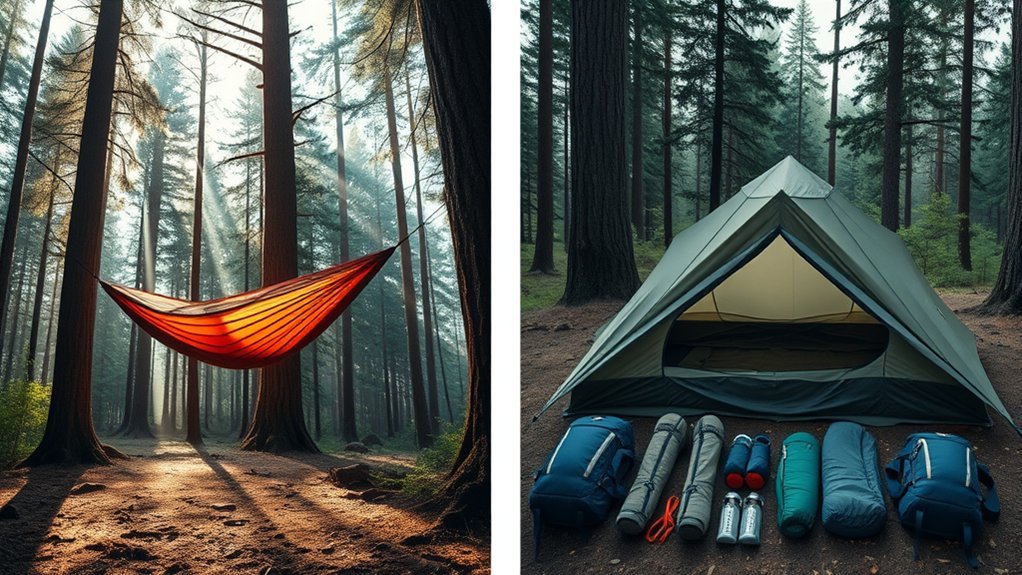
Compare complete systems for the same trip. A bare hammock is not equal to a weather-ready tent, and a tent body is not a complete sleep system without suitable bedding and insulation.
Tent Camping Gear
- Tent body, poles or trekking-pole supports, and the correct stakes
- Rainfly and guylines
- Footprint or groundsheet when recommended; it is optional for many tents
- Sleeping bag or quilt rated for the expected conditions
- Sleeping pad with suitable insulation
- Repair items matched to the tent fabric, poles, and pad
Hammock Camping Gear
- Camping hammock rated for the user and intended use
- Compatible suspension with wide tree-friendly straps
- Rain tarp, ridgeline, guylines, and stakes
- Integrated or separate bug net when insects are active
- Underquilt or hammock-compatible sleeping pad for bottom insulation
- Top quilt or sleeping bag suited to the forecast
- Small gear sling, ground sheet, or waterproof storage plan for shoes and pack
- Repair items matched to the hammock, suspension, tarp, and insulation
Keep both systems clean and dry before long-term storage. Inspect fabric, seams, poles, cords, buckles, straps, stakes, zippers, and insulation before each trip. Retire any suspension component that shows cuts, melted fibers, severe abrasion, or damaged stitching.
Sleeping Positions: Flexibility and Options
Tents provide the widest range of sleeping positions. Hammocks can be very comfortable, but fit and technique matter more. Your normal sleep style should guide the decision.
Tent Position Variability
A tent lets you sleep on your back, side, or stomach and shift through the night. You can choose a pad width and firmness that suit you, place two pads together for a couple, or use cots in roomy car-camping tents. The floor also makes it easier to manage medical devices, children, pets, or nighttime gear.
Hammock Position Options and Limits
A diagonal back position is the usual starting point in a gathered-end hammock because it helps flatten the fabric. Some people can side sleep comfortably, especially in a long, wide hammock or a bridge-style model. Stomach sleeping is less practical for most hammock campers. You can move during the night, but you have less usable floor area and fewer stable surfaces than in a tent.
Do not assume that one short test proves whether hammock camping suits you. Adjust the hang, try a small pillow or knee support, and test the setup for a full night near home.
Comfort With Terrain Adaptability
Hammocks separate bed comfort from ground shape, which is their biggest terrain advantage. Tents tie bed comfort to site selection, but they offer a stable platform and work without trees. For campers with limited balance, reduced mobility, or difficulty getting into a suspended bed, a tent with a suitable pad or cot is often easier and safer.
Bug Protection: Keeping Pests at Bay
Tents usually include mesh doors and panels, while many camping hammocks need an integrated or separate net. In either shelter, close zippers fully, repair holes, avoid leaning against netting, and keep food and scented items stored according to local wildlife rules.
Hammock Bug Netting Options
- Integrated net: Fast and tidy, but less flexible when bugs are absent.
- Full-length removable net: Surrounds the hammock and protects the underside as well as the top.
- Top-only net: Lighter, but the fabric beneath you may not stop every bite without added protection.
Check that the net is compatible with the hammock and suspension. Make sure entry zippers or closures can be reached from inside and that the net does not rest against exposed skin.
Tent Insect Protection Features
A tent’s mesh canopy and sewn floor provide a simple enclosed barrier. Keep the inner door closed, inspect mesh and zipper tracks, and avoid leaving the rainfly or door fabric where it blocks ventilation. A vestibule helps keep muddy shoes and packs outside the sleeping area without leaving them fully exposed.
Effective Repellent Strategies
Do not rely on unregistered blends of citronella, lavender, or other essential oils for dependable protection. The Centers for Disease Control and Prevention recommends EPA-registered repellents with active ingredients such as DEET, picaridin, IR3535, oil of lemon eucalyptus or PMD, or 2-undecanone. Follow the label, and do not apply permethrin directly to skin; it is intended for compatible clothing and gear.
- Wear loose-fitting long sleeves, pants, and socks when practical.
- Use intact bug netting and keep it away from bare skin.
- Follow the repellent label for age limits, application, and reapplication.
- Store food, trash, toiletries, and other scented items under the campground’s wildlife rules.
Portability and Weight: Packing for Adventure
A simple day-use hammock may weigh very little and pack small, but that figure does not describe an overnight shelter. A fair comparison includes every part needed for the expected weather.
For a hammock, count the hammock, suspension, tarp, guylines, stakes, bug net, bottom insulation, and top insulation. For a tent, count the tent body, fly, poles or trekking poles, stakes, guylines, footprint if used, sleeping pad, and sleeping bag or quilt. Some hammock systems are lighter than some tents; other complete hammock systems are heavier than ultralight tents.
Pack size follows the same rule. A hammock body is compact, but a cold-weather underquilt and tarp can take significant space. Compare your actual packed systems on a scale rather than relying on category averages.
Cost Considerations: Budgeting for Your Trip
Purchase price varies widely by materials, season rating, size, brand, and included parts. A low-cost hammock may still need straps, a tarp, a bug net, and insulation. A low-cost tent may still need a footprint, stronger stakes, seam treatment, and a sleeping pad.
Use this cost checklist before buying:
- List what is included: Confirm whether suspension, stakes, guylines, rain protection, netting, repair parts, and storage sacks come with the product.
- Add weather protection: Price the tarp or rainfly, suitable stakes, and any seam-sealing supplies.
- Add sleep insulation: Include the pad or underquilt plus the sleeping bag or top quilt needed for your expected temperatures.
- Add site-specific gear: Account for a footprint, gear sling, ground sheet, extra guylines, or approved tree straps.
- Check compatibility: Parts from different hammock brands may not fit or perform as intended.
Hammocks are not automatically cheaper, and tents are not automatically heavier. The best value is the complete system that safely covers most of your trips with the fewest extra purchases.
Privacy, Group Size, and Gear Storage
A tent is usually better for couples and families because one shelter can provide shared sleeping space, privacy, and a protected place to change clothes. It also offers walls, pockets, vestibules, and a floor for organizing gear.
A typical hammock is a one-person sleep system. Two people can camp near each other in separate hammocks, but each may need suitable anchors, suspension, and bug protection. One large tarp can sometimes cover two hammocks, but the site and layout must allow it without crowding trees or widening the campsite.
Hammock campers often store a pack beneath the tarp, hang small items from a ridgeline organizer, and place shoes on a small ground sheet. In blowing rain, low tarp coverage and waterproof sacks become more important.
Leave No Trace and Safety
Both systems can be low impact when used well, and both can damage a campsite when used poorly. Tents can crush vegetation and expand a campsite. Hammocks can scar bark, compact the area beneath the bed, and encourage campers to use trees that are too small or fragile.
- Follow land-manager rules and use designated campsites when required.
- Use wide straps and never drive nails, screws, or other hardware into trees.
- Do not remove branches or modify trees to make a hammock fit.
- Keep the hammock low and inspect the entire suspension before each use.
- Avoid dead trees, damaged trunks, loose limbs, flood channels, cliff edges, and exposed ridges.
- Keep tent stakes and guylines visible and away from busy walking paths.
- Store food and scented items exactly as local wildlife rules require.
Warning: Never hang from an unknown post, fence, small tree, dead tree, vehicle part, or building feature unless it is specifically approved and rated for that load. Suspension forces can damage anchors and cause a sudden fall.
Which Setup Should You Choose?
Choose a Hammock When
- You usually camp alone in wooded areas where hammocks are allowed.
- The ground is often rocky, wet, root-covered, or sloped.
- You have tested a hammock and sleep well in it.
- You are comfortable managing separate weather, bug, and insulation components.
- You can verify suitable anchors before the trip or have a legal backup plan.
Choose a Tent When
- You camp in deserts, alpine terrain, beaches, open fields, or places with uncertain tree access.
- You share shelter with a partner, family, child, or pet.
- You value privacy, enclosed storage, and room to change positions.
- You prefer a familiar setup with a stable floor.
- You want one shelter that works across the widest range of destinations.
Best Choice for Beginners
A tent is the more forgiving first shelter for most new campers because it works in more places and requires fewer anchor decisions. A hammock is a strong choice for a beginner who camps mainly in legal wooded sites and is willing to practice the complete system before traveling.
Frequently Asked Questions
Can I use a hammock in winter conditions?
Yes, but winter hammock camping requires experience and a complete insulation system. Use a weather-appropriate underquilt or pad, top insulation, a protective tarp, dry sleep clothing, and a setup tested at similar temperatures. A sleeping bag alone may not keep your underside warm because the insulation beneath you is compressed.
How do I choose the right hammock for camping?
Choose a hammock made for overnight use, sized for your height and preferred sleeping position, and rated above the total user load. Check the fabric, suspension compatibility, bug-net design, tarp coverage, and available underquilts. Test the complete system before relying on it in the backcountry.
What are the best trees for hammock camping?
Use healthy, sturdy trees that meet the land manager’s rules and your hammock manufacturer’s guidance. Avoid small, dead, leaning, cracked, rotten, loose-barked, or storm-damaged trees. Look overhead for dead limbs, and use wide straps rather than bare rope, nails, or screws.
How do I stay warm in a hammock?
Insulate below and above your body. Use an underquilt or a stable sleeping pad beneath you, plus a sleeping bag or top quilt suited to the forecast. Block wind with a properly pitched tarp, wear dry layers, eat and hydrate, and stop using any setup that is not keeping you warm.
Are there safety concerns with hammock camping?
Yes. The main concerns are weak anchors, damaged suspension, falling branches, excessive hanging height, poor weather planning, and local rule violations. Inspect the site and all components, keep the hammock near chair height, test the load gradually, and never camp beneath hazardous trees or limbs.
Is hammock camping allowed everywhere?
No. Parks, forests, campgrounds, and private properties may ban hammocks or set rules for strap width, tree size, placement, and designated sites. Check the current rules for the exact destination before packing a hammock.
Is a hammock lighter than a tent?
Sometimes, but not always. Compare the complete hammock, suspension, tarp, net, stakes, underquilt or pad, and top insulation with the complete tent and sleep system needed for the same conditions. A bare hammock’s weight is not a fair comparison with a weather-ready tent.
Conclusion
Hammocks offer an elevated bed, strong airflow, and freedom from rough or sloped ground. Tents offer wider site compatibility, more privacy, easier group use, and greater freedom to move. Neither shelter is automatically lighter, cheaper, warmer, or more weatherproof.
Choose the system that fits your usual destinations, sleep style, group size, and forecast. Then practice with every component before leaving home. A well-tested tent or hammock will serve you better than a theoretically perfect shelter you have never pitched in the rain.
Sources
- National Park Service: What to Bring Camping — shelter choices, bedding, food storage, and the need to check hammock rules.
- National Park Service: Finding and Setting Up a Campsite — dead-branch, flood, lightning, tent-site, and campsite-layout hazards.
- Leave No Trace: Leave What You Find — tree protection and 1-inch-wide hammock straps.
- Leave No Trace: Travel and Camp on Durable Surfaces — established campsites, durable ground, and low-impact site selection.
- Centers for Disease Control and Prevention: Preventing Mosquito Bites — EPA-registered repellents, protective clothing, and permethrin guidance.
- REI Expert Advice: How to Hammock Camp — complete hammock components, bottom insulation, tarp setup, diagonal lay, and low hanging height.
