
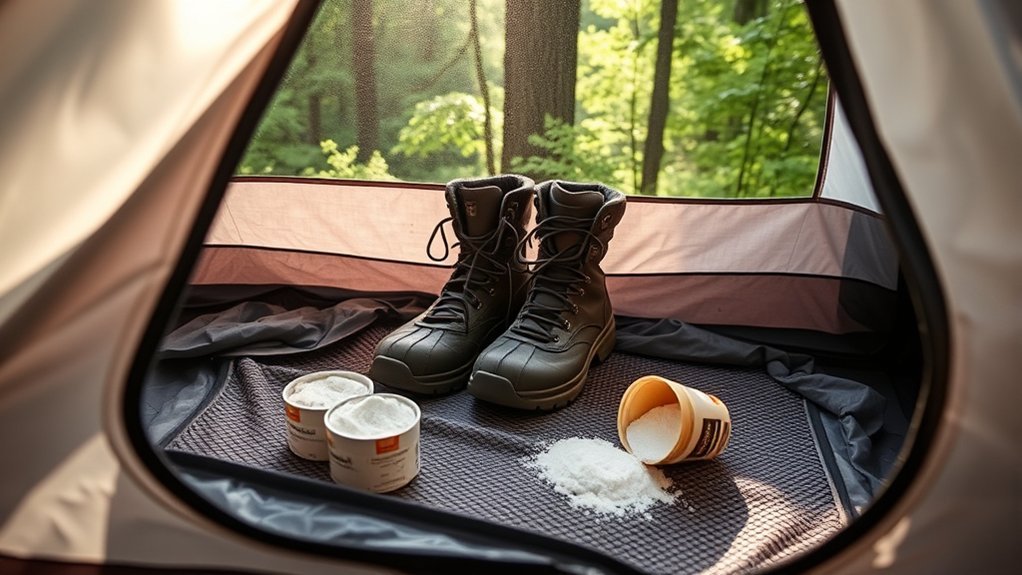
To manage wet shoes in a tent vestibule without the smell, start by removing insoles and laces for better airflow. Stuff your shoes with newspaper or paper towels to absorb moisture. Keep the vestibule vented by leaving it unzipped and using vents for circulation. Elevate your shoes and consider using silica gel packets inside them. Rotate between pairs to give each adequate drying time. There are more effective techniques to explore for keeping your shoes fresh.
Best Practices for Drying Wet Shoes in a Tent

When you find yourself with wet shoes in a tent vestibule, it’s important to act quickly to prevent odors and further moisture buildup. Start by removing the insoles and laces from your shoes; this enhances air circulation, promoting effective shoe drying. Stuff your shoes with paper towels or newspaper to absorb moisture and help maintain their shape. Position them in the vestibule, allowing air to flow freely without trapping moisture inside the tent, which can lead to unpleasant smells. If possible, use a portable fan or hang your shoes under a tarp to boost airflow and speed up the drying process. Remember, it’s vital to allow at least 12 to 24 hours for shoes to dry completely. For added odor prevention, consider using moisture-absorbing materials like rice or silica gel packets. These best practices not only help with shoe drying but also contribute to overall tent maintenance.
Products Worth Considering
Enhanced Durability & Safety: Made from premium heat-resistant plastic, this portable boot dryer ensures safe, efficient drying for your footwear. Its robust design and quality craftsmanship guarantee reliable performance across various conditions. The extended 110cm/43in power cord allows easy drying of up to two pairs of shoes simultaneously, making it perfect for work boots and more.
Hybrid forced air and convection system heats to 99-degrees to dry footwear in less time than it takes most other portable dryers
PTC heat generator, long lasting high temperature! Precise temperature control, to prevent over heating !
Importance of Ventilation in Preventing Odors
Ventilation plays an essential role in preventing odors in your tent vestibule, especially when dealing with wet shoes. Proper airflow techniques can drastically reduce moisture levels, vital for keeping bacteria and fungi at bay. A few simple strategies can make a big difference:
| Action | Purpose | Result |
|---|---|---|
| Leave vestibule unzipped | Enhances airflow | Reduces musty smells |
| Use tent vents | Facilitates circulation | Minimizes stagnation |
| Elevate wet shoes | Improves air circulation | Aids in drying |
| Regular airing | Keeps space clean | Decreases odors |
Moisture-Absorbing Solutions for Shoes
Finding effective moisture-absorbing solutions for your wet shoes can make a huge difference in your camping experience. Start by placing silica gel packets or rice-filled socks inside your footwear; these are excellent for soaking up excess moisture and preventing odors. You can also stuff your shoes with newspaper or paper towels—they absorb moisture and help maintain your shoes’ shape. For a more specialized approach, consider using moisture-absorbing shoe inserts like KickDry, which tackle both moisture and unpleasant smells efficiently.
Don’t forget to rotate between multiple pairs of shoes during your trip. Allowing each pair adequate time to dry out is one of the best shoe drying techniques to reduce odor. Finally, verify your shoes are in a well-ventilated area within the tent vestibule. Good airflow greatly enhances moisture evaporation and minimizes odors, making your camping experience much more enjoyable.
Products Worth Considering
Long lasting, all-day odor control, guaranteed
SUPER-SOFT TERRY CLOTH LAYER: Dr. Scholl’s Go Sockless! Insoles are equipped with a plush Terry cloth top layer that provides super-soft comfort and added cushioning, keeping your feet cozy and comfortable all day long
Powerful Odor & Moisture Control: Each pair is infused with Zeolite, a natural volcanic mineral that absorbs and eliminates even the toughest odors. Plus, the trusted power of Arm & Hammer Baking Soda helps combat sweat and moisture, making this the perfect shoe deodorizer for keeping your footwear fresh and dry.
Tips for Maintaining Foot Hygiene While Camping
Maintaining foot hygiene while camping is essential for comfort and overall health, especially after a day of hiking or other activities that cause sweating. Follow these tips to keep your feet fresh:
Maintaining foot hygiene while camping is crucial for comfort and health, especially after a day of outdoor activities.
- Daily foot washing: Use soap and water to clean your feet each day, particularly after sweating. This helps prevent odor buildup.
- Thoroughly dry: After washing, make sure to dry your feet well, especially between the toes, to minimize moisture and bacteria growth.
- Sock selection: Choose moisture-wicking socks that absorb sweat and keep your feet dry. This is vital in preventing unpleasant odors.
- Breathable footwear: Change into breathable shoes or sandals at night. This allows your feet to air out and stay fresh, reducing odor during your camping trip.
Products Worth Considering
Mid-Crew length sits below the calf for non-restrictive, all day comfort.
Comfortable Merino Wool: The innotree hiking socks women with thermoregulating merino wool and sweat wicking ventilation lanes ensure that it's cold and stay cool when it's hot weather, great for all season wearing.
Soft Breathable Moisture Control Fibers
Strategies for Rotating Shoe Usage
When you’re out camping, rotating your footwear isn’t just a good idea—it’s essential for keeping your shoes dry and odor-free. Start by packing multiple pairs of shoes to facilitate shoe rotation. Lightweight footwear, like sandals, can be your go-to during the day, allowing your hiking shoes to air out and dry. Implement a routine: after setting up camp, switch shoes and place the damp ones outside while you prepare meals. This maximizes exposure to sun and air, promoting effective drying techniques.
Store your shoes in a well-ventilated vestibule rather than sealing them inside the tent. This simple change encourages airflow and prevents mustiness from developing. By giving each pair adequate time to dry, you reduce moisture and the risk of unpleasant odors. Embrace these strategies, and you’ll enjoy a fresher camping experience.
Frequently Asked Questions
Can I Use Newspaper to Dry My Wet Shoes?
Yes, you can use newspaper to dry your wet shoes. Its absorbent properties enhance drying techniques. Just stuff them inside, replace when damp, and enjoy fresh, dry footwear ready for your next adventure!
How Long Does It Take for Shoes to Dry?
Shoes typically take 4 to 8 hours to dry, depending on drying techniques and moisture control. You can speed up the process by using newspaper, fans, or placing them near a heat source.
What if My Shoes Are Leather?
If your shoes are leather, treat them gently. Embrace moisture absorption methods like newspaper or special inserts. Prioritize leather care to prevent damage, ensuring your shoes stay fresh and ready for your next adventure.
Are There Specific Products for Shoe Odor Prevention?
Yes, there are specific products for shoe odor prevention. You can use shoe deodorizers or odor absorbers like activated charcoal bags or baking soda. They’ll help eliminate smells and keep your footwear fresh and inviting.
Can I Store Wet Shoes in My Backpack?
You can store wet shoes in your backpack, but it’s best to use waterproof bags for shoe storage to prevent moisture from spreading. Organizing your backpack this way keeps everything dry and fresh.
Conclusion
By following these tips, you can keep your tent vestibule fresh and your shoes dry, making your camping experience much more enjoyable. Isn’t it nice to slip into a pair of comfortable, odor-free shoes after a day of adventure? Remember, ventilation, moisture absorbers, and good hygiene are your best friends in this quest. With a little effort, you can prevent unpleasant smells and guarantee your gear is ready for the next outing. Happy camping!