
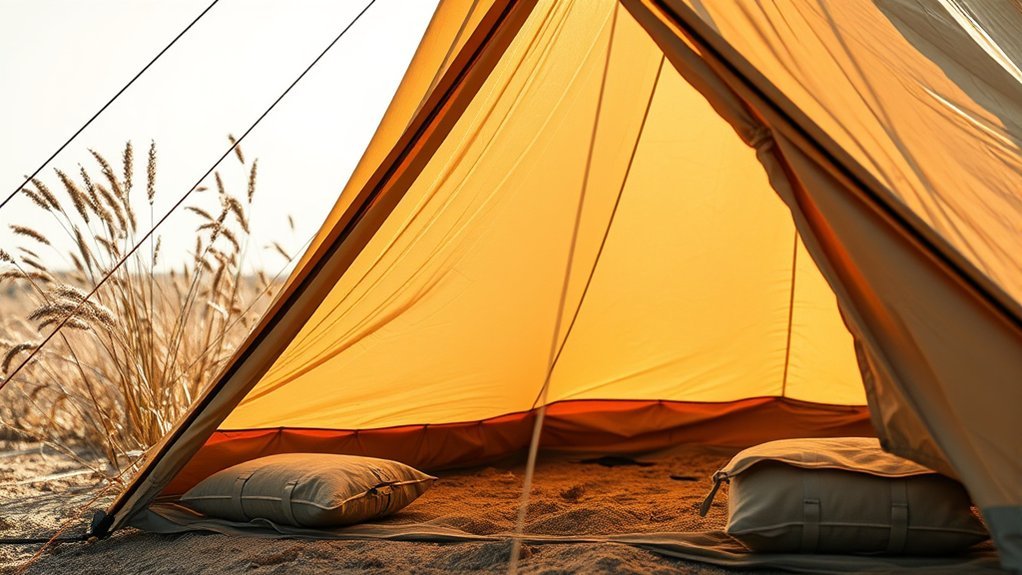
To make your tent more windproof, first assess its current wind resistance and structural integrity. Add multiple guy lines for better stability and secure those with durable stakes. Enhance the tie-out points by integrating at least five on each side to distribute tension evenly. Reinforce seams with nylon backing and apply waterproof adhesive. Finally, implement a tension system with triangular support to minimize flex. There’s much more to explore about optimizing your gear for windy conditions.
Assessing Your Tent’s Current Wind Resistance

How well does your tent stand up to strong winds? Start by evaluating your tent’s design and materials. Lighter fabrics can be more susceptible to wind damage, especially during storms. Check the structural integrity of all poles, stakes, and guy lines; verify they’re in good condition and properly tensioned. Next, assess your tent’s orientation against prevailing winds. Positioning the narrowest side into the wind minimizes resistance.
Take note of any existing guy lines and tie outs, and identify areas where you could enhance stability. A tent’s height and shape also matter; lower profiles and aerodynamic designs outperform taller, boxier models in windy weather conditions. By understanding these aspects of your tent, you can make informed decisions to boost its wind resistance, guaranteeing a safer, more liberating experience in the great outdoors.
Adding Guy Lines for Stability
To enhance your tent’s stability, adding guy lines is essential. Proper placement of these lines distributes wind loads evenly, reducing the risk of collapse in strong gusts. Make sure to secure them tightly to maintain tension and reinforce your tent’s structure against wind stresses.
Products Worth Considering
Guy Rope 4mm Reflective Cord Guy Line Tent Guide Rope with Aluminum Adjuster 13 Feet 8 Pack for Tent Tarp Outdoor Packaging
Reflective Design: When flashlight, torch, lantern, and even moonlights, the tent ropes are highly visible. At night, the cord around the camping tents can be carefree and no longer have to worry about being tripped at night
Super strong, reflective,Highly Visible, fluorescent in dark or at night
Importance of Guy Lines
Three or more guy lines can make a significant difference in your tent’s stability, especially in windy conditions. They distribute wind pressure evenly across your tent, preventing it from lifting or collapsing. For maximum effectiveness, use durable guy line materials and anchor them securely with titanium stakes or similar alternatives. Each line should be adjusted to achieve ideal guy line tension, minimizing movement during adverse weather. Incorporating inner guy lines can enhance stability by further reducing flexing. A triangular tension system helps maintain your tent’s shape, ensuring integrity under pressure. Positioning your guy lines at various angles improves resistance against wind forces, allowing you to enjoy your outdoor experience without the fear of your tent failing.
Proper Guy Line Placement
Proper placement of guy lines is essential for enhancing your tent’s stability in windy conditions. To effectively distribute tension and boost wind resistance, add at least five tie-outs on each side of your tent. Utilize inner guy lines to create additional tension, reinforcing the structure during high winds. Secure all guy lines at a 45-degree angle from the tent to maximize their effectiveness and prevent movement. Opt for durable materials like loss and glow wire for better visibility and strength in stormy weather. Incorporating a triangular tension system minimizes material bowing and helps maintain your tent’s shape under the pressure of strong gusts. Mastering these guy line techniques will empower you to tackle the elements with confidence and freedom.
Enhancing Tie-Out Points
To enhance your tent’s wind resistance, focusing on tie-out points is essential. You should strategically place multiple tie-outs for ideal tension distribution and consider using durable materials like nylon for added strength. This way, your tent can withstand gusty conditions without compromising its structural integrity.
Products Worth Considering
Guy Rope 4mm Reflective Cord Guy Line Tent Guide Rope with Aluminum Adjuster 13 Feet 8 Pack for Tent Tarp Outdoor Packaging.
Guy Rope 4mm Reflective Cord Guy Line Tent Guide Rope with Aluminum Adjuster 13 Feet 8 Pack for Tent Tarp Outdoor Packaging
Secure Your Tent: Guy Rope 4mm Reflective Cord Guy Line Tent Guide Rope with Aluminum Adjuster 13 Feet 8 Pack for Tent Tarp Outdoor Packaging.Durable guy lines with tensioners keep your tent stable even in windy conditions by evenly distributing tension across anchoring points.
Importance of Tie-Outs
Tie-outs are critical in enhancing your tent’s wind resistance, and adding multiple tie-out points can greatly bolster stability. By integrating at least five additional tie-outs on each side, you distribute wind load evenly, preventing flexing and ensuring your tent remains secure. Employing inner guy lines further tensions the structure, reducing the risk of bowing during high winds. Utilize tie-out techniques that incorporate a triangular tension system with reinforced loops to minimize material distortion, ensuring a reliable setup. Choosing durable tie-out materials and securing them with robust stakes is essential for maximizing wind resistance. These enhancements not only improve your tent’s performance but also grant you a sense of freedom to explore the outdoors confidently, regardless of weather conditions.
Optimal Placement Strategies
When securing your tent against wind, the placement of tie-out points is just as important as their quantity. Position your tie-outs at the four corners to stabilize the roof, preventing flexing during high winds. Consider your tent orientation relative to prevailing winds and use terrain considerations to inform your setup. Adding five tie-outs on each side greatly enhances stability against strong gusts. Secure inner guy lines to the tent’s structure to create additional tension, maintaining integrity under pressure. Reinforce your tie-out points with durable materials like nylon backing, ensuring they withstand wind forces without tearing. By strategically placing and enhancing these tie-out points, you can achieve a more resilient and liberated camping experience.
Materials for Durability
While strong winds can threaten your tent’s stability, using high-quality materials for your tie-out points can greatly enhance their durability. Start by reinforcing these points with nylon backing, boosting resistance to wear and tear. Add multiple guy-out points around the tent to evenly distribute tension, improving stability against gusts. Employ grosgrain and Velcro for secure bracing, which prevents flexing and maintains your tent’s structure during storms. An alpine-style tension system with inner guy lines provides further support, minimizing material bowing. Finally, install pins at tie-out points to eliminate play in the structure, ensuring your tent remains taut and secure. These durability upgrades will empower you to face the elements with confidence.
Reinforcing Seams and Fabric
To guarantee your tent can withstand strong winds, it’s essential to reinforce seams and fabric effectively. Start with seam reinforcement by adding high-quality nylon backing to bolster their strength, preventing tears. Next, apply grosgrain tape along the seams to provide extra support and seal weak points where wind might infiltrate. For enhanced stability, use a combination of velcro loops and structural pins to secure the fabric tightly, minimizing flexing during gusty conditions. Don’t overlook seam sealing—using a waterproof adhesive or seam sealer can greatly reduce the risk of fabric failure against harsh elements. When it comes to fabric selection, choose thicker, high-denier materials for high-stress areas, like corners and attachment points, as this considerably improves durability and wind resistance. By focusing on these practical upgrades, you’ll guarantee your tent stands strong against the elements, allowing for liberating outdoor adventures.
Products Worth Considering
Seal up to 60 ft of seams on tents, tarps and awnings with this water-based seam sealant; cures in 2 hours at room temperature
High Quality Fabric Tape One Sided: Durable glue waterproof fabric tape that securely adheres to surfaces without leaving residue. Ideal for repairs, hemming, and seam sealing on various materials
High-Quality Composition: Crafted from a three-layer structure—nylon/polyester mesh fabric, TPU waterproof membrane, and hot melt adhesive—this tape ensures robust adhesion and durability.
Implementing a Tension System
Reinforcing seams and fabric sets the stage for a resilient tent, but implementing a tension system takes your windproofing efforts to the next level. By adopting an alpine-style tension system, you enhance the tent’s structural integrity, effectively distributing wind loads across the canopy. Begin by adding multiple guy-out points and inner guy lines, which provide essential tension and stability, minimizing the risk of flexing or collapse in high winds.
Utilizing a triangular tension system is key; it reduces material bowing while maintaining the tent’s shape against gusts. Secure the canopy with pins at the corners to eliminate play and flex, creating a robust structure. Incorporating additional Velcro loops not only reinforces the internal framework but also secures the canopy against wind movement. These adjustments greatly improve tension dynamics, empowering you to face the elements with confidence and freedom.
Products Worth Considering
Package Includes: 20 Pcs black rope adjusters crafted from ultralight yet durable plastic, perfect for securing multiple tents or tarps during group adventures
Guy Rope 4mm Reflective Cord Guy Line Tent Guide Rope with Aluminum Adjuster 13 Feet 8 Pack for Tent Tarp Outdoor Packaging
Material: our cord adjusters are made of quality aluminum alloy, it can be compacted easy for you to carry out for joining outdoor activity
Testing Your Upgraded Tent in the Field
Testing your upgraded tent in the field is essential to confirm it can withstand various wind conditions effectively. Begin your field testing by pitching the tent in diverse wind scenarios to assess its performance and stability. Verify all guy lines are properly tensioned and secure before starting the test. Focus on the canopy’s resistance; pay close attention to weak points, especially the nylon top, and monitor for any signs of stress or damage throughout the process.
Utilize a variety of stakes and anchors, such as Vargo titanium nail stakes, to keep your tent anchored firmly during high winds. Document your findings meticulously, noting any adjustments made during testing. This performance assessment will allow you to refine your design, enhancing your tent for future adventures. By prioritizing these steps, you can confidently embrace the outdoors, knowing your tent is prepared for whatever the wind brings.
Products Worth Considering
Ultra Light: An ultra-light yet sturdy, three-sided, high-strength 7075 aluminum tent stakes that securely anchors your tent without adding unnecessary weight to your pack, you won't even feel these inflatable tent stakes lightweight in your pack; While flexible and break-resistant, these camping essentials can be straightened and reused after bending, easy to carry with you
Lightweight: 7075 aluminum ultra-light three-sided aluminum tent stakes; The Length of the stakes: 7 inch;
12.6 in U-Shape Sand Grip: Long profile locks down; tent stakes for sand grip deep in loose soil. Lightweight aluminium tent stakes pack flat for spring hikes and summer camps without bulk for travel
Frequently Asked Questions
What Materials Are Best for Guy Lines and Stakes?
For guy lines, consider paracord options for durability and strength. Use reflective guyline for visibility at night. For stakes, aluminum or fiberglass provides lightweight, sturdy support, ensuring your tent remains secure against wind and elements.
Can I Upgrade a Tent That’s Already Been Used?
Absolutely, you can upgrade your tent! With proper tent maintenance and effective upgrade techniques, enhance its durability and performance. Consider reinforcing seams, replacing poles, or adding reflective guylines for a sturdier, safer shelter.
How Do I Know if My Tent Needs Upgrades?
Inspect your tent regularly using a tent inspection checklist. Look for signs of damage like tears, worn seams, or compromised poles. If you notice these issues, it’s time to contemplate upgrades for improved performance.
Are There Windproof Tents Available on the Market?
Yes, you’ll find windproof tents on the market featuring wind resistant designs that enhance tent stability. Look for models with sturdy poles and aerodynamic shapes to guarantee you stay sheltered in gusty conditions while you explore.
How Do Weather Conditions Affect My Tent’s Stability?
Ever wondered how severe weather can compromise your tent structure? High winds can challenge its stability, reducing wind resistance and potentially causing damage. Choosing a robust design guarantees you stay secure, no matter the conditions.
Conclusion
By making these simple upgrades, you can greatly enhance your tent’s wind resistance, ensuring your camping experience is safe and enjoyable. Did you know that tents can experience wind loads of up to 50 pounds per square foot in strong gusts? With the right guy lines, reinforced seams, and a solid tension system, you’re not just preparing for a storm; you’re setting yourself up for a comfortable night under the stars, no matter the weather.