
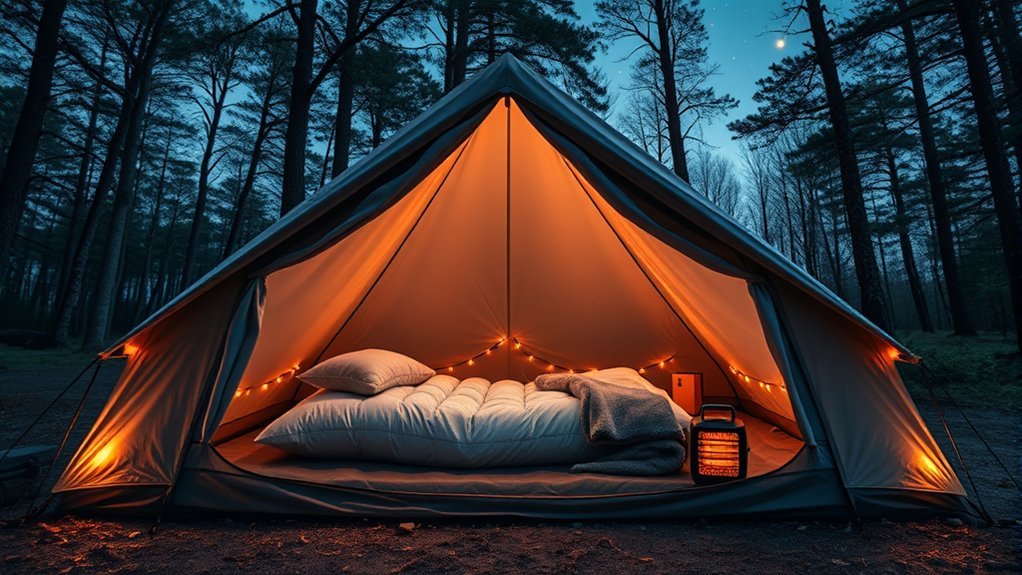
To make sleeping in a tent more comfortable, start by choosing a flat, quiet camping spot away from hazards. Select a thicker sleeping pad and a snug sleeping bag rated for cooler temperatures. Organize your tent space with storage pockets and keep it ventilated to prevent condensation. Create a cozy atmosphere with soft lighting and enjoy calming rituals before sleep. By focusing on these details, you can enhance your outdoor experience and learn more about maximizing comfort.
Choose the Right Camping Spot

When you’re planning to sleep in a tent, choosing the right camping spot can make all the difference in your comfort. Start your adventure by diving into some campsite research, seeking out quieter dispersed sites or smaller private campgrounds. These hidden gems often offer tranquility away from the noise and chaos of popular tourist spots.
Once you’ve found a suitable location, make sure it’s flat—use the water bottle technique to check for a centered bubble. Before setting up, clear away rocks, sticks, and debris to create a safe sleeping environment. Remember to position your tent away from potential hazards like steep slopes and bright camp lights to enhance your comfort. By taking these steps, you’re paving the way for a restful night under the stars, free from distractions and disturbances. Enjoy the liberation that comes with a well-chosen campsite!
Products Worth Considering
HAND-HELD SIGHT LEVEL: This hand leveling tool by Johnson is impeccably designed for surveyors; engineers; grade checkers; grading excavators and land developers to roughly level and estimate the distance during different land surveying or other projects.
Ensure a level setup every time with our RV T Level. Designed for precision, it helps you achieve an accurate reading to prevent uneven sleeping and appliance issues. Whether you're checking your rv leveling system or need a quick check with a magnetic level, this tool is your go-to for stability. Ideal for those collecting rv must haves for beginners or seasoned travelers with rv essentials for travel trailers
Type: RV Standard Level, rv bubble level, rv level, horizontal level, leveling tool set, level measuring instruments layout tools, this level indicator small bubble spirit level for photo frame desk daily leveling, multifunctional rv leveling bubble measuring kit, 4 pcs.
Select Your Sleeping Gear Wisely
When it comes to sleeping gear, picking the right sleeping pad and sleeping bag can make all the difference in your comfort level. A thicker sleeping pad offers better insulation and cushioning against the ground, while a quality sleeping bag with a lower temperature rating guarantees you stay warm through the night. By choosing wisely, you’ll set the stage for a restful night under the stars.
Products Worth Considering
【Extra Wide & 3" Thick Sleep Support】 The self inflating pad for camping is up to 78*27*8 inches, after inflating keeps you away from the uneven ground and hard rocks. The innovative egg-shaped air cells and built-in pillow are designed to relieve back and neck pressure, allowing you to freely adjust your body balance and comfort, whether on your back or your side, ensuring maximum comfort and warm for your sleep all night!
COMFORTABLE: Will keep your child warm and comfortable so you can sleep through the night; Sturdy sleeping bag with taffeta or canvas shell that is durable, easy to pack, and great for campouts and sleepovers
𝐀 𝐒𝐢𝐳𝐞 𝐨𝐟 𝐚 𝐖𝐚𝐭𝐞𝐫 𝐛𝐨𝐭𝐭𝐥𝐞 𝐘𝐞𝐭 𝐁𝐢𝐠 𝐨𝐧 𝐂𝐨𝐦𝐟𝐨𝐫𝐭: Packs small 8.6” Height × 3.1” Diameter at a weight of only 17.5 oz, same as a water bottle. When inflated it goes as large as 76” x 25” with ErgoCushion contours—3.35” at the edges tapering to 2.36” in the center. The easy-to-inflate lightweight backpacking sleeping pad can hold up to 440lb. It doubles as a sleep mat and bed roll, with unmatched comfort and portability for any outdoor adventure—𝑬𝒓𝒈𝒐𝒏𝒐𝒎𝒊𝒄 𝑪𝒐𝒎𝒇𝒐𝒓𝒕, 𝑩𝒐𝒕𝒕𝒍𝒆-𝑺𝒊𝒛𝒆𝒅 𝑷𝒐𝒓𝒕𝒂𝒃𝒊𝒍𝒊𝒕𝒚.
Choose Appropriate Sleeping Pad
Choosing the right sleeping pad can make or break your camping experience, so it’s vital to select one that suits your needs. A good sleeping pad elevates your body off the ground, providing insulation and cushioning. Here are four key factors to take into account:
- Thickness: Thicker pads offer more comfort for car camping, while thinner options are better for backpacking.
- Materials: Choose durable materials that can withstand wear and tear.
- R-Value: A high R-value is essential for insulation in colder conditions, ensuring a warm night’s sleep.
- Comfort Test: Always test your sleeping pad beforehand to guarantee support and comfort.
With the right pad, you’ll embrace the freedom of sleeping under the stars!
Invest in Quality Sleeping Bag
After selecting the perfect sleeping pad, the next step is to invest in a quality sleeping bag that guarantees a comfortable night’s sleep. Look for a bag with temperature ratings at least 10-20 degrees lower than expected nighttime temps to stay warm. A snug fit is essential; it prevents cold spots and retains heat better than a loose bag. Don’t overlook sleeping bag materials—choose high-quality insulation like down or synthetic fibers for maximum warmth-to-weight ratios and easy packing. If you crave freedom of movement, consider a backpacking quilt instead of a traditional sleeping bag. Finally, test your sleeping bag at home to verify it meets your comfort and temperature preferences before you hit the trail.
Enhance Comfort Inside the Tent
To guarantee a restful night under the stars, creating a comfortable atmosphere inside your tent is essential. With the right tent accessories, you can elevate your personal comfort and assure your camping experience is enjoyable. Here are some tips to enhance your tent environment:
Creating a cozy atmosphere in your tent is key to ensuring a restful night under the stars.
- Choose a camping pillow: Opt for inflatable or compressible pillows for better neck support instead of stuffed clothes.
- Keep your feet warm: Place a down jacket near your feet, use a Nalgene bottle with hot water, and wear warm socks to avoid cold surfaces.
- Wear cozy pajamas: A set of warm leggings and a long-sleeve shirt signals your body it’s time to rest.
- Organize your space: Use storage pockets for small items, designate a shoe area, and utilize a gear loft to maintain a tidy environment.
With these adjustments, you’ll create a cozy haven that invites relaxation and rejuvenation.
Products Worth Considering
𝗨𝗣𝗚𝗥𝗔𝗗𝗘 𝗙𝗢𝗥 𝗕𝗘𝗦𝗧 𝗗𝗨𝗥𝗔𝗕𝗜𝗟𝗜𝗧𝗬 - No more air leaks with our upgraded camping pillow! Unlike most inflatable pillows with only a thin TPU layer under the fabric, our air pillow comes with a separate bladder made from thickened TPU material and prevents air leaks effectively. We have performed nearly 1,000 quality checks before shipment and assure you a reliable experience.
BEST YEAR ROUND SLEEPING BAG - Temperature rated for 50°F to 77°F. Easily fits a 6ft adult and weighs only around 3lbs. It's perfect for spring, summer, fall, and cool weather. The ultra-strong, waterproof outer protective shell is made from our unique waterproof hex-tech design, double-layered with S-shape stitching, and 3D inner synthetic fiber fill for optimal warmth and insulation to protect you from the elements.
Cooling-Warm Pillow Cover:Gehannah travle pillows are encased in a luxury fabrics cover to further enhance their luxurious look and feel. You can sleep on cool-feeling fabrics or temperature regulating materials that can help you feel cooler. The pillows cover is made with cool technology fibers on one side to absorb body heat and enhance air circulation, and super soft fabric on the other side. Backpacking pillow is your camping gear must haves, you can enjoy every quiet outdoor night!
Create a Relaxing Bedtime Routine
As you settle into your tent for the night, establishing a relaxing bedtime routine can transform your camping experience. Start by engaging in calming rituals like reading or journaling—these bedtime activities signal to your body that it’s time to unwind. Incorporate gentle stretching or breathing exercises to relax both your mind and body, easing you into a peaceful state. Allow yourself extra time to shift to sleep; sip on herbal tea or share quiet conversations with your camping companions, fostering a serene mindset. To enhance your relaxation, avoid screens and bright lights in the hour leading up to bedtime, as this reduces stimulation and boosts melatonin production for better sleep quality. Finally, create a cozy atmosphere in your tent with soft lighting and comfortable bedding, making it an inviting sanctuary for a restful night under the stars. Embrace this routine, and you’ll drift into sleep with ease.
Manage Temperature and Environment
To sleep soundly in your tent, managing temperature and environment is key. Make sure to ventilate properly to keep condensation at bay, and don’t forget to insulate against the cold ground for added warmth. By taking these steps, you’ll create a cozy retreat that enhances your camping experience.
Products Worth Considering
Built for All-Season Comfort with 7.2 R-Value – Stay cozy year-round with the SGS-certified TREKOLOGY UL R7 camping sleeping pad. Featuring a 7.2 R-value, it provides excellent insulation against ground chill, ensuring comfortable sleep in various climates and conditions.
This waterproof outdoor mat has double sided aluminium foil and inside is made of EPE.
Built for All-Season Comfort with 7.2 R-Value – Stay cozy year-round with the SGS-certified TREKOLOGY UL R7 camping sleeping pad. Featuring a 7.2 R-value, it provides excellent insulation against ground chill, ensuring comfortable sleep in various climates and conditions.
Ventilation and Condensation Control
When you’re camping, ensuring proper ventilation in your tent is key to a comfortable night’s sleep and a moisture-free environment. To enhance your airflow strategies and achieve effective condensation prevention, follow these tips:
- Utilize vents and open doors: Encourage airflow, especially during high humidity nights.
- Adjust vents regularly: Keep them open during the day to reduce heat buildup and closed at night for warmth.
- Create a temperature difference: Warmer air inside holds more moisture, so ventilate accordingly to minimize condensation.
- Layer your clothing: Regulate your body temperature, adapting to both warm and cool conditions inside the tent.
Insulation and Ground Protection
Creating a cozy sleeping environment in your tent hinges on effective insulation and ground protection. Start by laying down a tent footprint or tarp beneath your tent; this provides essential ground insulation, shielding you from the cold earth and offering moisture protection. Next, invest in a sleeping pad with a high R-value to maximize thermal resistance and keep you warm during chilly nights. For added comfort, consider placing a foam mat under your sleeping pad to enhance insulation and prevent damage from debris. Don’t forget to ventilate your tent by opening vents, which helps combat condensation and maintains a dry atmosphere. Layer your clothing wisely to adapt to shifting temperatures, ensuring a restful night beneath the stars.
Stay Hydrated and Nourished
Staying hydrated and nourished is essential for a good night’s sleep in the great outdoors, especially after a long day of hiking or exploring. Proper hydration strategies help you avoid fatigue and enhance sleep quality. Aim to drink 2-3 liters of water daily, adjusting for activity level and heat.
Here are some tips to keep you refreshed and satisfied:
- Keep water close: Store a water bottle or hydration reservoir near your sleeping area for easy access during the night.
- Snack wisely: Opt for light, easily digestible sleep snacks like nuts or granola bars to stave off hunger without discomfort.
- Avoid heavy meals: Large meals before bedtime can lead to indigestion, disrupting your sleep.
- Use electrolyte drinks: In hot weather, these can help maintain hydration balance and prevent fatigue.
With these strategies, you’ll wake up refreshed and ready for your next adventure!
Organize Your Tent Space
Organizing your tent space can make a world of difference in your camping experience. Start by utilizing built-in pockets and gear lofts; these handy features keep small items organized and easily accessible, minimizing clutter. Designate a specific area outside your sleeping space for shoes and backpacks—using a basket or hammock storage helps maintain cleanliness. Portable storage solutions like totes can double as tables or bedside surfaces, maximizing your limited space.
To enhance ventilation and prevent moisture accumulation, run a clothesline through loops in the tent for wet clothes or gear. This keeps your belongings off the ground and promotes a drier environment. Finally, keep essential items like headlamps and snacks within arm’s reach in designated pockets. With these tent organization tips, you’ll transform your camping setup into a comfortable retreat that liberates your spirit and enhances your outdoor adventure.
Products Worth Considering
Not to deform: the lid, side plate, and baseplate of car trunk organizer are stronger density board, up to 7 pounds speaks to the its sturdiness, and even if you put a lot of stuff in car organizer, it won't deform! Quality material, no need to worry about the bad smell
Durable: Strong breathable fabric. Each shelf has a thickened board. Can hold up to 30lbs
PREMIUM STORAGE HAMMOCK. The Onewind Clip on Peak Storage Hammock gear sling easily attaches to your hammock, allowing for quick access to your stuff. No more fumbling around for your headlamp or sitting on your keys as it conveniently keeps all important items nice and tidy. Hung it above your hammock. It provides good storage space in the hammock.
Prepare for Wildlife Encounters
When you head into the wilderness, being prepared for wildlife encounters is essential to guarantee both your safety and the well-being of the animals. Understanding animal behavior can help you coexist peacefully in nature. Follow these vital wildlife safety tips:
Being prepared for wildlife encounters is crucial for your safety and the animals’ well-being.
- Store food in bear-resistant containers or hang it at least 10-15 feet off the ground, 4-5 feet from tree trunks.
- Keep your tent zipped at all times to minimize the risk of animals entering.
- Avoid cooking or eating inside your tent; set up a designated cooking area at least 200 feet from your sleeping space.
- Use scent-proof bags for toiletries and trash to prevent attracting wildlife with strong odors.
Embrace the Outdoor Experience
After ensuring your safety and the well-being of wildlife, it’s time to fully immerse yourself in the outdoor experience. Embrace nature appreciation by listening to the soothing sounds of rustling leaves and chirping crickets, creating a calming backdrop that enhances your sleep quality. As night falls, take a moment for stargazing—let the vast sky clear your mind and promote a positive mindset for rest. Share stories around the campfire, reflecting on your day’s adventures; these connections with fellow campers reduce stress and foster camaraderie. Don’t forget to incorporate outdoor mindfulness practices. A few deep breaths or a brief meditation under the stars can amplify the tranquility of your surroundings. By fully engaging with nature, you’ll reveal a deeper sense of peace, making it easier to shift into a restful state and wake up rejuvenated for another day of adventure.
Frequently Asked Questions
What Are the Best Tent Types for Different Weather Conditions?
For varying weather, choose four season tents for harsh conditions, lightweight tents for backpacking, family tents for spacious comfort, and waterproof tents to keep you dry. Each offers unique benefits to enhance your outdoor experience.
How Do I Prevent Condensation Inside the Tent?
To prevent condensation inside your tent, guarantee proper tent ventilation by opening vents and windows. Consider adding a moisture barrier underneath your sleeping area to absorb excess moisture, keeping your space dry and comfortable for restful nights.
Can I Sleep in a Hammock Instead of a Tent?
Absolutely, you can sleep in a hammock! It offers unique benefits like comfort and breathability. Just guarantee your hammock setup is secure, and you’ll enjoy a liberating experience, swaying gently under the stars.
What Are Some Tips for Camping With Kids?
Plan fun camping games to keep your kids entertained, like scavenger hunts or nature bingo. Prepare kid-friendly meals they’ll love, such as hot dogs and s’mores, to spark their excitement for the adventure ahead!
How Do I Pack My Tent for Easy Setup?
To pack your tent for easy setup, roll it tightly with poles and stakes in a separate pouch. Use compression bags for tent storage, and follow these packing tips to streamline your camping experience.
Conclusion
By choosing the right spot, selecting the perfect gear, and enhancing your tent’s comfort, you’re setting yourself up for a great night under the stars. Create a soothing bedtime routine, manage the temperature, and keep your space organized. Stay hydrated, nourish your body, and prepare for wildlife encounters—all while embracing the beauty of nature. With these tips, you’ll transform your camping experience into a cozy retreat, where restful sleep and outdoor adventure go hand in hand.