

Last Updated on July 28, 2026 by Mason Reed
Camping on gravel doesn’t have to mean a sleepless night on a lumpy surface. With the right site selection, ground prep, and anchoring strategy, gravel can actually make for one of the most stable tent setups around — especially in windy or exposed spots where standard stakes alone won’t cut it.
Quick Answer
To pitch a tent on gravel, pick a flat, dry, debris-free spot away from high-water lines. Clear sharp stones, lay down a heavy-duty footprint, and use a closed-cell foam pad under your inflatable sleeping pad. Anchor using rocks or driftwood as deadman anchors, or wide-head gravel stakes. Angle guylines at 45 degrees and re-tension regularly.
Key Takeaways
- Choose flat, dry ground well above high-water lines and flash flood risks on river gravel bars.
- Protect your gear by pairing a heavy footprint with a closed-cell foam pad beneath inflatable air mattresses.
- Standard wire stakes fail in loose rock; rely on deadman anchors (rocks/driftwood) or specialty wide stakes.
- Set guylines at a 45-degree angle to maximize holding power and adjust tension after wind gusts.
- Follow Leave No Trace principles: avoid digging trenches and return moved rocks to their natural placement before leaving.
At a Glance
| Time Required | 15–25 minutes |
| Difficulty | Moderate |
| Tools Needed | Heavy-duty footprint, gravel stakes, extra guylines, rocks or driftwood, closed-cell foam pad |
| Cost | $15–$50 (for footprint & specialized stakes) |
Disclosure: As an Amazon Associate I earn from qualifying purchases. Some links on this page are affiliate links, at no extra cost to you.
Choosing the Right Location
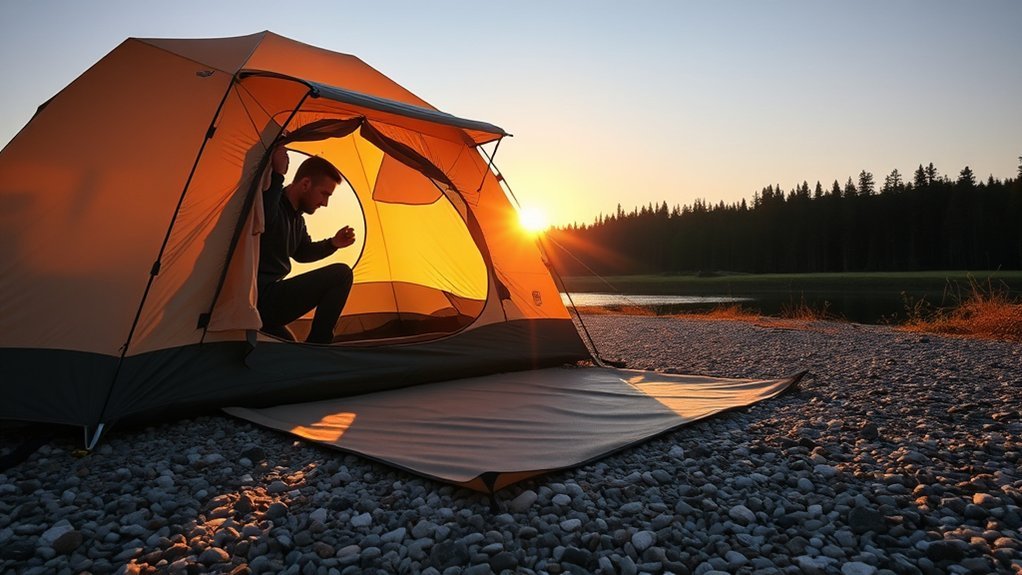
When choosing the right location for your tent on gravel, start by selecting a flat, dry area that offers a stable base for your tent layout. Keep an eye out for debris like sharp stones or sticks, which can damage your tent floor and disrupt your comfort. Pitch your tent away from water sources to reduce the risk of flooding, and check the site for drainage patterns — gravel bars near rivers can flood quickly after rain even if they look dry under clear local skies.
Look for natural features, such as large boulders or driftwood logs, to provide wind protection and enhance stability during adverse weather. Finally, make sure your spot allows for easy access to an escape route in case of sudden weather changes, and confirm that camping or ground-altering activity is permitted at the site — many public lands and riverbanks have specific rules about pitching on river gravel beds.
Note: Gravel bars and dry riverbeds can flood with little warning during upstream rain, even under clear local skies. Camp well above the high-water line whenever possible.
Preparing the Ground Surface & Sleep Protection
To guarantee a solid foundation for your tent on gravel, start by selecting a flat area that minimizes discomfort and enhances stability. Clear away sharp, jagged stones and debris to prevent punctures to your tent floor and create a smoother sleeping surface. If your campsite allows it, you can level a small platform in the gravel for added comfort — but check site rules first, since some protected backcountry areas prohibit disturbing the ground surface.
Placing a durable groundsheet or footprint under the tent is essential on gravel. A footprint should be cut slightly smaller than your tent’s actual floor dimensions so it doesn’t collect rainwater underneath the tent during a storm. To protect against punctures and ground cold, pair your inflatable sleeping pad with an inexpensive closed-cell foam pad placed directly underneath it.
Pro Tip: Never rely on an inflatable air pad alone on sharp gravel. Layer a thin closed-cell foam (CCF) pad underneath your air mattress — the foam acts as an armor shield against sharp rocks and boosts ground thermal insulation (R-value).
| Step | Action | Purpose |
|---|---|---|
| 1. Select Area | Choose a flat section above high water | Minimize slope discomfort & flood hazard |
| 2. Clear Debris | Remove sharp, angled stones | Protect tent floor and groundsheets |
| 3. Level Ground | Level a small platform (where permitted) | Prevent sliding during sleep |
| 4. Add Groundsheet | Place fitted footprint under tent | Provide puncture barrier & moisture block |
Step-by-Step Guide: How to Pitch a Tent on Gravel
Pitching on loose gravel requires a slightly different sequence than pitching on soft soil. Follow this field-tested workflow for a secure, comfortable setup:
- Sweep and Inspect: Clear large, pointed rocks from a footprint-sized area. Smooth out small gravel by hand to create a flat sleeping space.
- Lay the Footprint: Spread your heavy-duty footprint on the gravel. Ensure no edges stick out past the tent floor footprint to prevent rainwater pooling.
- Orient the Tent: Assemble the tent poles and position the tent body. Align the narrowest profile of the tent into the prevailing wind direction to minimize aerodynamic drag.
- Set Deadman or Rock Anchors: If standard pegs won’t drive into the gravel, wrap guylines around heavy rocks (10–15 lbs minimum) or driftwood logs. Bury them slightly in the gravel beds for maximum leverage.
- Tension and Fine-Tune: Extend guyline tensioners at 45-degree angles from the tent frame. Check all corners for tightness and secure rainfly vestibules to rock anchors.
Tent Selection for Gravel Camping
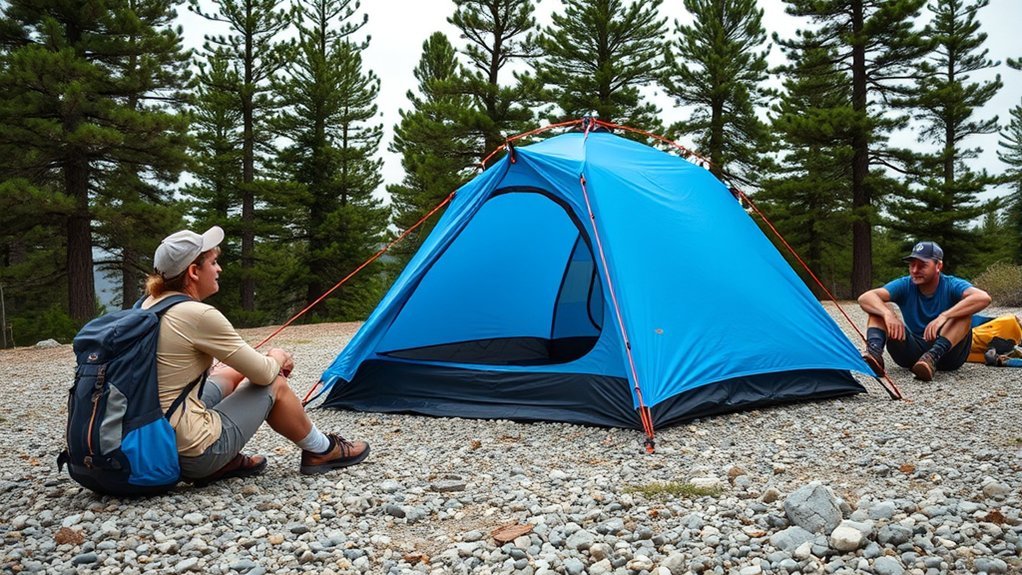
When selecting a tent for gravel camping, consider the weight and durability against the elements. Heavier tents often offer better stormproof features, which is essential in exposed areas like river gravel bars or mountain plateaus. Look for a design that balances stability with ease of setup.
Tent Weight Considerations
Selecting the right tent weight for gravel camping is important, since heavier tents often offer more durability and stability in challenging conditions. Ultralight tents may not provide the same structural strength against strong wind vectors due to lighter pole materials and delicate fabrics.
Focus on the tent’s overall weight-to-strength balance, and make sure the design allows for secure staking and anchoring. Freestanding tents are highly recommended on gravel because they hold their shape even before guylines and anchors are attached.
Durability Against Elements
Choosing a tent that withstands the elements is vital for gravel camping, since harsh conditions can quickly compromise comfort and safety. Prioritize tents made from weatherproof, high-denier fabric that resists wear against sharp stones. A bathtub floor design is worth prioritizing — it extends several inches up the tent sides to keep water out during heavy rain or surface runoff. Opt for tents with reinforced stress points and quality zippers for long-term durability on rugged terrain.
Anchoring Techniques for Stability
When camping on gravel, anchoring your tent properly is essential for stability, since standard thin wire stakes often can’t grip loose gravel or penetrate packed rock beds. You can use heavy rocks or driftwood as effective anchors and place extra-long guylines for added tension.
Effective Guyline Placement
To keep your tent stable on gravel, secure your guylines effectively. Use extra-long guylines for versatile anchor placement, and in challenging terrain, use rocks or driftwood as “deadman” anchors to boost stability. Tie guylines around solid objects and use multiple anchor points to distribute stress evenly, reducing the risk of structural collapse in severe storms. In loose gravel, double pegging or wrapping guyline loops twice around rocks adds holding power.
Alternative Anchoring Methods
Effective guylines are just one part of securing your tent on gravel; alternative anchoring methods can significantly boost stability on unstable surfaces.
| Anchoring Method | Description | Best Used For |
|---|---|---|
| Deadman Anchors | Bury rocks or driftwood logs in gravel attached to guylines | High wind & loose riverbed gravel |
| Gravel-Filled Pockets | Nylon bags or stuff sacks filled with gravel tied to corners | Exposed sites lacking large boulders |
| Long Guy Lines | Attach extended lines to large immovable trees or logs | Forest-edge gravel sites |
| Heavy-Duty Stakes | Wide-head Y-beam or snow/sand stakes driven into gravel | Compacted small gravel beds |
Use of Heavy Rocks
Using heavy rocks for anchoring can greatly improve your tent’s stability on gravel. Place larger, flat rocks on top of your tent stakes or deadman lines to add downward weight and prevent uplift during gusty conditions. You can also secure guylines directly around these rocks using timber hitch or bowline knots. Make sure rocks are firmly rested so they do not roll or fray guyline cords during persistent wind movement.
Adjusting Guylines for Wind Resistance
When strong winds strike, adjusting your guylines becomes vital for maintaining your tent’s structural integrity. Start by confirming your guylines are firmly anchored using heavy rocks, deadman logs, or wide stakes. For maximum wind resistance, position guylines at a 45-degree angle from the tent poles — this angle properly distributes force downward and outward.
Warning: Never rely on standard thin wire stakes alone in loose gravel during high winds — verify your deadman rock anchors or wide-head gravel stakes are solid before settling in for the night.
Use non-stretch guylines (such as Dyneema or polyester cord) to maintain tautness and consistent support. Reinforce high-stress points on your rainfly by adding extra guylines from the apex corners, securely tied off to heavy rocks. Check guyline tension regularly throughout the night, as wind vibration can loosen line locks.
Enhancing Comfort & Managing Ground Cold
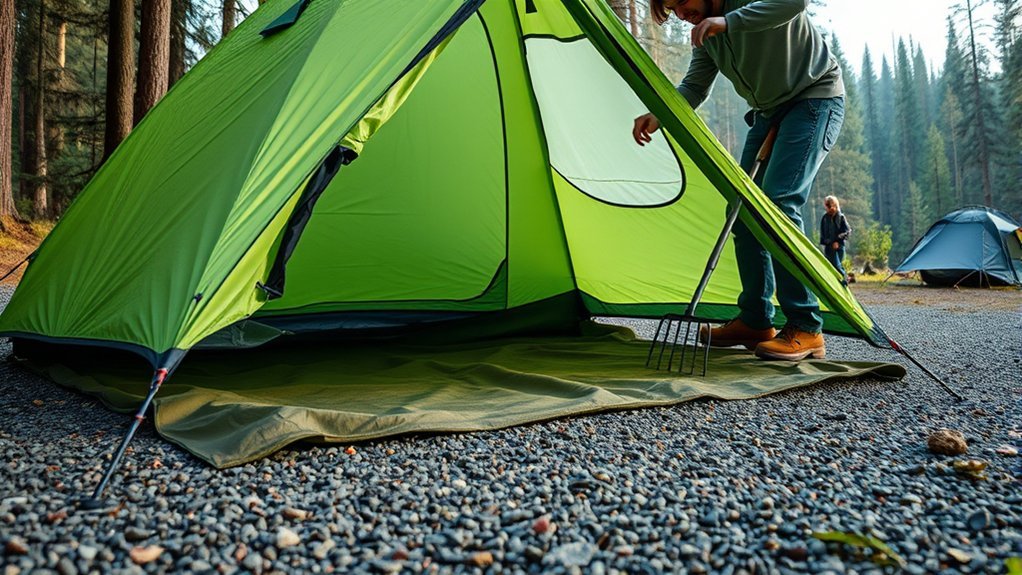
After securing your tent against the wind, focus on enhancing your sleeping comfort. Gravel surfaces conduct cold temperatures faster than soil or grass, making thermal insulation beneath your sleeping bag critical. Combining an insulated air pad with a closed-cell foam pad prevents ground cold from leeching body heat.
For better sleep quality, consider using silicone earplugs to block out environmental noise, such as crunching gravel as you shift positions. A compact, self-inflating camp seat or portable camp chair also improves comfort, as sitting directly on gravel outside your tent can quickly become uncomfortable.
Leave No Trace Principles for Gravel Camping
Gravel bars along rivers and alpine rock fields are sensitive natural ecosystems. When pitching your tent on gravel, follow core Leave No Trace principles to minimize your environmental footprint:
- Avoid Trenching: Never dig ditches or trenches around your tent in gravel. Rain runoff flows through loose gravel naturally.
- Disperse Moved Rocks: If you move large rocks to level a tent pad or build deadman anchors, return them to their natural positions before departing.
- Camp on Durable Surfaces: Gravel is an ideal durable surface because it resists soil compaction and vegetation damage — stay on gravel rather than expanding into nearby riverbank foliage.
Frequently Asked Questions
Can I pitch my tent directly on gravel without a tarp?
You can pitch directly on gravel, but doing so increases the risk of puncturing your tent floor and reduces ground cold insulation. Adding a heavy-duty footprint or tarp gives essential protection against sharp rocks and damp ground.
What type of ground tarp is best for gravel camping?
Use a durable footprint made from high-denier polyethylene or heavy polyester, cut slightly smaller than your tent floor. This protects against sharp rocks while preventing rainwater from collecting underneath.
How do I choose the right tent size for gravel?
Consider your group size and gear storage needs, but avoid oversizing. A tent with a smaller footprint requires less gravel clearing and is much easier to anchor securely on uneven rocky terrain.
Are there specific stakes designed for gravel surfaces?
Yes. Wide-head Y-beam stakes, sand/snow stakes, or heavy-duty steel pegs grip loose surfaces far better than standard thin wire pegs, keeping your tent stable in loose rock.
What additional gear can improve comfort while camping on gravel?
A closed-cell foam pad under an inflatable mattress, a fitted footprint, and earplugs make the biggest difference on gravel. A compact camp chair also helps, as gravel rarely provides soft seating.
Conclusion
Pitching a tent on gravel doesn’t have to mean a rough night’s sleep. With careful site selection away from high water, a heavy footprint paired with a closed-cell foam pad, and solid deadman rock anchors with 45-degree guylines, you can turn a coarse gravel bar into a stable, storm-ready, and comfortable backcountry campsite.
Sources
- REI Co-op Expert Advice — How to Choose a Backpacking Tent — bathtub floor design and weatherproofing guidance
- National Park Service — Backcountry Camping Basics — deadman anchor techniques and safety rules
- Leave No Trace Center for Outdoor Ethics — Durable Surfaces — environmental guidelines for gravel bar camping
