

Last Updated on July 28, 2026 by Mason Reed
Beach camping sounds simple until the wind picks up and your stakes start sliding out of the sand. Loose, dry sand offers almost no friction, so a tent that would stand effortlessly on packed dirt can come completely loose within an hour on the coast. Securing your shelter requires combining the right sand stakes, buried deadman anchoring techniques, and smart site placement relative to the wind and tide.
Quick Answer
To pitch a tent securely on beach sand, bury deadman anchors (sticks, rocks, or sandbags) 12 inches deep or use wide spiral sand stakes driven at a 45-degree angle. Tension long guylines with a trucker’s hitch, pitch your shelter’s narrowest profile into the wind, and always pitch well above the high-tide wrack line.
Key Takeaways
- Deadman anchors (buried sticks, rocks, or sandbags) leverage the mass of the beach and hold better than traditional stakes in loose sand.
- Rock stacking uses a flat foundation rock paired with a driven stake and top weight for windy coastal environments.
- Wide-profile aluminum sand stakes or spiral screw stakes outperform standard Y-beam or wire peg stakes.
- Always identify the high-tide mark (wrack line) before pitching to prevent flooding during high water.
- Rinse zippers and poles with fresh water post-trip to prevent abrasive sand wear and salt spray corrosion.
At a Glance
| Time Required | 15–30 minutes for a full deadman anchoring setup |
| Difficulty | Beginner to Intermediate (depends on coastal wind velocity) |
| Tools Needed | Wide/spiral sand stakes, non-stretch guylines, stuff sacks or sandbags, driftwood or rocks |
| Cost | $0–$40 depending on specialized sand stake upgrades |
Disclosure: As an Amazon Associate I earn from qualifying purchases. Some links on this page are affiliate links, at no extra cost to you.
Site Selection and High-Tide Safety
Before unpacking your tent, your first priority is finding a safe spot relative to the ocean tide. Pitching too close to the waterline can result in your camp being flooded during night-time high tides.
- Locate the Wrack Line: Look for the line of dried seaweed, driftwood, and debris left on the sand. This marks the reach of the highest recent tide. Pitch your tent well above this boundary.
- Check Local Tide Tables: Ocean tides fluctuate daily, and spring tides during full or new moons rise significantly higher than average. Always verify peak tide heights before setting up camp.
- Positioning for Wind: Point the narrowest, lowest-profile end of your shelter into the prevailing wind direction. This reduces surface resistance and stops wind gusts from bowing your tent poles inward.
Rock Stacking Anchor Method
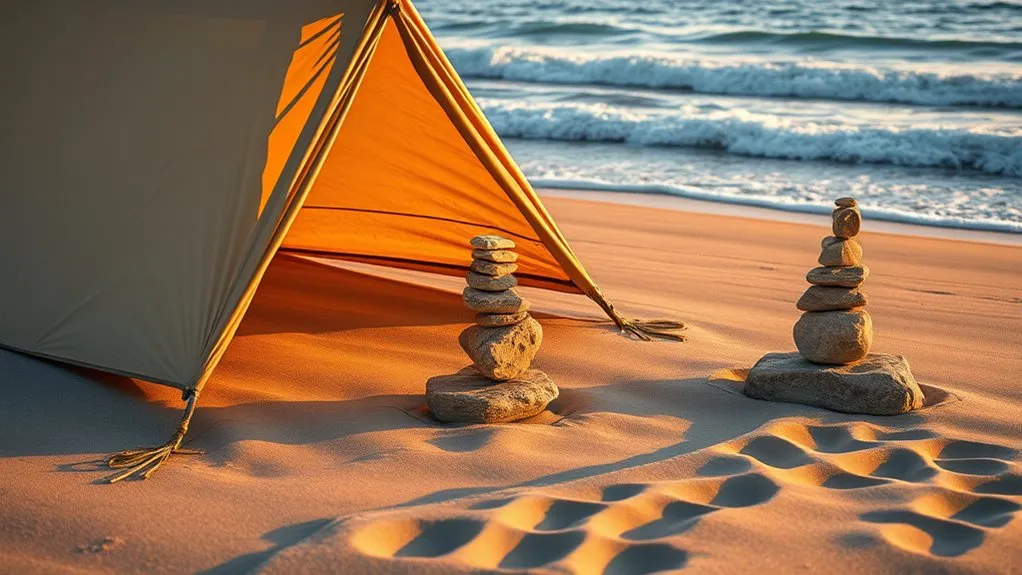
Rock stacking is an efficient fix when camping on gravelly beaches or sand with abundant river stone. Outdoor gear experts at SectionHiker emphasize using a flat “foundation rock” about the size and thickness of a thick pancake.
Place your guyline over the foundation rock, then drive your tent stake into the sand directly behind it. The rock absorbs the outward pulling force from the guyline, spreading the tension across a larger area so the stake doesn’t slide out of the loose sand. For maximum hold in high winds, pile several heavier rocks directly over both the stake and the guyline loop.
Deadman Anchors for Loose Sand
When dry, powdery sand makes standard stakes completely useless, a buried deadman anchor provides the strongest hold available on the beach.
In loose sand, a buried anchor almost always holds better than a stake pushed straight down — you’re using the weight and friction of the sand itself instead of fighting against it.
Stick or Rock Deadman Method
- Dig a horizontal trench or hole roughly 10 to 12 inches deep into the sand.
- Tie your guyline around the center of a sturdy stick, driftwood piece, flat rock, or unused tent stake using a clove hitch or bowline knot.
- Lay the anchor flat in the bottom of the hole, perpendicular to the angle of tension pulling from the tent.
- Fill the hole completely with sand and stomp it down firmly to compact the sand around the guyline.
Sandbag (Soft Deadman) Method
If driftwood or rocks aren’t nearby, fill a durable nylon stuff sack or dedicated fabric sandbag with 20 to 30 pounds of damp sand. Leave the bag’s drawcord above ground once buried in a trench. Secure your guyline to the drawcord using a trucker’s hitch knot to allow easy tension adjustments, a method recommended by Field & Stream for extreme sand and snow environments.
Warning: Never dig or place anchors inside dune grass or coastal vegetation. Dune plants anchor fragile beach ecosystems and prevent erosion. Damaging dune flora disrupts wildlife habitats and violates local park laws. Always pitch and anchor on bare sand.
Pro Tip: Fill in all dug holes before breaking camp. Unfilled deadman pits create tripping hazards for night walkers and disrupt beach nesting habitats for sea turtles and birds.
Selecting the Best Sand Stakes
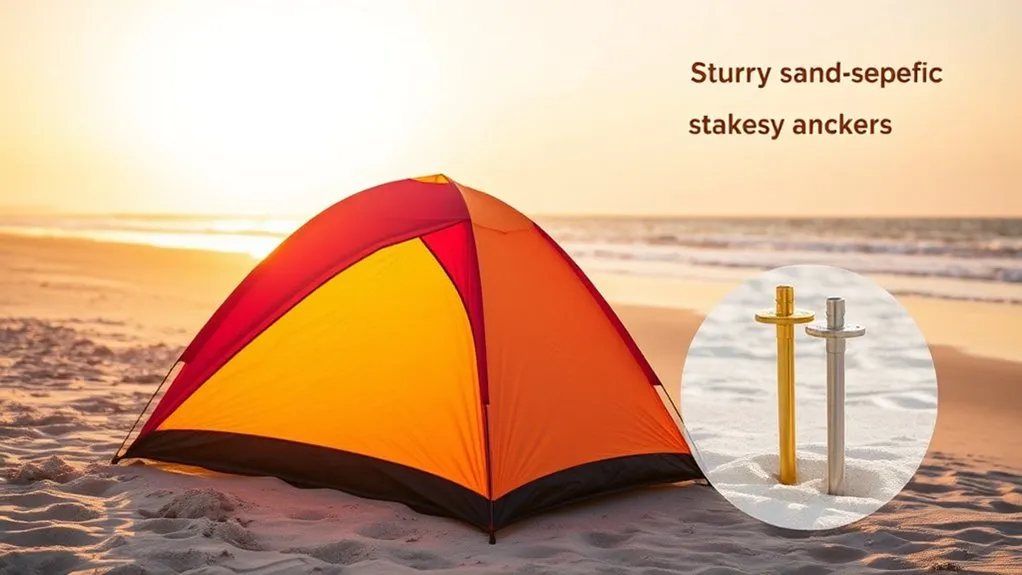
Choosing the correct stake geometry determines whether your shelter stays upright or pulls loose. Technical testing from MSR Gear Guides confirms that standard smooth thin pegs fail in loose ground, whereas specialized wide-surface stakes offer superior holding power:
- Spiral/Screw Stakes: Designs like the MSR Cyclone or large polymer screw stakes twist deep into the sand. Their threads engage the sand layers to lock the anchor into place under tension.
- Wide-Profile Sand Stakes: Curved aluminum stakes (such as the MSR Blizzard) feature a wide concave surface that holds against soil displacement. They can also double as buried deadman anchors when laid flat horizontally.
- Standard Y-Beam Stakes: Stakes like the MSR Groundhog work well in packed, damp sand near tidal areas, but lack sufficient surface area for fine, powdery dry sand higher up the shore.
When driving stakes into sand, insert them at a 45-degree angle pointing away from the tent. Pack sand firmly down against the front face of the stake shaft to maximize resistance.
Guyline Selection and Tensioning Tricks
Durable guylines keep structural load off the tent body during coastal wind storms. Select guylines with these specifications:
- Extended Length: Use 3-to-5-foot guylines so you can angle them far out from the tent frame, creating a shallower angle that prevents upward stake pull out.
- Low-Stretch Cord: Nylon cord stretches when wet or under heavy wind load. Use high-modulus polyester or Dyneema core cordage (1.5mm–2.5mm) with reflective outer sheath weaving.
- Tension Adjustment Knots: Master the trucker’s hitch or use adjustable linelocs to quickly re-tension guyline slack caused by shifting sand.
Freestanding vs. Non-Freestanding Tents on Sand
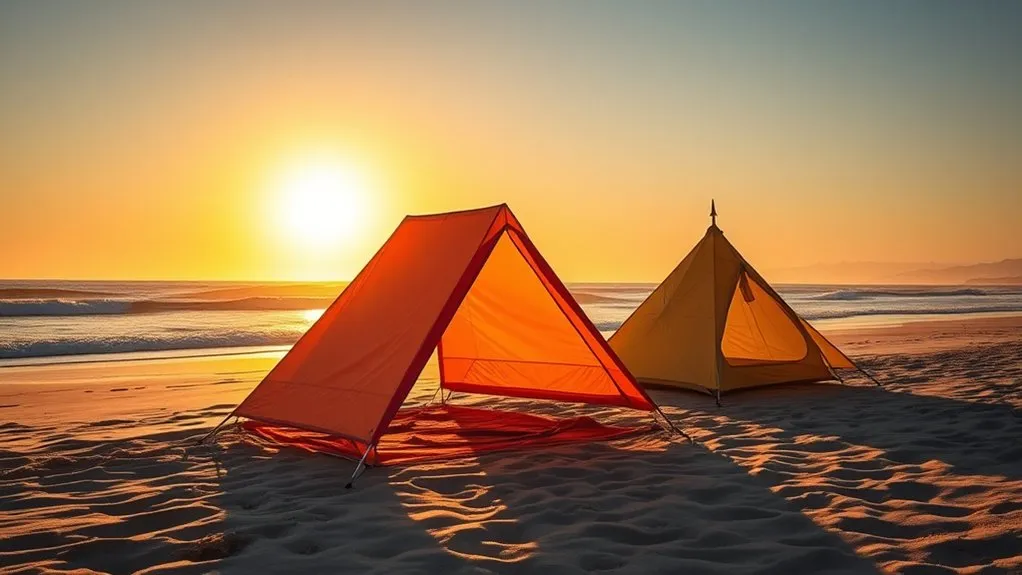
Your choice of shelter determines how critical your stake anchor points are for maintaining tent structure:
- Freestanding Tents: Dome and geodesic tents maintain their shape using rigid poles without relying on stakes. While easier to set up initially, an unstaked freestanding tent can easily blow away across the beach if gusty winds catch the rainfly. Always weigh the inside corners down with gear or anchor the exterior guylines.
- Non-Freestanding Tents: Single-pole pyramids (like the Mountain Laurel Designs Duomid) or trekking-pole shelters require solid anchor points to stay upright. While demanding more tensioning work, pyramid shelters shed high wind efficiently and allow easy pitch height tweaks on uneven sand dunes.
Sand Control and Post-Trip Gear Maintenance
Sand grit and saltwater mist are abrasive to outdoor equipment. Protect your shelter and extend its lifespan with these maintenance routines:
- Keep Sand Out of Sleep Systems: Use a lightweight ground cloth in your tent vestibule to step on before entering. Never wear shoes inside the inner tent, and use a small whisk broom or microfiber towel to sweep out sand granules before rolling up the floor.
- Protect Tent Zippers: Abrasive sand trapped in slider teeth can cause zipper teeth to jam or burst. Brush zipper tracks clean with a soft toothbrush and avoid forcing stuck sliders.
- Post-Trip Freshwater Rinse: Salt spray accelerates aluminum pole oxidation and degrades waterproof fabric coatings. Upon returning home, pitch your tent in the yard or shower, rinse all poles, stakes, and fabrics thoroughly with fresh water, and air-dry completely before storage.
Frequently Asked Questions
How do I choose the right location for my tent on the beach?
Choose a flat stretch of dry sand located well above the high-tide line (wrack line). Avoid low-lying depressions where sea water or rain runoff pools, face your door away from the prevailing wind, and stay clear of fragile dune vegetation.
What is the best time to pitch a tent to avoid wind?
Early morning and late evening typically feature calmer winds along coastal shores. Midday temperature increases create onshore thermal breezes that increase wind speeds across open beaches.
Can I use my regular tent stakes on the beach?
Standard thin hook or Y-beam stakes struggle in loose, dry sand. Upgrade to wide-profile aluminum snow/sand stakes, spiral screw stakes, or construct buried deadman anchors using sticks or sandbags for reliable holding power.
How do I prevent my tent from blowing away?
Combine deep deadman anchors with heavy equipment (backpacks, water jugs) placed inside the tent corners. Orient the shelter’s lowest profile into the wind and pull all exterior guylines taut using low-stretch cordage.
What should I do if it rains while camping on the beach?
Ensure your rainfly is pulled fully taut away from the inner tent body to prevent water transferring through contact points. Rig an overhead tarp anchored with soft sandbags to create a dry cooking and entry space outside your vestibule.
Conclusion
Successfully pitching a tent on beach sand comes down to choosing the correct anchoring strategy for coastal conditions. Rock stacking works efficiently when natural river stones are present, while buried deadman anchors—whether using logs, stakes, or sand-filled stuff sacks—provide maximum hold in soft sand. By pairing wide spiral sand stakes with low-stretch guylines, respecting high-tide boundaries, and maintaining gear clean from salt grit, your beach shelter will remain stable and secure against high ocean winds.
Sources
- SectionHiker: How to Set Up a Tent on Sand — Foundation rock setup and sand pitching methods
- Field & Stream: Camping Hack – The Deadman Anchor — Sandbag and soft deadman anchoring procedures
- Cascade Designs (MSR): Which MSR Tent Stake Is Right for You? — Technical stake selection and substrate holding force
- Outdoor Life: Best Tent Stakes Review — Comparative field test data on beach sand anchors

