
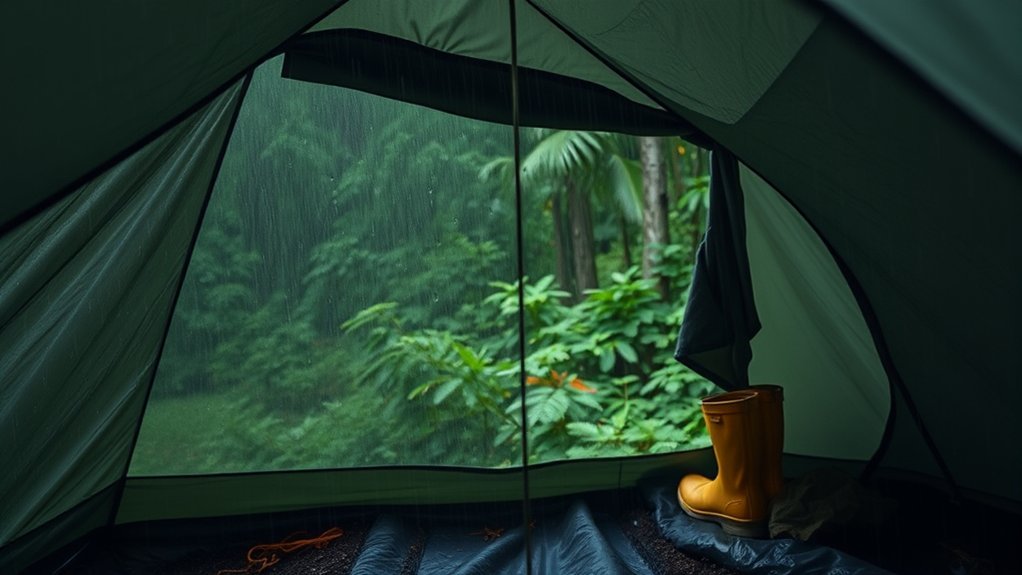
To keep your tent dry in heavy rain, choose an elevated site away from large trees and water bodies. Pitch your tent to direct rainwater away from the entrance. Use a groundsheet or footprint to shield against moisture, and consider utilizing a tarp to channel water away. Inside, manage moisture by airing out wet items and keeping the space clean. For more tips on maximizing your tent’s performance in adverse conditions, explore further strategies.
Find the Right Site

When choosing a campsite, how can you guarantee your tent stays dry? Start with a thorough site assessment. Seek elevated tent locations to minimize water pooling during heavy rain. Avoid large trees, known as widowmakers, which can drop branches or drip water onto your tent. Look for natural drainage features like a slight slope that directs water away from your setup.
It’s essential to orient your tent so the entrance faces away from the prevailing wind direction. This positioning reduces the chances of rain blowing in. Also, steer clear of camping too close to bodies of water, as this increases flood risks during heavy rain events. By carefully selecting your tent location, you can create a comfortable environment that keeps you dry and secure, allowing you to fully enjoy your outdoor liberation without the worry of unexpected downpours.
Products Worth Considering
A MUST FOR TENT: An extra tent tarp doesn't just give you extra waterproofing, it is used as ground cloths under tents to prevent wear and tear. There’s no question that an insulated tent footprint is a great idea to help protect your investment, definitely, the choice to extend your tent's life
Double Waterproof Protection: Tent footprint is made from waterproof 210T polyester fabric with silver waterproof coating, which can provide double waterproof protection, ensuring your gear and belongings stay dry in wet conditions
[HEAVY-DUTY WATERPROOF PROTECTION] Made with durable rip-stop fabric featuring polyethylene lamination on both sides for maximum water resistance. Keeps your gear, tent, firewood, and equipment completely dry in rain, snow, or harsh outdoor conditions
Pitch Your Tent Properly
To keep your tent dry, start by choosing elevated ground to prevent water accumulation. Angle the tent opening away from the prevailing wind to reduce the chance of rain entering. Finally, secure guylines tightly to guarantee stability against harsh weather conditions.
Products Worth Considering
Guy Rope 4mm Reflective Cord Guy Line Tent Guide Rope with Aluminum Adjuster 13 Feet 8 Pack for Tent Tarp Outdoor Packaging
【Complete Camping Kit】Comes with 8 stakes, 4 guylines, 1 puller, and 1 storage bag—a compact, all-in-one solution for your tent setup.
Easy to set up and highly portable this quick-assembly beach tent features a automatic pop-up mechanism, enabling swift setup and fold-down within 30 seconds. Weighing only 5.5 pounds with a compact storage size of 32 x 5 inches, it is exceptionally convenient to carry and store.
Choose Elevated Ground
Selecting elevated ground for your tent is essential, especially during rainy conditions, since it greatly reduces the risk of water pooling around or under your shelter. Low-lying areas are prone to flooding, so seek out natural drainage features like slopes or hillsides that promote efficient water runoff. When you pitch your tent, try to position it at a slight angle; this helps direct rainwater away from the entrance, minimizing the risk of leaks. Avoid setting up directly under trees, as falling branches and dripping water can be hazardous. Finally, verify your tent is staked securely on the elevated ground, as strong winds can shift it or create gaps that allow rain to seep in.
Angle Tent Opening
Properly angling your tent opening can greatly enhance its ability to repel rain during storms. To achieve this, always orient the tent entrance away from the prevailing wind direction. This minimizes the chance of water entering your shelter. Additionally, consider pitching your tent on a slight slope to facilitate water drainage.
Here’s a quick reference for effective tent orientation:
| Action | Benefit |
|---|---|
| Orient entrance against wind | Reduces rain entry |
| Pitch on a slope | Prevents water pooling |
| Choose elevated locations | Avoids flooding in low spots |
Secure Guylines Tight
Securing guylines tight is vital for maintaining your tent’s stability during storms. Position your guylines at opposing angles to maximize resistance against wind and heavy rain. Use strong stakes and tensioners to effectively anchor the guylines, preventing your tent from collapsing or shifting. Regular guyline maintenance is important; check and tighten them after rain or wind to guarantee ongoing support and prevent water infiltration through compromised areas. Aim for a slight tension adjustment that allows for movement without slack, which can lead to water pooling on the tent surface. Properly pitched guylines create a taut rainfly, reducing the likelihood of water collecting and penetrating your tent during heavy rainfall. Stay dry and secure by mastering these techniques!
Use a Groundsheet or Footprint
Using a groundsheet or footprint is essential for protecting your tent from moisture. It creates a barrier that prevents water from seeping in, keeping you dry during wet conditions. Make sure to select a properly sized groundsheet to avoid water pooling between the layers, ensuring maximum comfort while you camp.
Products Worth Considering
A MUST FOR TENT: An extra tent tarp doesn't just give you extra waterproofing, it is used as ground cloths under tents to prevent wear and tear. There's no question that an insulated tent footprint is a great idea to help protect your investment, definitely the choice to extend your tent’s life
【MULTIFUNCTIONAL TARP】-The footprint can be used as a tent tarp to prevent the wear and tear of your tent against the ground; allows you to camp on desert sand or on a sandy beach; also perfect for picnic, or to be used as a sun canopy and more; a must-have for outdoor activities.
✅ WATERPROOF - Our camping tarp is made with ripstop 190T Polyester Taffeta, taped seams, and an impenetrable water barrier for cover against all conditions
Protect Tent From Moisture
To keep your tent dry during wet conditions, it’s essential to use a groundsheet or footprint as a protective barrier against moisture from the ground. A groundsheet made from durable materials serves as a critical moisture barrier, preventing water from seeping into your tent during heavy rain. It also protects your tent from abrasions and punctures caused by sharp objects underfoot. Guarantee your groundsheet is slightly smaller than the tent to avoid water pooling between the two layers. An old tarp can work as a substitute if laid out correctly to minimize water collection. Regularly check and clean your groundsheet to keep it free of debris and moisture, guaranteeing maximum effectiveness in safeguarding your tent.
Select Proper Size Groundsheet
Selecting the right size groundsheet is essential for effective moisture protection and overall tent longevity. Aim for a groundsheet that’s slightly smaller than your tent’s base. This prevents water from pooling between layers during heavy rain. Quality groundsheet materials, like durable nylon or polyester, can shield your tent’s floor from moisture and abrasions caused by rocks and debris. To guarantee maximum performance, secure the groundsheet with stakes to keep it in place, exposing your tent to less water. Regular groundsheet maintenance, such as cleaning and checking for wear, will also extend its life. Additionally, a groundsheet provides insulation from cold, wet ground conditions, enhancing your comfort while camping in challenging weather.
Utilize a Tarp
When it rains, a tarp can be your best ally in keeping your tent dry. A proper tarp setup acts as an additional rainfly, redirecting water and ensuring your shelter remains cozy. Here are some tips for effective tarp usage:
- Slant the tarp downhill to allow rainwater to flow away from your tent, preventing pooling.
- Use hiking poles or sticks for support when trees aren’t available, creating a stable structure.
- Position the high point away from prevailing winds to maintain stability and prevent lifting during storms.
- Pack extra tarps to create covered cooking or gear storage areas outside your tent for added versatility.
Products Worth Considering
[HEAVY-DUTY WATERPROOF PROTECTION] Made with durable rip-stop fabric featuring polyethylene lamination on both sides for maximum water resistance. Keeps your gear, tent, firewood, and equipment completely dry in rain, snow, or harsh outdoor conditions
WATERPROOF & UV PROTECTION - Hammock Camping Tarp made of 210T ripstop polyester fabric with 2500 PU waterproof rating, enhanced the shelter's waterproof function and offers long-lasting protection, strengthen tear resistant & puncture resistant material without any worries. FREE SOLDIER Backpacking Tarp also can be put up as awning is effectively for blocking ultraviolet ray and protect your skin from the sun
Line the Inside of Your Tent
After ensuring your tarp setup is secure, consider lining the inside of your tent for added moisture protection. Using effective tent lining materials, such as plastic or a waterproof blanket, creates a robust moisture barrier that guards against heavy rain. Make sure any plastic is secured properly to prevent it from shifting, which could expose vulnerable areas to water intrusion. Before placing the lining inside, check the tent fabric for potential leaks to maximize your protection.
Additionally, lining can help insulate against cold and dampness from the ground, enhancing your comfort. Remember, moisture can still seep in from below, so elevate your gear off the tent floor. Utilizing dry bags or stuff sacks can keep your essentials dry, ensuring that you remain liberated and comfortable during your adventure, no matter the weather. Implementing these moisture barrier techniques will greatly enhance your camping experience.
Bring Plenty of Dry Bags
Dry bags are a camper’s best friend when it comes to keeping your gear safe and dry during wet conditions. By investing in various dry bag types, you can protect your essentials while enjoying the freedom of the outdoors. Here are four must-have items to pack:
- Large dry bags for sleeping bags and jackets.
- Medium dry bags for clothing and personal items.
- Small dry bags for electronics like phones and cameras.
- Compression dry bags to save space and keep things organized.
Utilizing effective packing techniques, like rolling the tops tightly before sealing, guarantees maximum waterproofing. Storing wet gear outside your tent in these durable bags helps keep your tent’s interior dry and comfortable. This way, you can truly liberate yourself from worries about soggy gear and focus on enjoying your camping adventure, no matter the weather!
Products Worth Considering
Waterproof - Built with professional seamless technology, our dry bag keeps your items and valuables dry during water sports like boating and kayaking. Note: It can handle accidental submersion, but should not be kept underwater for extended periods
Product Material: Dry bag is made of polyester and PU coating. The waterproof bag can effectively block moisture in light rain or humid environments to ensure that the items remain dry, but it is not recommended to soak in water for a long time
Roll-top waterproof closure
Manage Tent Moisture
Keeping your tent dry goes beyond just using dry bags; managing moisture inside the tent is equally important. Implement effective ventilation strategies to combat condensation. Open tent windows and the rainfly to encourage airflow. Properly staking your tent allows air to circulate underneath, maintaining a drier environment.
Here’s a quick guide to moisture management:
| Action | Purpose | Benefit |
|---|---|---|
| Open tent windows | Promote airflow | Reduces condensation |
| Stake the tent properly | Facilitate airflow | Maintains a drier environment |
| Remove shoes before entry | Minimize mud and moisture | Keeps interior dry |
| Store wet items outside | Limit moisture accumulation | Improves interior dryness |
| Use a tarp at the entrance | Create a clean entryway | Prevents water from dripping |
Keeping Your Tent Clean Inside
To guarantee your tent stays clean inside, it’s essential to establish good habits from the moment you arrive at your campsite. Implementing a few simple practices can make a big difference in maintaining a clean and enjoyable space.
- Shoe removal: Always take off your shoes before stepping inside to keep mud and moisture at bay.
- Entry mat: Use a waterproof entry mat outside your tent to catch excess moisture and dirt, creating a cleaner passage.
- Store wet items outside: Keep wet gear outside to prevent dampness from spreading inside. Use dry bags for added protection.
- Regularly sweep: Bring a small broom to remove debris and dirt, ensuring your tent remains clean throughout your trip.
Packing Up Your Tent – DRY!
Packing up your tent requires careful attention to moisture management. Always verify your tent is completely dry before storing it. A wet tent can lead to mold and mildew, compromising its integrity and your future adventures. Start by removing all pegs, poles, and accessories to avoid damaging the fabric during packing. Sweep out any debris and wipe down both the exterior and interior with a dry cloth to minimize residual moisture.
Next, fold the tent in half to expel excess air, then roll it tightly. This prevents water from being trapped inside during transport. For ideal tent maintenance, store your tent in a breathable bag rather than a plastic one. This allows any remaining moisture to evaporate, verifying your tent stays in good condition for future use. With these steps, you can confidently pack up your tent and be ready for the next journey, knowing you’ve prioritized moisture prevention.
Frequently Asked Questions
How Do I Choose the Best Tree Canopy for Shelter?
To choose the best tree canopy for shelter, consider canopy types like pop-up or stretch styles and prioritize shelter features such as UV protection, waterproof materials, and ventilation to guarantee comfort and safety during your outdoor activities.
What Materials Are Best for Waterproofing My Tent?
About 30% of campers experience wet gear due to inadequate waterproofing. For your tent, use durable materials like nylon or polyester with waterproof coatings like polyurethane or silicone to guarantee maximum protection against moisture and enhance your outdoor experience.
Can I Use a Regular Tarp Instead of a Tent Rainfly?
Yes, you can use a regular tarp instead of a rainfly. Tarps offer advantages like versatility and durability. Just make certain it’s properly secured and angled to direct water away, making it a practical rainfly alternative.
How Do I Prevent Water From Pooling Around My Tent?
You won’t want a swimming pool by your tent, right? So, guarantee proper drainage solutions and choose a tent site on elevated ground. Digging trenches can also guide water away, keeping your space dry and enjoyable.
What Should I Do if My Tent Still Gets Wet Inside?
If your tent’s wet inside, use tent drying techniques like ventilation and absorbent materials. Employ moisture control methods, such as placing a towel at the entrance and ensuring your gear’s dry to prevent further dampness.
Conclusion
By following these tips, you can transform your camping experience from a soggy nightmare into a dry retreat, even in the heaviest downpour. Picture yourself nestled in a warm, dry tent, raindrops dancing on the fabric above while you sip a hot drink. With the right preparation and techniques, you’ll keep your shelter cozy and comfortable. So gear up, stay proactive, and embrace the elements without letting them dampen your adventure. Happy camping!