
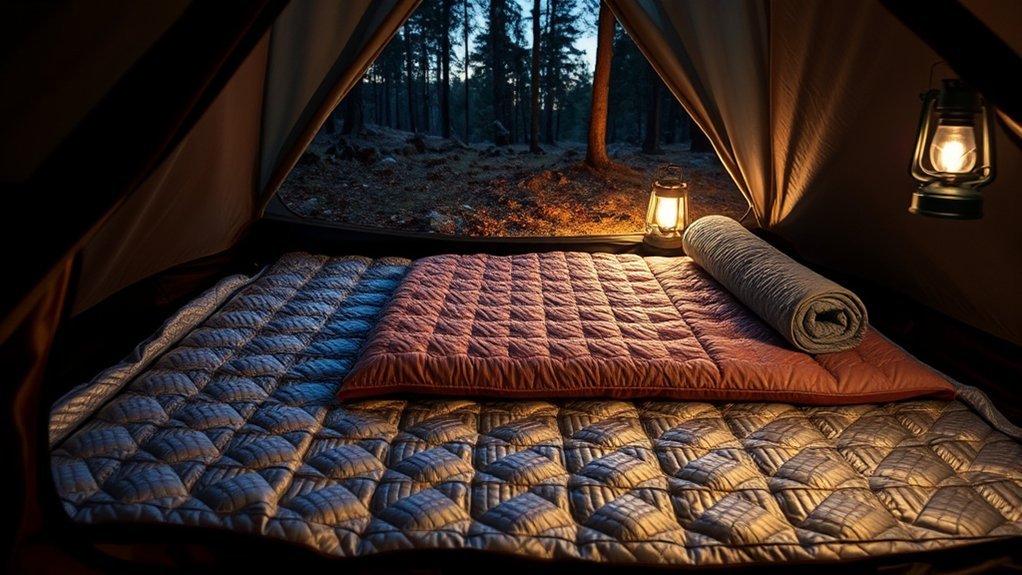
To insulate your tent floor for cold nights, start with a tent footprint to prevent heat loss and add foam sleeping pads with a high R-value for extra thermal insulation. Layer thick blankets or cardboard beneath your sleeping pad for added warmth. Guarantee the ground is dry and consider laying down a waterproof layer to combat moisture. Finally, implementing these strategies will help create a cozy environment, and there’s more you can do to enhance your camping experience.
Add Ground Insulation

To effectively insulate your tent floor, start by adding ground insulation, which can make a significant difference in your comfort level. Using a tent footprint is a practical first step; it creates a barrier against the cold ground. Next, consider incorporating foam sleeping pads with a high R-value (between 3-5) to enhance thermal insulation. Layering thick blankets, rugs, or even bubble wrap on the floor can also reduce heat loss and boost comfort. To prevent moisture from seeping in, guarantee the ground is dry and utilize waterproof materials beneath your sleeping area. For a budget-friendly option, cardboard can serve as additional insulation under your sleeping pad. By thoughtfully selecting tent materials and insulation options, you’ll elevate your camping experience, allowing you to embrace the wild with comfort and warmth.
Products Worth Considering
A MUST FOR TENT: An extra tent tarp doesn't just give you extra waterproofing, it is used as ground cloths under tents to prevent wear and tear. There’s no question that an insulated tent footprint is a great idea to help protect your investment, definitely, the choice to extend your tent's life
A MUST FOR TENT: An extra tent tarp doesn't just give you extra waterproofing, it is used as ground cloths under tents to prevent wear and tear. There's no question that an insulated tent footprint is a great idea to help protect your investment, definitely the choice to extend your tent’s life
A MUST FOR TENT: An extra tent tarp doesn't just give you extra waterproofing, it is used as ground cloths under tents to prevent wear and tear. There's no question that an insulated tent footprint is a great idea to help protect your investment, definitely, the choice to extend your tent’s life
Set Up a Wind Break
Creating an effective wind break can dramatically improve your tent’s comfort during cold weather. To maximize protection, consider these practical strategies:
- Choose your tent location wisely: Set up near natural windbreaks like rocks or shrubs.
- Construct a barrier: Use rocks, snow, or other protection materials to create a small wall around your tent.
- Utilize a tarp: Pitch a tarp or extra rainfly strategically to deflect wind and guarantee water runoff moves away from the entrance.
- Anticipate wind direction: Position your tent to face away from prevailing winds for best defense against chill.
- Check weather forecasts: Stay informed about potential wind-related challenges before heading out.
Add a Secondary Cover to the Top of Your Tent
Adding a secondary cover to your tent can greatly boost insulation by trapping warmth and protecting against the elements. You can choose from options like tarps or reflective materials, each offering unique benefits. Proper installation is key; make sure there’s an air gap to enhance insulation and prevent moisture buildup.
Products Worth Considering
Outstanding Water Shedding for True All Weather Protection: Our Rain Flies are made from PU 3000 Diamond Ripstop Nylon making them extra durable, tear- and puncture-resistant, giving you long-lasting cover from anything Mother Nature throws at you, come rain or shine.
Waterproof Protection: Built from ripstop nylon with taped seams, our waterproof camping tarp blocks rain and shields your hammock from wet conditions. Use it confidently as a rain fly for hammock camping or a tent rain fly during backcountry trips.
STAY DRY IN THE RAIN: Unigear tent tarp is made of super strong 210D rip-stop Oxford fabric, PU 3000mm waterproof. It offers an excellent protection against rain, sudden downpours, snow and high winds. Open size is 300x300cm/10x10ft
Benefits of Secondary Cover
A secondary cover, like a tarp or extra rainfly, can dramatically enhance your tent’s insulation. This addition offers several key benefits for heat retention and comfort during cold nights:
- Creates an extra barrier against cold air and moisture.
- Reflects body warmth back inside, especially with reflective materials.
- Protects against snow accumulation and fierce winds that compromise insulation.
- Elevates the cover to form an air gap, reducing heat loss and condensation.
- Shields your tent from harsh winter elements, extending its lifespan.
Types of Covers Available
When it comes to enhancing your tent’s insulation, several types of covers are available that can greatly improve warmth and comfort. One effective option is to add a tarp or an extra rainfly over your tent, which creates an additional insulating layer, minimizing heat loss. Reflective blankets, such as foil thermal blankets, can be draped over the exterior, reflecting body heat back inside while protecting against wind chill. For dedicated winter camping, consider using specialized insulated covers designed for cold weather—they’re made to provide substantial warmth. Just make certain that all covers are securely fastened to prevent wind from sneaking underneath, as this can compromise the insulation and reduce your cozy environment inside the tent.
Installation Tips and Techniques
To enhance your tent’s insulation, installing a secondary cover on top can greatly improve warmth and protect against moisture. Here are some techniques to guarantee effective installation:
- Use a tarp or an extra rainfly to create an insulating layer.
- Pitch the cover to allow proper water runoff, avoiding pooling at the entrance.
- Opt for reflective materials like space blankets to trap body heat effectively.
- Maintain a gap between the cover and tent fabric for adequate tent ventilation and condensation control.
- Secure the cover with stakes or guylines to prevent it from being blown away by wind.
String Up a Tarp Over Your Tent
Stringing up a tarp over your tent is a simple yet effective way to enhance thermal insulation. By securely anchoring the tarp at an angle, you create an air gap that reduces heat loss and protects against cold winds. Choose a durable, weather-resistant tarp to guarantee it withstands the elements and keeps your tent cozy.
Tarp Setup Techniques
Setting up a tarp over your tent can enhance your camping experience by providing essential protection from rain and snow. To guarantee effective coverage, consider the following tarp setup techniques:
- Choose tarp dimensions larger than your tent for full protection.
- Use sturdy rope or cord to secure each corner, creating a slope for water runoff.
- Incorporate adjustable tensioning devices like taut-line hitches to maintain stability in wind.
- Position the tarp a few feet above your tent to create an air gap, improving insulation.
- Always check the weather forecast to anticipate wind direction and adjust your setup accordingly.
Weatherproofing Your Tent
When you want to guarantee your tent stands up to the elements, stringing up a tarp above it is a smart move. A tarp provides an extra layer of protection against snow, rain, and wind while reflecting heat back into your tent. For peak performance, pitch the tarp at an angle to allow water runoff and prevent accumulation. Use sturdy rope or cord to secure it, ensuring a taut setup to minimize flapping.
| Tarp Materials | Maintenance Tips |
|---|---|
| Polyethylene | Regularly check for wear |
| Canvas | Clean and dry after use |
| Nylon | Store in a cool, dry place |
| Waterproof | Inspect anchor points often |
Enhancing Thermal Insulation
To enhance thermal insulation in your tent, consider placing a tarp overhead to create an effective barrier against cold winds and to trap warm air. Using the right tarp materials can greatly improve your tent’s insulation properties. Here are some tips to maximize effectiveness:
- Pitch the tarp at an angle for effective water runoff.
- Use reflective foil thermal blankets to reflect body heat back inside.
- Maintain adequate airspace between the tarp and tent to prevent condensation.
- Verify the tarp is secured to withstand wind and snow loads.
- Regularly check for any snow buildup or damage to the tarp.
Line the Interior With Insulating Fabric
Lining the interior of your tent with insulating fabric can dramatically enhance your comfort during cold nights. Using materials like fleece or thermal blankets greatly reduces heat loss, keeping your sleeping area warm. A combination of insulating materials, such as foil thermal blankets layered with fleece, creates an effective barrier that reflects body heat back to you.
Properly layering these fabrics also aids in moisture absorption, helping to minimize condensation that may accumulate inside the tent. For added convenience, consider using removable liners; they allow for easy cleaning and adjustments based on temperature changes.
Ensure that the insulating fabric covers the entire floor area of your tent to maximize thermal efficiency. This attention to detail in your setup can transform your camping experience, allowing you to embrace the outdoors without sacrificing comfort during those chilly nights.
Products Worth Considering
KEEPS YOU WARM & DRY: The Drymate Tent Carpet has a waterproof backing that works as a protective barrier that prevents any moisture from soaking through to your tent, keeping you warm and dry.
Add up 27°F / 15°C top to your sleeping bag
KEEPS YOU WARM & DRY: The Drymate Tent Carpet has a waterproof backing that works as a protective barrier that prevents any moisture from soaking through to your tent, keeping you warm and dry.
Utilize a Safe Tent Heater
Using a safe tent heater can greatly enhance warmth and comfort during cold camping nights, provided you follow essential safety precautions. The right heater selection can make a significant difference, but it’s vital to prioritize safety to avoid hazards.
- Verify your heater has a low air shut-off feature to prevent accidents from low oxygen levels.
- Use a carbon monoxide detector inside the tent, especially with propane heaters, to monitor gas buildup.
- Maintain proper ventilation to reduce condensation and prevent damp conditions.
- Choose a heater that requires a filter to avoid clogging from oils, guaranteeing safe, consistent operation.
- Consider wood heat in an ice shelter if you want dry warmth without moisture issues.
Products Worth Considering
Emits 4,000 or 9,000 BTU/hr radiant heat
4,000- to 9,000-BTU radiant heater for spaces up to 225 square feet. Approved for outdoor use; clean-burning; nearly 100-percent efficient
PORTABLE PROPANE HEATER:Take the warmth of home anywhere you go with our portable propane heater. Camping heater is lightweight and convenient, yet strong enough to handle even the most challenging environments. Portable heater runs on propane tank not Included. It's the perfect companion for camping heater,patio heater,outdoor heater,space propane heater,camping heater,hunting heater,gas heater.Provides powerful outdoor heat.Making it suitable for working and relaxing
Additional Ways to Stay Warm When Winter Tent Camping
While winter camping can be a magical experience, staying warm is essential to enjoy those chilly nights comfortably. Start by using a tent footprint beneath your tent; this extra barrier minimizes heat loss from the cold ground. Incorporate foam sleeping pads with a high R-value into your sleeping gear to guarantee you have a warm surface to rest on. Layer thick blankets or rugs on the floor to create an additional buffer against the frigid ground. Before crawling into your sleeping bag, use a hot water bottle to pre-warm it, providing immediate comfort. Finally, ensure proper ventilation inside the tent to avoid moisture buildup, which can lead to a colder environment and condensation issues. By layering thermal layers in your clothing and optimizing your sleeping setup, you’ll enhance your winter camping experience and stay cozy even on the coldest nights.
Frequently Asked Questions
What Materials Are Best for Insulating a Tent Floor?
For insulating a tent floor, you’ll find foam pads and reflective liners are your best bets. Foam pads provide cushioning and insulation, while reflective liners help trap heat, keeping your space warm and comfortable.
How Thick Should the Insulation Layer Be for Optimal Warmth?
You’d think a thin layer suffices, but for ideal warmth retention, aim for at least 1 to 2 inches of insulation thickness. This guarantees you stay cozy rather than shivering through the night.
Can I Use Old Blankets for Tent Floor Insulation?
Yes, you can use old blankets for tent floor insulation. Different blanket types offer varying insulation effectiveness, so choose thicker, denser options to maximize warmth and comfort during your outdoor adventures.
How Do I Prevent Moisture Buildup Inside the Tent?
To prevent moisture buildup inside your tent, prioritize condensation control. Integrate ventilation solutions like vents or mesh panels, keeping air flowing. Trust me, fresh air is your tent’s best friend for a comfortable night!
Is It Safe to Use a Regular Mattress for Camping Insulation?
Using a regular mattress for camping isn’t ideal. Its durability might suffer outdoors, compromising your comfort. Instead, consider specialized camping pads or inflatable mattresses designed for better insulation and portability during your adventures.
Conclusion
By implementing these insulation strategies, you’ll greatly enhance your comfort on cold nights. Did you know that the ground can sap up to 90% of your body heat? By adding layers of insulation beneath you and protecting your tent from the elements, you’ll create a warm haven. Remember, staying cozy while winter camping isn’t just about the gear; it’s about smart preparation. With these tips, you can enjoy the beauty of the outdoors without the chill.