

Last Updated on July 28, 2026 by Mason Reed
When camping, keep your campfire at least 15 feet from tents, sleeping gear, shrubs, trees, and other flammable items, unless local rules require an even greater distance. Use an established fire ring whenever one is provided, keep plenty of water and a shovel nearby, and never leave the fire unattended. A few careful setup choices can prevent burns, damaged gear, and escaped fires while making your camping experience much safer.
Quick Answer
Keep a campfire at least 15 feet from tents, sleeping gear, shrubs, and other flammable items. Keep your tent and gear upwind of the fire when conditions are calm enough for a campfire, use an established ring, clear combustibles around it, and never leave the fire unattended.
Key Takeaways
- Keep tents, sleeping gear, shrubs, and other flammable items at least 15 feet from the fire unless local rules require more.
- Place tents and gear upwind of the fire when possible; if winds are strong, gusty, or conditions are critically dry, skip the campfire.
- Check campground rules, permits, fire restrictions, and current fire weather before lighting anything.
- Keep the fire small, supervised, and supplied with enough water to extinguish it completely.
- Drown, stir, and repeat until every coal and piece of wood is cold to the touch before sleeping or leaving.
At a Glance
| Time Required | About 10–15 minutes to check and prepare the site, plus enough time to extinguish the fire completely before leaving or sleeping |
| Difficulty | Easy, but requires continuous adult attention |
| Tools Needed | Established fire ring or approved fire container, plenty of water, bucket, shovel or trowel, and a safe ignition source |
| Cost | Varies by campground and local firewood rules; firewood or permits may cost extra |
Disclosure: As an Amazon Associate I earn from qualifying purchases. Some links on this page are affiliate links, at no extra cost to you.
Safe Campfire Distance From Tents and Gear

According to the National Park Service, tents, gear, and other flammable objects should be at least 15 feet away and upwind of the firepit. In practical terms, that means the fire should be downwind of your tent and gear when conditions are suitable for an open fire.
The 15-foot figure is a minimum safety guideline, not permission to ignore campground rules. A land manager may require a larger separation, restrict fires to designated rings, or prohibit them entirely. If an established campground fire ring sits too close to where you planned to pitch your tent, move the tent rather than moving or creating a new fire ring.
Look up as well as around. Low branches, dead vegetation, dry grass, exposed roots, piles of firewood, chairs with synthetic fabric, and other combustible materials can all be affected by sparks or radiant heat.
Guidelines for Campfire Setup
Use an established campfire ring, grate, or designated fire pit whenever one is available. If ground fires are allowed outside a developed ring, follow the land manager’s exact requirements before disturbing soil or vegetation.
As a general benchmark, federal recreation guidance recommends clearing a roughly 10-foot-wide area around a campfire of dry leaves, grass, pine needles, twigs, and other burnable material. Some agencies require a larger cleared area, so posted rules always take priority. The National Park Service campfire-safety guidance also stresses keeping fires away from overhanging branches, logs, dry vegetation, and other fuels.
Note: Check the campground or land manager’s website shortly before your trip and again when you arrive. Fire rules can change quickly. Some areas require permits, and a permit does not override an active closure or fire restriction.
Wind matters just as much as distance. Keep your tent and gear upwind of the fire when possible, but remember that wind can shift. A National Weather Service Red Flag Warning means critical fire-weather conditions are occurring or expected soon. A Red Flag Warning is not itself the same thing as every local fire ban, so check both the weather and the land manager’s legal restrictions. During strong, gusty, or critically dry conditions, the safest choice is to skip the wood fire.
| Fire-to-Tent Distance | At least 15 feet from tents, gear, shrubs, and other flammable items; follow any larger local minimum |
| Cleared Area | About 10 feet wide as a general baseline, or the larger area required by local rules |
| Wind Direction | Keep tents and gear upwind; avoid fires when winds are strong or gusty |
| Emergency Equipment | Plenty of water plus a shovel or trowel within immediate reach |
Supervision Around Campfires
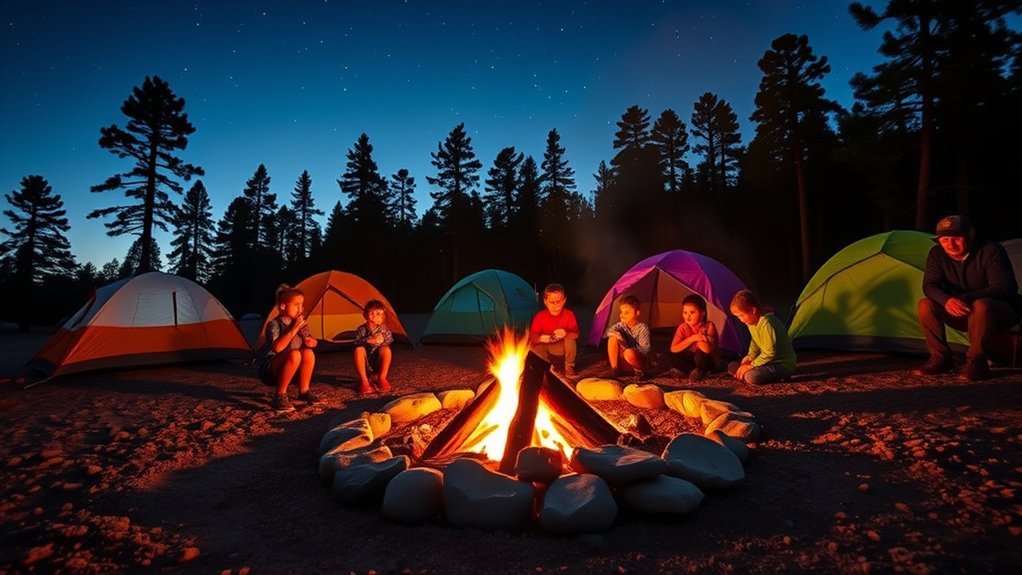
A lit campfire needs constant supervision. One responsible adult should remain close enough to react immediately if a log rolls, sparks escape, a child approaches, or the wind changes.
Always Monitor Children Closely
Do not rely on the 15-foot tent rule as a universal child-safety distance. Instead, establish a clear no-running and no-playing boundary around the fire and supervise young children directly. The National Park Service specifically advises watching children and pets closely around campfires.
When children roast marshmallows or help with cooking activities, use long utensils with insulated handles. Teach them to walk around the fire, never jump over it, and never wave flaming food or hot skewers.
Designate Responsible Adults
- Supervise children and pets: Keep them under direct control around the fire.
- Watch sparks and embers: React immediately if burning material escapes the ring.
- Enforce fire rules: No running, rough play, aerosol cans, trash, or throwing objects into the flames.
- Maintain constant attendance: A fire should never be left alone, even briefly.
Establish Fire Safety Rules
Before lighting the fire, make sure everyone knows where to sit, where children may walk, who is tending the fire, where the water and shovel are located, and what to do if clothing or surrounding vegetation catches fire.
Warning: Never use a camp stove, charcoal grill, or other fuel-burning cooking device inside a tent or vehicle. The U.S. Consumer Product Safety Commission warns that fuel-burning camping equipment can create deadly carbon monoxide in enclosed spaces. Use any heater only exactly as its manufacturer allows for that type of space, with the required ventilation, and never use charcoal inside a tent, camper, or vehicle.
Emergency Preparedness and Response
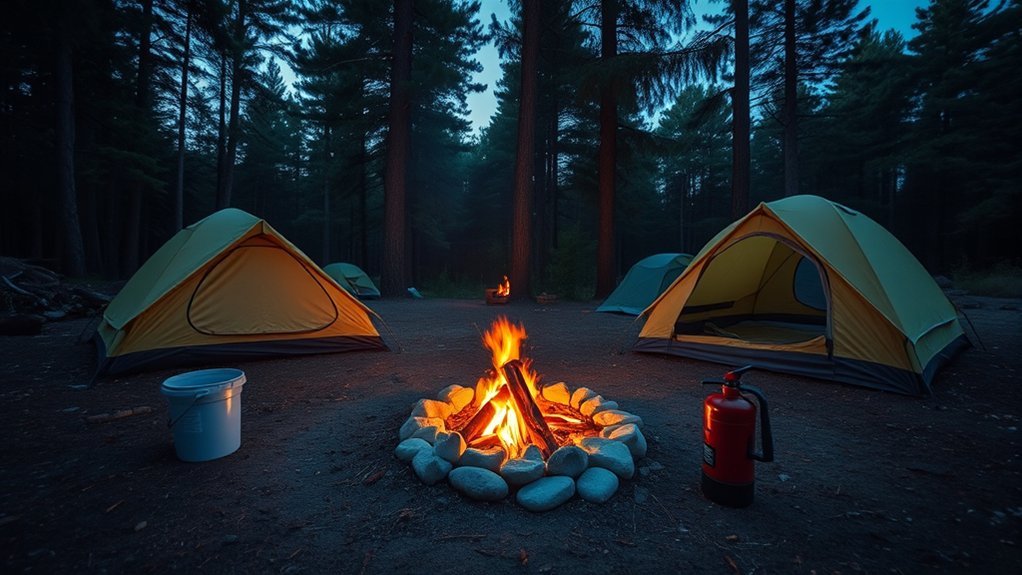
Prepare for a problem before lighting the first match:
- Have plenty of water and a shovel ready. If you do not have enough water to extinguish the fire completely, do not start it.
- Know your location. Be able to give the campground name, site number, trailhead, road, or coordinates if you must call for help.
- If the fire escapes your control, call 911. Also alert the campground host, ranger, or local fire authority when available. Do not put yourself between a spreading fire and your escape route.
- If clothing catches fire, stop, drop, and roll. Cover the face with the hands and roll until the flames are out.
- For a thermal burn, cool it promptly. The American Red Cross recommends clean, cool running water. Do not apply ice to a serious burn. Call 911 for severe burns, large burns, or burns involving the face, airway, hands, major joints, groin, or other high-risk areas.
Extinguishing Campfires Properly
A campfire is not out just because the flames have disappeared. Coals and partly burned logs can retain enough heat to restart a fire hours later.
When you are finished, let the fire burn down as much as practical while continuing to supervise it. Then drown the fire with plenty of water, wetting the wood, embers, and coals. Stir and scrape the material apart with a shovel, add more water, and repeat until there is no hissing, steam, glow, or hidden heat.
The National Park Service advises continuing until all material is cool to the touch. Do not simply bury hot coals under dirt; buried embers can continue to smolder and later reignite. If water truly is unavailable and local rules permit using soil or sand, mix it thoroughly through the coals rather than covering them in an insulating layer.
Pro Tip: If you can still feel heat above the ashes or coals, the fire is not ready to leave. Add more water, stir again, and repeat the cold-out check.
Fire Management and Maintenance
Keep the fire small enough to control quickly. Local rules determine the maximum size, and some campgrounds allow fires only in supplied rings or grates.
- Keep safe separation: Maintain at least 15 feet between the fire and tents, sleeping gear, shrubs, trees, and other flammable objects unless the site requires more.
- Clear combustible material: Remove dry leaves, needles, twigs, and grass from the required area around the ring.
- Keep the fire small: Build only the amount of fire needed for warmth or cooking and follow posted size restrictions.
- Use approved fire locations: Do not create a new rock ring or ground fire where the land manager prohibits one.
- Use suitable fuel: Burn dry, untreated firewood. Do not burn plastic, trash, painted wood, pressure-treated lumber, batteries, aerosol cans, or other manufactured materials.
- Avoid dangerous accelerants: Never use gasoline or similar fuels to start or revive a campfire, and never pour liquid starter onto an active flame or hot embers.
- Keep spare firewood away: Store it well away from sparks and preferably upwind of the fire.
Buy firewood near your destination when possible, and collect wood only where local rules specifically allow it. The National Park Service notes that transporting firewood can also move invasive insects and other pests into new areas.
Teach Everyone the Campfire Rules
Campfire safety works best when every camper knows the same basic rules before the fire is lit. Review them with children, guests, and first-time campers instead of assuming everyone understands open-fire hazards.
| Never Leave It Unattended | A responsible adult stays with the fire until it is fully cold-out. |
| Keep Water Ready | Have enough water to control an escaped ember and extinguish the entire fire. |
| Check Restrictions | Review campground rules, permits, burn restrictions, and current fire weather before lighting. |
| Extinguish Completely | Drown, stir, drown again, and confirm that every part of the fire is cold. |
Respecting Wildlife and Natural Surroundings
Fire safety is only one part of campsite safety. Give wildlife room, keep food and scented items secured, and follow the specific wildlife rules for the park, forest, or campground you are visiting.
Maintain Distance From Wildlife
The National Park Service notes that many parks require visitors to stay at least 25 yards from most wildlife and 100 yards from large predators such as bears or wolves, while some parks require 50 yards or other distances. Always check the rules for your destination.
- Never approach an animal for a photograph or closer look.
- Move back if an animal approaches or changes its behavior because of your presence.
- Never feed wildlife.
- Keep pets controlled according to campground and park rules.
Secure Food Properly
Do not depend on an ordinary airtight container to keep bears or other wildlife out. According to the National Park Service food-storage guidance, requirements vary by location and may call for a bear-resistant locker, an approved bear canister, or properly secured storage inside a hard-sided vehicle.
Store food, coolers, trash, cooking utensils, pet food, toiletries, and other scented items as required by the land manager. Never store food or scented items in your tent in bear country. Vehicle storage is permitted in some parks but prohibited or restricted in others, so check the rules instead of assuming your car is always acceptable.
Clean dishes promptly, pick up crumbs and scraps, and place garbage in the designated wildlife-resistant receptacle or pack it out as required. Never burn food scraps or trash in the campfire to dispose of them.
Frequently Asked Questions
Can I use a portable fire pit near my tent?
Treat a portable wood- or charcoal-burning fire pit as an open fire. Keep it at least 15 feet from tents and flammable gear unless local rules require more, use it only where the land manager allows it, and keep it away from overhanging branches and dry vegetation. Fire restrictions may prohibit portable wood or charcoal pits even when some gas stoves remain allowed.
What should I do if my tent catches fire?
Get everyone out immediately and move a safe distance away. Call 911 if the fire is spreading or cannot be controlled safely, and alert campground staff or a ranger. Use water or an appropriate extinguisher on a very small fire only if you have a clear escape route. Never re-enter a burning tent to retrieve belongings.
Are there specific fire regulations for national parks?
Yes. Each park can regulate where fires are allowed, what type of fire container may be used, allowable fire size, permits, seasonal restrictions, and temporary closures. Check the park’s current conditions or fire page shortly before your visit and confirm the rules when you arrive.
How can I safely dispose of campfire ashes?
First extinguish the campfire completely with water, stirring and repeating until every coal and piece of wood is cold to the touch. Do not leave hot ashes to cool unattended and do not bury hot coals. In developed campgrounds, leave cold ash in the designated fire ring unless posted rules direct you to an approved ash-disposal container or another method.
What materials should I avoid burning in campfires?
Do not burn plastics, household trash, aerosol cans, batteries, painted or pressure-treated lumber, chemically treated wood, or other manufactured materials. Use dry, untreated firewood that is legal to burn at your campsite, and follow local rules about collecting or transporting wood.
Can I have a campfire during a Red Flag Warning?
A Red Flag Warning means critical fire-weather conditions are occurring or expected soon, so open flames can become especially dangerous. Separately check the land manager’s current restrictions because a legal fire ban or closure may also be in effect. Even when a particular fire is not expressly prohibited, postponing it is the safer choice during critical fire weather.
Conclusion
The core rule is simple: keep your campfire at least 15 feet from tents and flammable gear, use the designated fire area, watch the weather, and never leave the flames unattended. Before sleeping or leaving, drown and stir the fire until it is completely cold. Local rules always come first, so check restrictions each time you camp rather than relying on what was allowed during a previous trip.
Sources
- National Park Service — Campfires — 15-foot separation, wind direction, supervision, local rules, firewood, and extinguishing guidance.
- National Park Service — Campfire Safety — clearing combustible material, keeping fires small, water and shovel preparation, and cold-out extinguishing.
- National Weather Service — Wildfire Warnings and Watches — current Red Flag Warning and critical fire-weather guidance.
- U.S. Consumer Product Safety Commission — Portable Heaters and Camping Equipment — carbon monoxide risks from fuel-burning camping equipment in enclosed areas.
- American Red Cross — Burns: Types, Symptoms, and How to Help — current first-aid guidance for thermal burns.
- National Park Service — Storing Food — bear-resistant food, garbage, cookware, and scented-item storage requirements.
