

Last Updated on August 26, 2026 by Mason Reed
Cooking inside an ordinary camping tent is not considered safe when you are using a fuel-burning stove, barbecue, lantern, or heater. These devices can produce carbon monoxide (CO), while open flames, hot cookware, and fuel create serious fire and burn hazards. The safer approach is to cook outdoors in a stable, open area and prepare a bad-weather backup plan before your trip.
Quick Answer
No, you should not cook with an ordinary fuel-burning camping stove, barbecue, or similar appliance inside a tent. Carbon monoxide can build up even when a tent door or flap is open, and heat or flames can ignite nearby fabric and gear. Cook outdoors and follow the appliance manufacturer’s instructions.
Key Takeaways
- Never assume an open tent flap, door, vestibule, or porch provides enough ventilation for a fuel-burning stove.
- Carbon monoxide is colorless and odorless, so you may not realize you are being exposed.
- Cook outdoors on a stable surface, away from sleeping areas, tent fabric, dry vegetation, and other combustibles.
- For rain, use an appropriately designed open-sided outdoor cooking area or switch to ready-to-eat food rather than moving a stove into the tent.
- Follow stove instructions, campground rules, fire restrictions, and wildlife-food-storage requirements for your specific location.
Warning: A carbon monoxide alarm is not permission to use a camping stove, charcoal grill, or other fuel-burning device inside an ordinary tent. Preventing the CO source from being inside the enclosed space is the primary safety measure.
Disclosure: As an Amazon Associate I earn from qualifying purchases. Some links on this page are affiliate links, at no extra cost to you.
The Dangers of Cooking in a Tent
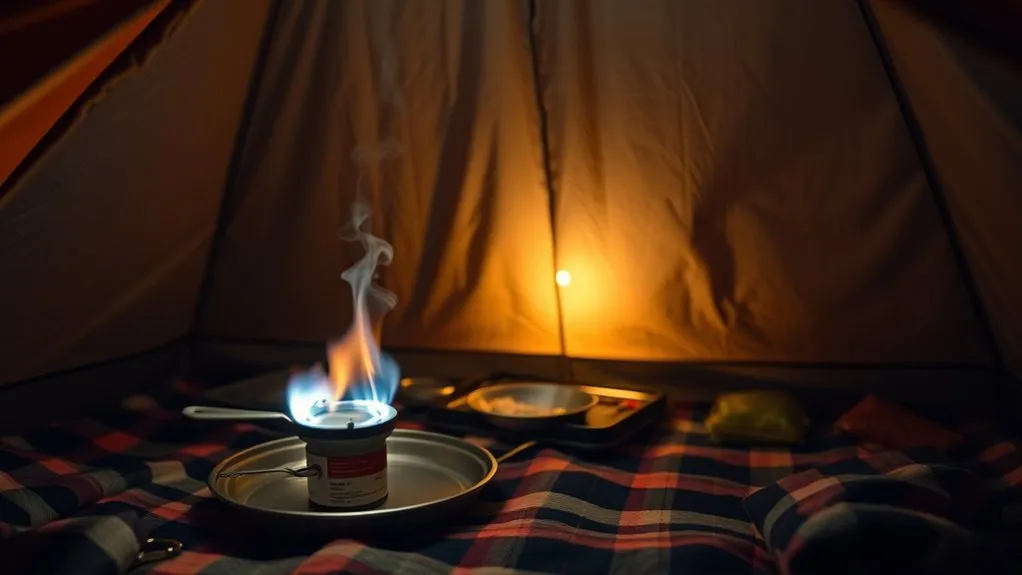
Cooking inside a tent may seem convenient when it is cold, windy, or raining, but the confined space introduces risks that do not exist to the same degree in an open cooking area. The two biggest concerns are carbon monoxide poisoning and fire.
Portable stoves, charcoal grills, heaters, lanterns, and other devices that burn fuel can produce carbon monoxide. The U.S. Centers for Disease Control and Prevention advises against using portable gas camp stoves indoors, while the U.S. Consumer Product Safety Commission warns against using portable fuel-burning camping equipment inside a tent unless it is specifically designed for enclosed-space use and provides instructions for that use.
Fire is the second major concern. A stove can be knocked over, cookware can spill, and flames or radiant heat can reach tent fabric, sleeping bags, clothing, dry grass, or other gear. Even flame-resistant tent materials should never be treated as fireproof.
The safest rule for ordinary recreational camping is simple: keep fuel-burning cooking equipment outside the sleeping tent.
Understanding Carbon Monoxide Risks
Carbon monoxide is a colorless, odorless poisonous gas produced when fuels do not burn completely. Camping stoves, charcoal, heaters, generators, and lanterns can all be CO sources. Because you cannot reliably see, smell, or taste CO, dangerous exposure may occur before you understand what is happening.
According to the CDC’s carbon monoxide guidance, common symptoms include headache, dizziness, weakness, nausea, vomiting, chest pain, and confusion. A sleeping person may be especially vulnerable because early symptoms may not wake them.
CDC investigations have documented fatal carbon monoxide poisonings in tents involving both portable gas stoves and charcoal grills.
If you suspect carbon monoxide exposure, get everyone into fresh outdoor air immediately and seek emergency medical help. Do not re-enter a tent or enclosed shelter to retrieve equipment while a suspected CO source is still present or operating.
Also remember that different fuels behave differently after cooking. A switched-off gas stove is not the same as smoldering charcoal. Charcoal can continue producing carbon monoxide after visible flames have disappeared and should never be brought into a tent while hot, warm, or smoldering.
Common Misconceptions About Tent Cooking
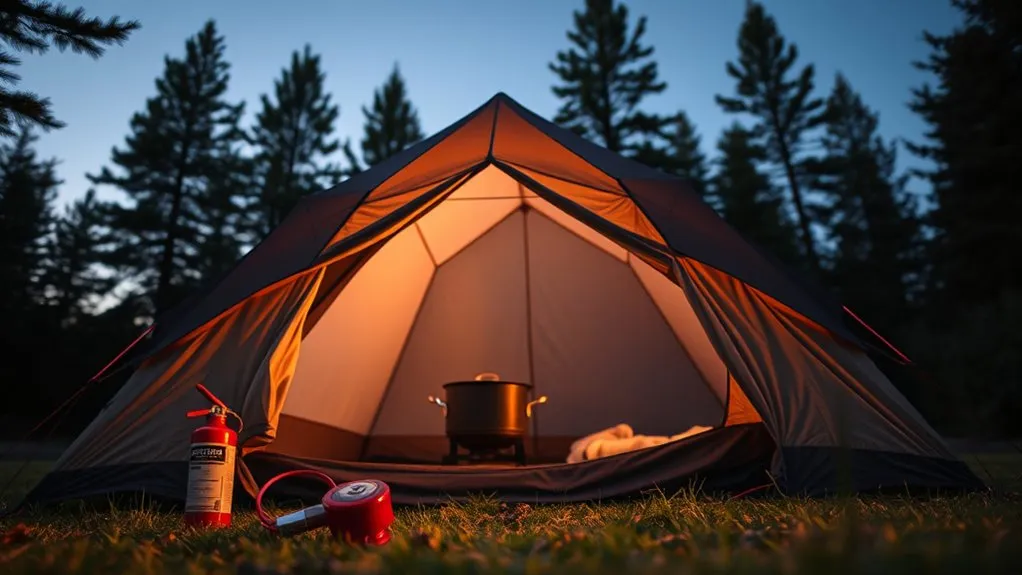
Several common assumptions make tent cooking appear safer than it really is.
- “The flap is open, so the stove is ventilated.” Opening a door, flap, or window does not guarantee that combustion gases will leave the shelter. Official fire-safety guidance warns that open tent flaps are insufficient protection against CO accumulation.
- “I will only cook for a few minutes.” CO concentrations depend on the fuel, appliance, combustion quality, airflow, altitude, and enclosure. There is no reliable “safe number of minutes” for using an ordinary fuel-burning stove inside a tent.
- “I will know if carbon monoxide is building up.” You cannot rely on smell or sight because CO is colorless and odorless.
- “A CO alarm makes indoor stove use safe.” An alarm provides an extra warning layer; it does not remove the combustion or fire hazard.
- “Once a charcoal barbecue stops flaming, it is safe to bring inside.” Charcoal can continue producing CO until it is completely extinguished and cold.
Note: Campsite rules and equipment manuals may be stricter than general guidance. Always follow the manufacturer’s instructions and local fire restrictions for the stove, fuel, shelter, and location you are using.
The Reality of Tent Fires
Cooking inside a tent also creates a serious fire and burn hazard. Tents contain fabric, mesh, sleeping bags, clothing, backpacks, and other materials that may ignite, melt, or be damaged by heat. A small flame or overturned stove can turn into an emergency quickly.
Keep cooking appliances stable and well away from anything combustible. Never refuel a stove while it is operating or still hot, and keep fuel containers away from ignition sources. Children and pets should also remain clear of the cooking area.
If a tent catches fire, evacuation comes first. Get everyone outside, alert other campers, and contact the campsite operator or local emergency service. Do not remain inside trying to save belongings. Only attempt to extinguish a small fire when you have the correct extinguisher or extinguishing method, know how to use it, and still have a clear escape route.
Can You Cook in a Tent Vestibule, Porch, or Awning?
A vestibule or porch may feel “outside” because one side can be opened, but it can still trap combustion gases and place a flame close to tent fabric. For ordinary camping equipment, an open flap should not be treated as a substitute for a genuinely outdoor cooking location.
Current government camping guidance warns against bringing gas stoves, heaters, lights, and barbecues into tents or similar enclosed camping spaces. The Northern Ireland government camping CO guidance, published in 2026, specifically warns that CO incidents can occur in tents and awnings.
There is a narrow equipment-specific distinction: the CPSC notes that portable fuel-burning camping equipment should not be used in a tent unless it is specifically designed for enclosed-space use and comes with instructions for that use. That does not make an ordinary backpacking stove safe in a vestibule, nor should you improvise a “hot tent” setup with incompatible equipment.
If you own a purpose-built shelter-and-stove system, follow every clearance, ventilation, chimney, spark-control, installation, and supervision requirement from both manufacturers. Never assume advice for a specialized system applies to a normal tent.
Safe Cooking Alternatives During Inclement Weather
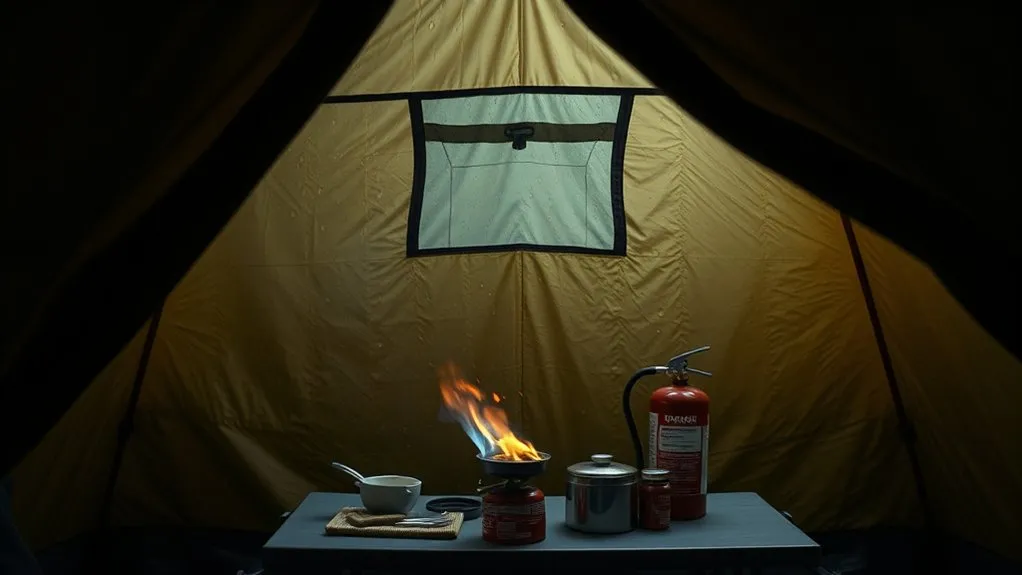
Rain, snow, and wind are common reasons campers are tempted to move a stove into the tent. A safer plan is to decide before the trip what you will eat if outdoor cooking becomes impractical.
Outdoor Cooking Shelters
An outdoor cooking shelter can help with rain, but it should not simply recreate an enclosed tent around a fuel-burning stove. Use a location or shelter that is genuinely open to outdoor air and suitable for cooking, and keep the stove clear of fabric, walls, dry vegetation, and other combustible materials according to the stove manufacturer’s required clearances.
Place the stove on a stable, level surface where it cannot easily be knocked over. Protect the flame from unsafe wind exposure only in ways approved by the stove manufacturer; improvised windscreens can overheat some fuel canisters.
If the weather makes outdoor stove operation unsafe, stop cooking rather than moving the appliance into the sleeping tent. At a developed campground, a covered designated cooking area, vehicle-accessible restaurant, food pickup, or delivery may be a safer alternative.
Pre-prepared Meal Options
Pre-prepared and ready-to-eat foods are useful when the forecast is poor. Options include shelf-stable meals, nut butter, crackers, nuts, energy bars, jerky, dried fruit, tortillas, canned foods, and other items that do not require heating.
Freeze-dried meals and instant oatmeal can reduce stove time because they normally need only hot water, but that water should still be heated in the safe outdoor cooking area. Pre-cooked chili, pasta, or casseroles can also simplify meal preparation when they are stored and reheated safely.
Meal-delivery or takeaway food may be practical at developed campgrounds close to towns. The goal is not to avoid hot meals completely; it is to avoid creating an indoor combustion hazard simply because the weather changed.
Pro Tip: Pack at least one meal per person that can be eaten safely without a stove. That gives you an immediate backup if high wind, heavy rain, a fire restriction, or equipment failure makes cooking unsafe.
Essential Fire Safety Measures for Campers
Good stove safety starts before ignition. Use these precautions whenever you cook at camp:
- Check campground rules, wildfire restrictions, and burn bans before using any stove or flame.
- Read the stove and fuel manufacturer’s instructions before your trip.
- Use the stove outside on a stable, level, heat-appropriate surface.
- Keep tent fabric, sleeping equipment, dry grass, leaves, clothing, and other combustibles away from the cooking area.
- Never leave an operating stove unattended.
- Do not move or refuel a stove while it is burning or hot.
- Keep fuel cylinders and liquid fuel containers closed and away from heat when they are not in use.
- Keep children and pets out of the immediate cooking zone.
- Have an appropriate emergency-extinguishing method available where local rules or the equipment instructions recommend one.
- Know the campsite’s emergency procedures and your route away from the tent.
The U.S. National Park Service also recommends checking current fire conditions and local restrictions because dry or windy conditions can lead to temporary bans or special rules.
Where Should You Set Up Your Camp Kitchen?
There is no single universal distance that applies to every camp stove, campground, fuel type, and environment. Follow the appliance’s clearance requirements and any campsite-specific rules, and position the cooking area far enough from your tent that heat, flame, exhaust, and accidental spills cannot affect the sleeping shelter.
Wildlife rules may require much greater separation. In bear country, the National Park Service commonly advises keeping cooking, food storage, and sleeping areas separated. Some backcountry guidance recommends preparing and storing food about 100 yards from the tent when no designated food-preparation area is provided. Always use the rule for the park or land agency where you are camping.
The National Park Service’s Cooking in Camp guidance also stresses keeping food and odors away from sleeping areas and following local wildlife-storage requirements.
Food Safety While Camping
A safer stove setup does not prevent foodborne illness, so food handling also deserves attention. According to the USDA Food Safety and Inspection Service:
- Keep perishable food cold with ice, frozen gel packs, or another adequate cold source.
- Keep raw meat and poultry separate from ready-to-eat foods so juices cannot cross-contaminate them.
- Wash hands with soap and clean water when possible; if that is unavailable, bring suitable hand sanitizer or wipes.
- Use clean utensils and plates for cooked food instead of reusing items that held raw meat.
- Use a food thermometer when cooking meat and poultry rather than judging doneness only by appearance.
- Do not keep perishable food at unsafe temperatures for extended periods.
Store food in sealed containers or approved wildlife-resistant storage as required by the campground. Keeping food “off the ground” alone is not enough to control bacteria or prevent wildlife access.
Staying Informed About Camping Safety
Safe camping depends on more than remembering one rule. Conditions, regulations, equipment, and wildlife requirements can change from one campsite to another.
Before each trip, check:
- The stove manufacturer’s operating and clearance instructions.
- The campground’s rules for camp stoves, grills, fires, and fuel storage.
- Current wildfire restrictions or burn bans.
- Weather forecasts, especially wind, storms, and extreme cold.
- Wildlife and food-storage requirements.
- Where to obtain emergency help at the campsite.
A portable CO alarm can provide an additional warning layer where appropriate, but it should never be used to justify operating unsuitable fuel-burning equipment inside a tent. Prevention remains more reliable than depending on an alarm after CO has already entered the shelter.
Most importantly, do not let bad weather pressure you into changing a safe outdoor stove setup into an unsafe indoor one. If you cannot operate the stove according to its instructions, switch to your no-cook backup meal and wait for safer conditions.
Frequently Asked Questions
What Types of Stoves Are Safest for Outdoor Cooking?
No fuel type makes a stove safe for ordinary indoor tent use. Outdoors, choose a stable camping stove from a reputable manufacturer that is appropriate for your trip and fuel availability. Follow its instructions for setup, clearances, wind protection, fuel connection, ignition, and shutdown rather than assuming propane, butane, liquid fuel, or wood is automatically safest.
How Can I Prevent Food Contamination While Camping?
Keep perishable food properly chilled, separate raw meat and poultry from ready-to-eat foods, wash or sanitize your hands, use clean plates and utensils, and cook meat and poultry to safe internal temperatures with a food thermometer. Follow local wildlife-storage rules as well; an airtight container alone may not be adequate in bear country.
What Should I Do in Case of a Tent Fire?
Get everyone out immediately, move away from the tent, alert nearby campers, and contact the campsite operator or local emergency service. Do not go back for belongings. Only try to extinguish a small fire if you have the correct method, know how to use it, and can maintain a clear escape route.
Can I Use a Portable Heater Inside My Tent?
Do not use an ordinary fuel-burning camping heater inside a tent simply because it is cold. Carbon monoxide and fire are serious risks, and fuel-burning heaters should never be used while sleeping in an enclosed camping space. Only consider equipment if the manufacturer explicitly designs and instructs it for that exact enclosed-space application. For normal tent camping, use an appropriately rated sleeping bag, insulated sleeping pad, dry clothing layers, and other non-combustion methods to stay warm.
What Are Some Quick Meal Options for Camping?
Useful no-cook or low-cook options include nut butter and tortillas, crackers, nuts, dried fruit, energy bars, jerky, shelf-stable tuna or chicken packets, canned foods, and other shelf-stable meals. Instant oatmeal, soup packets, and freeze-dried meals can also reduce cooking time because they usually require only water heated outdoors.
Is It Safe to Cook in a Tent Vestibule With the Door Open?
Do not assume it is safe. An open vestibule can still place a flame close to tent fabric and may not prevent carbon monoxide from entering or accumulating in the shelter. Ordinary camping stoves should be operated outdoors according to the manufacturer’s instructions, not moved into a vestibule solely because the weather is bad.
What Are the Symptoms of Carbon Monoxide Poisoning While Camping?
Common symptoms include headache, dizziness, weakness, nausea, vomiting, chest pain, sleepiness, and confusion. If you suspect CO exposure, move everyone into fresh outdoor air immediately and seek emergency medical help. Do not remain in or re-enter the enclosed shelter while the suspected source is operating.
Conclusion
Cooking inside an ordinary tent with a fuel-burning camping stove, barbecue, lantern, or heater creates avoidable carbon monoxide and fire risks. Opening a flap or door does not make the setup reliably safe. Cook outdoors, follow the equipment manufacturer’s instructions and campsite rules, and carry food that can be eaten without cooking when weather prevents safe stove use.
A little planning solves most of the problem: choose a stable outdoor cooking area, keep combustion equipment away from your sleeping space, check fire restrictions, store food correctly, and know what to do if someone develops CO symptoms or a fire starts.
Sources
- U.S. Centers for Disease Control and Prevention — Carbon Monoxide Poisoning Basics — CO characteristics, health risks, and portable camp-stove guidance.
- U.S. Consumer Product Safety Commission — Carbon Monoxide Fact Sheet — guidance for portable fuel-burning camping equipment and enclosed spaces.
- Northern Ireland Government — Carbon Monoxide Dangers When Camping — 2026 tent, awning, stove, heater, and barbecue safety guidance.
- U.S. National Park Service — Cooking in Camp — outdoor food preparation, campsite cleanliness, wildlife separation, and cooking-area guidance.
- USDA Food Safety and Inspection Service — Food Safety While Hiking, Camping & Boating — cooler temperatures, hand hygiene, cross-contamination, and safe cooking guidance.
