
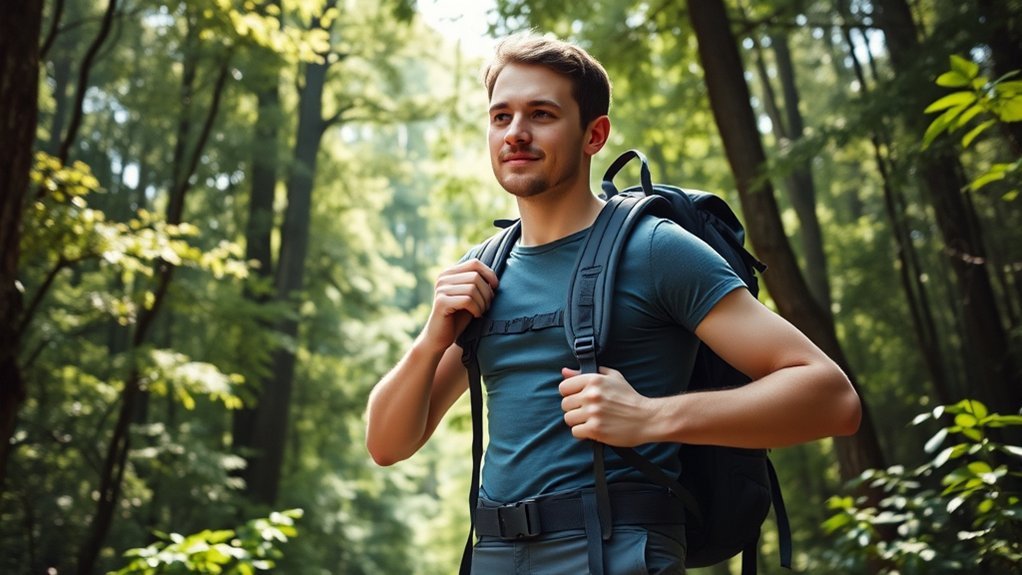
To fit a backpack properly, start by measuring your torso length from the iliac crest to the C7 vertebra. Prepare your pack with 15-20 pounds to simulate a load. Adjust the hip belt first for 80% weight support, then tighten shoulder straps without lifting it off your hips. Ascertain load lifters form a 45-degree angle and secure the sternum strap lightly. Finally, take a 20-minute walk to check for comfort and any pressure points. Keep going to uncover more fitting tips!
Measuring Your Torso Length

Measuring your torso length is an essential step in finding the right backpack size. Start by locating your iliac crest, the top of your hip bones, and imagine a line drawn between them to your spine’s center. Next, identify your C7 vertebrae—tilt your chin to your chest, and you’ll feel it pop out at the base of your neck.
While standing straight and relaxed, measure the distance from your iliac crest to the C7 vertebrae. This measurement is your torso length, and it’s vital for selecting a backpack that fits you well. A proper fit enhances comfort and stability, especially when carrying weight, allowing you to move freely and confidently. Don’t underestimate this step; knowing your torso length empowers you to choose a pack that supports your adventures and liberates your spirit. Your journey awaits, but it begins with the right fit!
Preparing Your Pack for Fitting
Before you begin fitting your backpack, it is crucial to prepare it properly to guarantee an accurate adjustment. Start by placing 15-20 pounds of weight inside the pack; this simulates a realistic load and helps you assess how it’ll feel on your back. Make certain the backpack is fully closed and buckled to prevent any shifting during adjustments. Next, loosen all the straps on the back of the pack. This step allows for easier modifications when you put it on.
As you prepare, remember that secure weight distribution is key for comfort. Begin your fitting process from the bottom of the pack by adjusting the hip belt first, then move upwards to the shoulder straps and load lifters. This method guarantees that the pack sits correctly on your body, promoting an ideal experience during your adventures. Proper preparation allows you to achieve a fit that’s truly liberating.
Adjusting the Pack for Optimal Fit
To achieve an ideal fit for your backpack, start by centering the hip belt padding on your hip bones. Tighten it to guarantee 80% of the pack’s weight is supported by your hips, minimizing shoulder strain. Next, follow these steps for best adjustments:
- Tighten the shoulder straps: Pull down and back to create a snug fit that stabilizes the load without lifting it off your hips.
- Adjust the load lifters: Pull the weight slightly forward, guaranteeing they form a 45-degree angle with the shoulder straps for balanced weight distribution.
- Buckle the sternum strap: Apply light tension to help shift the weight away from your shoulders, enhancing stability during movement.
- Test the fit: Walk around for 20 minutes to assess comfort and make necessary tweaks for any pressure points or discomfort.
These adjustments will help you liberate your movements while carrying your gear.
Products Worth Considering
High-Quality Material:Hiking backpack is made of high quality rip-stop 210d nylon fabric,which is water resistant,tear resistant,anti-scratch and wear resistant. Furthermore,we also give away a rain cover with a clear silver reflective logo. It is putted in the little pocket under the backpack. So it is no doubt that all your things will keep dry during rain. Just take this outdoor backpack,no matter the weather.
Backpack Luggage: The Eagle Creek Explore Backpack is the perfect carry backpack for storing all your travel essentials, no matter where you go
💖【Ultra-Lightweight hydration Backpack with No Extra Burden】The hydration backpack with water bladder is made of durable and water-resistant nylon fabric. Weighing only 11 oz, the hydration pack will not add extra weight to your hiking, running, exploring or other outdoor activities
Evaluating Comfort on the Trail
How can you guarantee your backpack remains comfortable on the trail? Start by taking a 20-minute walk after adjusting your pack. This helps you assess its fit during movement. Verify the shoulder straps meet the back of the pack 1-2 inches below your shoulder height for ideal alignment. Adjust the load lifter straps to create a 45-degree angle; this pulls the weight forward and enhances your balance without being too tight.
As you walk, pay attention to any pressure points. If something feels uncomfortable, loosen the corresponding straps to improve your experience. Remember, trail conditions may change, so be ready to make further adjustments as needed. Comfort is key to enjoying your adventure, so don’t hesitate to tweak your pack for the best fit. Embrace the freedom of exploring the great outdoors with a well-fitted, comfortable backpack!
Products Worth Considering
NOT YOUR BASIC BACKPACK: Feature rich at this price point; Comfort and balanced backpack for men and women.
50L HIGH-CAPACITY: Include Main compartment, two zipped front pocket, sleeping bag compartment, mesh side pockets, you can put your tents, blanket,cooking gear and other equipment & accessories in this backpack, backpack internal layout clear classified easily, more convenience to you.
Lightweight: The lightweight packable backpack is about half the weight of a mobile phone, being folded into its inner pocket for storage and easy to open when needed. Unfolded size: 12.5 x 8.5 x 20.9 inches, folded size is only 4.5 x 3.9 x 7.8 inches
Safely Removing the Pack
When it’s time to remove your backpack, start by unbuckling the sternum strap to relieve tension and set the stage for a smooth process. Following this method guarantees safety and comfort while you shift out of your load.
Here’s how to do it:
- Unbuckle the sternum strap – This step relieves tension on your upper body, making the process easier.
- Loosen the shoulder straps – This allows for more freedom of movement and reduces strain on your back.
- Loosen the hip belt – Doing this next helps facilitate a smoother removal of the pack.
- Unbuckle the hip belt last – This order aids in re-buckling when you’re ready to put the pack back on.
Always remember to follow this reverse order to guarantee efficient and safe removal of your backpack, allowing you to liberate yourself from the weight comfortably.
Frequently Asked Questions
What Features Should I Look for in a Backpack?
Look for adjustable straps, padded back support, multiple compartments, and durable materials. Waterproof features and lightweight designs enhance comfort. Guarantee it’s the right size for your needs, allowing freedom of movement during your adventures.
How Do I Choose the Right Backpack Size?
To choose the right backpack size, measure your torso length and consider the pack’s volume. Think of it as selecting a vessel for your adventures; it should fit comfortably and hold everything you need for freedom.
Can I Use a Backpack for Different Activities?
Yes, you can definitely use a backpack for different activities. Just make sure it’s versatile enough to accommodate your needs, whether you’re hiking, commuting, or traveling. Choose features that enhance functionality for each specific use.
What Materials Are Best for a Durable Backpack?
For a durable backpack, choose materials like nylon or polyester, which resist tears and water. Reinforced stitching and quality zippers enhance longevity, ensuring your gear withstands various activities while remaining lightweight and comfortable during use.
How Often Should I Replace My Backpack?
You should replace your backpack every 2-3 years, depending on wear and tear. If you notice fraying straps, broken zippers, or compromised seams, it’s time to invest in a new one for best performance.
Conclusion
Properly fitting your backpack can make a world of difference on the trail. Did you know that nearly 70% of hikers experience discomfort due to ill-fitting gear? By taking the time to measure your torso, adjust your pack, and evaluate comfort, you can enhance your hiking experience and reduce fatigue. Remember, a well-fitted pack not only boosts your performance but also keeps you safe and supported on your adventures. Happy hiking!