
Last Updated on July 30, 2026 by Caleb Warren
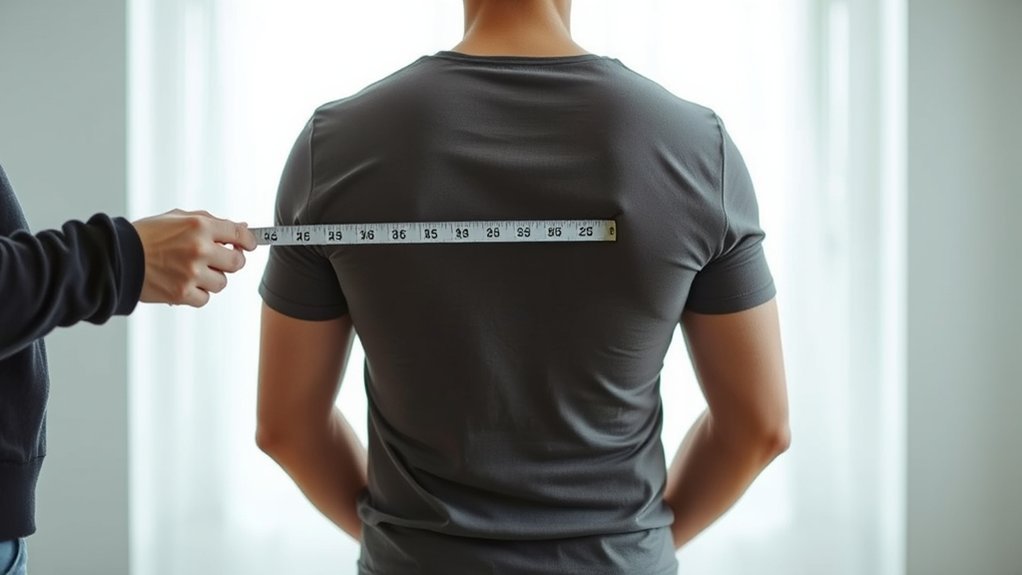
Measuring your torso length is the best starting point for choosing a hiking or backpacking pack that sits correctly on your body. The measurement runs from the C7 vertebra at the base of your neck to the point where a horizontal line across the tops of your hip bones meets your spine. You should also measure around your iliac crest to confirm that the hipbelt fits.
Quick Answer
Tilt your head forward to find the C7 bump at the base of your neck. Place your hands on top of your hip bones and draw an imaginary line between your thumbs. Have someone measure down the curve of your spine from the C7 to that line using a flexible tape measure.
Key Takeaways
- Torso length—not your height, shirt size, or pants size—determines the starting size for most framed hiking packs.
- Measure from the C7 vertebra to the horizontal line formed by the tops of both iliac crests.
- Measure hipbelt circumference around the iliac crest, slightly above a typical pants waistband.
- Always compare your measurements with the size chart for the exact backpack model.
- Confirm the fit with weight in the pack before using it on a long hike.
At a Glance
| Time Required | 5–10 minutes |
| Difficulty | Easy, although a helper improves accuracy |
| Tools Needed | Flexible tape measure, mirror, and a belt or length of string |
| Cost | Free if you already own a tape measure |
Disclosure: As an Amazon Associate I earn from qualifying purchases. Some links on this page are affiliate links, at no extra cost to you.
Understanding the Importance of Proper Backpack Fitting

A correct torso measurement helps you identify the pack sizes most likely to fit. It allows the shoulder harness, frame, and hipbelt to line up with the parts of your body they were designed to support.
Torso length is not the same as your total height. Two people of the same height can have different torso measurements because their leg and upper-body proportions differ. Shirt size and pants-waist size are not reliable substitutes either.
On a framed hiking or backpacking pack, the hipbelt should rest over the top of your hip bones. The shoulder straps stabilize the upper part of the load, while the hipbelt carries a substantial share of it. If the pack is too long or too short, the hipbelt and shoulder harness may not reach their correct positions at the same time.
A torso measurement identifies your starting size. A loaded try-on confirms whether the backpack actually fits your body.
Pack sizing ranges vary by brand and model. Follow the chart for the exact backpack you are considering rather than assuming that a medium from one brand matches a medium from another. The REI backpack fit guide also recommends trying packs on because a home measurement is not always exact.
Tools You’ll Need for Measuring
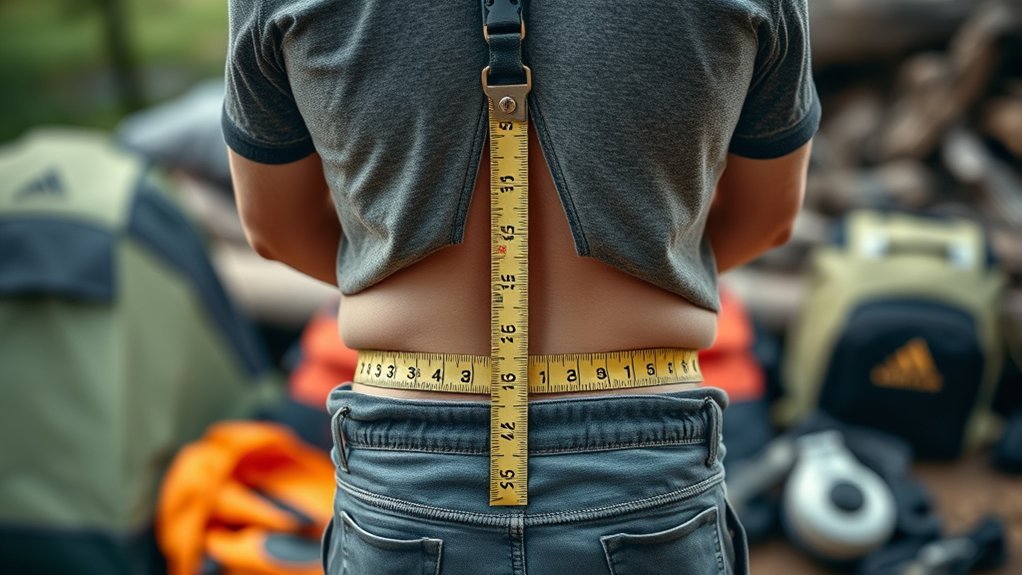
Gather the following items before you begin:
- Flexible tape measure: A fabric or tailor’s tape can follow the natural curve of your spine.
- Friend or assistant: A helper can keep the tape centered and read the measurement while you stand naturally.
- Belt or length of string: Place it horizontally across the tops of your hip bones to mark the lower endpoint.
- Mirror: Use it to check your posture and the position of the belt if you are measuring alone.
- Pen and notebook: Record the result in both inches and centimeters if you plan to compare several brands.
Note: A rigid ruler does not follow the shape of your back well. When a flexible tape is unavailable, use nonstretch string to take the measurement, mark the string, and then measure it with a ruler.
Step-by-Step Guide to Measuring Torso Length

- Stand upright. Wear a thin shirt or measure over bare skin. Keep your shoulders relaxed and your spine in a natural position.
- Find the C7 vertebra. Tilt your head forward. Feel for the prominent bony bump where the base of your neck meets your shoulders. This is the upper measuring point.
- Find both iliac crests. Place your hands on your hips with your fingers pointing forward and your thumbs pointing backward. Slide your hands until they rest on the top edges of your hip bones.
- Create the lower reference line. Imagine a horizontal line connecting your thumbs across your lower back. The point where that line crosses your spine is the lower endpoint. A level belt placed across the iliac crests can make this point easier to find.
- Measure along your spine. Have your helper place the end of a flexible tape at the C7 and follow the curve of your spine down to the iliac-crest line. The tape should touch your clothing or skin without being pulled tight.
- Record the result. Write down the torso length in inches and centimeters, then compare it with the manufacturer’s chart for the exact backpack model.
This method follows current guidance from major pack fit resources, including Deuter’s back-length guide and the Osprey sizing guide.
Warning: Do not measure down to your pants waistband, the bottom of your back, or one hip bone. Those points can produce an incorrect torso length.
Averaging Your Measurements for Accuracy
One careful measurement is often enough when a helper can clearly identify both landmarks. Repeating the process is useful when your results vary or when your measurement sits close to the boundary between two pack sizes.
- Take two or three measurements using the same posture and landmarks.
- Check that the belt or imaginary thumb line remains level.
- Make sure the tape stays centered on the spine.
- Add the measurements and divide by the number of readings if they differ only slightly.
- Repeat the process from the beginning if the readings differ by more than about half an inch.
For example, measurements of 18, 18.25, and 18.25 inches average about 18.2 inches. Use that number as a starting point, but still try the pack on because sizing ranges often overlap.
Pro Tip: Mark the C7 and lower reference point lightly through your shirt with removable tape. This helps a second measurement follow the same path.
Measuring Your Hip Circumference
Torso length determines the starting pack size, while hip circumference helps confirm whether the hipbelt can wrap and tighten correctly. For backpack fitting, this measurement is taken around the top of the hips at the iliac crest. It is usually higher than a pants waistband and is not necessarily the widest part of the hips.
Importance of Accurate Measurement
A correctly sized hipbelt should wrap around the top of your hip bones with enough padded coverage to support the load. It should tighten securely without bottoming out at the buckle, pinching the abdomen, or leaving the padded sections too far apart.
The range may be listed as “waist,” “hips,” or “hipbelt size” on a product page. Read the manufacturer’s measuring instructions because the label alone can be misleading.
Finding the Correct Iliac-Crest Line
- Stand upright with your feet about hip-width apart.
- Place your hands on top of your hip bones.
- Wrap the flexible tape around your body at that level.
- Keep the tape parallel to the floor.
- Pull it snug without compressing your skin or clothing.
- Record the circumference and compare it with the pack’s hipbelt range.
Osprey’s official fitting instructions specify measuring around the hips at the iliac crest rather than at the waist. REI describes the same line as slightly higher than a typical beltline.
Tips for Consistent Results
- Measure over a thin base layer or bare skin.
- Do not hold your breath or pull in your stomach.
- Keep the tape level all the way around your body.
- Take a second reading if the tape slipped or twisted.
- Check whether the pack offers an adjustable or interchangeable hipbelt when your torso and hip measurements fall into different listed sizes.
Selecting the Right Backpack Size
Use torso length to identify the likely pack size, then confirm that the hipbelt and shoulder harness suit your body. Capacity in liters describes how much the pack holds; it does not indicate whether the suspension fits your torso.
Torso Length Importance
Compare your torso measurement with the range shown for the exact pack model. A model may be sold in fixed sizes such as small, medium, and large, or it may use an adjustable back panel that covers several torso lengths.
Set an adjustable suspension to your measured torso length before tightening the other straps. Shoulder straps and load lifters cannot fully correct a back panel that is set too long or too short.
Hip Measurement Considerations
Confirm that your iliac-crest circumference falls within the listed hipbelt range. When the torso size is correct but the belt does not fit, look for a model with an interchangeable, extended, or more adjustable hipbelt rather than changing torso size solely to obtain a longer belt.
The center of the padded hipbelt should cover the top of the hip bones. It should feel secure without pinching, folding, or sliding down under load.
Choosing Between Two Backpack Sizes
Do not automatically choose the larger size. Manufacturer ranges often overlap, and the better option depends on the pack’s harness shape and adjustment range.
Try both sizes with weight inside and compare the following:
- Can the hipbelt remain centered over the iliac crest?
- Do the shoulder straps wrap smoothly over and behind the shoulders?
- Is there a large gap between the harness and the back of the shoulders?
- Are the load lifters angled upward toward the pack rather than downward?
- Can every strap be adjusted without reaching the end of its usable range?
REI recommends trying both sizes when your measurement falls between listed ranges. A trained fitter can also help when neither size passes the full fit check.
Body-Specific and Extended-Fit Options
Pack labels such as men’s, women’s, unisex, slim, extended, or plus fit describe differences in torso range, shoulder-harness shape, strap length, and hipbelt contour. Treat these labels as starting points rather than rules.
Choose the version whose shoulder straps, hipbelt, and back panel fit your body most comfortably. Some people fit best in a pack marketed outside their usual clothing category.
Note: Small frameless daypacks may not transfer much weight to the hips and may offer no torso-size options. For those packs, shoulder comfort, strap length, and freedom of movement may matter more than an exact C7-to-iliac-crest match.
Adjusting Your Backpack for Optimal Comfort
Load the backpack before adjusting it. Begin with every major strap loose enough to let the pack settle naturally.
- Set the torso length. Adjust the back panel or harness to match your measurement before working on the straps.
- Position the hipbelt. Place the center of the padded belt over the top of the hip bones. Buckle it and tighten until it feels secure but not painful.
- Tighten the shoulder straps. Pull them down and back until they follow the curve of your shoulders. They should not lift the hipbelt off the iliac crest.
- Set the load lifters. Tighten them enough to bring the upper load closer to your body. Depending on the pack design, they commonly angle upward from the shoulder harness toward the pack at roughly 30–60 degrees.
- Adjust the sternum strap. Position it at a comfortable height across the chest and tighten only enough to keep the shoulder straps stable. It should not restrict breathing.
- Fine-tune while walking. Make small changes to relieve pressure and keep the load close to your center of gravity.
Warning: Stop and readjust the pack if you feel sharp pain, numbness, tingling, restricted breathing, or severe pressure. A new backpack may soften with use, but an incorrect torso size will not correct itself through a break-in period.
Testing Your Backpack With Weight
Test the backpack with enough weight to make the suspension work. For an initial fitting, approximately 10–20 pounds is commonly sufficient. You can also use the realistic load you expect to carry, provided it stays within the backpack manufacturer’s recommended limit.
Distribute the test load rather than dropping one dense object into the bottom. Place heavier items close to your back and pad hard objects with clothing or towels. Wear the pack for at least 10–15 minutes and walk on stairs or around the store when permitted.
The Gregory pack fit guide recommends trying a pack with at least 10–20 pounds, while REI suggests beginning with about 15 pounds.
| Component | Adjustment Check | Correct Fit |
|---|---|---|
| Hipbelt | Center the padding over the iliac crest and tighten evenly. | Secure without slipping, pinching, or reaching the end of the strap. |
| Shoulder Straps | Tighten until the padding follows the shoulders and upper back. | Smooth contact without a large gap, edge pressure, or armpit rubbing. |
| Load Lifters | Tighten gently to bring the upper pack closer. | Stable load without shoulder pinching or a stiff, over-tightened harness. |
| Sternum Strap | Position it comfortably and apply light tension. | Shoulder straps remain stable without restricted breathing. |
| Overall Balance | Walk, turn, climb stairs, and lean slightly forward. | The pack moves with you and does not pull strongly backward or sway. |
Signs Your Backpack Torso Length Is Wrong
Signs the Torso Is Too Short
- The shoulder straps rise sharply from the shoulders toward a low anchor point.
- The load lifters are nearly horizontal or angle downward toward the pack.
- The shoulder straps carry excessive pressure even when the hipbelt is correctly positioned.
- The pack feels as though it is pulling backward.
- The hipbelt rides upward when the shoulder straps are tightened.
Signs the Torso Is Too Long
- The shoulder-strap anchor points sit too high near the neck.
- The shoulder padding runs into the armpits or rubs the sides of the neck.
- A visible gap remains behind the shoulders.
- The hipbelt drops below the iliac crest when the shoulder straps are comfortable.
- The pack shifts or sways because the harness cannot wrap the upper back correctly.
When the Measurement Is Correct but the Pack Still Hurts
A correct torso number does not ensure that every model will fit. The shoulder harness may be too wide or narrow, the hipbelt may have the wrong contour, or the lumbar pad may press against a sensitive area. Try another suspension design when repeated adjustments do not remove the problem.
Common Backpack Measuring and Fitting Mistakes
- Using height or shirt size: Neither shows the distance between the C7 and iliac crest.
- Measuring to the waistband: Pants often sit above or below the correct lower landmark.
- Measuring one side of the body: Torso length should be measured along the center of the back.
- Slouching: Stand naturally upright instead of rounding or overextending your spine.
- Pulling the tape through the air: Let the tape follow the natural curve of the back.
- Setting the shoulder straps first: Set the torso length and hipbelt position before fine-tuning the upper straps.
- Overtightening load lifters: Excess tension can create a gap in the harness or pinch the shoulders.
- Testing an empty pack: The suspension may feel very different once it supports weight.
- Assuming all brands size alike: Always use the chart for the specific model.
Tips for Maintaining Your Backpack Fit
Your preferred strap tension may change as food, water, and other supplies are used during a trip. Small adjustments can keep the load balanced throughout the day.
- Check the torso setting before each trip if the back panel can move during storage or transport.
- Mark your preferred adjustable-torso position with removable tape or take a photo for reference.
- Retighten the hipbelt after adding or removing layers of clothing.
- Shift a small amount of pressure between the hips and shoulders during long hiking days.
- Inspect buckles, webbing, stitching, and adjustment hardware for damage.
- Store the backpack clean, dry, and with the straps loosened rather than tightly cinched.
- Remeasure before buying a new pack or after a meaningful change in body size, posture, or mobility.
Frequently Asked Questions
Can I measure torso length alone, or do I need assistance?
A helper usually produces the most reliable result because you can stand naturally while the other person keeps the tape centered. To measure alone, place a level belt across your iliac crests, use a mirror to check its position, and measure from the C7 to the point where the belt crosses your spine. Repeat the process to confirm the reading.
Does torso sizing vary between backpack brands?
Yes. Size names and torso ranges can vary between brands and even between models from the same brand. Compare your measurement with the chart for the exact pack rather than relying on a general small, medium, or large label.
What if my torso length falls between two backpack sizes?
Try both sizes with weight in them. Choose the pack that keeps the hipbelt centered over your iliac crest, allows the shoulder straps to wrap smoothly around your shoulders, and gives the load lifters a useful upward angle. Do not automatically select the larger size.
How often should I remeasure my torso length?
There is no required annual schedule. Remeasure before buying a new backpack, after a meaningful change in body size or posture, or whenever your current pack no longer sits where it previously did.
Can I use a regular ruler instead of a flexible tape measure?
Do not place a rigid ruler directly against your back because it cannot follow the spine’s curve. Use nonstretch string to trace the measurement, mark the endpoints, and then measure the string with the ruler.
Is torso length the same as height?
No. Height includes your legs, while backpack torso length measures only the distance from the base of your neck to the top of your hip bones. People of equal height can require different pack sizes.
Where should a backpack hipbelt sit?
The padded center of a substantial hiking-pack hipbelt should cover the top of the iliac crest. It should not sit entirely on the soft waist above the hip bones or hang below them over the upper thighs.
Do I need a torso measurement for a small daypack?
Not always. Small frameless daypacks may be sold in one size and place more of the load on the shoulders. Torso length becomes more important as pack weight increases and the pack uses a frame, structured hipbelt, and load lifters.
Conclusion
Measure your torso from the C7 vertebra to the horizontal iliac-crest line, then measure around the iliac crest for hipbelt sizing. Use those numbers to identify a starting size, set any adjustable suspension, and test the backpack with a realistic load. The correct pack should keep the hipbelt secure, the shoulder harness in smooth contact with your body, and the load stable without painful pressure.
Sources
- REI Co-op: Backpacks—Fit and Torso Size Guide — torso measurement, hip measurement, pack adjustment, and loaded fitting guidance.
- Osprey: Backpack Size Chart and Sizing Guide — torso sizing, iliac-crest hip measurement, harness checks, and load-lifter positioning.
- Gregory: Pack Fit and Sizing Guide — torso landmarks, loaded try-on guidance, and harness placement.
- Deuter: How to Measure Your Back Length — belt-assisted landmark and solo-measurement method.
- Deuter: How to Adjust a Backpack — hipbelt, shoulder strap, sternum strap, and stabilizer adjustment.
