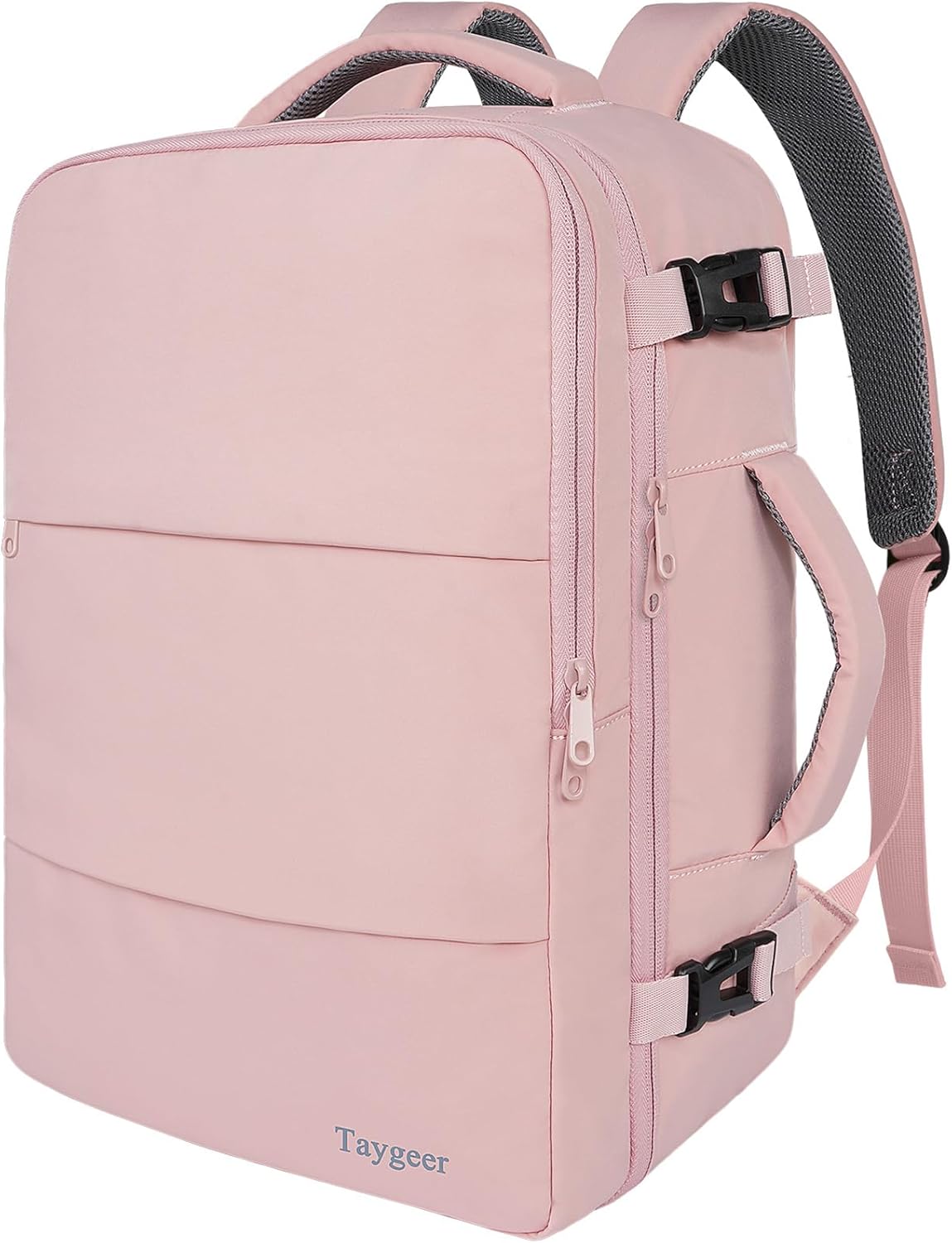
Last Updated on July 30, 2026 by Caleb Warren
Choosing a travel backpack for men is less about buying a bag labeled “men’s” and more about matching the pack to your body, trip, airline, and packing habits. The best choice fits your torso, carries comfortably when loaded, protects your gear, and stays within the exact size limits for the flights you plan to take.
Quick Answer
Choose a travel backpack by checking its outside dimensions first, then its capacity, empty weight, harness fit, materials, opening style, and warranty. For most one-bag trips, 30–40 liters is a useful starting range, but only the airline’s measured size limit—not the liter rating—determines whether the bag qualifies as a carry-on or personal item.
Key Takeaways
- Match the backpack’s measured dimensions to every airline on your itinerary; capacity in liters does not prove compliance.
- Fit is based mainly on torso length, hipbelt position, shoulder-strap shape, and how the pack feels with real weight inside.
- A 30–40L bag works for many carry-on trips, while smaller 18–30L packs are often easier for short trips or under-seat use.
- Prioritize strong zippers, reinforced seams, a useful opening, and the right amount of organization instead of paying for features you will not use.
- Test the bag fully packed during the return window before deciding that it is comfortable.
At a Glance
| Time Required | About 20–45 minutes to compare specs and complete a loaded fit test |
| Difficulty | Easy, once you know your airline limits and torso measurement |
| Tools Needed | Flexible tape measure, airline baggage pages, and 10–15 pounds of test weight |
| Typical Cost | Roughly $80–$350+, with prices changing by brand, material, size, and sales |
Disclosure: As an Amazon Associate I earn from qualifying purchases. Some links on this page are affiliate links, at no extra cost to you.
Understanding Your Travel Needs
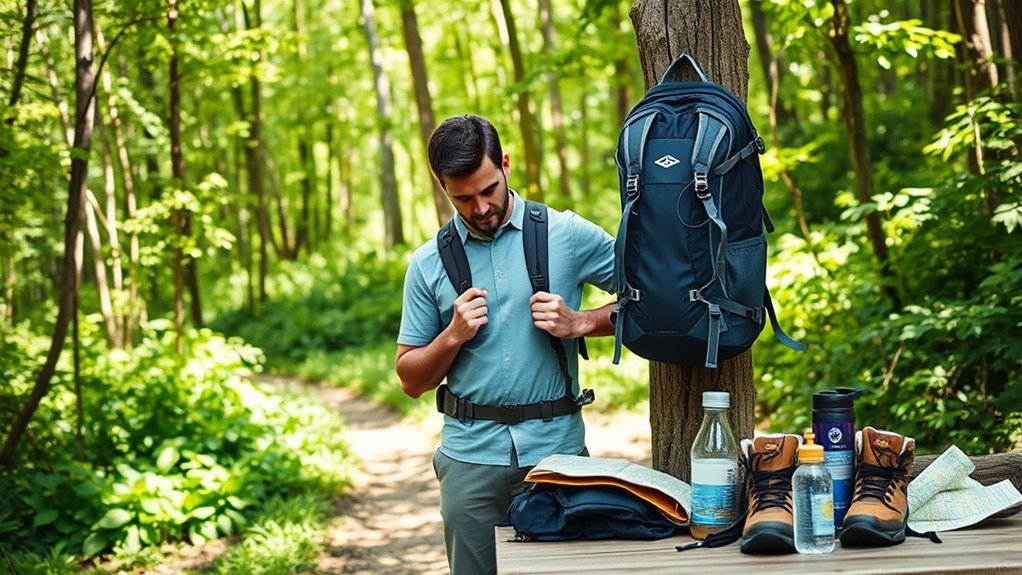
Start with the trips you actually take. A backpack for city breaks and business travel has different priorities from one used on trails, trains, or long one-bag trips. Write down your usual trip length, transportation, climate, electronics, footwear, and whether you expect to do laundry.
Match Capacity to Trip Length
Capacity is useful for estimating how much a bag can hold, but it does not tell you whether the bag will fit an overhead bin or under a seat. Use these ranges only as a starting point:
| Capacity | Common Use | Main Trade-Off |
|---|---|---|
| 18–25L | Daily commuting, overnight trips, or light under-seat packing | Limited room for extra shoes or cold-weather layers |
| 25–35L | Weekends, warm-weather trips, and minimalist travel | May require a compact wardrobe and regular laundry |
| 35–40L | Longer one-bag trips and travelers carrying more tech | Heavier and less likely to qualify as a personal item |
| Over 40L | Bulky gear, winter travel, or trips where checking a bag is acceptable | Higher risk of exceeding cabin limits when fully packed |
Warning: Do not buy by liters alone. Two 35L backpacks can have different outside dimensions, and soft bags can exceed the limit when overstuffed. Measure the packed bag, including bulging pockets and handles.
Check Airline Size Rules Before Buying
The Federal Aviation Administration says that many airlines use a maximum of 45 linear inches for carry-ons, but it also tells travelers to check the airline’s own rules because limits and item allowances vary. For example, United Airlines currently lists different measurements for overhead carry-ons and under-seat personal items.
Check every carrier on a multi-airline itinerary, including regional and budget airlines. Also confirm weight limits, because some airlines restrict cabin-bag weight even when the dimensions fit.
Consider Destination and Transportation
- Urban travel: Look for a clean profile, secure zippers, a laptop sleeve, and handles that work on buses or trains.
- Business trips: Prioritize a structured shape, wrinkle-friendly packing, subdued styling, and fast laptop access.
- Adventure travel: Choose stronger fabric, protected zippers, external attachment points, and a supportive harness.
- Hot climates: A ventilated back panel and lower empty weight may matter more than thick fabric.
- Wet climates: Look for water-resistant materials and covered or coated zippers, but carry a rain cover or dry bag for valuables unless the manufacturer calls the entire pack waterproof.
Key Features to Look For
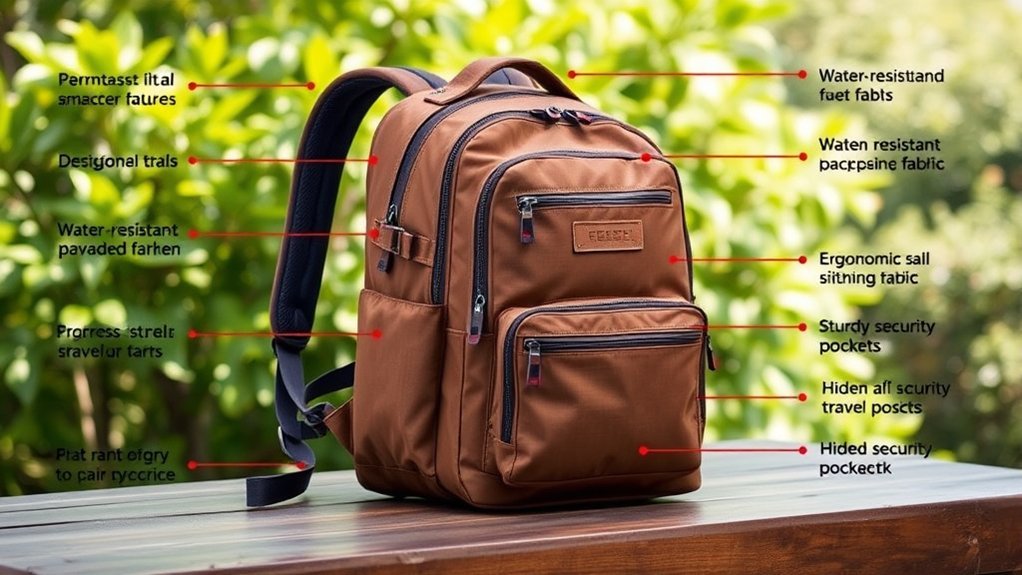
A good travel backpack balances durability, access, comfort, and weight. More features are not always better. Every extra divider, zipper, frame sheet, and strap adds weight and can reduce usable space.
Durability and Materials
Fabric denier, often shown as 420D, 840D, 1000D, or 1680D, describes yarn thickness rather than the bag’s total quality. Higher-denier fabric can resist abrasion well, but weave, coating, stitching, and construction also matter.
- Nylon: Common in durable travel packs because it offers good abrasion resistance for its weight.
- Ballistic nylon: Thick and rugged, but usually heavier and less flexible.
- Polyester: Often affordable and colorfast; quality varies widely by weave and coating.
- Recycled fabrics: Can be durable, but evaluate them by the same standards as virgin fabric: weave, coating, seam quality, and warranty.
- Laminated fabrics: Often provide strong weather resistance and low stretch, though creasing and surface wear may show over time.
Inspect high-stress areas such as shoulder-strap anchors, grab handles, compression-strap attachments, and the bottom panel. Reinforced stitching and dependable hardware often matter more than a large denier number printed in the product description.
Organizational Compartments and Opening Design
Choose organization that matches how you pack. A clamshell opening gives a clear view of the main compartment and works well with packing cubes. A top-loading pack can be lighter and simpler but may require more digging.
- A suspended, padded laptop sleeve helps keep a device away from the floor when the bag is set down.
- Quick-access pockets are useful for a passport, wallet, keys, cables, and a liquids bag.
- Internal compression straps hold clothing in place without using space-heavy dividers.
- A separate shoe or laundry area can help, but it may reduce the main compartment when full.
- Lockable zipper pulls can deter casual access, though they do not make a fabric backpack theft-proof.
Pro Tip: Pack the exact items you normally travel with, then count how many pockets you actually use. Too many small compartments can make a bag feel organized in the store but waste space on the road.
Materials and Durability
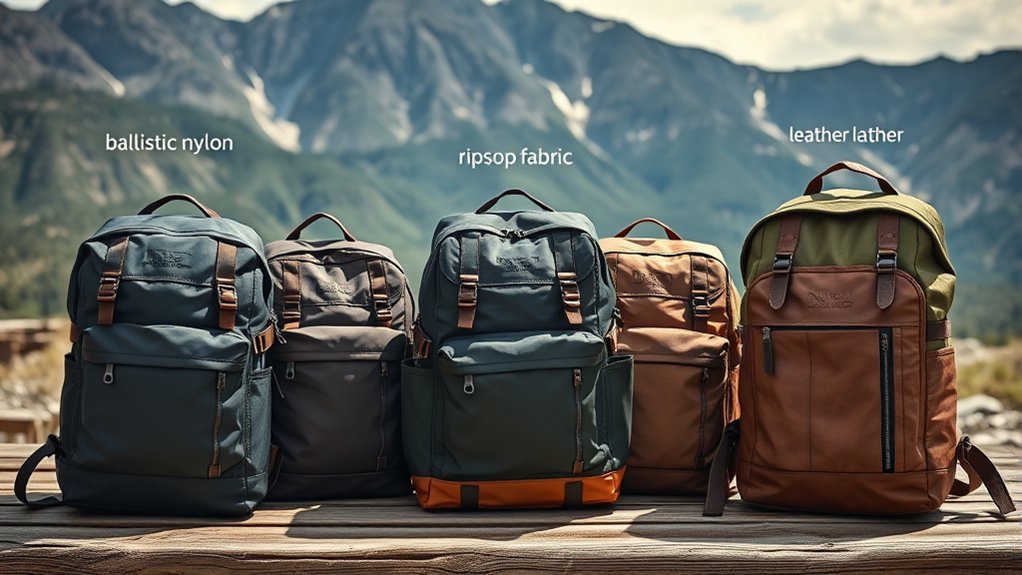
Material choice should reflect how hard you use the bag. Frequent flyers who slide a pack under seats and through luggage racks may benefit from a tougher shell and reinforced bottom. Occasional travelers may prefer a lighter fabric that reduces empty weight.
Water-Resistant Is Not the Same as Waterproof
Most travel backpacks are water-resistant, not fully waterproof. Water can enter through seams, zipper tracks, or openings even when the face fabric has a water-resistant coating. Protect passports, medication, and electronics in sealed pouches when heavy rain is possible.
Zippers, Hardware, and Repairability
Open and close every zipper around corners while the pack is loaded. Check whether buckles are easy to replace and whether the brand offers repairs or replacement parts. A long warranty is useful only when its terms cover the type of damage you are likely to encounter.
The most durable backpack is not automatically the best backpack. The better choice is the lightest bag that still meets your expected level of wear, weather, and load.
Comfort and Fit
Fit matters more than a “men’s” label. The REI backpack fit guide recommends sizing by torso length rather than overall height. Measure from the C7 vertebra at the base of your neck to the line across the top of your hip bones.
How to Test Backpack Fit
- Load the backpack with about 10–15 pounds, or with the items you normally carry.
- Loosen the hipbelt, shoulder straps, load lifters, and sternum strap.
- Position the hipbelt so its padding cups the top of your hip bones, then tighten it snugly.
- Tighten the shoulder straps until they wrap the shoulders without lifting the hipbelt.
- Snug the load lifters, if included, without pulling the shoulder straps away from your body.
- Adjust the sternum strap so your arms move freely and your breathing is not restricted.
- Walk for at least 15–20 minutes, use stairs, and note any rubbing, numbness, hot spots, or shoulder pressure.
A supportive harness should keep the load close to your body. A substantial hipbelt is most valuable when the pack is heavy; on a lightly loaded 20–25L bag, a simple waist strap may be enough.
Note: Shoulder width, chest shape, torso length, and hip shape vary within every gender. Try men’s, women’s, unisex, and extended-size harnesses when available, then choose the one that fits your body best.
Organization and Packing Options
A well-organized backpack should speed up packing without forcing every item into a fixed location. Decide whether you prefer built-in organization or a simple main compartment with removable packing cubes.
Choose an Opening Style
- Clamshell: Opens like a suitcase and offers the best visibility.
- Panel loading: Opens most of the front panel and balances access with structure.
- Top loading: Usually simple and efficient, but items at the bottom are harder to reach.
- Dual access: Adds convenience but also adds zippers, seams, and weight.
Protect Electronics and Valuables
Check the laptop compartment’s actual internal dimensions instead of relying only on a screen-size claim. Look for padding on the bottom and sides, and confirm that the sleeve remains accessible when the main compartment is full.
Keep travel documents in a pocket that is easy for you to reach but difficult for another person to open unnoticed. Avoid placing a passport in an exposed outer pocket.
Compression and External Storage
Compression straps can reduce bulging and stabilize the load. External water-bottle pockets should hold your bottle securely when the pack is tilted. Tuck-away shoulder straps are helpful when gate-checking the bag because loose webbing can catch on equipment.
Style and Aesthetic Choices
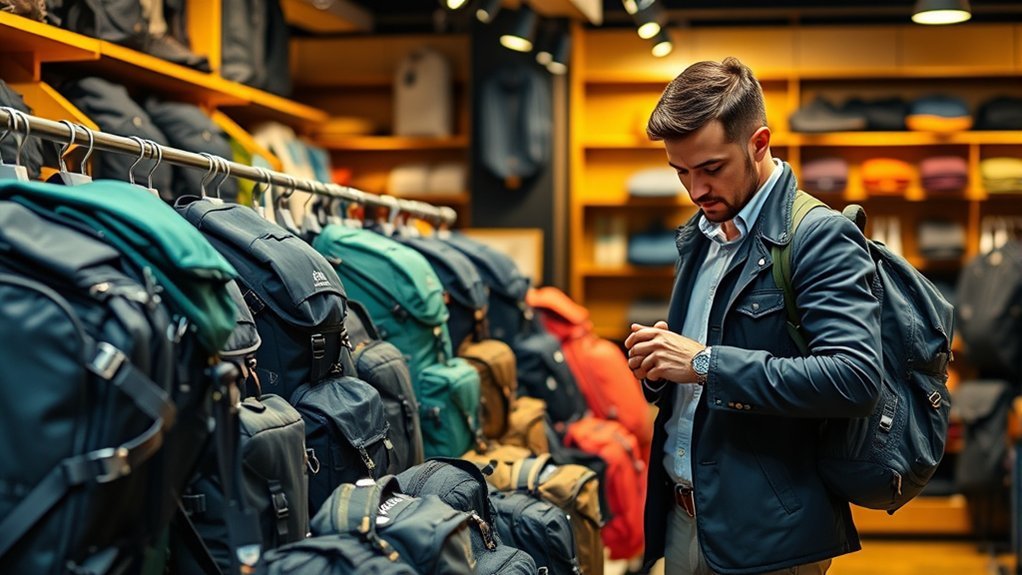
Your backpack should fit the places you visit as well as the gear you carry. Dark, structured bags move easily from airports to offices, while brighter colors are easier to identify and can reflect a more casual travel style.
| Style | What to Look For | Current Example |
|---|---|---|
| Minimalist | Clean front panel, subdued colors, hidden organization | Aer Travel Pack 4 35L |
| Rugged or Tactical | Abrasion-resistant fabric, reinforced handles, modular attachment points | GORUCK GR2 |
| Classic and Customizable | Neutral shape, removable pouches, replaceable accessories | A simple panel-loading bag with removable organizers |
| Vibrant and Casual | Distinct colors, travel-focused compartments, softer styling | Cotopaxi Allpa 35L |
| Professional | Structured body, limited exterior straps, protected laptop access | A logo-light bag with stowable straps and a luggage pass-through |
Examples are useful for comparing design ideas, but product lines, fabrics, colors, and prices change. Verify the current manufacturer specifications before buying.
Budget Considerations
Set a spending limit after you know the size, fit, and features you need. A lower-priced bag can be a smart choice for occasional trips, while frequent travelers may benefit from better hardware, a more supportive harness, or a repairable design.
Determine Your Spending Limit
Compare the full cost, including optional hipbelts, rain covers, packing cubes, shipping, and return fees. A pack that appears cheaper can cost more once the accessories needed for your use are added.
Assess Value for Money
Judge value by the features you will use on every trip:
- Correct outside dimensions for your airlines
- Comfort with your normal packed weight
- Reliable zippers and reinforced stress points
- A laptop compartment sized for your actual device
- An opening and pocket layout that matches your packing style
- A clear return policy and practical warranty
Consider Long-Term Investment
A durable backpack can be a good long-term purchase, but price alone does not prove quality. Read the warranty exclusions, check whether repairs are offered, and search for long-term reports about zipper, coating, buckle, and seam wear. Choose a bag you can comfortably carry now rather than paying extra for theoretical durability you do not need.
Final Buying Checklist
- Does the packed bag meet the smallest airline limit on your itinerary?
- Does its empty weight leave enough room under any airline weight cap?
- Does the torso length or fixed harness fit your body?
- Can you walk 15–20 minutes with your normal load without pain or numbness?
- Can you reach travel documents and electronics without unpacking everything?
- Are the zippers, seams, handles, and strap anchors reinforced?
- Is the bag water-resistant enough for your destination, with backup protection for valuables?
- Does the return window allow a realistic indoor fit test?
- Does the warranty cover defects, and is repair service available?
Frequently Asked Questions
Can I use a travel backpack for daily commuting?
Yes. A travel backpack can work for commuting when it is not too bulky and includes the pockets you need for a laptop, charger, lunch, and daily essentials. Compression straps or an expandable design help a larger bag feel less oversized when it is lightly loaded.
How do I clean and maintain my travel backpack?
Follow the care label first. Empty the bag, vacuum loose dirt, and spot-clean with mild soap and cool water when the manufacturer allows it. Rinse away soap, open all compartments, and air-dry the pack completely. Do not machine-wash, heat-dry, bleach, or apply waterproofing products unless the maker specifically approves them.
Are travel backpacks suitable for hiking?
Some are suitable for short, easy hikes, especially when they have a stable harness, breathable back panel, and secure water storage. For long or technical hikes, a dedicated hiking pack usually offers better ventilation, load transfer, movement, and hydration compatibility.
What size backpack is best for international travel?
There is no universal best size. Many travelers find 30–40L practical for one-bag travel, but the correct choice is the largest packed backpack that fits the strictest airline dimensions and weight limit on the itinerary. A smaller bag is usually easier on regional aircraft and budget airlines.
Can I carry a backpack as a personal item on flights?
Yes, when the airline allows a personal item and the packed backpack fits its under-seat size limit. Check the exact dimensions for your fare and route. A bag marketed as a “personal item” is not automatically accepted by every airline.
Do men need a men’s-specific travel backpack?
Not necessarily. A gender label can describe average harness proportions, but individual bodies vary. Torso length, shoulder-strap spacing, hipbelt shape, and loaded comfort are better buying criteria than the label alone.
Is a heavier backpack always more durable?
No. Heavier fabric and hardware may improve abrasion resistance or structure, but durability also depends on seam construction, zipper quality, coatings, and repairability. Compare the whole design and warranty, not weight alone.
Conclusion
The right travel backpack for men is the one that fits your body and your real itinerary. Start with airline dimensions, choose a realistic capacity, and test the harness with weight inside. Then compare materials, organization, style, warranty, and price. A careful loaded-pack test will tell you more than a long feature list or a gender label.
Sources
- Federal Aviation Administration — Carry-On Baggage Tips — cabin-bag sizing and airline-rule guidance
- United Airlines — Carry-On Bags — example of separate carry-on and personal-item dimensions
- REI Co-op — How to Size and Fit a Backpack — torso measurement and strap-adjustment guidance
- Aer — Travel Pack 4 35L — current minimalist travel-pack specifications
- GORUCK — GR2 — current rugged travel-pack materials, sizes, and warranty information
- Cotopaxi — Allpa 35L Travel Pack — current travel-pack materials, size, and warranty information