
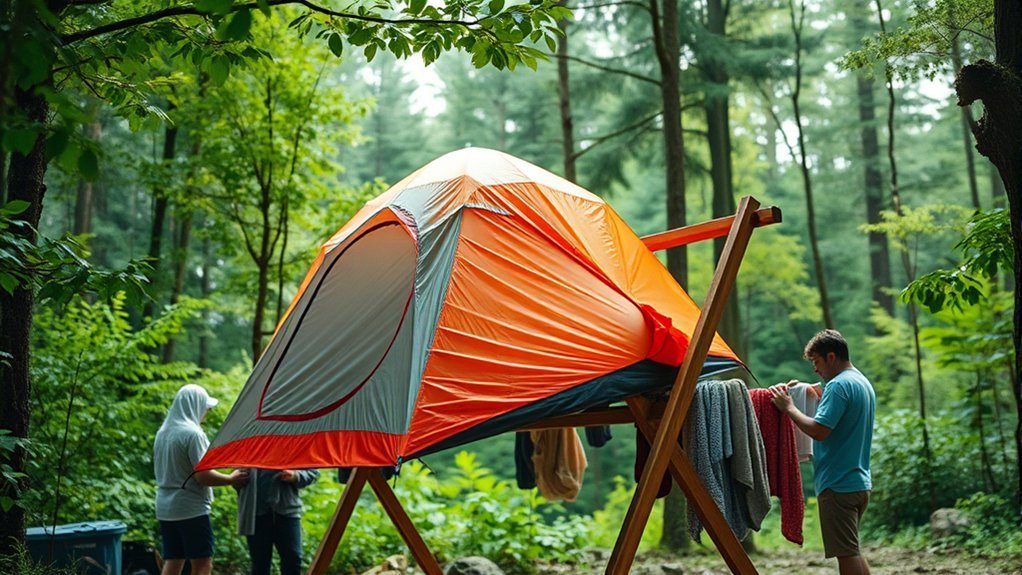
To dry your tent after rain, start by shaking it to remove excess water and wipe down surfaces with a towel or microfiber cloth. Position it in direct sunlight and open all doors for airflow. If possible, let it dry while pitched in a breezy spot. At home, air dry it in a well-ventilated area and avoid using a dryer. Make sure it’s completely dry before storage to prevent mold. You’ll discover more helpful tips and techniques ahead.
Shake or Wipe Off Excess Moisture

After a rain, the first step in drying your tent is to shake it out vigorously. Use the shake technique to dislodge water droplets clinging to the fabric. This quick action helps eliminate excess moisture before you move on to the next step. Once you’ve shaken off the bulk of the water, grab a towel or microfiber cloth and employ the wipe method. Wipe down all surfaces, including the underside, to remove any remaining water. Pay special attention to corners and seams, as these areas often retain moisture even after shaking and wiping. By thoroughly drying your tent, you’ll prevent mold growth and extend its lifespan. Remember, the more effective you are with these methods, the quicker your tent will dry, making it easier for you to enjoy your next adventure without worrying about damp gear.
Products Worth Considering
SUPER ABSORBENT - Absorbs water 5 times of its own weight. FAST DRYING - Dry in no time by hanging it with the snap loop.
SUPER ABSORBENT - Absorbs water 5 times of its own weight. FAST DRYING - Dry in no time by hanging it with the snap loop.
COMPACT DESIGN - This sports towel set is packable for the gym, beach, and anywhere else you need them. They can easily be condensed in size 4x smaller than a camping towel of the same size.
Use Natural Sunlight
Using natural sunlight is one of the most effective ways to dry your tent after rain. Position your tent in direct sunlight to speed up moisture evaporation, but be mindful of potential UV damage. Open all doors and windows to boost airflow and guarantee that hidden moisture in corners and seams dries out efficiently.
Benefits of Sunlight Exposure
While you might be enthusiastic to pack up your tent after a rainy outing, exposing it to natural sunlight can greatly improve the drying process. The sunlight benefits your tent by speeding up evaporation, ensuring that moisture doesn’t linger. This is especially effective on sunny days following rainfall. Sunlight also acts as a natural disinfectant, reducing the risk of mold and mildew that thrive in damp conditions. In addition, it helps eliminate stubborn odors, leaving your tent fresh and ready for the next adventure. Just remember to monitor your tent’s exposure time to protect its UV coating. For maximum drying efficiency, pitch it in an unobstructed spot where it can soak up sunlight for as long as possible throughout the day.
Optimal Sunlight Timing
To maximize the drying process after rain, timing your tent exposure to sunlight is key. Position your tent in direct sunlight as soon as the rain stops. Aim for peak sun hours, typically between 10 AM and 2 PM, when sunlight intensity is highest and drying efficiency is ideal. However, keep an eye on the clock to prevent prolonged exposure, which can harm your tent fabric over time.
Here are three tips to enhance your drying strategy:
- Set up in direct sunlight right after the rain.
- Use reflective surfaces, like light-colored ground sheets, to boost drying efficiency.
- Monitor for wear on the fabric, ensuring it stays intact while drying.
Protecting Tent Fabric
Protecting your tent fabric during the drying process is essential, especially when using natural sunlight. Position your tent in direct sunlight to speed up drying, as ultraviolet rays help evaporate moisture quickly. However, monitor exposure time; too much sun can damage UV coatings and degrade fabric. Make sure your tent is fully pitched to maximize airflow and light exposure on all surfaces. This not only aids in drying but also helps eliminate mold spores and bacteria that might thrive in damp conditions. For effective tent maintenance and fabric care, avoid leaving your tent out for prolonged periods. By balancing sunlight exposure, you can maintain your tent’s integrity and enjoy many more adventures under the stars.
Utilize Wind or a Breeze
To effectively dry your tent, position it in a spot where the wind can reach it easily. Open all doors and windows to enhance airflow inside, which helps eliminate trapped moisture. By leaving the tent pitched, you allow the breeze to reach every corner, ensuring a thorough drying process.
Products Worth Considering
【Remote Timing Camping Fans】 - This battery fans for camping has 3 wind speeds to meet your different needs. Not only can it be operated through the buttons on its body. The fan can also be operated by remote control without moving your body. (The remote control is in the clip on the bottom of the fan). Battery powered fan for camping can be set remotely with 1/3/5 hour timer. Setting Air volume adjustment/lighting adjustment.
Battery Operated Ceiling Fan: This tent ceiling fan is a game changer for plug-in fan. It's equipped with 12000 battery so that you can charge it before and take it anytime and anywhere. The fan blade is detachable, very convenient for portability
【24000mAh Super Large Battery】FRIZCOL Portable Rechargeable Fan with unique advanced cell technology. It is equipped with 24000mAh rechargeable batteries for 16-60 hrs super-long endurance. You can also use it as a power bank for your phone, tablet, or laptop in an emergency.
Open Doors and Windows
Opening all doors and windows of your tent is a simple yet effective way to boost airflow and speed up the drying process after rain. By enhancing tent ventilation, you’ll promote moisture removal and create a more comfortable environment inside. Here are three key tips to maximize your drying efforts:
- Choose a Breezy Spot: Position your tent in an area with natural wind flow to enhance airflow and reduce drying time.
- Keep It Open: Make sure doors and windows remain open while the tent is pitched, allowing the breeze to circulate through hard-to-reach areas.
- Combine with Sunlight: If possible, expose your tent to sunlight, maximizing both airflow and heat for quicker drying.
These steps will help you dry your tent efficiently and effectively.
Leave Tent Pitched
While it may be tempting to pack up your tent immediately after a rain shower, leaving it pitched can greatly enhance the drying process. By doing so, you maximize exposure to natural elements like wind and sunlight, which are key drying techniques. Open all doors and windows to boost airflow and promote evaporation of moisture trapped inside. The wind helps blow away residual water droplets, ensuring thorough drying and reducing the risk of mold and mildew. Keeping your tent pitched after the rain stops allows it to dry before packing, minimizing dampness and preventing long-term damage. This approach is especially effective for synthetic materials, which dry faster but still benefit from good airflow. Prioritize your tent maintenance for longevity!
Leave Your Tent Pitched as Long as Possible
Leaving your tent pitched for as long as possible after rain not only takes advantage of natural airflow but also allows sunlight to work its magic on damp fabric. This approach is essential for effective tent ventilation and can notably reduce dampness, preventing mold and mildew from forming.
Here are three practical tips to enhance your drying techniques:
- Keep doors and windows open: This promotes maximum airflow, helping to evaporate moisture quickly.
- Utilize favorable weather: Even a short duration of sunny or breezy conditions can greatly enhance drying.
- Leave it up until the last moment: The longer your tent stays pitched, the better it can harness wind to eliminate any lingering dampness.
Products Worth Considering
Get better airflow by cracking your windows, even in the rain
Material: Made of 210T argent coated cloth, waterproof, Sunproof and .
DARK TENT: The blackout design camping tent is perfect for sleeping in and allows you to have privacy on outdoor adventures; It also keeps out most temp changes with the blackout fabric
Drying a Tent at Home
After you’ve allowed your tent to air out outside, drying it at home is the next step if the weather isn’t cooperating. Choose a spacious area like a garage or bathroom, guaranteeing good ventilation to prevent condensation. Here are some effective tent drying techniques:
| Method | Description |
|---|---|
| Pitching Indoors | Set up your tent in a well-ventilated area. |
| Hanging Outside | If weather permits, hang it on a washing line. |
| Cleaning First | Use a tent cleaner and sponge before drying. |
| Air Drying Only | Avoid tumble drying; high heat can damage it. |
| Store Properly | Confirm it’s completely dry before storing in breathable options. |
Follow these indoor drying methods to keep your tent mold-free and ready for your next adventure. Always prioritize air drying to maintain its fabric and protective coatings.
Products Worth Considering
Clothes drying laundry rack for energy savings and gentle air drying so clothes last longer; for indoor use
A mesh netting rack designed to preserve plant material by promoting even drying and curing.
Efficient Herb Drying: You will get 4 pcs herbal drying racks, each equipped with 30 stainless steel detachable clips, allowing you to dry and preserve a variety of herbs simultaneously, saving you time and effort
What Not to Do When Drying a Tent
When drying your tent, it’s crucial to steer clear of common mistakes that can lead to lasting damage. Following these tent maintenance tips can guarantee your gear stays in top shape:
- Avoid Heat Sources: Don’t use hair dryers or tumble dryers. High temperatures can ruin the fabric and its protective coatings.
- Don’t Delay Drying: Waiting too long after exposure to moisture encourages mold and mildew growth, making cleanup a nightmare.
- Never Keep It Packed: Leaving a wet tent in its bag traps moisture, risking fabric degradation and unpleasant odors.
How to Store Your Tent After Drying
To keep your tent in great condition, verify it’s completely dry before storing it, as any remaining moisture can lead to mold and mildew growth. For ideal tent storage, use a breathable storage bag or keep the carry sack open. This allows for airflow, aiding in moisture prevention and maintaining hygiene.
Choose a cool, dry place away from direct sunlight to protect your tent’s materials and prevent degradation of waterproof coatings. Regularly check your stored tent for signs of moisture or damage, especially before your next camping trip.
Additionally, store tent poles and stakes separately to reduce weight and avoid potential damage to the tent fabric. By following these simple steps, you guarantee your tent remains ready for your next adventure, allowing you the freedom to explore without worry. Keeping your gear in top shape means you can focus on enjoying nature to the fullest.
Products Worth Considering
Pack your tent in our ALPS Mountaineering Tent Bag and you're ready for you next campout
Pack your tent in our ALPS Mountaineering Tent Bag and you're ready for you next campout
Appreciable Storage Capacity: exceptional sizing characterizes this extra large duffle bag with dimensions of 83 x 16 x 12 inches offering a large storage capacity of 260L; It can accommodate various gear, including a tent and sleeping bags, umbrella-style strollers, sport equipment and household items such as quilts, clothes and disassembled Christmas trees, showcasing its multi-purpose functionality
Frequently Asked Questions
Can I Dry My Tent Indoors Without Causing Damage?
Yes, you can dry your tent indoors without causing damage. Just make sure it’s in a well-ventilated area. Proper indoor drying is essential for tent maintenance, preventing mold and preserving its longevity.
How Long Does It Take to Dry a Tent Completely?
A tent can dry completely in a few hours to a day, depending on factors like humidity, temperature, and airflow. Use effective tent drying techniques to speed up the process and reclaim your adventure spirit.
Should I Use Detergent When Washing My Tent?
No, you shouldn’t use detergent when washing your tent. Instead, try gentle soap or natural detergent alternatives. Follow these tent cleaning tips to protect your gear and extend its life for your next adventure.
Is It Safe to Use a Hairdryer on My Tent?
Using a hairdryer on your tent isn’t safe; 80% of tent fabrics can be damaged by high heat. Instead, opt for air drying or gentle methods to preserve your gear and guarantee its longevity.
Can I Dry a Tent in a Garage or Shed?
You can dry a tent in a garage or shed, but guarantee proper ventilation. Use drying techniques like hanging it up or laying it flat to prevent mildew and promote airflow for effective drying.
Conclusion
In summary, drying your tent quickly and carefully guarantees it stays in superb shape for your next adventure. By shaking off excess moisture, soaking up sunshine, and savoring the breeze, you can effectively eliminate dampness. Remember to pitch your tent as long as possible for ideal drying. Avoid common drying blunders, and store your tent safely afterward. With these simple strategies, you’ll safeguard your gear, keeping it ready for future fun-filled excursions!