
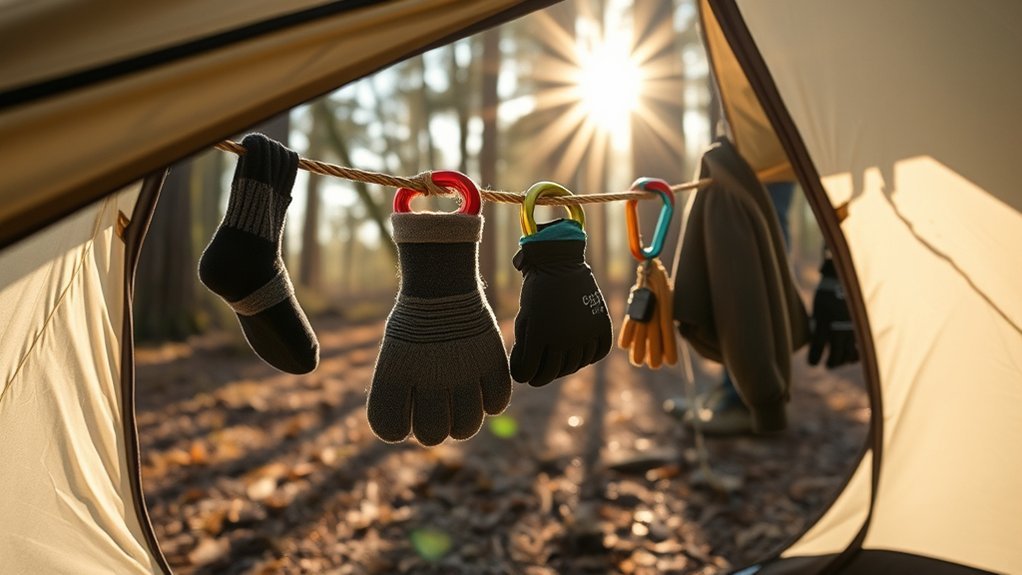
To create a gear drying line under your vestibule, start by selecting weather-resistant materials like stainless steel or heavy-duty nylon for durability. Measure the area to guarantee ideal line placement at a height of 5-7 feet, spaced 10-12 feet apart with eye screws. Install hooks securely and stretch the line using turnbuckles for tension. Regularly check the line for wear and maintain proper airflow by hanging items inside out. Discover additional tips for efficient drying solutions.
Selecting the Right Materials

When you’re creating a gear drying line, selecting the right materials is vital to guarantee durability and functionality. Opt for weather-resistant materials like stainless steel or galvanized metal to prevent rust and deterioration in humid environments. These choices assure long-term material durability, allowing your drying line to withstand the elements. For the line itself, heavy-duty nylon or polyester provides the strength needed to support wet gear without stretching over time.
Make certain to use eye screws or hooks rated for outdoor use, creating a stable support system for hanging items securely. Proper spacing is essential; aim for supports 10-12 feet apart to maintain tension and prevent sagging. Finally, consider installing adjustable turnbuckles to easily tighten the line as needed. This will keep your gear drying line effective and taut, guaranteeing your equipment dries efficiently while you enjoy the freedom of your outdoor adventures.
Products Worth Considering
HEAVY-DUTY CLOTHESLINE: Our steel cable hanging system is made of durable and rust-resistant steel cable and PVC coating that allows it to withstand multiple uses for a long time. The metal line wire is pliable and won’t crack over time.
Effortless Load Capacity: The Retractable Clothesline Kit is designed to support an impressive load of up to 8kg (approximately 282.2oz), making it a good solution for all your drying needs. Whether you’re hanging wet clothes, towels, or delicate items, this strong and sturdy clothesline provides the durability you can count on, ensuring your laundry dries efficiently and securely
Premium Steel Core & Heavy-Duty Design: Our upgraded outdoor clothesline features a reinforced steel wire core wrapped in thickened weather-resistant nylon. Engineered for exceptional strength, it delivers superior load-bearing capacity that resists snapping under tension. Built to withstand rain, wind, and UV exposure, this robust clothesline is perfect for demanding outdoor environments – ensuring your laundry stays securely hung season after season.
Measuring the Space
Start by evaluating the available area in the vestibule, measuring both length and width to guarantee sufficient space for your gear drying line. Next, determine the ideal height for installation, aiming for 5-7 feet off the ground to facilitate access while maximizing drying efficiency. Be mindful of any obstructions that could hinder placement and airflow.
Assess Available Area
Evaluating the available area for your gear drying line is essential for guaranteeing functionality and efficiency. Measure the total length and width of your vestibule to determine the best space utilization for your drying line, accommodating the gear size. Don’t overlook the height of the ceiling; plan for enough clearance to hang items without obstruction. Identify any obstructions, such as doors or windows, that might limit placement and effectiveness. Additionally, confirm the distance between mounting points is appropriate—ideally 10-12 feet apart for stability and to prevent sagging. Finally, incorporate effective ventilation strategies; a well-ventilated area accelerates drying and mitigates humidity’s negative impact on your gear.
Determine Line Height
With the available area assessed, the next step involves determining the appropriate line height for your gear drying setup. Start by measuring the vestibule’s height from floor to ceiling to establish the maximum line height. Consider the tallest gear item you plan to dry, adding an extra foot to guarantee ample gear clearance and prevent interference with the ceiling. Position the line high enough to allow for adequate airflow, which enhances drying efficiency and reduces moisture buildup. Use a level to mark the line height on both sides of the vestibule, guaranteeing even placement and preventing sagging. Finally, account for heavier items that may require a lower line to avoid strain when hung.
Preparing the Ceiling for Installation
Before you install the gear drying line, it’s essential to prepare the ceiling properly to guarantee a secure and effective setup. Start by measuring the vestibule’s ceiling space, ensuring the line hangs 6-7 feet above the ground for easy access. Use a stud finder to locate ceiling joists, which provide the necessary support for your installation. Pre-drill holes into these joists to prevent wood splitting and facilitate the installation of eye screws.
| Step | Action | Tools Needed |
|---|---|---|
| 1 | Measure ceiling height | Measuring tape |
| 2 | Locate joists | Stud finder |
| 3 | Pre-drill holes | Drill |
| 4 | Insert eye screws | Screwdriver |
| 5 | Secure with hardware | Toggle bolts, lag screws |
Ensure the drying line is anchored securely to support damp gear. Consider a pulley system for added convenience and efficient space usage.
Products Worth Considering
Retro Design:The pipe clothes is made of steel galvanized pipe and black powder coated surface.Its unique and vintage look is great in your room and could be also used in a hallway, entryway, bedroom, closet, laundry room or balcony
Adjustable Telescopic Design: Expands from 29.5" to 55" to hold more laundry while maximizing vertical space—perfect for drying sheets, towels, or daily loads.
Foldable & Space-Saving Wall Drying Rack - This wall mounted clothes drying rack folds flat against the wall when not in use, saving valuable floor space. Ideal for small laundry rooms, bathrooms, apartments, and other tight spaces.
Installing Hooks or Eye Screws
To install hooks or eye screws effectively, choose weather-resistant materials to prevent corrosion in humid conditions. Position them at a height of 5-6 feet for accessibility and guarantee even spacing of 4.5 inches apart to optimize drying area. Pre-drill holes to secure them properly and avoid damaging the mounting surface, using sturdy anchors when necessary.
Products Worth Considering
High-Strength Steel Construction: Crafted from steel, these lag screw eyes boast increased strength and durability, making them a reliable choice for your fastening needs.
High-Strength Steel Construction: Crafted from high-strength steel, these screw eyes provide enhanced durability, making them a reliable choice for various tasks, from organizing tools to securely hanging decorations.
High-Strength Steel Construction: Crafted from steel, these lag screw eyes boast increased strength and durability, making them a reliable choice for your fastening needs.
Choosing Suitable Hooks
Selecting the right hooks or eye screws is essential for a successful gear drying line. Opt for durable eye screws made of weather-resistant materials to guarantee they withstand outdoor elements. Consider the load capacity based on the weight of the gear, and choose appropriate hook materials that can handle the expected strain. When determining hook styles, make sure they provide ideal support without risk of failure. Space the eye screws approximately 4.5 inches apart to prevent sagging and enhance stability. Pre-drill holes in the installation surface to avoid wood splitting, and secure each eye screw with at least three full turns for maximum stability. These choices will ensure your gear drying line remains functional and reliable for years to come.
Proper Installation Techniques
When installing hooks or eye screws for your gear drying line, it’s crucial to pre-drill holes at evenly spaced intervals to guarantee ideal support and functionality. Use weather-resistant eye screws to avoid rust and corrosion, ensuring durability in outdoor conditions. Position them at a height of 6 to 7 feet for adequate clearance, and space the hooks or eye screws 10-12 feet apart to prevent overcrowding—this mitigates installation challenges. Securely tighten each screw until flush with the surface, ensuring a firm anchor to prevent movement while hanging gear. Always follow safety precautions, such as wearing protective eyewear when drilling, to avoid accidents. With these techniques, you’ll create a reliable and efficient gear drying line.
Stretching the Drying Line
Stretching the drying line is vital for maximizing its effectiveness, as a tightly secured line prevents sagging that can impede the drying process. To achieve this, install eye screws on both ends of the line, anchoring it firmly to the vestibule’s walls. Maintain a distance of 10-12 feet between these anchor points to enhance stability and support the weight of wet gear. During installation, perform a tension adjustment using turnbuckles, allowing for precise tightening that eliminates any potential line sagging. This adjustment is key; a sagging line can trap moisture and extend drying times, defeating the purpose of your setup. Consider using weather-resistant materials, such as metal covered in plastic, to guarantee durability against humidity. By focusing on these aspects, you’ll create an efficient drying line that promotes quick and effective gear drying, liberating your outdoor pursuits from the constraints of wet equipment.
Securing the Line With Turnbuckles
Securing the line with turnbuckles is essential for maintaining peak tension and preventing sagging in your gear drying line. Position a turnbuckle at both ends of the line to facilitate even turnbuckle tensioning across its length. This guarantees stability and allows for easy adjustments as necessary.
When selecting turnbuckles, opt for weather-resistant materials to withstand outdoor elements, thereby prolonging their lifespan. Proper installation involves using pre-drilled holes for a secure fit, minimizing strain on the line when tightened. Regularly check and tighten the turnbuckles to maintain maximum tension; this proactive approach helps prevent potential line failure during use.
Products Worth Considering
【Packaging Information】: Including x 30m/100ft vinyl steel cable,4 xM5 Turnbuckle Tensioners,8x M3Wire Rope Clamp Clip,10 x M3 aluminum sleeve, 8x M3 thimble, 2 x Spring Snap Hook,8x M6 Sheep eye screw hook 65mm, 8 x plastic anchors,1x wrenches
Professional Turnbuckles for Cables Wire Kit: Includes a 100 ft steel cable wire, 5 M5 cable turnbuckle wire tensioners, 10 wire rope thimbles, 12 3-inch eye screws, 12 cable clips, 1 cable clamp screwdriver, and 12 expansion tubes for concrete walls
BUILT TO LAST: Our 304 Stainless Steel Turnbuckles offer unbeatable durability with exceptional rust and corrosion resistance. Engineered to endure the harshest conditions, they provide a secure and reliable connection for long-term use
Tips for Optimal Gear Hanging
After securing your gear drying line with turnbuckles for ideal tension, it’s time to focus on how you hang your gear. Start by ensuring there’s adequate space—2-3 inches between items—to promote air circulation and prevent moisture buildup. Use sturdy hooks or lines that can support the weight of your wet gear; heavier items like jackets or boots need robust solutions to avoid sagging. A designated drying line at least 6-8 feet long, positioned under the vestibule, maximizes ventilation while shielding your gear from the elements. Remember to hang items inside out for better drying efficiency and to protect the outer fabric from prolonged moisture exposure. Regularly check and rotate your gear for even drying. This proactive gear organization helps mitigate dampness and potential mildew growth, ensuring that your gear remains in prime condition and ready for your next adventure.
Maintenance of the Drying Line
To maintain your drying line effectively, conduct regular inspections for any signs of wear and tear. Clean the metal lines periodically to prevent rust buildup and guarantee maximum drying efficiency. By staying proactive in these areas, you can extend the lifespan and functionality of your drying system.
Regular Inspections Required
Maintaining the functionality and safety of your gear drying line hinges on regular inspections. You’ll want to establish an inspection frequency that suits your environment and usage, verifying you check for wear indicators like fraying or rusting on metal lines and eye screws. Examine the stability of posts and supports, especially after severe weather, to prevent collapses.
| Inspection Focus | Action Required |
|---|---|
| Metal Lines | Check for fraying or rusting |
| Eye Screws | Confirm integrity and function |
| Posts and Supports | Verify stability |
| Turnbuckles | Confirm tightness and tension |
Promptly replace any damaged components to maintain the integrity of your drying line system and guarantee peak performance.
Clean Lines Periodically
Cleaning your gear drying lines periodically is crucial for maintaining their effectiveness and safety. Implementing proper cleaning techniques prevents mildew and extends the lifespan of your lines. Here are some key maintenance steps:
- Use a mild soap solution to clean the lines and remove dirt or debris.
- Inspect for signs of wear, like fraying or rust, to guarantee safety.
- Tighten turnbuckles every few months to maintain tension and prevent sagging.
- Replace damaged eye screws promptly to uphold structural integrity.
- Store lines indoors during extreme weather to optimize performance.
Benefits of a Gear Drying Line
A gear drying line offers numerous advantages for outdoor enthusiasts seeking effective gear maintenance. By providing a sheltered space for your wet gear, it helps prevent mold and mildew growth, ensuring your equipment stays in prime condition. Utilizing this dedicated line enhances gear longevity, as it promotes proper air drying and minimizes wear from excessive heat or tumble drying. Moreover, better air circulation around your gear leads to faster drying times, especially in humid conditions.
Organizing your gear on a drying line also keeps the vestibule tidy, reducing clutter and making it easier to find and access your equipment when gearing up for adventures. Additionally, a gear drying line is an eco-friendly solution, minimizing energy consumption and supporting sustainable practices in outdoor gear maintenance. Embracing this method allows you to care for your gear while aligning with environmentally conscious values.
Alternative Drying Solutions
When it comes to drying gear, several effective alternatives can complement a gear drying line. These solutions enhance efficiency and can be easily implemented to suit your needs. Consider integrating the following options:
- Solar dryers: Harness natural sunlight to dry gear efficiently, even in remote locations.
- Indoor fans: Improve air circulation within your vestibule, speeding up drying times.
- Dehumidifiers: Reduce moisture in the air, preventing dampness and accelerating the drying process.
- Heat lamps: Provide targeted heat to specific areas, ideal for stubbornly wet gear.
- Tumble dryers with drying racks: Utilize your existing appliance to dry gear without risking damage.
Products Worth Considering
Ultimate Cooling Experience: BEARWIND handheld turbo fan uses a 4th-gen high-speed airflow system, 7 blades turbo design, and advanced brushless motor. With speeds up to 9 m/s, 3x stronger than ordinary fans, it’s ideal for travel and instant cooling
The Snowpea Boot Dryer Hot Air has two pipes that can blow hot air (around 140℉) into your footwears. The pipes are extendable up to 11.8in to fit different sizes of shoes and gloves. The cable length is 5.3ft, which is long enough for most outlets.
𝟏𝟑𝟓𝟓𝟎 𝐑𝐏𝐌 𝐔𝐥𝐭𝐢𝐦𝐚𝐭𝐞 𝐂𝐨𝐨𝐥𝐢𝐧𝐠 𝐄𝐱𝐩𝐞𝐫𝐢𝐞𝐧𝐜𝐞 - This N607 handheld turbo fan adopts an advanced 6-blade design and is equipped with a high-speed three-phase brushless motor, with a maximum wind speed of up to 10m/s. Maximum speed is 13,550 rpm, which is 3 times that of ordinary handheld fans. Perfect for relieving the heat during hot journeys.
Frequently Asked Questions
What Types of Gear Can I Hang on the Drying Line?
You can hang various types of gear on the drying line, including hiking gear, cycling apparel, camping equipment, and climbing harnesses. These items dry efficiently, ensuring they’re ready for your next adventure.
How Much Weight Can the Drying Line Support?
Your drying line should support at least 50 pounds if you follow safety guidelines. For instance, a line holding multiple wet jackets can easily exceed this if not properly balanced, risking failure and damage.
Can I Install the Line Outdoors as Well?
Yes, you can install the line outdoors, but make certain it has weather resistance. Choose materials designed for outdoor installation to withstand moisture, UV exposure, and temperature fluctuations, assuring durability and effective performance in various conditions.
How Often Should I Clean the Drying Line?
You should clean the drying line every month for ideal performance. Regular maintenance tips include inspecting for wear and tear, removing debris, and ensuring proper airflow to enhance efficiency and prolong the drying line’s lifespan.
Is There a Recommended Distance Between Hung Items?
For ideal airflow, maintain recommended spacing of at least 6 inches between hung items. This distance prevents overcrowding, ensuring efficient drying and minimizing moisture retention, which can lead to unpleasant odors or mildew.
Conclusion
To sum up, creating a gear drying line under your vestibule not only maximizes space but also greatly enhances gear longevity. Studies indicate that proper drying can extend the lifespan of outdoor gear by up to 50%. By following the outlined steps and maintaining your system, you can guarantee your equipment remains in peak condition. Implementing this solution not only improves efficiency but also contributes to a more organized and functional entryway in your home.