
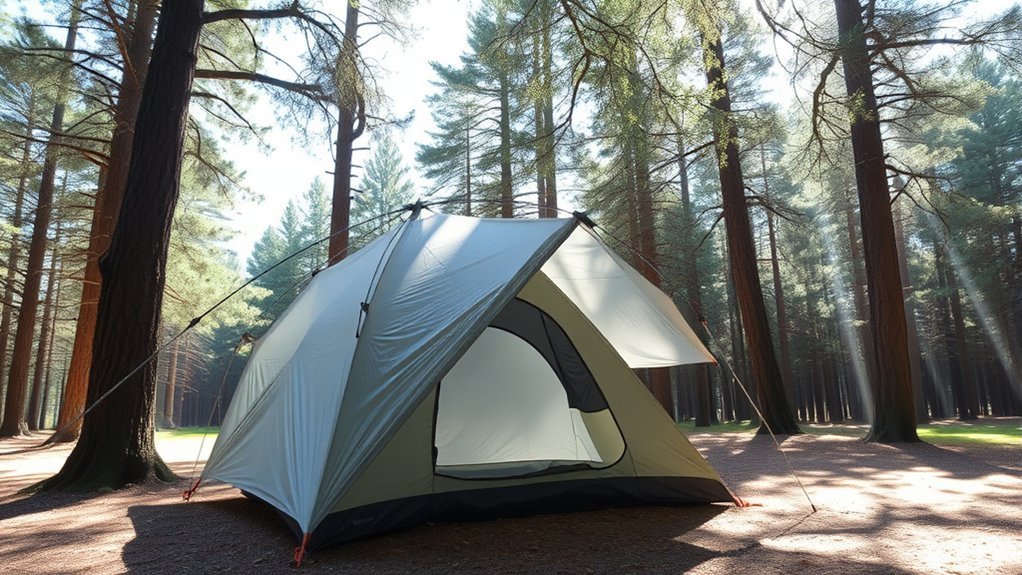
To create a rain shelter over your tent site, start with a high-quality rectangular tarp and raise a center support rope about 10-12 feet high. Secure the corners with taut ropes and use stakes to anchor them down. Employ tensioning systems and friction hitches for adjustments as weather changes. Position the tarp at an angle to direct water away from your tent. By following these tips, you can guarantee better protection from rain while camping. More effective strategies await!
Understanding Rain Tarp Design

When it comes to rain tarp design, a well-thought-out approach can make all the difference in keeping you dry during your outdoor adventures. Start by choosing high-quality tarp materials that offer excellent weather resistance, guaranteeing durability against rain and wind. Your setup should include a tight support rope placed under the tarp between opposite corners, allowing for effective attachment without straining the tarp. Using only three ropes, you can efficiently drain water at two points, preventing pooling that can lead to hazards. If trees aren’t available, consider using 3/4 EMT Conduit to create five-foot poles that fit easily in your vehicle. Finally, secure the tarp with stakes and adjust taut line hitches to guarantee all lines are taut and secure. This careful design will help you create a reliable shelter that enhances your outdoor experience.
Products Worth Considering
Large Camp Tarp Size: The GEERTOP camping tarp measures approximately 17.2 x 10 ft and weighs only about 3.3 lbs. It’s lightweight yet large enough to fully cover a 4-person tent, double hammock, or standard car easily. Note that tarp poles are NOT INCLUDED
WATERPROOF & UV PROTECTION - Hammock Camping Tarp made of 210T ripstop polyester fabric with 2500 PU waterproof rating, enhanced the shelter's waterproof function and offers long-lasting protection, strengthen tear resistant & puncture resistant material without any worries. FREE SOLDIER Backpacking Tarp also can be put up as awning is effectively for blocking ultraviolet ray and protect your skin from the sun
Waterproof Protection: Built from ripstop nylon with taped seams, our waterproof camping tarp blocks rain and shields your hammock from wet conditions. Use it confidently as a rain fly for hammock camping or a tent rain fly during backcountry trips.
Essential Tarp Configuration
A well-designed tarp isn’t just about the materials; it’s also about how you configure it for maximum efficiency. Start with a rectangular tarp, raising a center support rope 10-12 feet high. This height offers ample headroom and proper drainage. Secure the tarp using tight support ropes at each corner, ensuring minimal tension to maintain stability and prevent water pooling. Incorporating two friction hitches, like taut line hitches or Prusik knots, allows for adjustable tension, making repositioning easy as conditions change.
Use stakes to anchor the corners firmly, keeping all lines taut for stability against wind and rain. If you’re facing unpredictable weather or varied landscapes, consider bringing multiple tarps to enhance flexibility in your setup. This way, you can also improve your shelter aesthetics while ensuring effective protection. With the right configuration, your tarp becomes a reliable refuge, empowering your outdoor adventures.
Products Worth Considering
Rainproof & Anti-UV: The tent tarp is made of 150D Oxford Cloth with Blackout Shelter Technology, Waterproof 18000mm+ and UPF2000+; The tarp blocks 99.99% harmful UV, it provides a large shade area and cool comfortable rest space; when suffering bad rain storm, the tent tarp can be used as a rain fly or emergency rain shelter to prevent you from getting wet.
The Ultimate Wilderness Wingman: Whether you’re setting up at camp, the RV park, or on a river trip, Noah’s Tarp is an essential and capable piece of your kit. This simple shelter comes in three sizes, throwing shade for groups of 1 to 16.
Key Benefits of Using a Rain Tarp
While enjoying the great outdoors, having a rain tarp on hand can make all the difference in keeping you dry and comfortable. A rain tarp offers effective weather protection, ensuring that you stay shielded from unexpected rain showers. With just three ropes and a tarp, setting up your shelter becomes a simple and efficient task. The design allows water to drain at two points, preventing pooling and potential leaks, which can ruin your camping experience.
Utilizing Poles for Setup
Using poles for your rain shelter setup can greatly enhance your outdoor experience, especially when trees aren’t available for support. Opt for 3/4 EMT conduit as your pole materials; they’re sturdy and transportable. Five-foot poles work well, fitting easily in vehicles, but remember to use joining techniques like welded bolts for secure connections. To guarantee a snug fit, duct tape can provide an effective solution between the bolts.
Adjusting the height of your center support rope is vital—aim for 10-12 feet high to maintain adequate headroom. Utilizing poles allows you to configure your tarp flexibly, creating effective rain shelters in open areas devoid of natural supports. This approach doesn’t just keep you dry; it empowers you to take control of your outdoor space, assuring comfort wherever you set up camp. Embrace the freedom of designing your rain shelter with poles!
Products Worth Considering
1" Foot Pads fit 1" EMT Conduit poles. EMT Conduit (Electrical Metallic Tubing) is sold in 10' poles at any major hardware store.
1" Foot Pads fit 1" EMT Conduit poles. EMT Conduit (Electrical Metallic Tubing) is sold in 10' poles at any major hardware store.
Best Practices for Tarp Setup
Setting up your tarp correctly is key to maximizing its effectiveness as a rain shelter. Here are some best practices to guarantee a reliable setup:
- Use tight support ropes under the tarp between opposite corners to stabilize it and prevent water pooling.
- Position a center support rope 10-12 feet high for adequate headroom while attaching the tarp without tension.
- Employ taut line hitches at both ends of the tarp for easy height adjustments depending on changing weather conditions.
- Bring multiple tarps made of different tarp materials to adapt to various environmental constraints and optimize your shelter location.
Before finalizing your setup, test tarp positions on the ground to find the best orientation for drainage and coverage over your tent site. With these best practices, you’ll create a dependable rain shelter that enhances your outdoor experience.
Products Worth Considering
Knot-Free Operation Saves Time and Frustration:This rope adjusters Quick-adjust cam mechanism allows smooth tightening and releasing of ropes without complex knots,Perfect for fast campsite setups in changing weather.
【Knot-Free Rope Adjuster】This rope tightening tool features a smooth cam mechanism for instant adjustment.Tighten or loosen your lines in seconds without any complicated knots,perfect for fast setups and adjustments in the field.
Guy Rope 4mm Reflective Cord Guy Line Tent Guide Rope with Aluminum Adjuster 13 Feet 8 Pack for Tent Tarp Outdoor Packaging
Effective Rope Techniques
Mastering effective rope techniques is essential for creating a sturdy and reliable rain shelter with your tarp. Start by using a tight support rope placed under the tarp between opposite corners; this minimizes water pooling. Employ taut line hitches at either end of the tarp to allow for easy adjustments and maintain tension as needed. For added security, incorporate Prusik knots on the main line. These adjustable friction hitches hold firmly while letting you reposition as necessary.
When tying your corner support ropes, use 1-foot loops to facilitate quick adjustments for ideal tarp height and tension. Keeping your center support rope positioned 10-12 feet high ensures sufficient headroom while maximizing the tarp’s effectiveness in protection against rain. Choose durable rope materials that can withstand outdoor conditions, and practice your knot techniques to enhance your setup’s stability. With these skills, you’ll create a rain shelter that stands strong against the elements.
Products Worth Considering
BUILT TO LAST: Constructed of heavy duty powder-coated steel to prevent rust and corrosion and can be reused .
PERFECT GIFT for yourself and loved ones for camping, hiking or hunting. Help your family and friends be prepared to survive in emergency situations. Teach your kids important survival skills with these essential survival items included with this Survival Tent!
Complete Paracord Kit- Whether beginners, advanced or professionals; In our starter kit you will find all the parts you need to make your first Paracord knotting work: 24 x 10 feet 550 Paracord Rope, 15 Buckle, 6 Carabiner, 1 Soft Tape Measure 60 IN long. Which can be used to make bracelets, paracord lanyards, water bottle handle, and other smaller DIY projects.
Making Adjustments for Weather Conditions
When weather conditions change, you can easily adjust your tarp height to guarantee ideal rain protection. Use taut line hitches and Prusik knots to reposition the tarp quickly, adapting to heavy rain or wind. Remember, keeping corner ropes tied with minimal tension allows for flexibility, so you’re always ready for whatever Mother Nature throws your way.
Tarp Height Adjustments
To guarantee your tarp provides excellent protection against varying weather conditions, adjusting its height is essential. Employing effective tarp positioning techniques and height adjustment methods can make a significant difference.
- Set the tarp at 10-12 feet during dry conditions for optimal headroom and ventilation.
- Lower the tarp closer to the ground when rain approaches, enhancing protection.
- Use a taut line hitch for quick height adjustments without re-tying.
- Keep corner ropes tied with minimal tension to enable rapid repositioning.
Before finalizing your setup, verify and test the tarp height on the ground to confirm it’s oriented properly and offers sufficient coverage for anticipated weather. Adjusting your tarp height allows you to stay prepared and comfortable, no matter what nature throws your way.
Flexible Configuration Techniques
While unpredictable weather can make outdoor activities challenging, employing flexible configuration techniques for your tarp can greatly enhance your shelter’s effectiveness. Start by adjusting the tarp height with a taut line hitch—this lets you optimize airflow during sunny spells or maximize rain protection when storms hit. If space is tight, consider tarp layering with smaller tarps to guarantee your setup remains effective without overcrowding. Bringing multiple tarps allows quick adaptations to sudden weather changes. Loosening the taut line hitch enables easy repositioning to lower or raise your shelter as needed. Regularly check the tarp’s tension to avoid pooling and maintain a secure haven, guaranteeing you can focus on enjoying your time outdoors, rain or shine.
Final Steps for Securing Your Rain Shelter
As you finalize your rain shelter, securing the tarp is essential to withstand wind and rain. Follow these final checks to guarantee your shelter is ready for any weather considerations:
- Use stakes at each corner to anchor the tarp firmly, preventing it from blowing away.
- Adjust taut line hitches to keep all lines tight and stable, enhancing the tarp’s effectiveness.
- Position prusik knots along the center support rope for quick adjustments, adapting to changing weather.
- Make final tweaks to the tarp’s height and tension for ideal rain runoff, avoiding pooling.
Regularly check the tension of all lines, especially after heavy rain. This vigilance guarantees your shelter remains secure and effective throughout your camping experience. With these steps, you can enjoy nature’s freedom without worrying about unexpected downpours.
Frequently Asked Questions
What Materials Are Best for a Rain Tarp?
For the best rain tarp, consider polyester tarps for durability and water resistance, or nylon tarps for lightweight portability. Both materials offer excellent protection, so choose based on your specific camping needs and preferences.
How Do I Choose the Right Size Tarp?
Around 40% of campers face unexpected rain. To choose the right tarp size, consider your tent dimensions and weather considerations. Aim for a tarp that extends at least 2 feet beyond your tent’s edges for ideal coverage.
Can I Use a Rain Tarp in Snow?
Yes, you can use a tarp in snow. It provides excellent insulation and snow protection, keeping you dry and warm. Just guarantee it’s securely anchored to withstand heavy snow loads and wind. Enjoy your adventure!
How Do I Clean and Maintain My Tarp?
To clean your tarp, rinse it with water, scrub gently using mild soap, then hang it to dry. For tarp maintenance, store it in a cool, dry place and avoid sharp objects to prolong its life.
Are There Alternatives to Using Trees for Setup?
Yes, you’ve got options! Consider using tarp alternatives like a DIY shelter made from poles and a tarp or even a portable canopy. These methods give you flexibility and protection without relying on trees.
Conclusion
By crafting a rain shelter over your tent site, you’re not just building a barrier against the storm; you’re creating a cozy haven amidst the chaos. With the right tarp configuration and clever rope techniques, you’ll transform your campsite into a dry refuge, no matter the weather’s mood. So, embrace the elements, adjust as needed, and secure your shelter like a fortress. Now, you can enjoy nature’s symphony without the worry of getting drenched!