
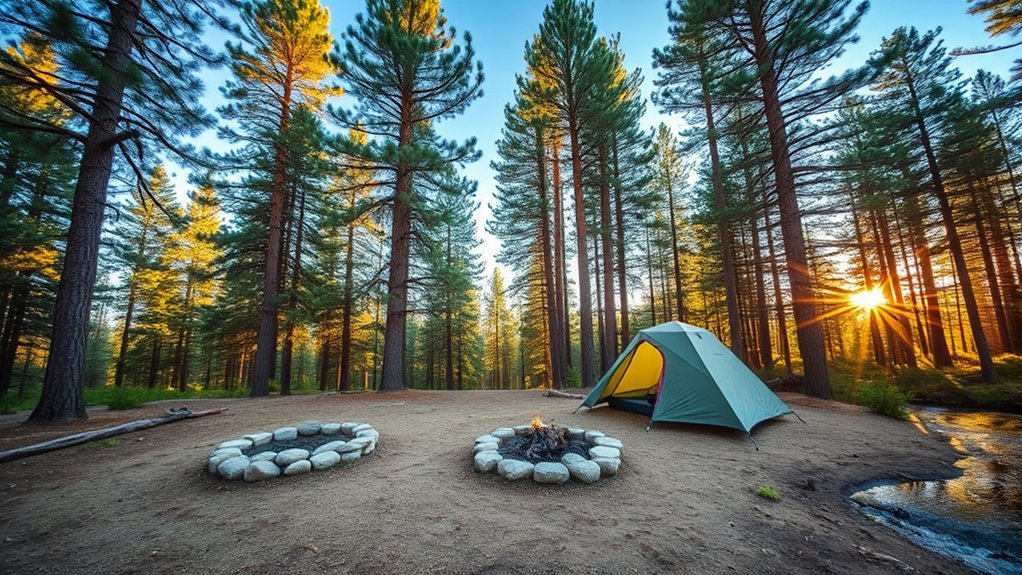
When choosing a safe campsite in the US, prioritize locations at least 200 feet away from water sources to prevent flooding and contamination. Assess the terrain for hazards like dead trees and erosion. Look for flat, level ground with natural windbreaks and shade for comfort. Also, confirm the area is legally designated for camping and check for required permits. By following these guidelines, you can guarantee a secure and pleasant camping experience, and there’s more to explore.
Environmental Impact

When you choose a campsite, it is crucial to take into account the environmental impact of your decision. Opt for established campsites or durable surfaces to minimize disruption to natural vegetation and avoid creating new trails. Following the Leave No Trace principles is imperative for ecological preservation; camp at least 200 feet away from water sources to protect aquatic habitats. When using fire, always utilize existing fire rings and never cut live trees for firewood, as this safeguards the surrounding ecosystem. Remember to return any moved objects, like logs or rocks, to their original positions before you leave. By adhering to these sustainable practices, you actively contribute to conserving the environment and ensuring that your outdoor adventures don’t compromise the natural beauty around you. Your choices matter—embracing responsible camping can lead to a more liberated and harmonious relationship with nature.
Products Worth Considering
Water Jet Cut From 1/8 Thick T6 Aluminum, a material commonly used in Aerospace and by other great outdoor gear companies such as MSR and Osprey!
if you are looking for ecologic, conservationist, responsible and sustainable camping, outdoor activity themed shirts then this is for you. Raise nature awareness and make people laugh at the same time.
Safety
Selecting a safe campsite is essential for a worry-free outdoor experience, as several factors can influence your overall safety. Start by ensuring your site is at least 200 feet away from water sources to prevent flooding and protect local ecosystems. Conduct a thorough terrain assessment; avoid camping near dead trees or “widow makers” that could fall unexpectedly. Opt for higher ground with good drainage to minimize flood risks, steering clear of low-lying areas. Watch for signs of erosion or unstable ground, which can signal potential hazards. Additionally, stay away from exposed ridges and lone trees, as they’re more likely to attract lightning during storms. Remember, wildlife encounters can happen, so choose a campsite that’s not only safe but also respects the natural habitat. Prioritizing these elements will help you enjoy your outdoor adventure without unnecessary worries.
Products Worth Considering
Perfect Air Vents Systems & Easily Transform to Capris Pants: Designed for outdoor enthusiasts like you, these hiking pants for men feature strategically placed breathable vents on the inner thighs, ensuring ventilation and preventing heat buildup in any environment. With the innovative button design at the hem, effortlessly transform them into 7/8 length pants, allowing for easy adaptability to tackle unexpected weather changes or muddy trails with ease.
Package quantity: package comes with 9 pieces hiking compasses, enough quantity for you to meet your different needs, you can share with your friends or team members when you and your friends having outdoor activities, which can bring a lot convenience for them
Comfort
Finding a campsite that offers comfort can greatly enhance your outdoor experience, especially after a long day of hiking or exploring. In summer, prioritize sites with natural shade to take advantage of cooling breezes and reduce mosquito activity, making your stay more pleasant. Conversely, for winter camping, look for spots with natural windbreaks, like trees or hills, to shield you from cold winds.
When it comes to tent placement, choose level and flat ground to guarantee a restful night’s sleep, as uneven surfaces can lead to discomfort. While sunlight is important for visibility, balance it with adequate shade for comfort during warmer months. Additionally, consider using ground cover such as tarps or sleeping pads to enhance your sleeping experience and minimize moisture absorption from the ground. By focusing on these aspects, you’ll create a cozy and inviting campsite for your adventures.
Products Worth Considering
🏕【Extra Wide & 3" Thick Sleep Support】HiiPeak New Desgin creative hexagon shape air cells with pillow is made special with ergonomics. The hexagon shape air cells ergonomically support all of your pressure points, built-in pillow are designed to relieve back and neck pressure, no matter sleep on one's back or sleep on one side. Our Camping bed 3 inch thickness & 27.6 inch width will keep your body away from the uneven ground and hard rocks, ensuring maximum comfort and warm
【Extra Wide & 3" Thick Sleep Support】 The self inflating pad for camping is up to 78*27*8 inches, after inflating keeps you away from the uneven ground and hard rocks. The innovative egg-shaped air cells and built-in pillow are designed to relieve back and neck pressure, allowing you to freely adjust your body balance and comfort, whether on your back or your side, ensuring maximum comfort and warm for your sleep all night!
EXTREME COLD PROTECTION - R VALUE 11: Engineered for true winter conditions. With an ASTM-tested R value of 11, the Arctic R11 delivers serious insulation for sub-zero camping and snow conditions where standard mats fail.
Water and Fire
While enjoying the great outdoors, it’s vital to prioritize access to water and fire for both safety and comfort. Always make sure you have a reliable water source for drinking, cooking, and cleaning. However, remember to treat water from natural sources to avoid contamination. When it comes to fire, adhere to local fire regulations. If fires are permitted, use existing fire rings and gather dead wood to minimize your environmental impact—never cut live trees for firewood. In areas where open fires are prohibited or firewood is scarce, consider using a camp stove as a safer cooking alternative. It’s also important to set up your campsite at least 200 feet away from water sources. This distance protects surrounding ecosystems and prevents water contamination. Plus, secure your food and gear away from water to avoid attracting wildlife and maintain the preservation of local habitats.
Products Worth Considering
Duel Fuel - Compatible With Both Butane (Fuel Not Included) And Propane Fuel (Fuel Not Included), Operates On A Single Butane Cartridge 8 Oz Or A Propane Cylinder 16.4 Oz , Propane Converter Regulator Included
High OUTPUT - Most Fuel Efficient Butane Portable Stove On The Market - Boils Water quickly with 7,650 BTU Evenly Compared To Compeititors Portable Stoves/ To Be used with 8oz Butane Canister Only (Fuel Sold Separately)
Compact and Lightweight Design: Folds flat for easy transport or storage; perfect for backpacking, camping, and any outdoor adventure where space is limited
Legal and Ethical Considerations
Before you set up camp, it’s important to guarantee that the area is legally designated for camping, as this not only protects the environment but also keeps you compliant with local regulations. Adhering to regulatory compliance and practicing campsite etiquette fosters a respectful outdoor experience.
- Verify local regulations and required permits for your camping location.
- Maintain a distance of at least 200 feet from lakes, rivers, and streams to protect aquatic ecosystems.
- Choose established campsites to minimize environmental impact and avoid disturbing wildlife.
Frequently Asked Questions
What Wildlife Should I Be Aware of While Camping?
While camping, be aware of bears, snakes, and raccoons. Wildlife encounters can happen, so keep food stored properly and maintain distance. Understanding animal safety helps you enjoy nature without unnecessary risks or stress. Stay alert!
How Do I Identify a Suitable Tree for Hammock Camping?
Look for sturdy tree types like oak or maple, at least six inches in diameter. Confirm they’re healthy, with no dead branches. This’ll guarantee hammock safety while you enjoy your liberating outdoor experience.
What Gear Do I Need for a Safe Campsite?
You’ll need campsite essentials like a sturdy tent, reliable sleeping bag, and portable stove, along with safety gear such as a first aid kit, flashlight, and bear spray to guarantee your camping experience is secure and enjoyable.
Are There Specific Campsite Markers or Signs to Look For?
Yes, look for campsite signs indicating rules, safety information, and amenities. Trail markers guide you through paths, ensuring you stay on track. These indicators create a safer, more enjoyable camping experience while exploring the wilderness.
How Can I Minimize My Environmental Footprint While Camping?
To minimize your environmental footprint while camping, practice Leave No Trace principles. Use eco-friendly practices like biodegradable soap, pack out all waste, and choose established trails and campsites to protect natural habitats.
Conclusion
Choosing a safe campsite is like selecting the right anchor for a boat; it keeps you grounded in unpredictable waters. By considering environmental impact, safety, comfort, water access, and legalities, you guarantee a smooth adventure. Remember, a well-chosen site not only protects you but also respects nature and fellow campers. So, before you set up your tent, take a moment to evaluate your surroundings—your peace of mind depends on it, just like a sturdy anchor in a storm.