
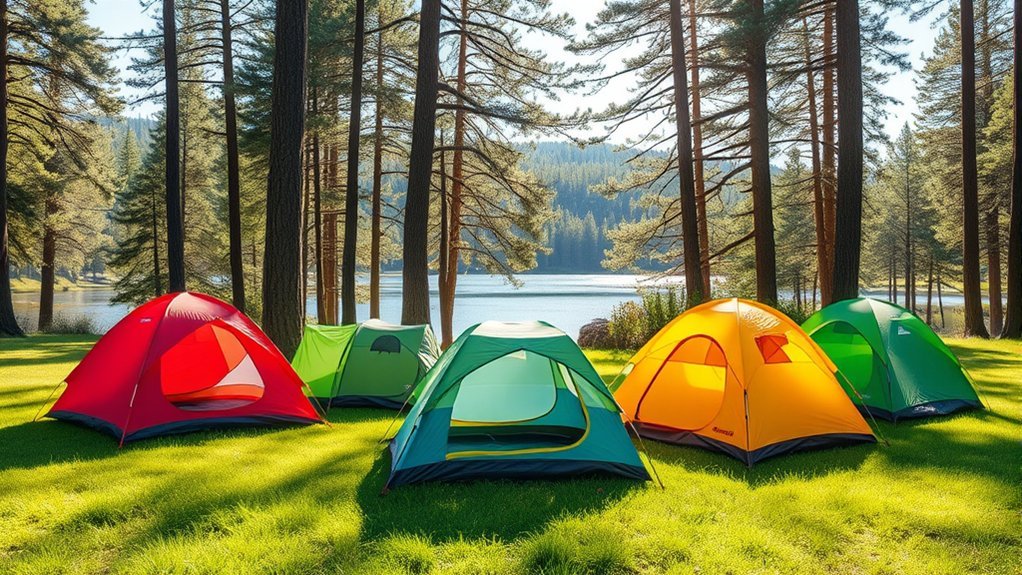
When choosing a camping tent, start by identifying your camping style, whether it’s car camping or backcountry hiking. Consider how many people you’ll accommodate and the expected weather—a three-season tent works for most, while four-season models handle harsh conditions. Look for features like tent height and extra room for gear storage. Finally, set a budget that suits your frequency of use. Need more tips on specifics? There’s plenty more to explore!
Determine Your Camping Style and Needs

When planning your camping trip, have you thought about your specific camping style and needs? Identifying your camping style—whether it’s car camping, backcountry hiking, or glamping—directly affects the tent types you should consider. For car camping, larger tents provide ample space for you and your gear, while backpacking requires lightweight options that won’t weigh you down.
Also, think about the number of people you’ll accommodate. Sizing up your tent is a smart move for extra comfort and gear storage. Don’t forget to evaluate expected weather conditions; opt for three-season tents for moderate climates or four-season tents for more extreme weather. Your experience level matters too—beginners might lean towards budget-friendly options, while seasoned campers may invest in durable, high-quality tents. Finally, consider any special features you might need, like multiple doors or advanced ventilation systems, to enhance your camping experience.
Products Worth Considering
Roomy 4 Person Tent: Spacious design offers enough room for 4 people, with a size 8' x 7' x 72" (H), nearly straight walls, and a 72 inch center height to create generous space to stand up and move around
【Spacious Interior】Our 4 person tent size has been upgraded to 8.7*8ft, giving you more room to put your gear when camping with 4 people, also fits a queen size air mattress with some camping gear and can also be used as a 5 person tent. And the height of the center is increased to 61 inches, giving you more headroom.
【Spacious Interior】Our 4 person tent size has been upgraded to 8.7*8ft, giving you more room to put your gear when camping with 4 people, also fits a queen size air mattress with some camping gear and can also be used as a 5 person tent. And the height of the center is increased to 61 inches, giving you more headroom.
Assess Tent Capacity and Comfort
Choosing the right tent size is crucial for a comfortable camping experience. Start by considering the number of occupants. It’s wise to select a tent that accommodates one more person than the number of campers, allowing for extra space for gear or pets. Assess your sleeping habits as well; if you tend to toss and turn or feel claustrophobic, a larger tent can make a notable difference.
Also, think about the tent’s height and layout. Taller tents with vertical walls provide more livable space, making it easier to change clothes and store equipment inside. This is especially helpful during rainy conditions, where extra room can keep your gear dry without compromising sleeping space. Finally, check the packing size to verify it fits comfortably in your vehicle or backpack, especially if you’re heading into the backcountry. Prioritizing tent capacity and comfort can greatly enhance your camping adventure.
Products Worth Considering
2 PERSON TENT: Two person tents are favored for their lightweight and comfortable size. The Clostnature 2 person backpacking tent is spacious enough, with dimensions of 7’3’’x4’11’’x3’10’’, providing ample space for two adults to feel comfortable. Additionally, this lightweight tent comes with a compact storage sack, sized 16.5’’x6’’x6’’, which is easy to put into the backpack for portability and weighs only 5.29lbs, offering a perfect blend of comfort and convenience
WEATHERTEC PROTECTION — Tub-style floor, welded corners, inverted seams and taped rainfly work together to keep water out and help block wind and rain for a reliable, weatherproof shelter.
Included rainfly offers extra weather protection
Consider Weather Conditions and Tent Seasons
Comfort in your tent isn’t just about size; it also hinges on the weather conditions you expect during your trip. Most camping happens in warmer months, making three-season tents a popular choice. They balance ventilation and insulation, handling various seasonal temperatures well. If you’re planning an adventure in warm, dry weather, a two-season tent might suffice, but steer clear in heavy rain. On the flip side, if winter camping or extreme weather’s in the cards, opt for a four-season tent designed with durable tent materials to withstand harsh elements. For those seeking a bit more warmth without diving into full winter gear, extended-season tents provide extra protection. Evaluating the expected weather and tent seasons is essential; it directly impacts your overall camping experience and comfort, so choose wisely!
Products Worth Considering
Easy Set Up - Y frame tent with simple structure. One person first using this tent is able to set up the tent quickly. The installation instructions sewn inside of the stuff sack.
Key Features: Waterproof and durable material - Lightweight but sturdy frame pole for sleeping overnight, even on a windy or drizzle day. - Perfect for the outdoor enthusiast that enjoys camping, backpacking, hiking ,etc.
Easy Set Up - Y frame tent with simple structure. One person first using this tent is able to set up the tent quickly. The installation instructions sewn inside of the stuff sack.
Explore Different Tent Designs and Features
Understanding the various tent designs and features can greatly enhance your camping experience. Dome tents are popular for their spacious design and ease of pitching, perfect for families or casual outings. If you’re facing extreme weather, consider geodesic tents, which offer enhanced stability with their multiple pole-crossing points. For backpackers, tunnel tents provide a high space-to-weight ratio and quick setup techniques, making them easy to transport.
Ultralight tents, weighing under 1kg, often use trekking poles for support, ideal for minimalist camping and fast treks. Finally, hybrid tents blend different designs to strike a balance between strength and weight, making them versatile for multi-day adventures or quick setups in inclement weather. When choosing your tent, pay attention to tent materials and how they fit your specific camping needs, ensuring you pick the right design for your next outdoor escape.
Products Worth Considering
1 PERSON TENT: If trekking or backpacking personal in the backcountry, you will need a quality one person tent to keep you protected from the elements. Polyester rain fly&bathtub with PU 5000 coating is better in waterproof and firmer than you expected. Weatherproof material with factory-sealed seams keeps you dry and comfortable in all season&all weather conditions! You need an appropriate lightweight solo tent for backpacking!
WATERPROOF & LONG-LASTING: Polyester rain fly & groundsheet & bathtub with PU 5000 coating is firmer than you expected. Weatherproof material with factory-sealed seams keeps you dry and comfortable in all season&all weather condition! Better material but more affordable! You really need an appropriate lightweight 2 person tent for backpacking!
★ 𝘽𝘼𝘾𝙆𝙒𝙊𝙊𝘿𝙎 𝘽𝙐𝙉𝙂𝘼𝙇𝙊𝙒 2.0 𝙑𝙚𝙧𝙨𝙞𝙤𝙣: A classic bakers tent that made with 75D Ripstop Nylon fabric, waterproof treated seams with 1500mm waterproof rating, reinforced groments & tie-out points, quality YKK zippers for extra durability and protection
Budgeting for Your Tent Purchase
When selecting the right tent for your camping adventures, budgeting plays a key role in your decision-making process. Start by establishing a budget range that aligns with how often you camp. Beginner tents typically range from $50 to $80, but if you’re camping regularly, consider investing around $400 for a durable, high-quality tent that withstands the elements. For serious backpackers, ultralight tents priced between $400 and $550 offer portability, making them a worthy investment.
Remember to assess your needs against the price differences in features and materials; lower-end tents may not deliver the durability you need. Don’t forget to factor in additional costs for essential accessories like footprints and rainflies, as these enhance longevity. To keep your investment in top shape, follow tent maintenance tips and explore effective tent storage solutions to protect it between trips.
Products Worth Considering
【Durable and High-Quality Material】: BISINNA Camping tent are made with high quality Material. The INNER TENT made with 190T Polyester Taffeta+B3 No-see-um Mesh; RAINFLY made by 190T Polyester Taffeta and guarantees PU2000mm water-resistant; TENT POLES made with lightweight and durable 7001 space aluminum, can supports most heavily wind rain.
【Quick & Easy Setup】Designed for effortless solo setup, this 2 person backpacking tent features easy set up structure and two lightweight aluminum poles. It can be pitched in just 3 minutes—perfect for hikers or campers who want a hassle-free experience.
6 PERSON TENT: This camping tent is made to comfortably fit 6 people. It has a spacious 9’10'' x 9’10'' floor and a 5’11’’ center height, giving everyone plenty of headroom. Ideal for families, it's great for a comfortable camping experience. On each side, there are two large vestibules. They're perfect for storing your things and also make a cozy place for your pet. Even though it's big inside, it only weighs 11.3 lbs, just perfect for a 6 person tent for backpacking
Frequently Asked Questions
How Do I Clean and Maintain My Camping Tent?
To clean your tent, use mild soap and water, avoiding harsh chemicals. For maintenance, store it dry and away from direct sunlight. Regularly check for tears and seams; repairs keep your tent in great shape.
Can I Use a Regular Tent for Winter Camping?
You shouldn’t use a regular tent for winter camping. Look for tents with strong, durable materials, proper insulation, and features like a snow skirt to withstand harsh conditions, ensuring your comfort and safety in the cold.
What Accessories Do I Need for My Tent?
You’ll need a tent footprint to protect your tent floor and camping stakes to secure it against wind. Don’t forget a rainfly, extra guylines, and a repair kit for those unexpected surprises during your adventure.
How Do I Set up My Tent Correctly?
To set up your tent correctly, follow these tent setup tips: lay it flat, stake the corners, and check for tension. Avoid common mistakes like ignoring the weather and skipping the rainfly for added protection.
Is It Safe to Camp in a Tent During a Storm?
Camping in a tent during a storm isn’t safe. Prioritize storm preparation by choosing a sturdy tent, securing it well, and following safety tips like avoiding low areas and staying away from trees. Stay cautious!
Conclusion
Choosing the right camping tent is essential for a great outdoor experience. Know your camping style, assess your comfort needs, consider the weather, explore designs, and stick to your budget. By understanding these key factors, you’ll find a tent that fits your adventures, accommodates your group, withstands the elements, enhances your comfort, and aligns with your finances. So gear up, get informed, and make your next camping trip unforgettable!