
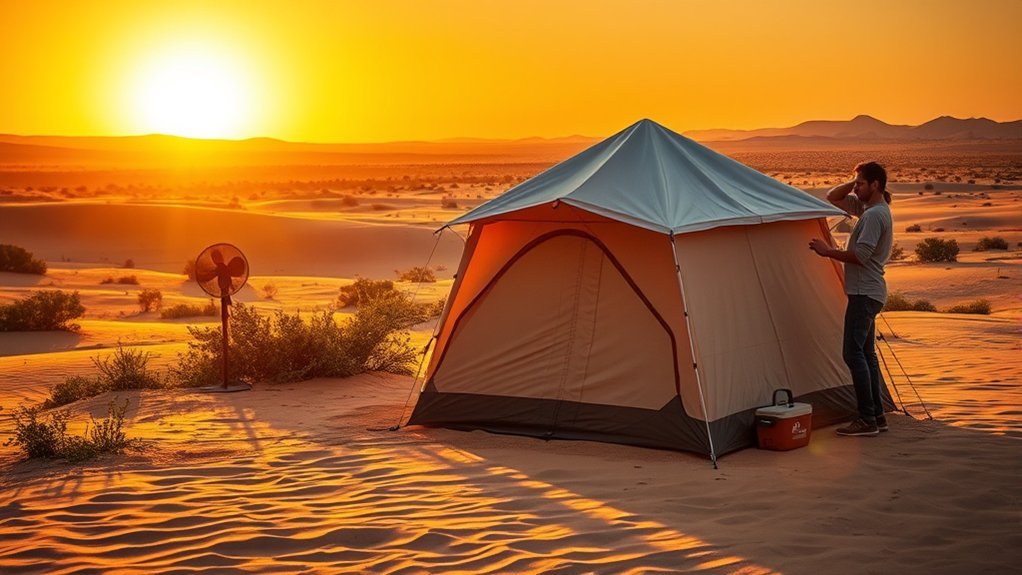
Camping in the desert means adapting to extreme temperature shifts, so choose a shaded spot with wind protection for your tent. Set up your tent facing prevailing winds and use reflective materials to fend off the heat. Keep cool by staying hydrated, wearing light clothing, and planning activities during cooler hours. At night, maximize airflow with fans and light bedding. This outdoor adventure offers unique challenges, and there’s plenty more to discover about ensuring your comfort and safety.
Understanding Desert Conditions

When you venture into the desert, you’ll quickly discover that its conditions are as extreme as they are enchanting. The stark temperature variations, with daytime highs often exceeding 100°F and nighttime lows dropping into the 50s°F, create a unique challenge. In such desert ecosystems, life flourishes through remarkable wildlife adaptations. Creatures like the kangaroo rat have evolved to conserve water, thriving in a climate where humidity is scarce.
During the day, the sun beats down relentlessly, but the desert transforms at night. As temperatures cool, nocturnal wildlife awakens, offering you a chance to witness their elusive behaviors. When camping, choose shaded spots to escape the sun’s intensity and stay safe from wildlife hazards. By understanding these desert conditions, you’ll not only enhance your experience but also connect with an environment that thrives against the odds. Embrace the extraordinary and let the desert’s rugged beauty liberate your spirit.
Importance of Hydration
The desert’s beauty comes with its own set of challenges, and staying hydrated is one of the most important aspects of a successful camping experience. Adequate hydration is essential; aim for at least one gallon of water per day to fend off dehydration and heat-related illnesses. In the dry desert air, drink small, frequent sips rather than large gulps to maintain your electrolyte balance effectively. Pre-hydrating before your adventures can enhance your endurance and prepare your body for the heat.
Consider using insulated water bottles or hydration packs to keep your water cool, encouraging you to drink regularly during hikes. Keep an eye on your water consumption; thirst can be a subtle sign of mild dehydration that might impact your physical performance. With these hydration tips, you’ll empower yourself to fully embrace the desert’s wild, liberating spirit without the risk of succumbing to its harsh conditions.
Choosing the Right Campsite
When you’re choosing a campsite in the desert, look for spots that provide both shade and protection from the wind. Finding a location near a water source can be a game-changer, keeping you hydrated and refreshed in the heat. Pay attention to how the sun moves throughout the day and position your tent to maximize comfort and minimize exposure.
Products Worth Considering
150D Polyester Oxford Fabric Features Strong Color Fastness: 3.5 Grade.
Applicable Scenarios: Camo netting comes in a variety of colors and sizes, perfect for jungle theme decorations,military party decorations, hunting, house decoration, fencing, roof shade, camping, movie sets, bird watching, CS games, camo car covering etc. You are only limited by your imagination
STAY DRY IN THE RAIN: Unigear tent tarp is made of super strong 210D rip-stop Oxford fabric, PU 3000mm waterproof. It offers an excellent protection against rain, sudden downpours, snow and high winds.
Shade and Wind Direction
Finding the right campsite in the desert hinges on your ability to scout for natural shade and understand wind patterns. Look for trees or rock formations that offer shade options, especially during peak heat hours. Position your tent facing prevailing winds to enhance airflow and keep cool. Higher ground is ideal; it provides evening shade and helps you avoid flash flooding risks.
Here’s a quick reference table to guide you:
| Shade Options | Wind Patterns |
|---|---|
| Trees | Align tent with wind flow |
| Rock formations | Position for airflow |
| Tarps with guy lines | Use high ground |
Proximity to Water Sources
Selecting a campsite in the desert often hinges on your access to reliable water sources, which can be scarce and unpredictable. Aim to position your camp within a mile of a water source, making it easier for drinking, cooking, and cleaning. Water source identification is essential; scout multiple options to guarantee you have alternatives if one dries up. Keep elevation in mind—higher ground can protect you from sudden flash floods during unexpected rainstorms. Don’t forget to pack ample water supplies; aim for at least one gallon per person per day. Implement water conservation strategies, like limiting shower time and reusing cooking water, to stretch your resources. Embrace the freedom of the desert while staying hydrated and safe.
Tent Design and Setup
Choosing the right tent for desert camping can make all the difference in your comfort and experience. Opt for tents made from light-colored or reflective materials to keep the interior cooler during scorching days. When setting up, find shaded areas to minimize direct sunlight and orient your tent to catch the prevailing breezes, enhancing natural ventilation. Look for aerodynamic designs that can withstand strong winds, and always secure the guy lines for added stability.
Ensure your tent features adequate ventilation, like mesh windows and doors, to promote airflow while keeping pesky insects out. If you’re feeling adventurous, consider using reflective tarps over your tent to deflect sunlight even more. Just be sure to anchor them properly to handle the desert winds. With the right setup, you’ll create a cozy retreat amidst the vast, beautiful wilderness, allowing you to fully embrace the freedom of desert camping.
Products Worth Considering
【Easy Setup】Instant pop-up tent with pre-assembled poles sets up in seconds, simply open the bag and let go,So easy and enjoyable and set up the tent. No need to waste nice camping time to set up tents,Even if it rains suddenly, you don’t have to be flustered.
Waterproof Design: The tent is made with water-resistant materials to keep you dry in wet conditions.
Included rainfly offers extra weather protection
Managing Temperature Fluctuations
When camping in the desert, managing temperature fluctuations is key to your comfort. Position your tent in a shaded area and angle it to catch the cool evening breezes, helping you shift from the scorching daytime heat to the invigorating night air. With the right setup and a few nighttime cooling techniques, you can create a cozy retreat amidst the desert’s extremes.
Products Worth Considering
All-Weather Protection for Outdoor Survival: Built with a durable 3-layer design, this all-weather survival blanket combines reflective Mylar and rugged polypropylene to help retain body heat while blocking wind and moisture. Ideal for camping, hiking, hunting, or emergency preparedness when dependable protection matters.
[PREMIUM MATERIAL] This rain poncho is made from lightweight yet durable and rip-resistant polyester material. Seams are sealed with waterproof backing material to guarantee no rain will leak from them. Each corner is reinforced and comes with a grommet. Quality buttons along the side are added to help in windy weather. A brim is incorporated in the hood to help you see better
Reinforced Grommets: Upgraded 6.3 inch Stainless Steel Grommets, engineered for a more secure connection and greater durability to prevent falls.
Optimal Tent Placement
To keep your tent cool in the desert heat, positioning it wisely can make all the difference. First, select shaded areas to avoid direct sunlight, drastically lowering internal temperatures. Pay attention to your tent orientation; face the entrance towards the prevailing winds to enhance ventilation and promote cooling breezes. Consider using reflective tarps or light-colored tents to minimize heat absorption. Elevated ground selection is vital, too; it not only protects against flash floods but also allows you to catch cooler air currents at night. Finally, guarantee your tent has proper ventilation features like mesh windows and doors, allowing airflow to reduce heat buildup and create a more comfortable oasis amidst the desert’s sweltering embrace.
Nighttime Cooling Techniques
After setting up your tent in a shaded, well-ventilated spot, the focus shifts to keeping it comfortable as the desert night unfolds. To maximize nighttime ventilation, consider removing the rainfly once temperatures drop. This simple move allows cooler air to flow freely, preventing unwanted heat buildup. Utilize USB rechargeable fans to circulate air inside your tent, enhancing your cooling experience during the warmest parts of the night. If you’ve camped at higher elevations, revel in the fact that nighttime temperatures can be up to 10 degrees cooler. Opt for light-colored, reflective sleeping gear, like cotton sheets, to minimize heat absorption. Position your tent in canyons or shaded areas to catch those natural cooling breezes, ensuring a restful night under the stars.
Creating Shade Solutions
While the desert sun can be relentless, you can create effective shade solutions that provide much-needed relief during the hottest parts of the day. Start by scouting for natural features like rock overhangs or taller vegetation; they can offer a cool refuge from direct sunlight. When planning your campsite, position your tent to maximize shade from these elements, taking advantage of the sun’s angle throughout the day.
For added flexibility, consider using lightweight, portable structures like silver tarps. These can reflect sunlight and enhance air circulation when draped over your tent. If you’re car camping or in an RV, a traditional canopy can also provide respite; just make sure it’s secured against the desert winds. Remember to remove any shade structures when they’re not in use to prevent damage from those unpredictable gusts. With these strategies, you can enjoy your desert adventure without feeling scorched!
Products Worth Considering
Camo Netting for Hunting Blinds: Our camo netting is constructed with premium materials to eliminate shine and glare, ensuring you stay hidden while hunting. Easily cut to fit any size blind, it guarantees a secure attachment for your convenience
150D Polyester Oxford Fabric Features Strong Color Fastness: 3.5 Grade.
High Quality Camo Netting: FLYEGO camo netting is made from high-quality 150D Oxford polyester. Featuring 41D leaf-like foliage, it allows excellent viewing of the surrounding terrain while providing maximum concealment—perfect for all kinds of camouflage situations.
Nighttime Comfort Strategies
As the sun sets in the desert, the temperature can drop considerably, offering a welcome relief from the daytime heat. To maximize your nighttime comfort, focus on effective airflow management in your tent. Position your tent to face the breeze, allowing cooler air to flow through. Consider packing a USB rechargeable fan to enhance airflow, especially on warmer nights.
Instead of bulky sleeping bags, opt for light, breathable cotton sheets that keep you comfortable without overheating. You can also hang reflective tarps over your tent to deflect residual heat, ensuring a cooler environment as the night progresses.
If you’re looking for even cooler nights, consider camping at higher elevations, where temperatures tend to dip lower than in desert valleys. With the right nighttime gear and strategies, you’ll find yourself enjoying peaceful, revitalizing sleep under the vast desert sky.
Protecting Your Gear
To guarantee your gear withstands the harsh desert environment, it’s vital to take proactive measures. Start by securing your tent with a 45-degree angle on guy lines, staked away from the structure. Use sandbags or heavy objects to anchor the corners, protecting against strong winds and sand damage. For your electronic gadgets, gear storage is critical; keep them in ziplock bags or waterproof sacks to shield them from moisture and sand.
Choose tents with proper ventilation and a bathtub-style floor to minimize sand infiltration and enhance durability. Whenever possible, set up in shaded areas to reduce overheating and prolong the lifespan of your tent fabric. Regularly check and maintain your gear—inspect zippers, seams, and fabric to ascertain everything stays intact. These simple steps will help you enjoy your desert adventure without worrying about gear failure, granting you the freedom to explore this magnificent landscape.
Products Worth Considering
12.6 in U-Shape Sand Grip: Long profile locks down; tent stakes for sand grip deep in loose soil. Lightweight aluminium tent stakes pack flat for spring hikes and summer camps without bulk for travel
PREMIUM DURABILITY: Crafted from heavy duty aluminum, silvery color, lightweight, safe, and sturdy, these screw in tent stakes offer superior grip and rust prevention for trampolines, sheds, canopy, backyard, or swing sets
Respecting the Desert Environment
After ensuring your gear is well-protected from the desert’s harsh elements, it’s time to turn your attention to the delicate environment around you. Respecting this landscape is essential for wildlife protection and cultural preservation. Here’s how to tread lightly:
Protect the desert’s fragile environment by respecting wildlife and cultural heritage. Tread lightly and leave no trace.
- Always practice “pack it in, pack it out” to minimize your impact.
- Stick to established trails and campsites to protect fragile soil crusts and prevent erosion.
- Avoid disturbing local flora and fauna—don’t dig in the sand or hang hammocks from sensitive trees.
- Leave ancient artifacts undisturbed and never touch rock art to safeguard history.
- Educate yourself and others about Leave No Trace principles to promote responsible recreation.
Frequently Asked Questions
What Are the Best Times to Camp in the Desert?
The best seasons to camp in the desert are spring and fall. You’ll enjoy ideal temperatures, typically between 60°F and 80°F, allowing you to explore freely while basking in the stunning landscapes and vibrant sunsets.
How Do I Keep Food From Spoiling in the Heat?
To prevent food from spoiling, use cooler options like insulated bags or ice packs for effective food storage. Keep perishables shaded and restock ice regularly; your taste buds will thank you for it!
What First Aid Supplies Should I Bring for Desert Camping?
You’ll want to pack essential first aid supplies like adhesive bandages, antiseptic wipes, and gauze. Prioritizing injury prevention with items like splints and pain relievers guarantees you’re ready for any unexpected mishaps during your desert adventure.
Can I Bring a Pet Camping in the Desert?
Yes, you can bring a pet camping in the desert! Just guarantee their safety by keeping them hydrated, protecting them from desert hazards like heat and wildlife, and always supervise them during your adventures.
What Are the Common Wildlife Encounters in Desert Camping?
While exploring the arid expanse, you’ll encounter desert animals like coyotes, rattlesnakes, and scorpions. Prioritize wildlife safety by keeping a respectful distance, securing food, and staying alert to guarantee an unforgettable experience under the stars.
Conclusion
Camping in the desert can be an unforgettable adventure if you’re prepared. By understanding the harsh conditions and managing heat effectively, you’ll transform your experience from intimidating to delightful. Remember, the desert may appear barren, but it holds countless wonders waiting to be discovered. So, as you pack your gear and plan your trip, embrace the challenge; after all, the most rewarding journeys often lead us through the most inhospitable landscapes. Happy camping!