
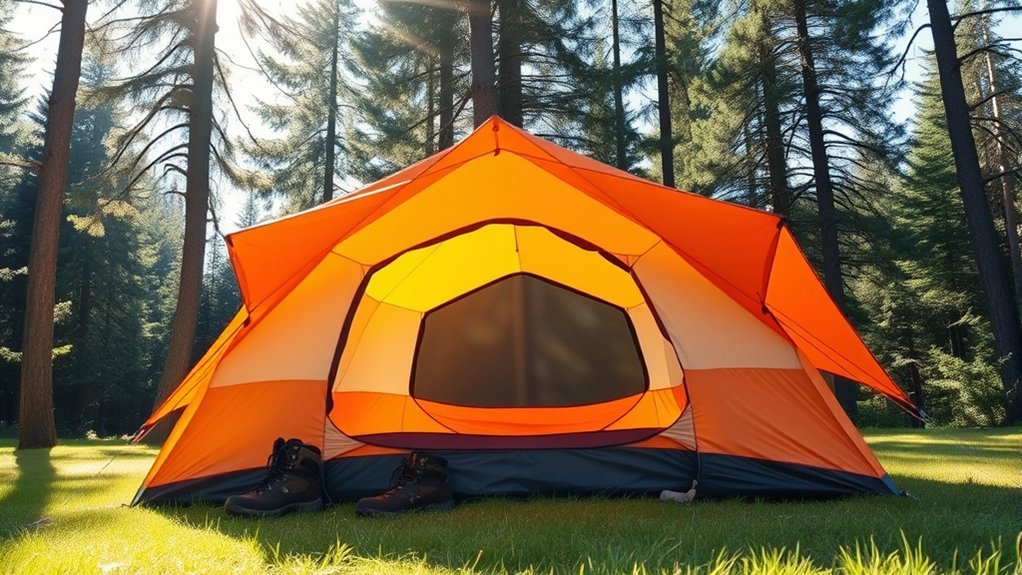
To air out your tent effectively after a trip, set it up in a sunny, dry area as soon as possible. Open all doors and vents for maximum airflow. Remove bedding and accessories, and wipe down any wet spots with a microfiber towel. Allow it to air out for 2-4 hours to guarantee complete dryness. This practice prevents odors and prolongs the life of your tent. There are more tips on maintaining freshness to explore.
Why Airing Out Your Tent Is Essential

While you may be enthusiastic to pack up after a camping trip, airing out your tent is essential for its longevity and your health. Moisture from rain or dew can create a breeding ground for mold and mildew, which can compromise your well-being. Regular airing out promotes mold prevention and protects the fabric, preventing dampness from degrading your tent over time.
To maintain your tent’s integrity, find a sunny, dry area and let it air out for 2–4 hours immediately after use. This simple habit not only eliminates musty odors but also preserves the waterproof coatings. By prioritizing fabric care, you enhance your camping experience, ensuring your gear stays fresh and functional for future adventures. Taking these steps means you can embrace the freedom of the outdoors with confidence, knowing your tent is ready for whatever nature throws your way.
Products Worth Considering
Clothes drying laundry rack for energy savings and gentle air drying so clothes last longer; for indoor use
Space-Efficent Design (36"x18"x72") The Canna Dry Tent is small yet efficent and will not take up much space in your room.
【Non-magnetic stainless steel】The Laundry Drying Rack is made of non-magnetic stainless steel with high quality and can not be adsorbed by magnet. It is non-rusting and has high quality welding design and long service life.
When to Air Out Your Tent
To maintain your tent’s condition and prevent moisture-related issues, air it out immediately after any trip where it encountered rain or heavy dew. This quick action can greatly reduce the risk of mold and mildew development. Here are three key times to air out your tent:
Air out your tent right after rain or dew to prevent mold and ensure freshness for your next adventure.
- After Rain or Dew: Always air it out following exposure to water to maintain freshness and eliminate odors.
- Before Long-Term Storage: Especially during winter, airing out prevents moisture retention and associated health risks.
- Prior to Packing: Make sure your tent is dry and aired out to guarantee proper sealing and minimize odor formation.
Regular tent maintenance through these practices is essential for effective moisture control, extending your tent’s lifespan and keeping it ready for future adventures. Don’t underestimate the importance of timely airing out; it’s a simple step towards a comfortable camping experience.
Step-by-Step Guide to Airing Out Your Tent
To effectively air out your tent, prioritize sunlight and airflow by opening all doors and vents as soon as you return home. Remove bedding and accessories to minimize moisture retention, and wipe down wet spots with a microfiber towel. Let your tent bask in the sun for 2–4 hours to guarantee it’s completely dry before packing it away.
Products Worth Considering
Premium Material: Professional microfiber drying towels are crafted from an advanced blend of 87% polyester and 13% polyamide. They are ultra soft and comfortable, ensuring a gentle touch on your vehicle's surface. With an extra-large size of 31 " x 24 ", they perfectly fit SUVs, RVs, trucks, and boats, significantly reducing drying time and making car drying jobs a breeze
Streak-Free, Spot-Free Drying: With SMINDER’s car drying towels advanced 1200 GSM microfiber and twisted-loop technology, you’ll enjoy a flawless finish every time. Just one pass and your car is 100% dry, streak-free, and water spot-free. The microfiber towels for cars absorb up to an entire gallon of water, making them perfect for efficient, high-performance drying.
ENORMOUS SIZE (MIC721) - A gigantic 36" x 25" towel for rapid drying of even the largest vehicles.
Sunlight and Airflow
Airing out your tent effectively relies heavily on sunlight and airflow, which work together to eliminate moisture and odors. To maximize sun exposure and airflow management, follow these steps:
- Choose a Sunny Spot: Set up your tent in a dry, sunny area as soon as possible after your trip. This helps evaporate moisture quickly.
- Enhance Ventilation: Open all doors and vents to allow fresh air to circulate, carrying away lingering odors and moisture.
- Remove Accessories: Take out bedding and any other items that can retain moisture, preventing musty smells.
Aim to let your tent air out for at least 2–4 hours, adjusting for humidity and temperature to guarantee it dries completely before packing it away.
Clean and Dry Essentials
When it comes to keeping your tent in top condition, cleanliness and dryness are essential. Start by setting up your tent in a sunny, dry area right after your trip. Open all doors and vents to enhance airflow, aiding in odor prevention and moisture dissipation. Remove all bedding and accessories to limit moisture retention, ensuring that the fabric dries thoroughly. Use a clean microfiber towel to wipe away any wet spots, absorbing excess moisture before letting the tent air out. Aim to leave it in direct sunlight for 2–4 hours, ensuring it’s completely dry before packing it away. This step is vital for effective tent maintenance and to prevent mold and mildew growth.
Recommended Drying Time for Your Tent
To guarantee your tent dries effectively, aim for a minimum drying time of 2-4 hours in a well-ventilated area, preferably under direct sunlight. Keep in mind that humidity can greatly impact drying; warmer, drier conditions typically allow your tent to dry within 4-6 hours, while cooler and humid environments may require up to a full day. Always check all areas of your tent for dampness before packing it away to avoid mold and odors.
Ideal Drying Conditions
The ideal drying time for your tent typically falls between 4 to 6 hours in warm, sunny conditions, which allows for effective moisture evaporation. To achieve this, follow these ideal drying techniques in best drying locations:
- Choose Direct Sunlight: Set up your tent in a bright area to maximize heat exposure.
- Enhance Airflow: Open all vents and doors to promote circulation, speeding up drying.
- Inspect Thoroughly: Regularly check corners and seams for dampness, ensuring every part is completely dry.
In cooler or more humid conditions, drying may take up to a full day, so always verify that your tent is entirely dry before packing it away. This practice prevents odors and prolongs your tent’s lifespan.
Humidity Impact on Drying
Humidity plays a significant role in how quickly your tent dries after use, as high moisture levels in the air can prolong the drying process. In ideal conditions, you should aim for 4-6 hours of drying time. However, in humid environments, it may take up to a full day to guarantee complete dryness. Pay special attention to corners and seams, where moisture tends to linger.
| Humidity Level | Recommended Drying Time | Effective Drying Techniques |
|---|---|---|
| Low (0-40%) | 4-6 hours | Sunlight & airflow |
| Moderate (41-70%) | 6-12 hours | Open vents & doors |
| High (71-100%) | 24 hours+ | Set up in breezy areas |
Regular airing out helps prevent mold and mildew growth, extending your tent’s lifespan.
Effective Storage Practices After Airing Out
When you finish airing out your tent, proper storage is essential to assure its longevity and performance. Follow these effective practices to keep your tent in top shape:
- Proper Folding: Avoid folding the tent in the same way each time. This prevents creases that can cause wear and tear over time.
- Breathable Storage: Use a breathable storage bag to allow air circulation. This helps prevent moisture buildup, which can lead to mold and mildew.
- Dry and Cool Environment: Store your tent in a cool, dry place to minimize temperature fluctuations that could compromise its integrity. Assure all camping gear, including poles and stakes, is completely dry before packing them away.
Products Worth Considering
Materials: Crafted from premium, heavy-duty Oxford fabric, this storage duffle bag features reinforced webbing handles (extra thick and wide) and a heavy-duty two-way zipper. Strengthened by precision stitching, it's built to last for both travel and storage.
HIGH QUALITY: 52" x 15" x 15", The large duffle bag is made of high-quality 600D water-resistant and ripstop polyester material for durability. No damage or tearing even when filled with items. The lining fabric has an extra waterproof coating to keep the contents of the bag dry.
IMPORTANT AND MUST-READ: Please carefully read the capacity recommendations in the size chart! For travel, we recommend size Medium. For shipping or storage, we recommend purchasing the size that fits your item, preferably medium or large. XXXL and XXXXL sizes are particularly spacious; for example, the XXXL size can easily accommodate a 7.5-foot Christmas tree. The XXXXL size can accommodate a 9-foot Christmas tree.
Common Causes of Odor in Tents
Proper storage practices can greatly reduce the risk of unpleasant odors in your tent. One of the most common odor sources is moisture accumulation. When you pack away a damp tent, you create a perfect environment for mold and mildew to thrive, leading to musty smells that are tough to remove. In addition, the decomposition of polyurethane coatings on tent materials can emit a vomit-like odor, compounding the issue. Bacteria can also build up in the enclosed areas of your tent, contributing to foul smells if it’s not aired out properly after each use. Moreover, failing to clean the tent of dirt and moisture before storing it can exacerbate these odors. To maintain a fresh, enjoyable camping experience, it’s essential to understand these common causes and take proactive measures to prevent them.
Cleaning Methods to Remove Stubborn Odors
To effectively combat stubborn odors in your tent, you’ll want to explore various cleaning methods that can neutralize unpleasant smells and restore freshness. Here are some powerful odor removal techniques you can try:
- Vinegar Solution: Mix one part vinegar with two parts water, apply it to the affected areas, and let it sit for at least an hour before rinsing. This method effectively eliminates odors.
- Hot Water Soak: Combine hot water with salt and lemon juice. Soak your tent for a natural deodorizing effect, particularly effective against mildew smells.
- Enzyme Cleaner: Use MiraZyme, an enzyme-based product, by soaking your tent in a mixture of water and MiraZyme. This method tackles persistent odors effectively.
Products Worth Considering
STAIN AND UNWANTED SMELL REMOVER: Clorox Urine Remover for Stains and Unwanted smell breaks down urine to eliminate Unwanted smell, not mask it, while the powerful hydrogen peroxide cleaner removes stains
👟 MADE IN THE USA - QUALITY MATTERS THE MOST: Our leather sneaker cleaning rub is formulated with potent and safe, no phosphate with an advance cleaning agent to cleared dirt, grass stains on your tennis shoes. Save your shoes and your bucks!
POWERFUL CONCENTRATED FORMULA: Effectively removes mold, mildew, algae, leaf stains, bird droppings, tree sap, grease, oil, and some food or drink stains from awnings, tents, boat covers, cushions, carpets, vinyl, plastic, and fiberglass without damaging fabrics or colors.
Preventative Measures for Maintaining Freshness
Maintaining the freshness of your tent requires proactive measures that prevent odors and moisture buildup. Air out your tent immediately after returning from a trip by setting it up in a sunny, dry area for 2–4 hours. Before airing it out, remove all bedding and accessories to limit moisture retention. Open all doors and vents to maximize airflow, enhancing drying efficiency and reducing the risk of mold and mildew.
Regularly inspect your tent for any signs of dampness or odors, addressing issues promptly through preventive maintenance to maintain freshness and prolong its lifespan. When it’s time to store your tent, choose a cool, dry place and pack it loosely in a breathable storage bag. This allows for proper air circulation and prevents moisture accumulation. By following these steps, you’ll guarantee your tent remains odor-free and ready for your next adventure.
Products Worth Considering
Pack your tent in our ALPS Mountaineering Tent Bag and you're ready for you next campout
Pack your tent in our ALPS Mountaineering Tent Bag and you're ready for you next campout
Appreciable Storage Capacity: exceptional sizing characterizes this extra large duffle bag with dimensions of 83 x 16 x 12 inches offering a large storage capacity of 260L; It can accommodate various gear, including a tent and sleeping bags, umbrella-style strollers, sport equipment and household items such as quilts, clothes and disassembled Christmas trees, showcasing its multi-purpose functionality
Frequently Asked Questions
Can I Air Out My Tent Indoors?
Yes, you can air out your tent indoors. Guarantee good indoor ventilation to prevent moisture buildup. Proper tent care includes drying it completely to avoid mildew and odors, maintaining its longevity and usability for future adventures.
What Should I Do if My Tent Smells Musty?
If your tent has a musty smell, clean it with a mixture of water and mild soap, then rinse thoroughly. Make certain it dries completely outdoors to prevent mildew and maintain its longevity.
Is It Okay to Use a Fan While Airing Out?
Yes, using a fan enhances airflow effectiveness while airing out your tent. Just guarantee fan safety by placing it on a stable surface, avoiding direct contact with moisture, and monitoring it periodically to prevent any hazards.
How Often Should I Air Out My Tent?
You should air out your tent regularly, ideally after every trip. This simple act of tent maintenance not only prevents odors but also prolongs its lifespan, letting your outdoor adventures breathe free and fresh.
Can I Store My Tent Wet if It’s Cold Outside?
You shouldn’t store your tent wet, even in cold weather. Moisture control is essential; dampness can lead to mold. Guarantee proper tent drying before packing it away to maintain its integrity and longevity.
Conclusion
In the grand tapestry of your outdoor adventures, airing out your tent is the thread that keeps it fresh and inviting. By following the steps outlined, you not only prevent odors but also prolong the life of your gear. Think of your tent as a cherished companion; treat it well, and it’ll be ready for your next excursion. With proper care and attention, you can enjoy a clean, welcoming shelter that enhances every moment under the stars.