

To adjust your backpack straps, start by loosening all straps and putting on the pack. Position the hip belt snugly at your iliac crest and tighten it to keep most weight on your hips. Next, adjust the shoulder straps for a comfortable fit between your shoulder blades, ensuring they don’t restrict movement. Finally, secure the sternum strap at collarbone height for added stability. Check adjustments regularly to maintain comfort, and stick around for more tips on perfecting the fit.
Preparing Your Backpack for Adjustment
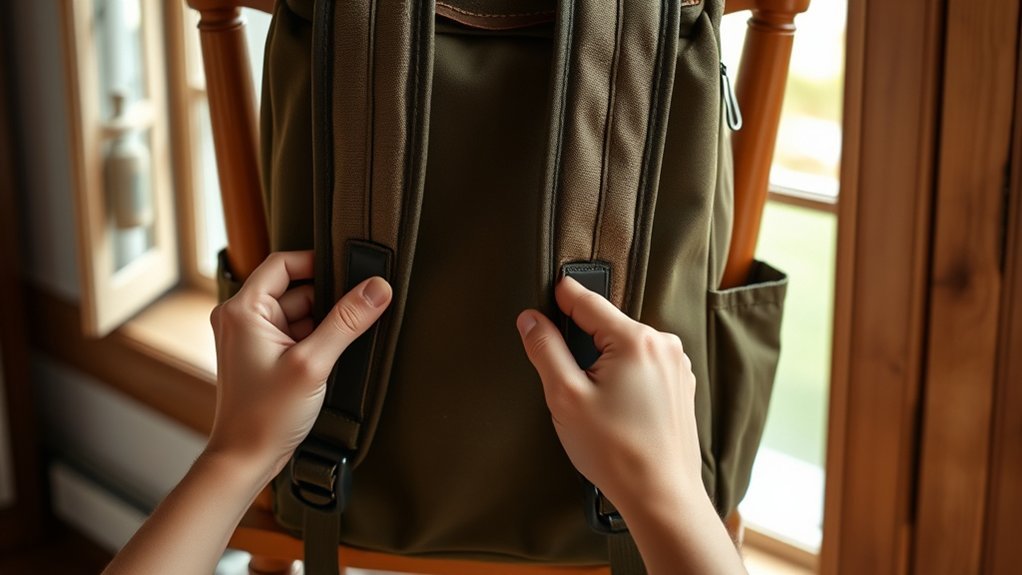
Before you adjust your backpack straps, it’s vital to load your backpack with the gear you’ll actually carry. Start by placing lighter items, like sleeping bags, in the bottom compartment. Position heavier items, such as tents, closer to your back and at shoulder height for ideal weight distribution. This arrangement keeps your center of gravity stable, enhancing your comfort during your journey.
Next, store clothing at the top and sides of the backpack, reserving the lid compartment for small, frequently accessed items. Once you’ve packed your gear, test the fit by wearing the loaded backpack on a short tour. This trial run lets you identify any adjustments needed before hitting the trail for longer treks.
Remember to loosen all straps before putting on the backpack, ensuring an easier initial fit and adjustment process. This preparation is important for a liberating outdoor experience.
Properly Positioning the Hip Belt
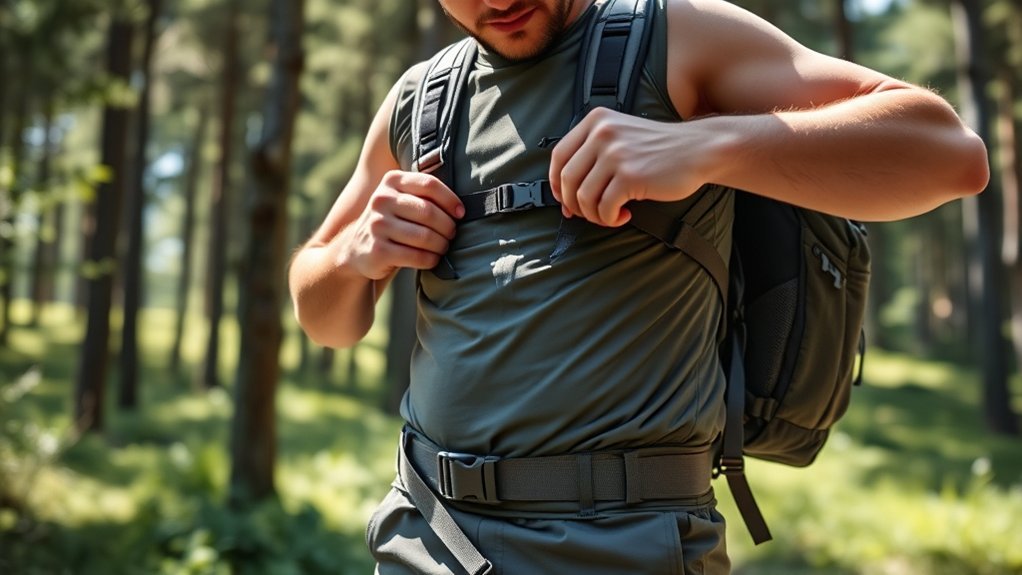
To guarantee ideal support and weight distribution, position the hip belt snugly around your hips, ideally resting on the iliac crest. Before donning your backpack, loosen all straps. Adjust the belt so it’s comfortable without constricting your stomach. After securing the buckle, tighten the hip belt to make sure the load primarily rests on your hips, especially during longer hikes.
| Proper Positioning | Importance |
|---|---|
| Snug fit | Best weight distribution |
| Iliac crest | Comfort and stability |
| Adjust after buckling | Prevents back strain |
| Avoid high/low placement | Reduces discomfort |
Adjusting the Shoulder Straps
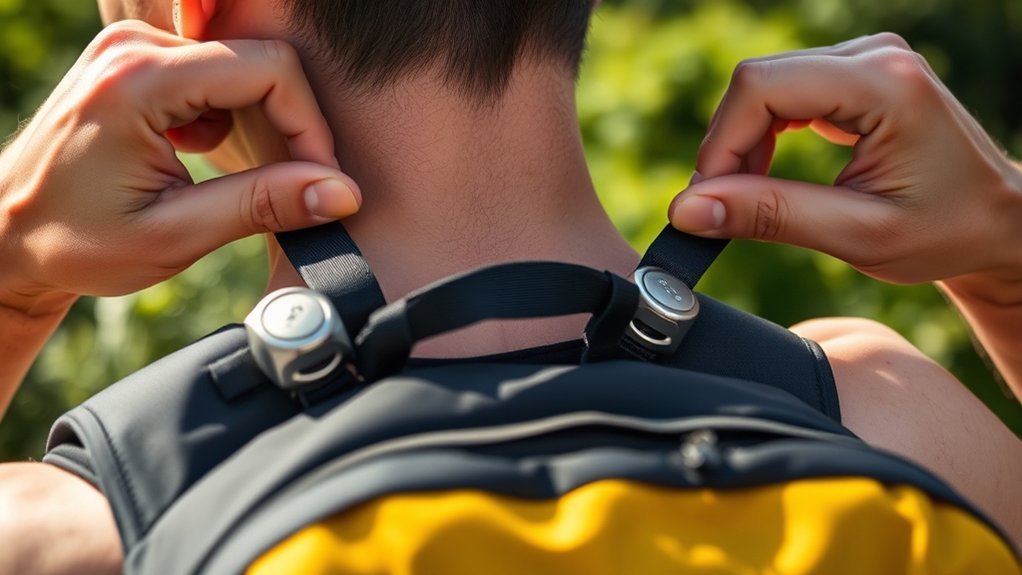
Adjust the shoulder straps to guarantee a superior fit that enhances comfort and weight distribution. First, loosen all straps before putting on your backpack. Once it’s on, position the shoulder straps snugly between your shoulder blades to help evenly distribute weight across your upper body. After securing the hip belt, tighten the shoulder straps until they feel comfortable but not constricting, allowing for natural arm movement. This positioning prevents strain and enhances your mobility during your activities.
Remember to regularly check and readjust the shoulder straps as needed throughout your hike, especially when traversing varied terrain. A proper fit not only reduces fatigue but also empowers you to move freely and confidently. Adjusting these straps correctly is essential for maximizing your experience in the great outdoors, allowing you to focus on enjoying your adventure without unnecessary discomfort.
Securing the Sternum Strap
Securing the sternum strap is essential for stabilizing your shoulder straps and enhancing overall comfort. Position it at the height of your sternum to effectively distribute the backpack’s weight. Adjust the strap to a snug fit that allows free arm movement without restricting your breathing.
Importance of Sternum Strap
While hiking or walking, ensuring your backpack’s straps are properly secured, especially the sternum strap, is essential for maintaining stability and comfort. The sternum strap connects the shoulder straps, preventing them from slipping and enhancing load distribution. Here’s why you should prioritize it:
- Stabilizes the backpack, improving overall balance.
- Distributes weight evenly across your chest for comfort.
- Reduces strain on your shoulders during movement.
- Should be snug but not overly tight to avoid discomfort.
Proper Height Adjustment
Proper height adjustment of the sternum strap is essential for ideal backpack performance. Position the strap across your chest, ideally at collarbone height, to enhance stability and prevent shoulder straps from sliding off. When securing the sternum strap, make certain it’s snug but not overly tight, allowing for comfortable breathing and arm movement. Adjust the strap’s height to align with your shoulder straps, which should rest comfortably between your shoulder blades for maximum support. A well-fitted sternum strap helps distribute the backpack’s weight evenly, reducing strain on your shoulders. Regularly check and adjust the sternum strap as needed, especially when adding or removing weight, to maintain the best fit and support for your adventures.
Enhancing Stability and Comfort
To enhance stability and comfort during your hike, it’s crucial to position the sternum strap correctly. Make sure it sits around mid-chest level, snugly across your chest without constricting your breathing. This adjustment stabilizes the shoulder straps, preventing them from slipping off your shoulders.
- Distributes weight evenly across your upper body
- Maintains load close to your center of gravity
- Reduces strain on your shoulders during movement
- Regularly check and adjust for maximum comfort
Understanding Load Distribution
Understanding load distribution is crucial for maximizing comfort during your outdoor adventures, as it directly impacts how your backpack affects your body. Properly distributing your load can liberate you from discomfort and fatigue, allowing you to enjoy your journey.
| Load Placement | Impact on Comfort |
|---|---|
| Heavy items at shoulder height | Minimizes strain on back |
| Main load on hips | Reduces shoulder fatigue |
| Light equipment at bottom | Stabilizes center of gravity |
| Adjust based on terrain | Enhances overall comfort |
To maintain a balanced center of gravity, pack heavy items close to your back. Store clothing at the top or sides, while lighter gear, like sleeping bags, should go in the bottom compartment. As you navigate different terrains, adjust your load distribution between your hips and shoulders for optimum comfort. Secure packing and proper strap adjustments are crucial for a liberating experience.
Common Mistakes to Avoid
While adjusting your backpack straps is essential for comfort, several common mistakes can undermine your efforts. Avoiding these pitfalls will help you achieve the best fit and performance during your adventures.
- Positioning the backpack too low can misalign the shoulder straps and hip belt, leading to discomfort.
- Placing it too high may constrict your stomach and affect your mobility.
- Neglecting load distribution can cause fatigue, so make sure you balance the weight between your hips and shoulders.
- Attaching equipment to the outside of the backpack disrupts load balance and increases snagging risks.
Lastly, don’t completely loosen the hip belt, as this compromises support and stability. By steering clear of these common mistakes, you’ll enhance your hiking experience and maintain the freedom you seek while on the trail.
Utilizing Adjustment Systems for a Perfect Fit
To achieve a perfect fit, you’ll want to utilize adjustment systems like the VAR Quick and clip and loop options. The VAR Quick system allows for step adjustments, making it easy to customize back length for better comfort and stability. Meanwhile, the clip and loop system provides three height settings, ensuring you can tailor the fit to your torso length effectively.
VAR Quick System Benefits
The VAR quick system revolutionizes backpack fitting by allowing you to adjust the back length in precise increments, accommodating various torso lengths for best comfort. This innovative adjustment system offers several key benefits:
- Quick Modifications: Easily make adjustments on-the-go to maintain ideal load distribution and balance.
- Time Efficiency: Spend less time on adjustments, enhancing your overall experience, especially when switching users or loads.
- Secure Fit: Achieve a stable fit that minimizes discomfort and fatigue during long treks.
- User-Friendly Design: The simple mechanism guarantees accessibility for all experience levels, promoting proper fitting for enhanced performance.
Clip and Loop Adjustments
Adjusting your backpack straps using the clip and loop system offers three distinct height settings, allowing for a tailored fit that accommodates various torso lengths. This adjustment method enhances comfort by evenly distributing the backpack’s weight, reducing strain on your shoulders and back.
To utilize the clip and loop system, simply unclip the adjustment points, slide the straps to your desired height, and secure them back in place.
Regularly check these settings to maintain an ideal fit, especially after changing the weight in your pack. Properly adjusted straps improve stability and balance on uneven terrain.
| Step | Action |
|---|---|
| 1 | Unclip the adjustment points |
| 2 | Slide straps to desired height |
| 3 | Secure straps back in place |
| 4 | Check adjustments regularly |
| 5 | Enjoy enhanced comfort and stability |
Frequently Asked Questions
How Do I Know if My Backpack Fits Properly?
You know your backpack fits properly when it sits snugly against your back, distributes weight evenly, and doesn’t pull on your shoulders. It shouldn’t shift excessively when you move, ensuring comfort and support during use.
Can I Adjust My Backpack While Wearing It?
Yes, you can adjust your backpack while wearing it. Simply pull the straps tighter or loosen them as needed for comfort. Make certain the weight’s balanced to maintain support and prevent strain on your body.
What if My Backpack Is Too Heavy?
If your backpack’s too heavy, lighten your load by removing unnecessary items. Distribute weight evenly, adjusting straps to secure the pack close to your back. This way, you’ll feel more balanced and liberated on your journey.
Are There Specific Adjustments for Different Body Types?
Yes, different body types require specific adjustments. For shorter frames, tighten straps to lift the pack higher; for taller individuals, loosen them for a lower fit. Always make certain the weight sits comfortably on your hips, not shoulders.
How Often Should I Adjust My Backpack Straps?
You should adjust your backpack straps whenever you change your load, outfit, or activity. Regular adjustments guarantee comfort and support, preventing strain and allowing you to carry your gear efficiently, enhancing your mobility and freedom.
Conclusion
To sum up, adjusting your backpack straps is like fine-tuning a musical instrument; it guarantees harmony in your outdoor adventures. By properly positioning the hip belt, adjusting the shoulder straps, and securing the sternum strap, you create a balanced load that feels light as a feather. Avoid common pitfalls, and take advantage of adjustment systems for a perfect fit. With these steps, you’ll transform your backpack into a trusty companion, ready to shoulder your journey with ease and comfort.
