Last Updated on July 30, 2026 by Caleb Warren
Cleaning a travel backpack safely starts with one rule: follow the care label for your exact bag. Many structured, coated, framed, or wheeled backpacks should be hand-cleaned, while a smaller number are labeled for machine washing. The steps below help you remove dirt, stains, and odors without damaging the fabric, padding, zippers, or water-repellent finish.
Quick Answer
Empty the backpack, read its care label, brush out loose dirt, and spot-test a mild cleaner. Hand wash or wipe the bag unless the label specifically allows machine washing. Rinse away all cleaner, blot excess water with towels, and air dry with every pocket open in a shaded, well-ventilated place.
Key Takeaways
- The manufacturer’s care label overrides all general backpack-cleaning advice.
- Hand cleaning is the safest default for most structured, coated, framed, and wheeled travel packs.
- Use a small amount of mild cleaner, test it on a hidden area, and rinse thoroughly.
- Do not use bleach, harsh solvents, or fabric softener unless the care label expressly allows them.
- Dry the backpack completely before storing it to prevent trapped moisture and musty odors.
At a Glance
| Time Required | 20–45 minutes of active cleaning, plus drying time |
| Difficulty | Easy |
| Tools Needed | Care label, soft brush, microfiber cloths, towels, basin or tub, and a compatible mild cleaner |
| Cost | About $0–$15 if you already own basic cleaning supplies |
Warning: Do not put a backpack in a washer or dryer just because it is made of nylon or polyester. Padding, coatings, frames, glued layers, leather trim, and wheeled chassis parts may require different care. Check the sewn-in label or the manufacturer’s product page first.
Disclosure: As an Amazon Associate I earn from qualifying purchases. Some links on this page are affiliate links, at no extra cost to you.
Preparing Your Backpack for Cleaning

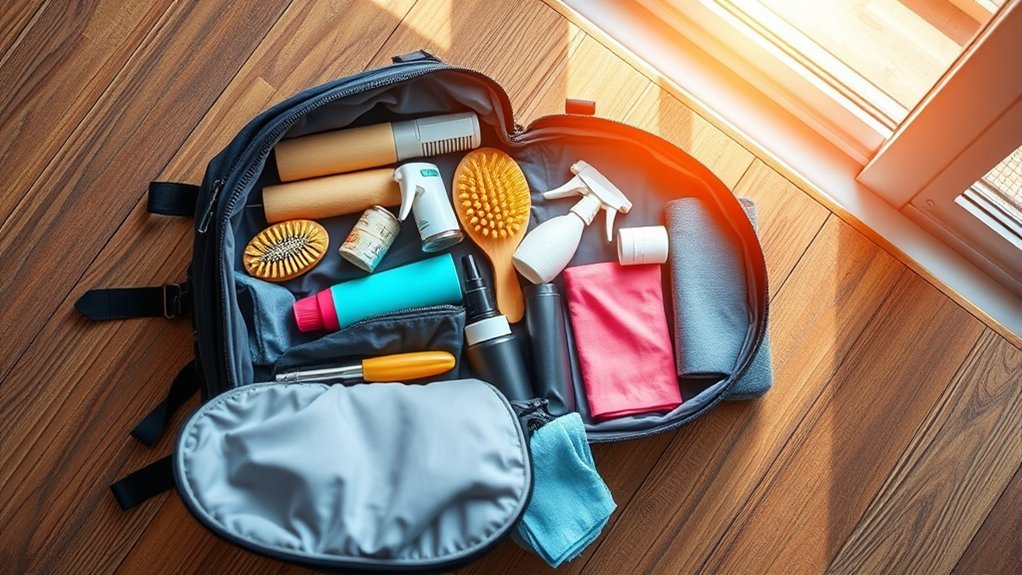
Empty the backpack completely before adding water or cleaner. Check the main compartment, laptop sleeve, organizer pockets, hip-belt pockets, hidden security pockets, and water-bottle sleeves. Remove loose accessories, cables, paper, food, and anything sharp.
- Read the care label: Confirm whether the bag is hand-wash only, machine washable, wipe-clean only, or unsuitable for immersion.
- Remove detachable parts: Take out a removable frame sheet, stays, hip belt, rain cover, hydration reservoir, and other components if the manual tells you to do so.
- Shake or brush out debris: Turn the bag upside down and use a soft brush or low-suction vacuum attachment on crumbs and dry dirt.
- Inspect the construction: Look for leather or suede trim, peeling coatings, damaged seams, electronic ports, rigid panels, and a wheeled chassis.
- Test the cleaner: Apply a small amount to a hidden area, rinse or wipe it away, and let the spot dry before treating a visible stain.
Note: Osprey advises against immersing travel packs with its HighRoad wheeled chassis. For a wheeled backpack, wipe the chassis and clean the fabric locally unless the manufacturer gives different instructions.
Identifying and Treating Stains

Treat stains before washing the whole backpack. Start with the mildest method that fits the bag’s fabric and finish. Blot rather than rub fresh spills, and work from the outside edge toward the center so the stain does not spread.
| Stain Type | Safer First Step | What to Avoid |
|---|---|---|
| Dry dirt or mud | Let it dry, brush off loose soil, then wipe with water and a compatible mild cleaner. | Grinding wet mud deeper into the weave. |
| Food or drink | Blot, apply a small amount of mild cleaner, gently brush, and rinse the area. | Hot water unless the care label allows it. |
| Oil or cosmetics | Use a tiny amount of compatible grease-cutting cleaner after a hidden-area test, then rinse well. | Saturating foam, leather, suede, or coated areas. |
| Ink or dye | Check the manufacturer’s advice or use a professional cleaner for valuable or delicate bags. | Applying rubbing alcohol or solvent without testing; it may lift color or damage a finish. |
| Sweat or salt marks | Wipe or hand wash with clean water and a compatible mild cleaner, then rinse thoroughly. | Leaving detergent in shoulder straps or the back panel. |
Pro Tip: Use a white cloth during the patch test. If color transfers to the cloth, stop and use a gentler method or contact the manufacturer.
Washing Machine Method: Only If the Care Label Allows It
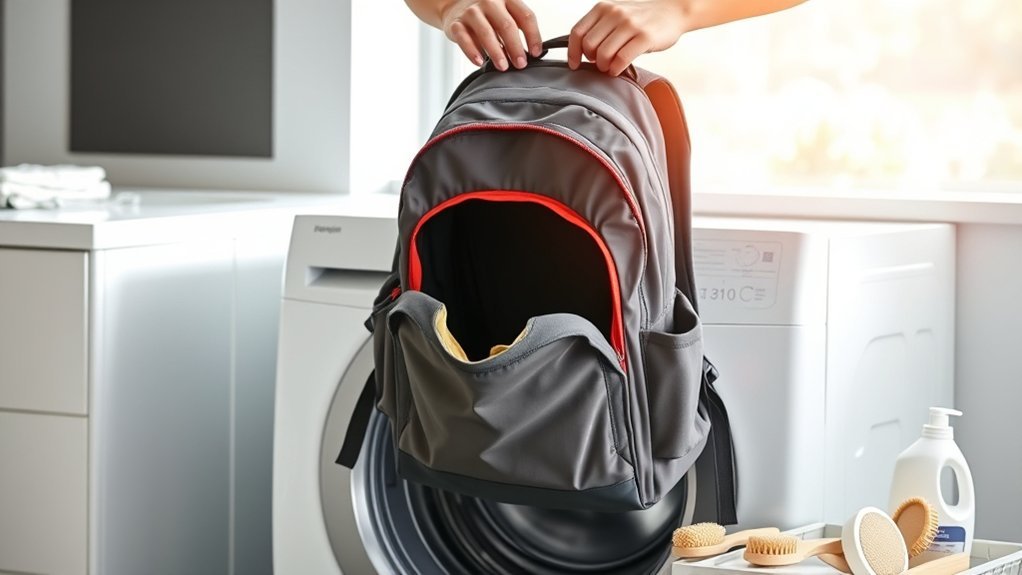
Machine washing is not a universal backpack-cleaning method. JanSport, Osprey, and Deuter generally advise hand cleaning their packs, while some Patagonia backpack care labels permit machine washing. Follow the instructions for your exact model rather than copying settings from another bag.
Pre-Treat Stains Effectively
After a successful patch test, apply a small amount of compatible cleaner to the stain. Let it work only as long as the product label permits, then use a soft brush or cloth with light pressure. Rinse or blot away the cleaner before the main wash so concentrated product does not remain on the fabric.
Protecting During Wash
If the sewn-in label specifically permits machine washing, prepare the backpack carefully:
- Remove detachable parts and empty every pocket.
- Secure loose straps and buckles so they cannot catch in the washer.
- Place the bag in a large mesh laundry bag or pillowcase if doing so does not conflict with the care instructions.
- Use the exact water temperature, cycle, cleaner, and load guidance on the label.
- Skip bleach and fabric softener unless the manufacturer expressly permits them.
- After washing, inspect for cleaner residue and rinse again if the care instructions allow it.
Note: A generic “normal cycle, cold water, one tablespoon of detergent” rule is not reliable. One brand may prohibit the washer, while another model may call for warm machine washing and low tumble drying.
Hand Washing Method: Step-by-Step
Hand cleaning is the safest default for many travel backpacks because it gives you more control around coatings, foam, seams, frames, and trim. Do not fully submerge the bag if its care instructions say to wipe it clean.
| Step | What to Do |
|---|---|
| 1. Prepare the water | Use cool or lukewarm water and a small amount of cleaner approved for the bag. |
| 2. Wet the bag carefully | Submerge it only when the manufacturer permits immersion. Otherwise, work section by section with a damp cloth or sponge. |
| 3. Clean high-contact areas | Gently scrub shoulder straps, the back panel, handles, pocket edges, and stained spots with a soft brush. |
| 4. Clean compartments | Open pockets and wipe or brush the lining, seams, and corners without forcing water into electronics or rigid panels. |
| 5. Rinse thoroughly | Use clean water until no suds or slippery residue remains. |
| 6. Remove excess water | Press the bag gently between clean towels. Do not twist or wring padded sections. |
| 7. Air dry | Open all compartments and dry the backpack in shade with good airflow. |
Tips for Cleaning Zippers and Pockets
Dirt, sand, salt, and sticky spills can collect around zipper coils and pocket seams. Open the compartments so you can reach the full zipper path, then use a soft brush to loosen debris. Osprey recommends mild soap, warm water, and a soft brush for regular zipper cleaning on its travel packs.
- Brush away dry grit before adding water.
- Use a damp cloth around zipper tape and seams rather than flooding them.
- Move the slider gently after cleaning; never force a zipper that still feels gritty.
- Do not apply household oil, wax, or silicone unless the zipper or backpack manufacturer approves it.
- For water-resistant zippers, follow the specific care directions because laminated zipper tape can require special handling.
Drying Your Backpack Properly
Drying is part of the cleaning process, not an optional final step. Trapped water can remain in foam, seams, pocket corners, and thick shoulder straps even when the outer fabric feels dry.
Avoid Direct Sunlight
Unless the care label says otherwise, air dry the backpack in a shaded, well-ventilated place. Osprey and Deuter both advise complete drying away from direct sunlight for their packs.
| Best Practice | Why It Helps |
|---|---|
| Choose shade and airflow | Allows steady evaporation without prolonged direct sun or concentrated heat. |
| Open all pockets | Lets humid air escape from closed compartments. |
| Change the bag’s position | Helps water drain from corners and padded sections. |
| Check thick areas by touch | Shoulder straps and back panels often stay damp longer than thin fabric. |
Maintain Open Zippers
Leave zippers and pocket flaps open while the backpack dries. Hang or support the bag so it keeps its shape and water can drain rather than pool. Do not store it until the lining, seams, straps, and back panel are completely dry.
Warning: Do not use a dryer, radiator, hair dryer, or other direct heat unless the exact care label permits it. Some machine-washable packs allow low tumble drying, but many structured packs require air drying.
Maintenance Tips for Longevity
Clean a travel backpack when it is visibly dirty, salty, sweaty, sticky, or musty rather than following an arbitrary calendar. Light, frequent care is usually easier on the bag than repeated deep washing.
- Empty and shake out the backpack after each trip.
- Wipe spills promptly before they dry.
- Let a damp or sweaty pack air out before putting it in a closet.
- Store it clean, dry, and loosely shaped in a cool place.
- Inspect stitching, buckles, zipper sliders, and coatings before the next trip.
- Reapply a water-repellent treatment only when the manufacturer recommends it and the product matches the backpack’s fabric and coating.
The safest cleaning method is the one written for your exact backpack—not the one that worked on a different bag.
Assessing Cleanliness After Washing
Check the backpack before you refill or store it. A clean-looking outer panel does not guarantee that thick straps, foam, and hidden corners are dry or free of residue.
- Inspect for stains: Check seams, corners, strap edges, and the bottom panel.
- Check for residue: Rub a damp finger over the fabric. A slippery or sudsy feel means it needs more rinsing.
- Smell the lining: A musty smell may indicate trapped moisture or soil that still needs cleaning.
- Test the hardware: Open and close zippers, buckles, and adjusters without forcing them.
- Check the shape: Make sure foam, panels, and straps have not twisted or folded while wet.
- Confirm complete dryness: Press thick padding and pocket corners with a dry towel; it should come away dry.
Troubleshooting After Cleaning
| Problem | What to Do |
|---|---|
| Cleaner residue | Rinse or wipe again with clean water, following the care label. |
| Stiff zipper | Brush away remaining grit and rinse the zipper area; do not force the slider. |
| Lingering odor | Reclean the affected area with an approved product and dry the bag fully with more airflow. |
| Poor water beading | Check whether the manufacturer recommends a compatible DWR-restoring treatment. |
| Peeling coating or delamination | Stop cleaning and contact the manufacturer about repair or replacement options. |
Dealing With Permanent Stains
Some stains cannot be removed safely without changing the fabric color or finish. The goal is to improve the mark without creating a larger damaged area.
Identifying Stain Types
- Oil-based stains: Grease, sunscreen, makeup, and food oils may need a compatible grease-cutting cleaner.
- Water-based stains: Many drinks and water-soluble foods respond to prompt blotting and mild cleaning.
- Ink and dye transfer: These may bind to the backpack’s dye or coating and can worsen when treated with solvents.
- Mildew-like spotting: This can indicate that the bag was stored damp and may require manufacturer guidance or professional assessment.
Pre-Treatment Techniques
Use the smallest amount of cleaner that can work, apply it only to the affected area, and repeat a gentle treatment rather than scrubbing hard. Do not use rubbing alcohol, acetone, chlorine bleach, oxygen bleach, or concentrated vinegar as a universal stain treatment. A product that is safe on one nylon fabric may damage another bag’s coating, dye, print, adhesive, foam, or trim.
Long-Term Solutions
If a mark remains after safe cleaning, accept minor discoloration rather than weakening the fabric. For a valuable pack, ask the manufacturer about professional cleaning, repair, an approved patch, or panel replacement. Apply a fabric protector only when it is approved for the bag’s exact material and finish.
Special-Care Backpacks and Components
| Backpack Type or Part | Special Care |
|---|---|
| Leather or suede trim | Keep it as dry as possible and use only a cleaner approved for that material. |
| Coated or water-repellent fabric | Avoid harsh detergent and unapproved treatments that may affect the finish. |
| Wheeled travel backpack | Do not immerse the chassis unless the manufacturer permits it; wipe hard parts and clean fabric locally. |
| Internal or external frame | Remove detachable stays or frame sheets only as directed, and avoid bending fixed structure. |
| Laptop or electronic features | Remove devices and power banks; do not saturate USB ports, wiring, or rigid electronics compartments. |
| Hydration reservoir and hose | Remove and clean them separately according to the reservoir maker’s instructions. |
Removing Odors Without Damaging the Pack
Odor usually comes from food residue, sweat, spilled liquids, or storage before the backpack was fully dry. Empty the bag, identify the source, clean that area with a compatible mild product, rinse well, and increase airflow during drying. Avoid covering the smell with perfume or fabric softener.
If a musty odor returns after the backpack is completely dry, inspect hidden foam, seams, and removable panels. Stop using the bag if you see widespread mold-like growth, damaged coatings, or contamination you cannot clean safely. Contact the manufacturer or a professional cleaner for guidance.
Additional Resources and Support
Use the backpack’s sewn-in care label, model-specific manual, and official product page as your first references. Manufacturer support can clarify whether the bag may be immersed, machine washed, tumble dried, or treated with a water-repellent product. Official repair programs are also safer than experimenting with aggressive chemicals on a valuable pack.
General videos, forums, and travel communities can offer practical ideas, but they should not override the instructions for your exact backpack. Compare any third-party method with the manufacturer’s guidance before trying it.
Frequently Asked Questions
Can I Use Bleach to Clean My Travel Backpack?
Usually not. Bleach can discolor fabric and damage coatings, trim, foam, or stitching. JanSport specifically advises against bleach and harsh detergents. Use only a product allowed by the care label for your exact bag.
How Often Should I Clean My Travel Backpack?
Spot clean spills and visible dirt promptly. Deep clean the backpack when sweat, salt, food, grime, or odor has built up. There is no universal every-few-months schedule because use, climate, fabric, and care instructions vary.
Is It Safe to Use Fabric Softener?
Avoid fabric softener unless the manufacturer expressly allows it. Softener can leave residue on technical fabrics and may interfere with moisture-management or water-repellent performance.
Can I Clean My Backpack With Vinegar?
Do not use an equal-parts vinegar solution as a universal backpack cleaner. Acidity, concentration, dyes, coatings, adhesives, and trim vary by bag. Use vinegar only when the manufacturer recommends it for that model and dilution.
What Should I Do if My Backpack Smells Bad?
Empty the bag, locate the source, clean the affected lining or padding with an approved mild cleaner, rinse away residue, and dry every compartment completely. Persistent musty odor may come from hidden moisture or mold-like growth and may need manufacturer or professional help.
Can I Put a Travel Backpack in the Washing Machine?
Only when the care label for that exact backpack permits machine washing. Several major backpack brands advise hand cleaning, while some specific models are labeled for machine washing. The fabric name alone is not enough to decide.
Can I Put My Backpack in the Dryer?
Use a dryer only when the care label specifically allows it and follow the listed heat setting. Otherwise, air dry the bag in shade with good ventilation and all compartments open.
Conclusion
A clean travel backpack lasts longer and is more pleasant to use, but safe cleaning depends on the bag’s construction and care label. Empty it, remove loose dirt, patch-test a mild cleaner, and hand clean unless the manufacturer permits machine washing. Rinse thoroughly, protect special materials and components, and let every padded area dry before storing the bag.
Sources
- Osprey: How to Clean Your Osprey Backpack — hand cleaning, zipper care, wheeled-pack precautions, and shaded air drying.
- JanSport: How to Clean a Backpack — hand-cleaning guidance and warnings against washers, bleach, and harsh detergents.
- Deuter: How to Clean a Backpack — reasons to avoid machine washing and guidance on careful cleaning and drying.
- Patagonia Black Hole Pack 25L Care Instructions — example of a specific backpack labeled for machine washing and low tumble drying.
- Nikwax Tent & Gear SolarWash — manufacturer guidance for cleaning and restoring water repellency on compatible outdoor equipment.