

Last Updated on July 30, 2026 by Caleb Warren
Cleaning the inside of a backpack is usually simple, but the safest method depends on the care label, fabric, coatings, frame, and trim. Start with dry debris removal, then use the least aggressive cleaning method that works. Hand cleaning is the safest default for most school, travel, hiking, and laptop backpacks.
Quick Answer
Empty every pocket, check the care label, vacuum or shake out crumbs, and wipe the lining with cool water and a small amount of mild soap. Rinse away residue with a clean damp cloth, blot with a towel, and air-dry with all pockets open. Machine-wash only when the manufacturer specifically allows it.
Key Takeaways
- The care label and the maker’s instructions override general cleaning advice.
- Spot cleaning or hand washing is safer than machine washing for many backpacks.
- Use cool or lukewarm water, mild soap, and a soft cloth or brush.
- Avoid bleach, fabric softener, harsh stain removers, high heat, and direct sunlight.
- Do not use the backpack again until the lining, seams, padding, and pockets are fully dry.
At a Glance
| Time Required | 15–45 minutes of cleaning, plus 12–36 hours of air-drying |
| Difficulty | Easy |
| Tools Needed | Vacuum or soft brush, microfiber cloth, soft toothbrush, basin, and clean towel |
| Cost | Usually $0–$10 with household supplies |
Disclosure: As an Amazon Associate I earn from qualifying purchases. Some links on this page are affiliate links, at no extra cost to you.
Gather Your Supplies
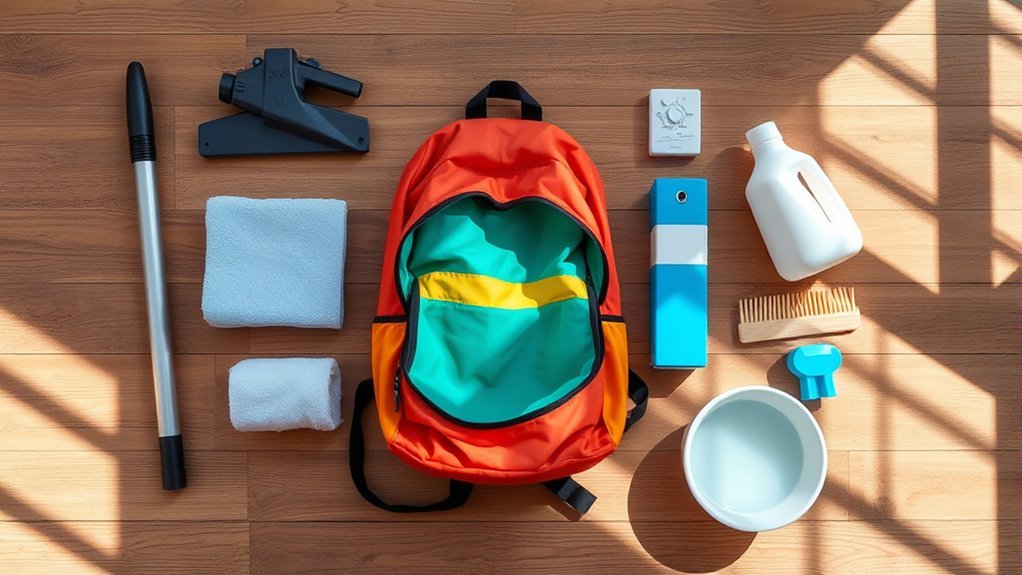
Gather the supplies before you begin so the backpack does not sit wet while you search for tools. A basic cleaning kit should include a soft-bristle toothbrush, a microfiber cloth, a soft sponge or brush, a clean towel, cool or lukewarm water, and a small amount of mild soap approved for the bag’s material.
- For dry debris: Use a handheld vacuum with a low-suction attachment or a soft brush.
- For wiping: Use a clean microfiber cloth that will not leave lint behind.
- For seams and corners: Use a soft toothbrush rather than a stiff scrub brush.
- For washing: Use a sink, tub, or basin only if the care instructions allow the bag to be submerged.
- For machine washing: Keep a mesh laundry bag or pillowcase available only when the care label specifically permits machine washing.
Warning: Do not assume a nylon, polyester, or canvas backpack is machine-washable. Osprey, JanSport, Deuter, and other manufacturers warn that machine agitation can damage coatings, fabric, structure, zippers, or trim. Check the sewn-in label and the exact model’s care page first.
Preparing Your Backpack for Cleaning
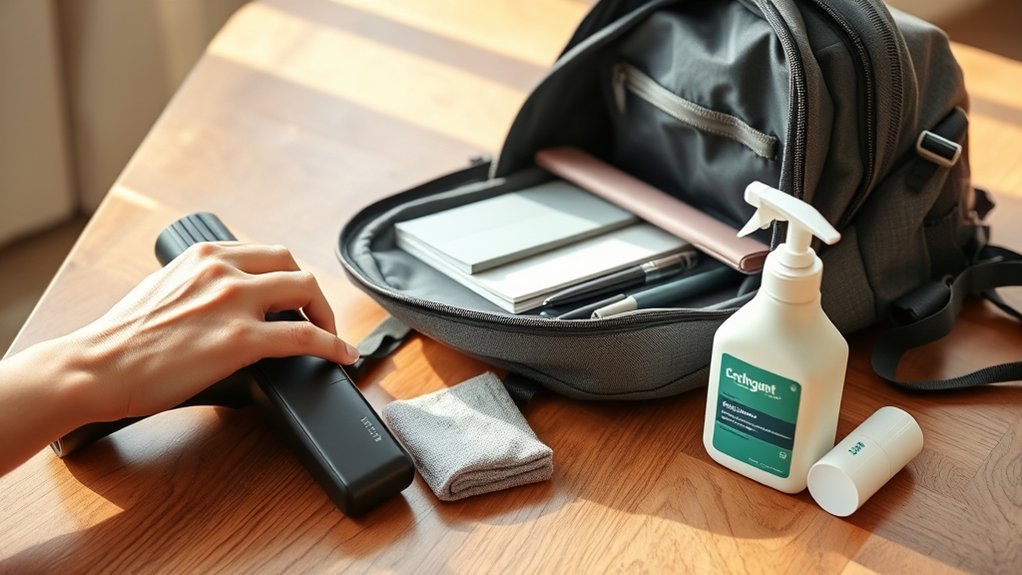
Preparation prevents missed debris, water damage, color transfer, and damage to removable parts. Work in a bright area and inspect the backpack before adding water or cleaner.
Read the Care Label First
Find the care tag inside the main compartment or along a seam. Look for instructions such as “spot clean only,” “hand wash,” or “machine wash cold.” Also check the manufacturer’s website for the exact model. Product-specific directions are more reliable than a general fabric rule because a backpack may combine coated fabric, foam, mesh, leather, suede, metal stays, electronics, or glued panels.
Empty All Contents
Remove everything from every pocket and compartment. Check pen slots, hidden security pockets, laptop sleeves, hydration compartments, and small zippered sections.
- Shake it out: Turn the backpack upside down over a trash can and shake gently to release crumbs, sand, and lint.
- Check hidden spaces: Feel along seams and pocket corners for small tools, coins, food, or paper.
- Remove detachable items: Take off a removable rain cover, hip belt, pouch, rigid insert, or organizer only when the manufacturer says it is removable.
- Protect electronics: Remove batteries, charging cables, trackers, lights, and electronic modules.
Pro Tip: Use a vacuum crevice tool on low suction for the bottom, seams, and corners. Hold loose lining fabric flat with one hand so it is not pulled into the nozzle.
Check for Stains
Inspect the interior lining, bottom panel, bottle pockets, shoulder-strap area, and any place where food, ink, sunscreen, makeup, or sweat may collect. Blot fresh spills first. Before treating a stain, test the cleaning solution on a hidden seam and wait for the area to dry so you can check for fading, coating damage, or texture changes.
Use a manufacturer-approved cleaner when available. Otherwise, start with diluted mild soap rather than a strong household spray. Apply the solution to a cloth or soft brush instead of soaking the stain directly.
Choose the Safest Washing Method
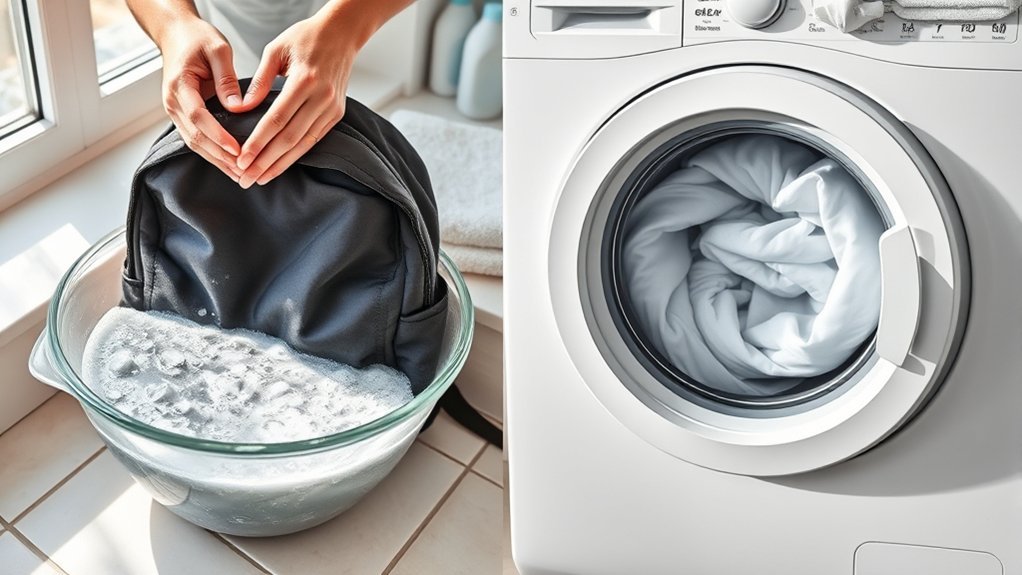
There are three practical methods: spot cleaning, hand washing, and machine washing. Start with the least aggressive option. A lightly dirty lining rarely needs a full wash.
Spot Cleaning
Spot cleaning is best for light dirt, backpacks marked “spot clean only,” bags with leather or suede trim, structured laptop bags, wheeled travel packs, and models with glued or coated components. Dip a cloth in cool water with a tiny amount of mild soap, wring it well, and wipe the lining. Follow with a second cloth dampened with clean water to remove soap residue.
Hand Washing
Hand washing is the safest default when the care label allows more than spot cleaning. Fill a basin with cool or lukewarm water and a small amount of mild, pH-neutral soap. Clean the interior with a cloth, sponge, or soft brush. Submerge the whole backpack only when the maker permits it. Rinse thoroughly because soap left in padding or straps can attract dirt and irritate skin.
Machine Washing
Machine-wash only when the care label or manufacturer clearly allows it. Remove detachable parts, open the pockets, place the backpack in a mesh bag or pillowcase, and use cold water with a gentle cycle and mild non-bleach detergent. Skip the spin cycle if the care instructions advise against it. Never machine-wash a bag with leather, suede, a rigid frame, wheels, electronics, decorative hardware, or a damaged coating unless the maker explicitly approves it.
Note: Manufacturer guidance differs. For example, Adidas provides machine-washing directions for some canvas, polyester, and nylon backpacks, while Osprey, JanSport, and Deuter advise against machine washing many of their packs. The exact product instructions should decide the method.
How to Clean the Inside of a Backpack Step by Step
- Empty and inspect the bag. Remove all contents, detachable accessories, paper, food, and electronics.
- Remove dry debris. Shake the bag over a trash can, then vacuum seams and corners on low suction.
- Test the cleaner. Apply diluted mild soap to a hidden area and let it dry.
- Blot stains. Work from the outside edge toward the center so the mark does not spread.
- Wipe the lining. Clean the bottom, sides, pocket interiors, and high-contact areas with a damp microfiber cloth.
- Brush seams gently. Use a soft toothbrush for zipper tape, corners, and textured fabric.
- Remove soap. Wipe again with a separate cloth dampened with clean water, or rinse as allowed by the care label.
- Blot excess water. Press with a clean towel. Do not twist or wring padded sections.
- Air-dry completely. Open every pocket and zipper, then dry in a shaded, ventilated place.
The safest rule is simple: use the least water, heat, detergent, and agitation needed to remove the dirt.
Cleaning Different Backpack Materials
Nylon, Polyester, and Canvas
These fabrics often tolerate wiping or hand washing, but coatings, foam, printed graphics, and trim can change the care requirements. Use cool or lukewarm water and mild soap. Machine-wash only when the label allows it.
Leather and Suede
Do not submerge leather or suede and do not put it in a washing machine. Keep water away from leather trim when cleaning nearby fabric. Use a cleaner and conditioner intended for that specific material, following the product maker’s directions.
Coated, Water-Resistant, and Technical Packs
Harsh detergent, bleach, abrasion, and heat can damage polyurethane coatings, seam treatments, and water-repellent finishes. Clean gently and rinse thoroughly. After the bag dries, check whether water still beads on the outer fabric. Use only a compatible reproofing product recommended by the backpack maker.
Wheeled, Framed, and Electronic Backpacks
Do not soak a wheeled backpack, powered backpack, smart bag, or pack with a rigid chassis unless its manual permits it. Wipe the lining and fabric in sections. Do not remove internal rods, frames, wiring, or batteries unless the manufacturer provides removal instructions.
Drying Your Backpack Properly
After cleaning, use a microfiber towel to absorb excess moisture. Reshape the bag, open every pocket and zipper, and place it in a well-ventilated area. Drying may take a full day or longer because foam, seams, and layered pockets hold water.
Avoid Direct Sunlight and Heat
Direct sunlight can fade colors and speed the breakdown of some coatings and synthetic materials. Dry the backpack in shade and keep it away from radiators, heaters, hair dryers, open flames, and hot car interiors. Never use a clothes dryer unless the care label explicitly allows it.
Use a Microfiber Towel
Press a clean microfiber towel against the lining, bottom, padding, and corners to draw out moisture. Do not rub delicate coatings or twist padded straps. Replace the towel when it becomes saturated.
| Step | Action | Purpose |
| 1 | Blot with a towel | Remove excess water without wringing |
| 2 | Open pockets and zippers | Improve airflow inside the bag |
| 3 | Dry in shade | Reduce fading and heat damage |
| 4 | Check seams and padding | Confirm the bag is dry before storage |
Tips for Stubborn Stains
Act quickly, blot instead of rubbing, and begin with the mildest treatment. Strong stain removers, concentrated dish sprays, rubbing alcohol, vinegar, and baking-soda pastes may discolor fabric or damage coatings, so use them only when the care label or manufacturer approves them.
Food, Drink, and Mud
Lift solids with a spoon or dull edge. Blot liquid from the outside of the stain toward the center. For dried mud, let it dry and brush off the loose dirt before using water. Apply diluted mild soap with a cloth, then rinse the area with a clean damp cloth.
Grease and Oil
Blot fresh oil with an absorbent white cloth. Use a tiny amount of mild dish soap only after a hidden-area test and only if the maker permits it. Do not saturate foam or coated fabric. Rinse thoroughly to prevent sticky residue.
Ink and Permanent Marker
Ink can spread quickly and alcohol may remove color or weaken a finish. Blot without rubbing and check the manufacturer’s stain guidance. For valuable leather, suede, coated, or specialty backpacks, professional cleaning is safer than experimenting with solvents.
Warning: Never mix cleaning chemicals. Stop if the color transfers to the cloth, the coating becomes tacky, or the fabric texture changes.
Remove Odors and Handle Mold Safely
For ordinary odors, empty the bag, remove debris, wipe the lining with mild soap and water, rinse away residue, and let the backpack dry completely in moving air. Do not mask dampness with fragrance. A smell that returns after drying usually means moisture or residue remains in padding, seams, or a hidden pocket.
If you find a small mildew spot, move the backpack outdoors, wear gloves, and follow the manufacturer’s cleaning guidance. Do not soak leather, suede, electronics, or a rigid chassis. If mold is widespread, embedded in foam, or returns after cleaning and full drying, replacement or professional cleaning may be safer.
Maintaining a Clean Backpack
Regular light care is safer than frequent deep washing. Empty food, damp clothing, and trash after use. Let a sweaty or rain-wet backpack air out before storing it.
- Empty and inspect: Clear the bag regularly so crumbs and forgotten items do not build up.
- Spot clean early: Fresh marks are usually easier to remove than set stains.
- Clean zippers: Brush grit from zipper teeth and tracks without forcing the slider.
- Dry before storage: Store the backpack in a cool, dry place only after every layer is dry.
- Deep clean only as needed: Wash when dirt, sweat, spills, or odor cannot be handled with a simple wipe-down.
Troubleshooting Common Cleaning Problems
The Lining Feels Stiff or Soapy
Wipe or rinse the area again with cool clean water. Repeat until the cloth no longer picks up suds. Too much detergent is harder to remove from foam and layered fabric, so use only a small amount.
The Backpack Still Smells After Drying
Check hidden pockets, foam panels, bottle sleeves, and seam folds for dampness or residue. Reclean the affected area and dry it longer with all openings exposed to airflow.
Color Transfers to the Cleaning Cloth
Stop cleaning, blot away excess water, and let the area dry. Do not add stronger detergent. Contact the manufacturer for model-specific advice before continuing.
A Zipper Feels Gritty or Sticks
Let the bag dry, then remove sand and dirt from the zipper teeth with a soft dry brush. Do not force the slider or apply household oil, which can stain fabric and collect more grit.
Frequently Asked Questions
Can I use bleach to clean my backpack’s interior?
Usually no. Bleach can fade fabric, weaken fibers, harm coatings, and damage trim. Use mild soap and cool water unless the care label specifically approves another product.
How often should I clean my backpack?
Empty and spot clean it whenever you notice crumbs, dirt, spills, or odor. Deep-clean only when needed and when the care instructions permit it. Frequent full washing can add unnecessary wear.
Is it safe to wash my backpack in hot water?
Hot water is not a safe default. It can affect color, adhesives, foam, and coatings. Use the temperature listed on the care label; cool or lukewarm water is usually the safer choice.
What cleaning materials should I avoid?
Avoid bleach, fabric softener, abrasive brushes, concentrated stain removers, harsh solvents, and any product the manufacturer does not recommend. Also avoid high heat and direct sunlight while drying.
How do I remove odors from my backpack?
Remove all debris, clean the affected lining with mild soap and water, rinse away residue, and dry the backpack completely with every pocket open. Persistent odor often comes from hidden moisture or contamination in padding or seams.
Can I put a backpack in the washing machine?
Only when the care label or exact manufacturer instructions say it is machine-washable. Many hiking, school, travel, and structured backpacks are hand-wash or spot-clean only.
How do I clean a laptop backpack?
Remove the laptop, charger, battery pack, tracker, and cables. Vacuum loose debris, then wipe the lining with a barely damp cloth and mild soap. Avoid soaking padded compartments, wiring, ports, rigid panels, and water-resistant coatings.
Conclusion
A clean backpack does not require aggressive chemicals or a full wash every time. Empty the bag, check its care label, remove dry debris, and use mild soap with the least water and agitation needed. Rinse away residue and let every pocket, seam, and padded section dry fully before packing or storing the bag.
Sources
- Osprey: How to Clean Your Osprey Backpack — hand cleaning, thorough rinsing, shaded air-drying, and avoiding machine washing.
- JanSport: How to Clean a Backpack — emptying, hand cleaning, avoiding bleach and harsh detergent, and complete air-drying.
- Deuter: How to Clean a Backpack — care for technical packs, coatings, rain covers, zippers, and drying away from heat and sunlight.
- Gregory: Care and Cleaning — mild soap, cool rinsing, towel blotting, open pockets, and shaded air-drying.
- Adidas: How to Wash a Backpack — checking the care label and conditional machine-washing guidance for permitted materials.
