Last Updated on July 30, 2026 by Caleb Warren
Backpack straps collect sweat, body oils, dust, sunscreen, and trail dirt, but cleaning them too aggressively can damage the foam, webbing, coating, stitching, or color. The safest approach is to check the care label first, remove loose dirt, clean by hand with the mildest approved solution, rinse thoroughly, and let the straps dry completely without direct heat.
Quick Answer
To clean backpack straps, check the care label, brush off loose dirt, and wipe or gently scrub the straps with cool or lukewarm water and an approved mild soap. Rinse until no suds remain, press out moisture with a towel, and air-dry the backpack away from sunlight, dryers, heaters, and open flames.
Key Takeaways
- Follow the sewn-in care label or manufacturer instructions before choosing soap, water temperature, or a washing method.
- Hand cleaning is the safest default because many backpack manufacturers advise against washing machines and dryers.
- Use a soft cloth, sponge, or brush and clean sweat-prone padding without crushing, twisting, or pulling the foam.
- Rinse thoroughly because soap trapped in shoulder padding can feel sticky and may irritate sensitive skin.
- Do not use the backpack until the straps, seams, and foam are completely dry.
At a Glance
| Time Required | 15–25 minutes of cleaning, plus several hours of air drying |
| Difficulty | Easy |
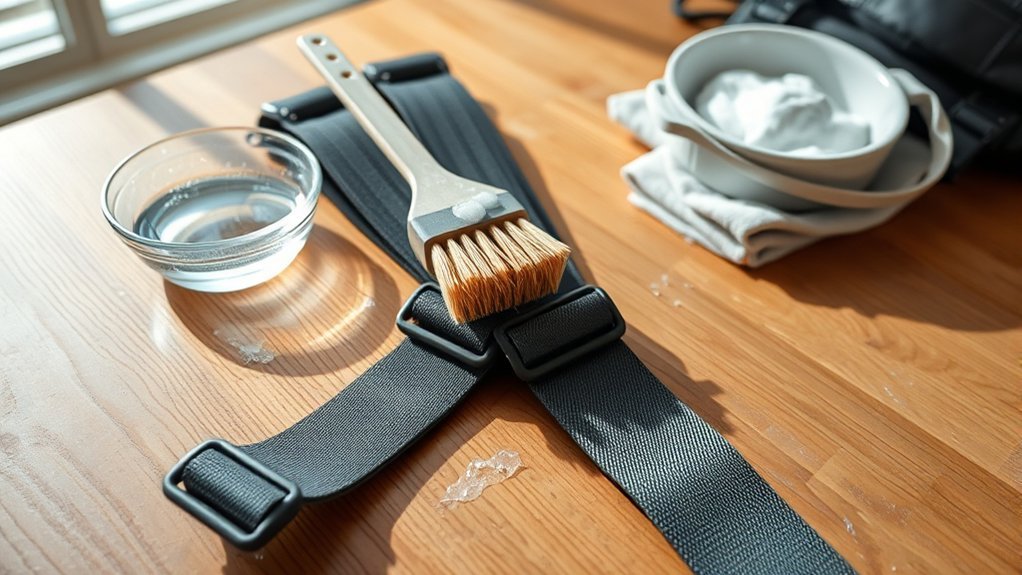
| Tools Needed | Soft brush, cloth or sponge, bowl or basin, clean towel, and an approved mild cleaner |
| Cost | $0–$10 if you already have the basic supplies |
Warning: Do not put the backpack or its straps in a washing machine or dryer unless the care label explicitly permits it. A laundry bag or pillowcase does not protect foam, coatings, frames, buckles, or bonded seams from agitation and heat.
Disclosure: As an Amazon Associate I earn from qualifying purchases. Some links on this page are affiliate links, at no extra cost to you.
Assessing the Condition of Your Backpack Straps

Start by emptying every pocket and checking the sewn-in care label. Instructions for your exact backpack take priority over general advice. For example, Osprey recommends mild soapy water and hand cleaning, while The North Face generally recommends spot cleaning backpacks with a damp cloth.
Inspect the front, back, edges, and anchor points of both shoulder straps. Look for:
- Loose dirt, dried mud, sweat marks, sunscreen, or food residue
- Frayed webbing, split seams, loose stitching, or fabric separating from the foam
- Cracked, bent, or jammed adjustment buckles
- Sticky residue around strap adjusters, sternum-strap rails, or clips
- Musty odor, visible mold, or padding that stays damp
- Leather, suede, reflective trim, printed graphics, or coated sections that need special care
Do not rely on cleaning to correct structural damage. If a load-bearing seam is pulling apart, the strap is partly detached, or the buckle cannot hold its adjustment, repair or replace the backpack before carrying a heavy load.
The care label is the final authority: the same cleaning method is not safe for every fabric, foam, coating, trim, or backpack design.
Check Whether the Straps Are Removable
Some hiking packs have removable shoulder harnesses or hip belts. If the owner’s manual allows removal, you can clean those parts separately. REI recommends removing washable shoulder straps or hip belts only when the pack is designed for it. Do not force out frames, stays, rods, or harness parts that are not intended for user removal.
Wheeled travel packs, backpacks with built-in electronics, and bags with rigid frames may not be safe to submerge. Clean only the affected strap area unless the manufacturer says otherwise.
Gathering Cleaning Supplies

Gather the supplies before wetting the backpack. You will usually need:
- A soft-bristled toothbrush, detailing brush, or soft clothes brush
- A clean microfiber cloth or nonabrasive sponge
- A bowl, bucket, sink, or bathtub
- Cool or lukewarm water
- A small amount of care-label-approved soap or gear cleaner
- A clean towel for blotting excess water
- A clothes hanger, shower rod, or shaded drying area with good airflow
Avoid stiff brushes, abrasive pads, chlorine bleach, oxygen bleach, fabric softener, solvents, disinfectant sprays, and strong degreasers unless the manufacturer specifically approves them. Do not assume a household stain remover is safe for polyurethane coatings, water-repellent treatments, printed logos, foam, adhesives, leather, or suede.
Note: JanSport advises using cool water and a damp cloth on many of its common polyester and Cordura bags and warns against bleach or harsh detergent. It also advises keeping leather or suede trim dry because it may discolor.
Removing Loose Dirt and Debris
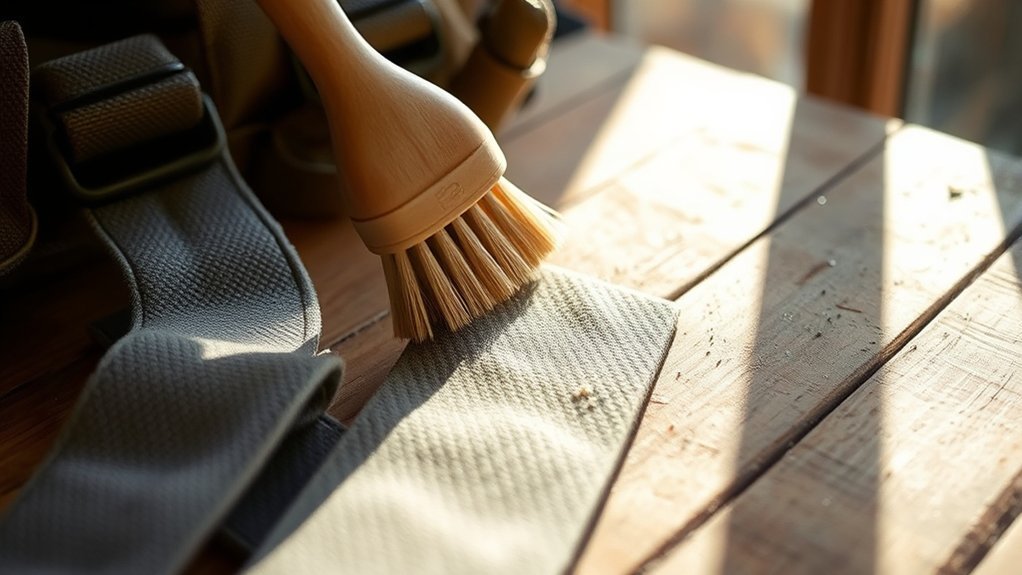
Remove dry material before adding water. Unfasten the sternum strap, loosen the shoulder straps, and open nearby pockets so you can reach folds and adjustment hardware.
- Hold the empty backpack upside down and shake it gently.
- Brush dried dirt from both sides of each strap using short, light strokes.
- Brush around seams, strap anchors, buckles, and folded webbing.
- Use a dry cloth or a low-suction vacuum attachment for crumbs in deep creases, taking care around mesh and loose threads.
- Wipe plastic hardware with a damp cloth before applying soap.
Do not shake or scrub so forcefully that you stretch mesh, roughen webbing, or pull stitching. Fine sand around zippers and buckles should be lifted away rather than ground into the material.
Preparing the Cleaning Solution
The correct solution depends on the care label. Some manufacturers allow a little mild soap, while others recommend water-only spot cleaning. Start with the least aggressive method that can remove the soil.
Choose Appropriate Detergent
When soap is allowed, choose a mild, fragrance-free, pH-neutral product or a technical gear cleaner recommended by the backpack manufacturer. Use only enough to make lightly soapy water. A strong concentration is harder to rinse from thick shoulder padding.
- Do not use bleach unless the specific care label directs you to do so.
- Avoid fabric softener because it can leave residue on technical fabric.
- Avoid powdered cleaner that may remain trapped in foam or seams.
- Do not use dry-cleaning solvent, acetone, alcohol, or adhesive remover.
- Test the solution on a hidden area and allow that spot to dry before treating a visible section.
Mix With Warm Water
Fill a small bowl or basin with cool or lukewarm water. Follow the cleaner’s dilution instructions rather than using a universal tablespoon-per-gallon formula. Hot water can affect color, foam, coatings, adhesives, or trim, so do not increase the temperature in an attempt to remove stains faster.
Mix only enough solution for the job. If you are cleaning attached straps rather than washing the whole pack, dip the cloth or brush into the solution instead of placing the backpack in a full tub.
Add Spot Treatment Options
For a visible stain, apply a small amount of the approved solution to the hidden test area first. Blot from the outside of the stain toward the center so it does not spread. Let the solution work briefly, but do not allow it to dry on the fabric.
- Sweat and salt marks: Work clean lukewarm water through the padded area by gently squeezing it with your hands. Add a little approved soap only if water is not enough.
- Greasy marks: Use a tiny amount of care-approved mild soap and blot repeatedly rather than saturating the foam with a strong degreaser.
- Ground-in dirt: Loosen it with a damp soft brush, then lift it with a clean cloth.
- Unknown stains: Contact the manufacturer before using a specialty chemical.
Do not default to equal-parts vinegar, baking-soda paste, bleach, or a strong household stain remover. Those treatments are not universally safe for backpack coatings, color, trim, or adhesives.
Pro Tip: Use two bowls—one for the mild cleaning solution and one for clean rinse water. This prevents you from spreading dirty, soapy water back onto the strap.
How to Clean Backpack Straps by Hand
- Read the care label. Confirm whether the pack should be spot cleaned, hand washed, or kept out of standing water.
- Empty and prepare the pack. Remove loose accessories, open pockets, loosen the straps, and detach the harness only when the manual permits it.
- Remove dry dirt. Brush the webbing, seams, and adjustment hardware before adding water.
- Dampen the strap. Use a cloth or sponge to wet a small section with cool or lukewarm water.
- Apply the approved cleaner. Work gently from the top of the strap downward, treating the front, edges, back, and high-contact areas.
- Clean the padding. Press and release the foam with your hands to move water through it. Do not wring or twist it.
- Clean the hardware. Wipe buckles and strap adjusters, then move the webbing through each adjuster so hidden dirt can be removed.
- Rinse thoroughly. Repeat with clean water until no bubbles, slippery feel, or cleaner odor remains.
- Blot and air dry. Press the straps between clean towels and hang the backpack in a shaded, ventilated area.
Scrubbing the Straps
Scrubbing should lift dirt without roughening the webbing or damaging mesh. Use light pressure and several passes instead of one hard pass.
Use Appropriate Cleaning Tools
A soft-bristled toothbrush works well around seams, buckle slots, and textured webbing. Use a nonabrasive sponge or microfiber cloth on smooth fabric and printed areas.
- Support the strap with one hand while brushing with the other.
- Scrub in the direction of the webbing rather than sawing across loose fibers.
- Clean both the front and back of each shoulder strap.
- Be especially gentle with spacer mesh and elastic sections.
- Do not pry under patches, logos, bonded trim, or reflective material.
Focus on Stain Removal
For a stubborn stain, reapply a small amount of approved solution and allow it to sit for the time stated on the cleaner label. Blot or brush gently, rinse, and inspect the area while it is still wet.
Repeat a mild treatment rather than moving immediately to a harsher chemical. Stop if color transfers to the cloth, the coating becomes tacky, printed material lifts, or the fabric changes texture. A faint cosmetic stain is preferable to weakened webbing or damaged padding.
Cleaning Sweat and Odor From Padded Straps
Sweat can soak below the surface of shoulder padding. Wet the affected section with clean lukewarm water, add a small amount of approved cleaner, and gently squeeze the padding several times. Do not twist it. Rinse by pressing fresh water through the foam until the runoff is clear and free of suds.
Do not cover persistent odor with perfume or deodorizing spray. If the strap still smells after a complete wash, rinse, and full drying cycle, repeat the mild cleaning once. A musty odor that quickly returns may indicate moisture or contamination deeper in the foam.
Rinsing Off Soap Residue
Thorough rinsing is essential because detergent can remain in thick foam, stitching, and folded webbing. Residue may make the straps stiff or slippery and can bother sensitive skin.
- Use clean, cool water and rinse from the top of each strap downward.
- Press the padding repeatedly to move trapped solution out of the foam.
- Move the loose webbing through the adjustment buckle while rinsing.
- Pay close attention to seams, binding, strap anchors, and sternum-strap hardware.
- Change the rinse water whenever it becomes cloudy or soapy.
- Continue until the water runs clear and the strap no longer feels slick.
A strap is not fully rinsed simply because the surface looks clean; press fresh water through the padding until no suds or slippery residue returns.
Air Drying the Straps
Press the straps between clean towels to remove surface water. Do not wring, twist, iron, or place the straps in a dryer. Open every pocket and zipper so moisture can escape from the surrounding pack.
| Step | Action | Purpose |
|---|---|---|
| Hang the backpack | Use a sturdy hanger, clothesline, or shower rod in a ventilated area | Allows air to reach both sides of the straps |
| Avoid sunlight and heat | Keep the pack away from direct sun, radiators, hair dryers, and fires | Reduces the risk of fading, distortion, and coating damage |
| Open pockets and zippers | Leave compartments open and spread the straps apart | Helps hidden moisture escape |
| Check the foam | Press the thickest area with a dry towel and feel around seams | Confirms that the interior is dry, not just the surface |
Drying may take several hours or longer in humid conditions. Reposition the backpack if one side remains damp. Do not use or store it while the foam, binding, or anchor seams still feel cool and wet.
Material-Specific Cleaning Cautions
Nylon, Polyester, and Coated Fabric
These materials are common, but their coatings and laminates vary. Use the cleaner and water temperature allowed by the care label. Avoid aggressive scrubbing on waterproof or water-resistant coatings.
Mesh and Elastic
Support mesh from behind and use very light pressure. Do not pull elastic keepers or sternum-strap rails while they are wet because they may stretch or deform.
Leather and Suede Trim
Keep leather and suede out of the cleaning solution unless the manufacturer provides separate instructions. JanSport warns that leather and suede trim may discolor when wet.
Waterproof Zippers and DWR Finishes
Do not scrub coated zippers aggressively. Remove grit with a damp cloth or very soft brush. Apply a waterproofing or durable water-repellent treatment only when the manufacturer recommends a compatible product. Avoid spraying treatment onto shoulder padding unless the directions specifically allow skin-contact areas.
Frames, Electronics, and Wheeled Packs
Do not submerge a pack containing a fixed metal frame, electrical connector, charging cable, light, rigid panel, or wheeled chassis unless its manual permits immersion. Wipe and spot clean the straps instead.
Troubleshooting Common Problems
The Straps Still Feel Slippery
Soap remains in the fabric or foam. Rinse again with clean water while pressing the padding. Do not add another cleaner.
The Odor Returns After Drying
Repeat the hand-cleaning and rinsing process once, then improve airflow during drying. If a musty smell returns quickly, contact the manufacturer about replacement or professional service because contamination may be inside the foam.
Color Transfers to the Cloth
Stop cleaning, rinse the test area with cool water, and blot it dry. Do not continue with the same solution. Check the care label or contact the manufacturer before trying another product.
A Buckle Is Stiff or Jammed
Flush loose dirt from the buckle with clean water and move it gently through its normal range. Do not force it, lubricate it with household oil, or use the backpack if the buckle is cracked or cannot lock securely.
The Strap Is Frayed or Pulling Away
Cleaning will not restore load-bearing strength. Stop using the backpack for heavy loads and arrange a manufacturer-approved repair or replacement.
There Is Visible Mold
Take the pack to a well-ventilated area and avoid brushing dry spores indoors. Follow the manufacturer’s mold-cleaning guidance. If mold remains in the foam, the fabric is deteriorating, or the odor persists after approved cleaning and complete drying, replacement may be the safer choice.
Tips for Regular Maintenance
Cleaning frequency should match how the backpack is used rather than follow one rigid calendar.
- After sweaty or wet use: Empty the pack, wipe the straps, open the compartments, and let everything dry before storage.
- After dusty or muddy use: Brush off dry dirt as soon as practical so it does not become embedded.
- Monthly during frequent use: Inspect the straps, buckles, anchor seams, and adjustment webbing.
- When a stain appears: Spot clean it promptly using the care-label-approved method.
- Before storage: Confirm that the foam and seams are fully dry, then store the backpack in a cool, dry, ventilated place.
Do not store a damp backpack in a car trunk, plastic bin, basement, or tightly closed locker. Long periods of heat and moisture can encourage odor and material deterioration.
If the outer fabric stops shedding water, consult the manufacturer before applying a fabric protector. Deuter notes that reproofing may sometimes be needed but warns that treatment on shoulder-strap fabric can cause skin irritation.
Frequently Asked Questions
Can I machine wash my backpack straps?
Usually not. Many backpack manufacturers advise against machine washing because agitation can damage foam, coatings, hardware, and structure. Machine wash only when the sewn-in care label for your exact product expressly permits it, and follow the stated cycle, temperature, and drying directions.
Can I clean only the straps without washing the whole backpack?
Yes. Spot cleaning the straps is often safer than soaking the whole pack. Apply water and an approved cleaner with a cloth, sponge, or soft brush, then rinse the same area with a clean damp cloth. Detach the straps only when the pack is designed for user removal.
What if my straps have stubborn stains?
Test a care-approved cleaner on a hidden area, then blot or brush the stain gently. Rinse and repeat the mild treatment if needed. Stop if color transfers, a coating becomes sticky, or the fabric changes texture. Do not jump to bleach, solvent, vinegar, or another strong chemical without manufacturer approval.
How do I remove sweat odor from padded straps?
Work lukewarm water and a small amount of approved mild cleaner through the padding by gently pressing and releasing the foam. Rinse several times with clean water, blot with a towel, and dry the straps completely in moving air. Do not mask the odor with perfume or deodorizing spray.
How often should I clean my backpack straps?
Wipe or brush them whenever they collect visible dirt, sweat, or odor. Frequent users can inspect the straps monthly, but a deep cleaning is needed only when normal wiping is not enough. Always dry the pack after wet or sweaty use.
Are there specific detergents I should avoid?
Avoid bleach, fabric softener, solvents, abrasive cleaners, strong degreasers, and any detergent prohibited by the care label. Some backpacks allow a mild pH-neutral soap, while others call for water-only spot cleaning. The product label should decide.
Can I use bleach on my backpack straps?
Do not use bleach unless the specific care label clearly allows it. Bleach can fade fabric and affect webbing, stitching, coatings, trim, and foam. Most manufacturer guidance for common backpacks tells users to avoid it.
How long do backpack straps take to air dry?
Surface fabric may feel dry within a few hours, but thick foam and anchor seams can take much longer, especially in humid weather. Keep the pack open in a shaded, ventilated area and do not use or store it until the padding feels dry when pressed.
Conclusion
To clean backpack straps safely, use the least aggressive method allowed by the care label. Remove dry debris first, hand clean the fabric and padding with cool or lukewarm water, rinse out every trace of soap, and air-dry the pack away from direct sunlight and heat. Regular wiping and prompt drying will usually prevent the heavy buildup that requires a deep clean.
Inspect the straps while you work. Cleaning can improve comfort and appearance, but it cannot restore weakened stitching, cracked buckles, stretched webbing, or a strap that is separating from the backpack. Repair or replace damaged load-bearing parts before carrying the pack again.
Sources
- Osprey: How to Clean Your Osprey Backpack — supports mild hand cleaning, thorough rinsing, shaded air drying, and avoiding machine washing.
- Deuter: Cleaning Your Backpack — supports care for sweat and salt deposits, pH-neutral soap, complete drying, and protection of coatings.
- Gregory: Care and Cleaning — supports mild soap, cool-water rinsing, cleaning buckles and zippers, and drying away from heat and sunlight.
- JanSport: How to Clean a Backpack — supports hand cleaning, cool water, bleach avoidance, trim cautions, and complete air drying.
- The North Face: Product Care — supports spot cleaning backpacks with a damp cloth and air drying rather than full submersion.
- REI Co-op: How to Wash a Backpack — supports removing detachable straps when permitted, cleaning skin-contact areas, and repeated rinsing.