
Last Updated on July 27, 2026 by Daniel Globe
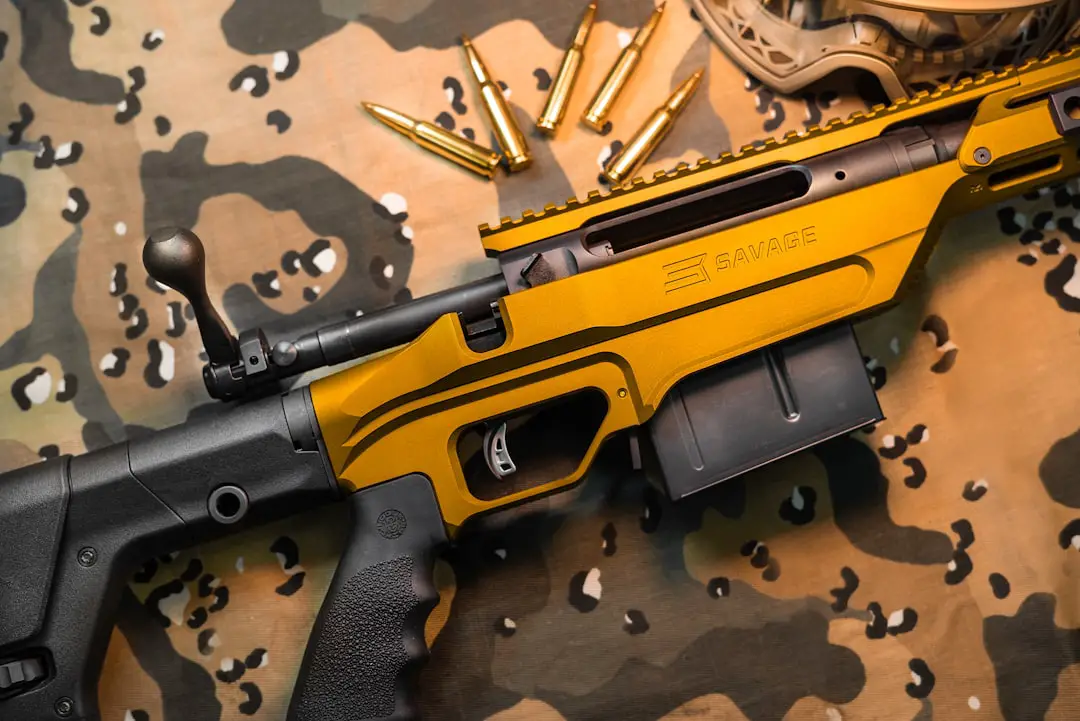
The .45 ACP (Automatic Colt Pistol), standardized by SAAMI as 45 Automatic or 45 Auto, has been in use for more than a century. John Moses Browning developed the cartridge during the early 1900s, and Colt introduced a .45-caliber automatic pistol commercially with the Colt Model 1905. The U.S. Army formally adopted Browning’s .45-caliber M1911 pistol in 1911, beginning decades of military use. Today, the cartridge remains common in target shooting, competition, and defensive handguns.
Quick Answer
A historical U.S. Army manual lists the maximum range of the M1911/M1911A1 and its service ammunition at approximately 1,600 yards when fired at 30 degrees. That is a maximum-flight figure, not a practical shooting distance or safety limit. Real range varies with the firearm, ammunition, trajectory, and conditions.
The cartridge is known for a relatively large projectile diameter and moderate velocity compared with many modern handgun cartridges. Current .45 Auto projectiles commonly measure around .451 to .452 inch depending on construction. Bullet weights also vary widely, although 230 grains remains one of the best-known traditional weights.
For one current reference point, Speer lists its 230-grain Lawman .45 Auto training load at 830 fps from a 4-inch test barrel, producing 352 ft-lbs of muzzle energy. Other .45 Auto loads can be slower or faster, so no single velocity or energy figure represents the entire cartridge.
Key Takeaways
- A 1940 U.S. War Department manual gives the M1911/M1911A1 an approximate maximum range of 1,600 yards at 30 degrees of elevation.
- Maximum physical range is not the same as practical accuracy, effective use, or a safe shooting distance.
- Barrel length, ammunition, projectile shape, muzzle velocity, firing angle, altitude, wind, and other conditions can change a bullet’s flight.
- A representative 230-grain Speer training load is listed at 830 fps and 352 ft-lbs from a 4-inch test barrel, but other .45 ACP loads differ.
- Any bullet that misses or passes through a target can remain dangerous. Never use a published maximum-range number as a substitute for a proper range and backstop.
- Firearm-discharge laws vary by jurisdiction, so shooters must follow applicable laws and range rules.
At a Glance: .45 ACP Range and Ballistics
| Representative Load | Speer Lawman .45 Auto, 230-grain TMJ |
| Muzzle Velocity | 830 fps from a 4-inch test barrel |
| Muzzle Energy | 352 ft-lbs for the representative Speer load |
| Practical Distance | No universal cutoff; historical M1911 training included firing within roughly 15–50 yards |
| Historical Maximum Range | Approximately 1,600 yards at 30° for the M1911/M1911A1 service configuration cited by the 1940 War Department manual |
What Does “Maximum Range” Mean for a .45 ACP Bullet?
Three different ideas are often mixed together when people ask how far a .45 ACP bullet can travel.
Maximum physical range is the farthest a projectile may travel under a particular set of firing conditions. It does not mean the shooter can accurately hit a target at that distance.
Practical range is much shorter and depends on the firearm, sights, ammunition, target size, shooter skill, and shooting conditions. There is no single distance at which a .45 ACP bullet suddenly stops being accurate or effective.
Safe shooting distance is different again. A maximum-range number should never be used to decide whether the area behind a target is safe. Ricochets, misses, terrain, hard surfaces, and other variables make a known and adequate backstop essential.
Warning: A published maximum-range figure is not a safe-distance rule. Never fire unless you are certain of your target, have a suitable backstop, and know what lies beyond it.
Factors That Affect How Far a .45 ACP Bullet Can Travel
Several factors determine the flight of a .45 ACP projectile. The ammunition itself is one of the biggest variables. Bullet weight, shape, ballistic coefficient, muzzle velocity, and the firearm’s barrel length can all change trajectory and retained velocity.
FMJ and hollow-point bullets can have different aerodynamic characteristics, but the difference cannot be reduced to a simple rule that one type always flies farther. A hollow point is designed to expand after striking suitable material; it does not normally expand while traveling through open air. In-flight drag is influenced by projectile shape and ballistic coefficient.
Environmental conditions matter as well. Wind can move a bullet laterally, while air density changes with altitude, temperature, humidity, and barometric pressure. Thinner air generally creates less aerodynamic drag than denser air.
Ammunition temperature can also affect some propellants, but the amount varies by load. It is better to rely on the ammunition manufacturer’s published specifications than to assume a fixed velocity change from temperature alone.
Note: SAAMI publishes standardized dimensional and performance standards for 45 Automatic ammunition, but individual commercial loads still vary in bullet design and velocity. See the SAAMI centerfire pistol and revolver standards for industry-standard information.
Maximum Effective Range of a .45 ACP Bullet
The .45 ACP is primarily a short-range handgun cartridge, but “maximum effective range” is not a universal specification for every pistol, load, shooter, or target.
The historical U.S. Army M1911 manual described the pistol as a comparatively short-range weapon and included field-firing exercises beginning at 50 yards and moving closer. Modern competition also shows that accurate handgun shooting at 50 yards is possible in skilled hands. That does not make 50 yards a hard ballistic limit.
The much larger maximum-range figure comes from the 1940 War Department FM 23-35 manual for the M1911 and M1911A1. It lists an approximate maximum range of 1,600 yards at an elevation angle of 30 degrees. That historical figure applies to the service pistol and ammunition described in the manual and should not be treated as an exact specification for every modern .45 ACP load.
The important distinction is simple: a .45 ACP projectile may travel far beyond normal handgun shooting distances, so a missed shot can remain a serious hazard long after it leaves the intended target area.
Understanding Bullet Drop and Velocity Loss
The .45 ACP’s moderate velocity produces a more curved trajectory than many faster handgun cartridges. However, bullet drop must always be tied to a specific load, sight-in distance, barrel, and atmospheric conditions.
For example, the Speer ammunition catalog lists its 230-grain Lawman .45 Auto load at 830 fps from a 4-inch test barrel. With a 25-yard sight-in, Speer gives an approximate trajectory of 2.4 inches below the line of sight at 50 yards and 17.7 inches below it at 100 yards.
| Distance | Velocity | Energy | Trajectory* |
|---|---|---|---|
| Muzzle | 830 fps | 352 ft-lbs | — |
| 50 yards | 794 fps | 322 ft-lbs | -2.4 in. |
| 100 yards | 760 fps | 295 ft-lbs | -17.7 in. |
*Representative Speer Lawman 230-grain TMJ data with a 25-yard sight-in. Actual results vary by firearm, ammunition, sight height, and conditions.
These figures also show why it is inaccurate to say that .45 ACP necessarily loses energy faster simply because standard loads are usually subsonic. Energy retention depends on projectile mass, drag, and velocity throughout flight. The more consistent generalization is that a slower .45 ACP load normally shows more trajectory curvature than a faster handgun load under comparable conditions.
Note: Ballistic tables describe a specific test setup. Your pistol, ammunition lot, barrel length, sights, elevation, and weather can produce different results.
Potential Dangers of a .45 ACP Bullet Traveling Long Distances
| Distance | Potential Dangers |
|---|---|
| 1000 yards | Do not assume a projectile is harmless at this distance. Its remaining speed and energy depend on the load and flight path, and an uncontrolled bullet may still cause injury or property damage. |
| 1500 yards | This is near the historical maximum-range region cited for the M1911 service configuration. Accuracy is not the relevant safety issue: the bullet’s landing point is uncontrolled. |
| 2000 yards | This exceeds the approximately 1,600-yard maximum cited in the 1940 M1911 manual, so it is not a valid generic .45 ACP benchmark. No arbitrary distance should be treated as proof that a missed shot is safe. |
One of the greatest hazards is a bullet that travels beyond the intended target. Bullets fired upward or at elevated angles can travel substantial distances before returning to the ground or striking something farther away.
This is not merely theoretical. The CDC documented injuries from celebratory gunfire, including a death, and reported that falling bullets can return with enough speed to cause serious or fatal injury.
A bullet fired more horizontally can also remain dangerous if it misses, passes through a target, or ricochets from a hard surface. FMJ ammunition is not designed to expand like a defensive hollow point, but no ammunition type should be assumed to stop safely in ordinary walls, fences, trees, or other improvised objects.
Warning: Never fire a firearm into the air for celebration or experimentation. Falling or stray bullets can injure or kill people far from the shooter, and reckless firearm discharge may also lead to serious criminal or civil consequences.
These realities are why a safe backstop and constant awareness of what lies beyond the target are essential every time a firearm is discharged.
Legal Implications of a .45 ACP Bullet Traveling Long Distances
The legal consequences of a bullet traveling beyond its intended target depend on where the incident occurs and what happens afterward. Reckless or unlawful firearm discharge can result in criminal charges under state, local, or national law, particularly when another person is endangered, injured, or killed. Property damage or injury may also create civil liability.
Firearm-discharge laws vary considerably. Some communities prohibit or restrict shooting within municipal limits, near occupied structures, across roads, or outside approved locations. Range-specific rules may impose additional requirements.
The safest approach is to use an established shooting range whenever possible and follow all posted rules. For shooting on private or public land, verify the laws and land-use regulations that actually apply to that location. General online information—including this article—is not a substitute for legal advice from a qualified attorney or guidance from the responsible local agency.
Gun owners should treat legal compliance and public safety as separate but equally important responsibilities. Existing site resources on other types of safety do not replace firearm-specific laws or range requirements.
Tips for Safe Shooting and Handling of .45 ACP Firearms
Responsible Handling Practices
Treat every firearm as though it is loaded until you have personally verified its condition. Keep the muzzle pointed in a safe direction, keep your finger away from the trigger until you intend to fire, and use only ammunition that matches the firearm manufacturer’s specifications.
The National Shooting Sports Foundation’s firearm-safety guidance also emphasizes knowing your target and what lies beyond it. A bullet cannot be recalled after it leaves the barrel.
Choosing a Safe Shooting Location
Use a designated shooting range whenever practical. Established ranges are designed around controlled firing directions, backstops, and safety procedures. Follow the range officer’s instructions and all posted rules.
Outdoor Shooting Safety
When shooting outdoors where lawful, make certain the area provides an adequate backstop and that people, buildings, roads, trails, livestock, and other unintended targets are not downrange or beyond the target area. Wear appropriate eye and hearing protection.
Pro Tip: A substantial earthen berm or a professionally designed range backstop is far more appropriate than fencing, thin metal, trees, or open sky. If you cannot identify the target, backstop, and area beyond it, do not fire.
Comparison of .45 ACP With 9mm and .40 S&W at Distance
Compared with common 9mm and .40 S&W loads, a traditional 230-grain .45 ACP training load generally starts at a lower velocity and follows a more curved trajectory.
For example, Speer’s current Lawman data list a 124-grain 9mm load at 1,090 fps and a 180-grain .40 S&W load at 1,000 fps, compared with 830 fps for its 230-grain .45 Auto load. Using the same 25-yard sight-in convention, the catalog shows about 9.6 inches of drop at 100 yards for the 124-grain 9mm load, 11.8 inches for the 180-grain .40 S&W load, and 17.7 inches for the 230-grain .45 Auto load.
Those numbers are examples, not universal cartridge rankings. Different loads within the same caliber can produce substantially different velocities and trajectories.
The cartridges also should not be ranked simply by saying one has more “stopping power.” Terminal performance depends on the specific projectile, its velocity, penetration and expansion characteristics, shot placement, and the target involved. Magazine capacity, recoil, firearm size, reliability, and shooter proficiency may also matter depending on the intended lawful use.
For historical background, the American Rifleman overview of .45 ACP history and performance provides additional context.
Final Thoughts on How Far a .45 ACP Bullet Can Travel
The best-supported historical answer is that the U.S. War Department listed an approximate maximum range of 1,600 yards for the M1911/M1911A1 service configuration when fired at 30 degrees. That figure describes maximum projectile travel under particular conditions—not the distance at which a handgun is normally used accurately and certainly not a safe buffer behind a target.
Modern .45 ACP ammunition varies by bullet weight, projectile design, barrel length, and velocity. A current 230-grain Speer training load, for example, starts at 830 fps from its specified 4-inch test barrel and follows a noticeably curved trajectory by 100 yards.
The most important practical lesson is safety. Any round that misses the intended target, passes through it, or ricochets can endanger people and property outside the immediate shooting area. Use an appropriate range or backstop, follow the basic rules of firearm safety, and never fire when you are uncertain about what lies beyond the target.
If you’re planning a multi-day trek and wondering how far a 45 ACP bullet can travel, you may also be interested in checking out this article on the best hiking backpack for multi-day trek. Having the right gear is essential for a successful hiking trip, just as understanding the limits and safety requirements of any equipment matters outdoors.
Frequently Asked Questions
What is the maximum range of a .45 ACP bullet?
A 1940 U.S. War Department manual for the M1911 and M1911A1 lists an approximate maximum range of 1,600 yards at an elevation angle of 30 degrees. That is a historical service-ammunition figure, not a guaranteed maximum for every modern .45 ACP load.
What is the practical range of a .45 ACP handgun?
There is no universal cutoff. Historical M1911 training included shooting at distances up to about 50 yards, but practical accuracy depends on the firearm, ammunition, sights, target, conditions, and shooter. Maximum physical range is far greater than normal handgun shooting distance.
What factors affect how far a .45 ACP bullet can travel?
Important variables include the ammunition’s muzzle velocity, bullet weight, projectile shape and ballistic coefficient, the firearm and barrel length, firing angle, wind, altitude, temperature, and air density.
Is it safe to shoot a .45 ACP bullet into the air?
No. Bullets fired into the air eventually return or strike something farther away. CDC investigations have documented serious injuries and death from celebratory gunfire. Reckless discharge can also violate criminal or local firearm laws.
What safety precautions should I follow with a .45 ACP firearm?
Keep the muzzle pointed in a safe direction, treat the firearm as loaded until verified otherwise, keep your finger off the trigger until you intend to fire, use the correct ammunition, know your target and what lies beyond it, use an adequate backstop, and wear eye and hearing protection.
Can a .45 ACP bullet penetrate walls and other barriers?
Yes, handgun bullets can penetrate common building materials, and exact penetration varies with ammunition, distance, impact angle, and construction. NSSF safety guidance specifically warns shooters to account for bullets penetrating walls and ceilings. Never treat an ordinary wall or fence as a reliable backstop.
Sources
- .45 ACP — Wikipedia — general background reference and historical overview
- American Rifleman: The .45 ACP — History & Performance — historical background and cartridge-development context
- SAAMI Standards — standardized cartridge terminology, dimensions, and industry performance standards
- U.S. Army: Arming the Army — John M. Browning — M1911 adoption and military history
- Speer Ammunition Catalog — current .45 Auto velocity, energy, projectile dimensions, and trajectory data
- CDC: New Year’s Eve Injuries Caused by Celebratory Gunfire — documented danger of falling bullets and celebratory gunfire
