
Last Updated on September 11, 2026 by Daniel Globe
Choosing an accessible base in Central London is less about finding one perfect neighborhood and more about checking the exact station, hotel entrance, room layout, and route you will use. The South Bank and Westminster are usually the strongest starting points for sightseeing with less walking. Covent Garden, Trafalgar Square, and Kensington can also work, but their nearest Tube stations have important step-free limits.
Quick Answer
For most travelers with limited mobility, the South Bank and Waterloo offer the easiest all-around base because major sights sit close together and the riverside route is generally level. Westminster is best for classic landmarks. Covent Garden, Trafalgar Square, and Kensington can still work, but nearby Tube stations have important step-free limits.
Key Takeaways
- South Bank and Waterloo are the best overall choices for closely grouped attractions and a generally level riverside route.
- Westminster is best for Parliament, Westminster Abbey, St James’s Park, and Buckingham Palace, although some access routes require advance booking.
- Covent Garden, Leicester Square, and Charing Cross Underground stations are not fully step-free.
- A station marked step-free may still have a gap or step between the platform and train.
- Never rely only on an “accessible room” filter. Confirm the exact bathroom, bed, doorway, lift, and transfer layout with the hotel.
Disclosure: As an Amazon Associate I earn from qualifying purchases. Some links on this page are affiliate links, at no extra cost to you.
Best Accessible Areas in Central London?
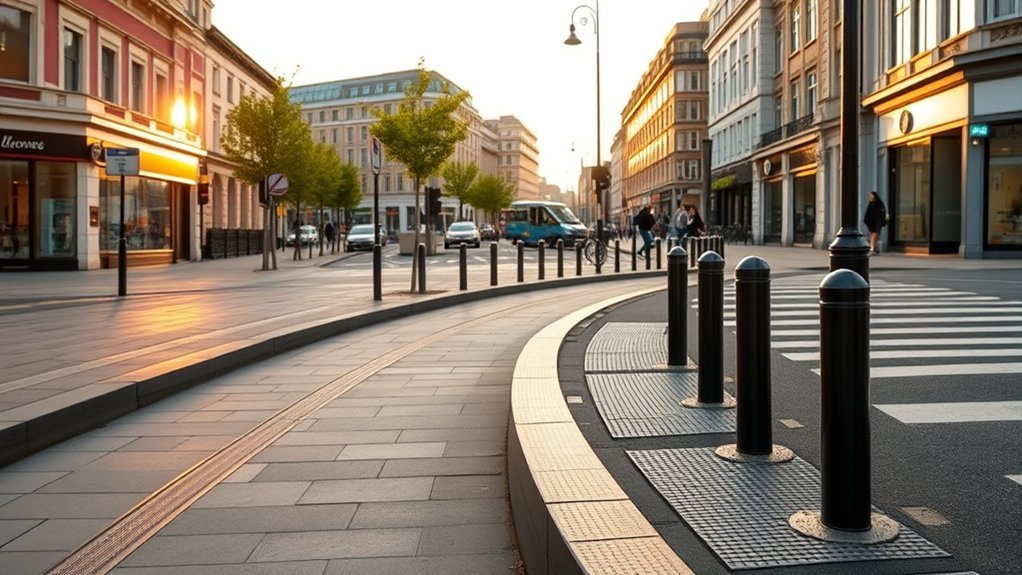
The best accessible area depends on whether your priority is short outdoor routes, step-free rail travel, museums, landmarks, nightlife, or a specific hotel room. The comparison below shows the main strengths and limits of five popular Central London bases.
| Area | Best For | Access Advantage | Main Caveat |
|---|---|---|---|
| South Bank and Waterloo | Best overall; river views, theaters, galleries, and family attractions | Many sights are close together along a generally level riverside route | Waterloo access varies by line, operator, platform, and interchange |
| Westminster | Parliament, Westminster Abbey, St James’s Park, and royal landmarks | Westminster Underground station has step-free routes | Platform gaps vary, crowds are heavy, and Buckingham Palace access must be arranged |
| Trafalgar Square | National Gallery, theaters, Whitehall, and central bus routes | Open public space with step-free routes and nearby accessible attractions | Charing Cross and Leicester Square Underground stations are not step-free |
| Covent Garden | Dining, shopping, performances, and a lively pedestrian district | Many venues have level or managed entrances, and buses serve the area | Covent Garden and Leicester Square Underground stations are not fully step-free |
| Kensington | Natural History Museum, V&A, Science Museum, and quieter residential streets | Major museums provide lifts, accessible entrances, toilets, and seating | South Kensington station is not step-free; buses, taxis, or a longer route may be needed |
TfL currently lists 94 Tube stations—just over one-third of the network—as step-free. A hotel beside a famous Tube station is therefore not automatically an accessible base.
Warning: “Step-free” can mean street-to-platform access rather than level street-to-train access. Check the platform gap, boarding method, interchange, lift status, and return journey on the current TfL Step-Free Tube Guide.
Why Westminster Works Well for Sightseeing?
Westminster is a strong choice when your main goal is to see famous landmarks without repeatedly crossing the city. Westminster Abbey, UK Parliament, Whitehall, St James’s Park, and the Thames are grouped within a compact district. Westminster station also provides step-free routes, although the step and gap between the platform and train differ by line.
Prime Sightseeing Access
You can combine several landmarks in one area and reduce the number of vehicle transfers. Westminster Abbey provides wheelchair access, accessible toilets, lifts, and wheelchairs to borrow. The UK Parliament offers step-free entry and adapted visitor routes, although historic spaces can include narrow sections or alternative lift routes.
St James’s Park can provide a quieter break between Westminster and Buckingham Palace. Paths are generally broad, but the easiest route can change with weather, temporary works, events, and crowd-control barriers.
Easy Step-Free Routes
Westminster station appears on TfL’s step-free network, but that does not mean every platform offers level boarding. Check the specific line and direction before traveling. Buses can be easier for short trips between Westminster, Trafalgar Square, Victoria, and the South Bank because they avoid long station corridors.
Buckingham Palace is accessible, but its step-free route must be booked in advance. Visitors using that route enter separately from the standard admission line, and wheelchairs or rollators should also be reserved if needed. Do not arrive assuming the regular visitor route is step-free.
Pro Tip: Plan Westminster as a landmark cluster rather than a starting point for the whole city. Visit two or three nearby sights, schedule a seated break, and use a bus or taxi for the next district.
Why the South Bank Is Easy for Step-Free Travel?
The South Bank is often the most practical all-around base for travelers who want to conserve energy. The riverside path connects major attractions, restaurants, performance venues, and seating areas without requiring a Tube ride between every stop. Much of the promenade is level or gently sloped, although bridge approaches, temporary diversions, crowds, and occasional uneven surfaces still require attention.
- Southbank Centre, the National Theatre, and Tate Modern publish detailed access information.
- The London Eye, SEA LIFE London Aquarium, and other County Hall attractions sit close together.
- Waterloo provides useful National Rail and Underground connections, but access must be checked for the exact platform and interchange.
- Riverside cafés, cultural venues, and public spaces provide regular chances to sit and rest.
- Westminster Bridge connects the South Bank with Parliament and Westminster, although bridge gradients and crowds may affect some users.
Note: South Bank and Waterloo are often used as one planning area, but they are not a single level zone. Check the route from your hotel entrance to the promenade and the correct accessible station entrance rather than relying only on the neighborhood name.
Why Covent Garden Suits Mobility Needs?
Covent Garden can suit travelers who want restaurants, shops, theaters, and street entertainment close to their hotel. Many parts of the Piazza are pedestrianized, and major venues such as the Royal Ballet and Opera publish access routes, wheelchair spaces, hearing support, and assistance information.
The main weakness is rail access. Covent Garden Underground station has lifts, but it is not classified as a complete step-free station. Leicester Square station is also not step-free. Travelers who cannot use stairs should plan an accessible bus, a licensed taxi or private-hire vehicle, or a longer route from a verified step-free station.
Historic streets can include paving joints, drainage channels, curb transitions, crowds, delivery vehicles, and temporary outdoor seating. Check the precise route between your hotel and the places you expect to visit instead of assuming the whole district has smooth paving.
Warning: Do not use Covent Garden or Leicester Square Underground stations as the core of a wheelchair route without checking the current TfL guide. A station lift does not necessarily provide a step-free journey from street to train.
Why Trafalgar Square Makes a Good Base?

Trafalgar Square is useful for the National Gallery, National Portrait Gallery, Whitehall, theaters, and central bus routes. The square has broad open areas and step-free routes between levels, but the nearest Underground stations create an important limitation: Charing Cross and Leicester Square are not classified as step-free.
Central Transport Links
Accessible buses are often more useful than the Tube in this area. They connect Trafalgar Square with Westminster, Victoria, Oxford Street, the City, and the South Bank while avoiding station stairs and long underground corridors. Licensed black cabs and appropriately booked private-hire vehicles provide another door-to-door option.
- Use the TfL Go app to set a step-free journey and check live disruption.
- Confirm that the bus stop itself has a usable curb and boarding position.
- Allow extra time during demonstrations, ceremonies, holidays, and major events.
- Save a backup route in case a lift or road crossing is unavailable.
Walkable Sights Nearby
The National Gallery faces the square, and the National Portrait Gallery is nearby. St Martin-in-the-Fields, Whitehall, and the northern edge of St James’s Park are also close. The London Eye and Parliament are reachable across the river, but the distance and bridge gradient may be tiring for someone with limited stamina.
“Walkable” does not always mean accessible. Traffic crossings, paving, crowds, curb cuts, weather, and the need for rest stops can matter more than the distance shown on a map.
Step-Free Sight Access
The National Gallery’s main Sainsbury Wing entrance is step-free. The square itself also has managed step-free routes. However, do not describe Charing Cross or Leicester Square Underground stations as accessible lift stations. Plan to arrive by bus, taxi, private hire, or another route verified through TfL.
When Kensington Works Best
Kensington is a strong choice for visitors whose main priorities are the Natural History Museum, V&A, Science Museum, Kensington Gardens, and a quieter evening environment. The museums provide accessible entrances, lifts, toilets, seating, and additional support, but the transport picture is less convenient than the attraction access might suggest.
South Kensington Underground station is not step-free. The V&A identifies Knightsbridge as a more distant step-free option, while buses and licensed taxis can stop closer to Exhibition Road. Consider the full distance between the transport stop and museum entrance, especially if hills, weather, fatigue, or a heavy mobility device affect your route.
The Natural History Museum’s Central Entrance has a ramp, while other entrances can use internal lifts or different approaches. Always check the museum’s current entrance and lift information because construction or maintenance can temporarily change the easiest route.
Which London Attractions Are Wheelchair Friendly?
Many of London’s best-known attractions provide wheelchair access, lifts, accessible toilets, companion tickets, hearing support, or mobility aids. The exact arrangement varies, so use each attraction’s official access page rather than relying on a general booking listing.
| Attraction | Verified Access Information | Plan Ahead |
|---|---|---|
| British Museum | Accessible entrances, lifts, toilets, seating, and a limited number of manual wheelchairs | Manual wheelchairs can be pre-booked free of charge; confirm the designated entrance |
| London Eye | Wheelchairs and mobility scooters can board within stated size limits | Reserve a wheelchair time slot; capacity is limited to two wheelchair users per pod and eight on the wheel at once |
| National Gallery | Step-free main entrance, internal lifts, accessible toilets, and queue assistance | Use the Sainsbury Wing entrance and check access arrangements for temporary exhibitions |
| Natural History Museum | Lifts and step-free access to most areas, accessible toilets, seating, and a Changing Places toilet | Loan wheelchairs cannot be reserved and are first-come, first-served; check current lift status |
| Tower Bridge | Lifts to the high-level walkways and Engine Rooms, accessible toilets, wheelchairs, and walking frames | Check lift status before traveling because outages can occur at short notice |
| Westminster Abbey | Step-free visitor access, lifts, accessible toilets, and manual wheelchairs to borrow | Check the designated entrance and current visitor arrangements |
| UK Parliament | Step-free entry and alternative lift routes for most of the standard tour | Book ahead and describe wheelchair dimensions, sensory needs, or hearing support requirements |
Note: “Wheelchair friendly” is not a complete specification. Confirm doorway width, mobility-scooter rules, lift dimensions, transfer requirements, seating, companion-ticket terms, assistance-dog rules, quiet-entry options, and accessible-toilet facilities.
How to Plan a Step-Free London Route
- Set the correct journey preference. Use TfL Go or Journey Planner and select a wheelchair-accessible or step-free route.
- Check both parts of station access. Confirm street-to-platform access and the size of the platform-to-train step or gap.
- Check every interchange. A step-free origin and destination do not guarantee that a transfer station is step-free.
- Review live lift status. Check shortly before leaving and again before the return trip.
- Identify the correct entrance. Large stations can have several street entrances, and only some may connect to the accessible route.
- Save a backup. Note a nearby bus stop, staffed station, licensed taxi rank, or alternative attraction.
- Allow recovery time. Add seating, toilets, food, and indoor rest stops to the route rather than planning attractions back to back.
- Contact venues for individual requirements. Advance contact is especially useful for large powered chairs, transfer assistance, sensory access, hearing support, or a quieter entrance.
Warning: Lift outages, roadworks, demonstrations, station closures, security barriers, and temporary venue entrances can change an accessible route without much notice. Recheck the route on the day rather than relying on an old screenshot.
How to Get Around Central London With Less Walking?
To reduce walking or rolling distance, use a mix of accessible buses, selected rail routes, river services, and door-to-door vehicles. The best option may change during the day depending on crowds, lift availability, fatigue, and weather.
- London buses: London’s scheduled buses are low-floor and wheelchair accessible. The wheelchair space is limited, and TfL guidance gives a typical maximum wheelchair size of 70 cm wide by 120 cm long.
- Tube and Elizabeth line: Use only a verified step-free route. Central Elizabeth line stations generally provide strong step-free connections, but the walk through a large station can still be long.
- River services: River buses provide step-free boarding on many central routes, but Cadogan Pier has steps, London Bridge City Pier can be very steep at low tide, and other pier restrictions may apply.
- Licensed taxis: A licensed black cab can provide a direct trip without station corridors. Confirm that the vehicle and boarding space suit your chair or scooter.
- Private hire: Request an appropriate vehicle rather than assuming a standard app-booked car can carry a wheelchair or mobility scooter.
- Compact sightseeing clusters: Group the South Bank, Westminster, Trafalgar Square, Covent Garden, or Kensington museums into separate half-days instead of crossing Central London repeatedly.
A short bus journey can be easier than a technically step-free Tube route that requires long corridors, multiple lifts, and a difficult platform gap.
Accessible Toilets, Rest Stops, and Support
Accessible travel becomes much easier when toilets and rest stops are part of the route rather than an afterthought. Museums, major galleries, National Rail stations, shopping centers, hotels, and many visitor attractions provide accessible toilets, but opening hours and access conditions vary.
- Use the official visitor guide to accessible toilets in London.
- Check whether a toilet requires a Radar key under the National Key Scheme.
- Look specifically for a Changing Places toilet if you need an adult-size changing bench, hoist, or extra maneuvering space.
- Mark at least one backup toilet before starting a longer outdoor route.
- Use museums, galleries, libraries, hotel lounges, and cafés as planned indoor rest stops.
- Check official access pages for seating, quiet rooms, sensory maps, induction loops, visual stories, and assistance-dog facilities.
The Natural History Museum has accessible toilets, seating throughout much of the building, and a Changing Places facility. Westminster Abbey, Tower Bridge, the National Gallery, and Parliament also publish detailed information about toilets and visitor support.
Which Accessible Hotels Are Best in Central London?
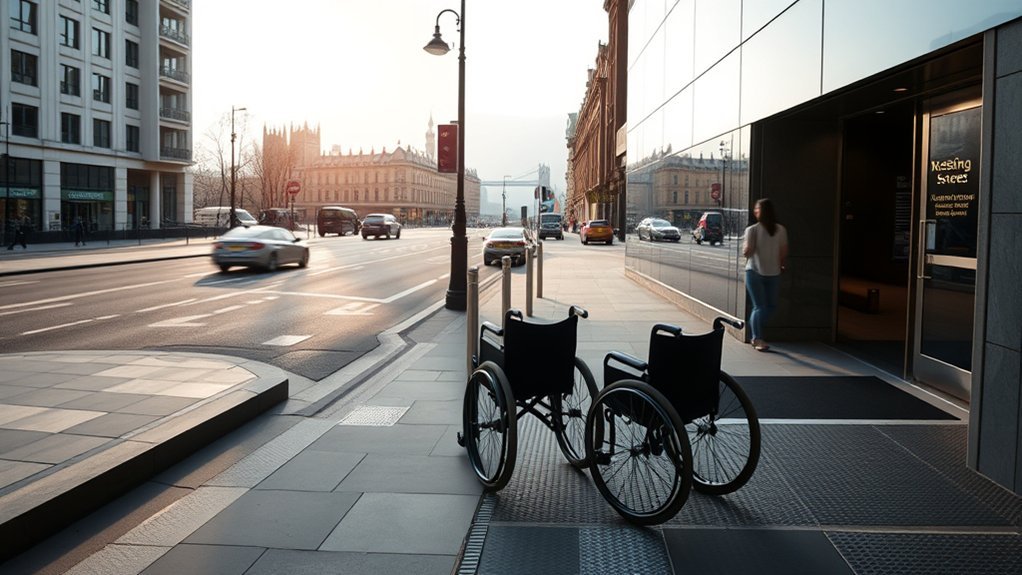
A hotel should be judged by the exact room and route you will use, not only by its neighborhood or an “accessible” booking filter. The following Central London hotels currently advertise accessible features or room categories on their official websites.
| Hotel | Why It May Work | Confirm Before Booking |
|---|---|---|
| Hilton London Bankside | Accessible room categories and a useful Bankside location near Tate Modern | Shower or bath setup, bed-transfer space, toilet rails, route to the street, and distance to suitable transport |
| London Marriott Hotel County Hall | Accessible room inventory and a location beside the London Eye and South Bank | Exact room category, bathroom design, bed height, entrance route, and whether the confirmed room is guaranteed |
| Park Plaza Westminster Bridge London | Advertises a Superior Wheelchair Accessible Room and sits between Waterloo and Westminster | Bathroom transfer layout, shower controls, bed clearance, lift access, and the route from the entrance to the room |
| Hyatt Regency London Blackfriars | Current name of the former Crowne Plaza London – The City; advertises a king room with an accessible shower | Whether the shower and transfer layout meet your needs and which Blackfriars station route is usable |
Before paying, contact the hotel and ask for written confirmation of:
- The exact accessible room category and whether it is guaranteed rather than requested
- Entrance thresholds, ramps, revolving-door alternatives, and the route from reception
- Bedroom and bathroom doorway widths
- Clear floor space beside the bed and the bed height
- Under-bed clearance if you use a portable hoist
- Whether the room has a roll-in shower, transfer shower, bath, shower seat, or fixed bench
- Toilet height, grab-rail position, and transfer side
- Sink clearance and mirror height
- Lift dimensions and access to restaurants, breakfast rooms, pools, or spas
- Emergency alarms, vibrating pads, visual alerts, refuge areas, and evacuation assistance
- Refrigeration for medication, charging space for mobility equipment, and assistance-dog arrangements
Warning: Hotels use “accessible,” “mobility accessible,” and “wheelchair accessible” in different ways. A room with grab rails may still lack a usable shower, correct transfer side, under-bed clearance, or enough turning space.
Frequently Asked Questions
What Are the No-Go Zones for Tourists in London?
Central London does not have an official list of tourist “no-go zones.” Use the same care you would in any large city: plan the route, stay on busy and well-lit streets at night, use licensed taxis or private-hire vehicles, secure valuables in crowds, and watch for distraction theft. Check current Metropolitan Police or event guidance if demonstrations, road closures, or major gatherings are planned.
What Do Travelers Wish They Knew Before Visiting London?
The most important lesson is that a nearby Tube station may not be step-free and a step-free station may still have a platform gap. Check the exact route, entrance, lift status, hotel room, attraction booking rules, toilets, and return journey. Avoid the busiest commuting periods when possible and keep a bus or taxi backup.
What Is the Safest Area of Central London?
No central neighborhood can be guaranteed to be the safest for every visit. Choose a well-reviewed hotel on a busy, well-lit route near transport you can use. Stay aware in crowded attractions and stations, secure phones and wallets, and use licensed transport at night. Accessibility and personal safety should be assessed street by street rather than by a broad neighborhood label.
What Are the Most Walkable Neighborhoods in London?
Covent Garden, Soho, the South Bank, Westminster, Kensington, and parts of Bloomsbury are commonly explored on foot. However, walkability does not guarantee step-free travel. Check paving, curb cuts, crossings, gradients, crowds, toilets, seating, and the distance from a usable transport stop.
What Is the Best Central London Area for a Wheelchair User?
The South Bank and Waterloo are often the best overall choice because several attractions are close together and much of the riverside route is level. Westminster may be better for landmark-focused visits. The best choice still depends on the exact hotel room, station platforms, wheelchair dimensions, transfer needs, and planned attractions.
Is Covent Garden Underground Station Step-Free?
No. Covent Garden station has lifts, but TfL does not classify it as a complete step-free station. Leicester Square station is also not step-free. Use an accessible bus, licensed taxi or private-hire vehicle, or a route from a verified step-free station if you cannot use stairs.
Is Westminster Underground Station Step-Free?
Westminster has step-free routes between the street and its platforms. However, the size of the platform-to-train step or gap differs by line and boarding position. Check the current TfL Step-Free Tube Guide and live lift information before traveling.
Conclusion
The South Bank and Waterloo are usually the easiest all-around Central London base for closely grouped attractions and a generally level riverside route. Westminster is the strongest choice for classic landmarks, while Kensington works well for museum-focused visits if you plan around the lack of step-free access at South Kensington station. Covent Garden and Trafalgar Square remain appealing, but buses and door-to-door transport may be more useful than their nearest Tube stations.
Whichever area you choose, confirm the exact hotel room, station platforms, train gap, venue entrance, toilet facilities, and backup route. That preparation will do more for a comfortable trip than choosing a neighborhood based only on its name or distance from the sights.
Sources
- Transport for London: Step-Free Access — current network coverage and the distinction between station access and level boarding
- TfL Step-Free Tube Guide, April 2026 — station, platform, step, and gap information
- Transport for London: Transport Accessibility — accessible journey planning and transport support
- Visit London: Accessible Public Transport — bus, rail, riverboat, and pier-access guidance
- Visit London: Accessible Toilets — Radar-key toilets, station facilities, and Changing Places planning
- Metropolitan Police: Staying Safe in London — practical visitor and pickpocket-safety guidance
