Last Updated on August 21, 2026 by Caleb Warren
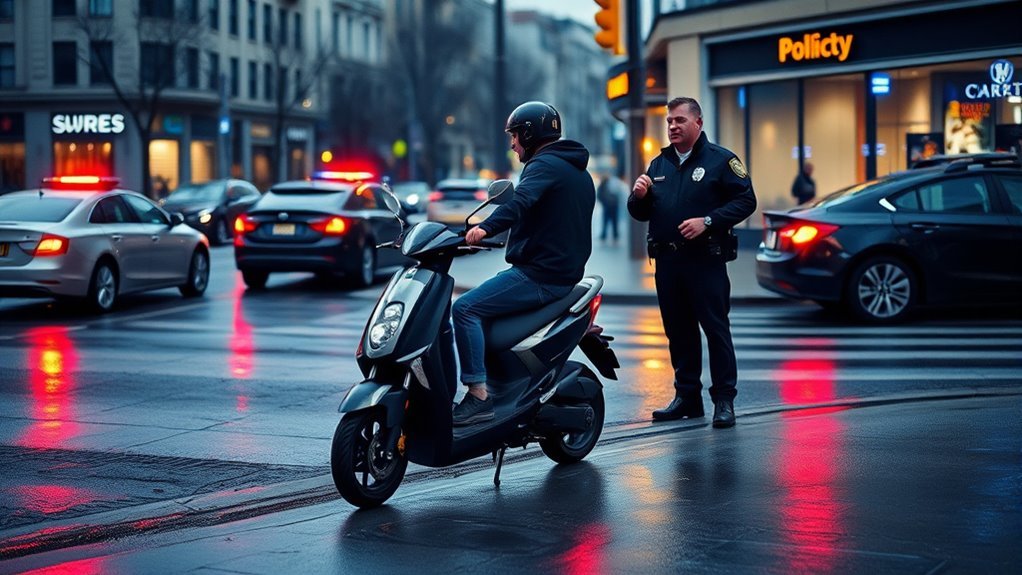
Yes, police can stop you for riding an electric scooter if you break local traffic laws or safety rules. In New York City, that can include riding on sidewalks, speeding over 15 mph, running red lights, or riding without required lights, reflectors, or helmets when needed. You’re safest when you follow street limits, use bike lanes where allowed, and ride politely and lawfully. The details below explain when stops happen, what the current rules actually say, and how to avoid a citation.
Quick Answer
Yes. NYPD can stop e-scooter riders for sidewalk riding, exceeding the citywide 15 mph limit, running lights, missing required helmets or lighting, or riding an illegally modified device. Fines typically range from about $25 to $1,000 depending on the violation, and scooters can be impounded for reckless or repeated violations.
Disclosure: As an Amazon Associate I earn from qualifying purchases. Some links on this page are affiliate links, at no extra cost to you.
Can Police Stop You for Riding an Electric Scooter?
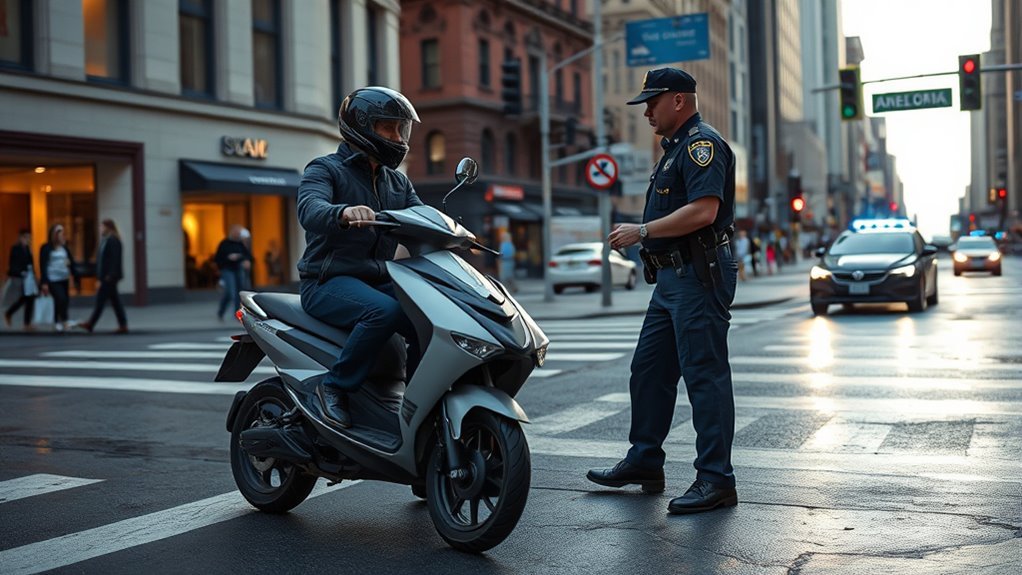
Yes—police can stop you while you’re riding an electric scooter if they have a lawful reason to do so, such as seeing you violate traffic rules, ride on a sidewalk, run a red light, operate without required safety equipment, or use an illegally modified scooter that exceeds the legal speed or weight limit. If you ignore signals, weave through traffic, or ride under the influence, you increase the chance of a stop. You also invite scrutiny when you skip helmets, lights, or other required gear, since scooter safety is now an active enforcement priority in the city. When officers find a violation, you can face fines, a summons, or in serious cases impoundment of the scooter itself. Riding within the rules is the simplest way to avoid an unplanned conversation with law enforcement.
NYC Scooter Laws That Can Get You Stopped
In NYC, you can get stopped for violating basic e-scooter rules, because police commonly enforce the laws on sidewalks, speed, age, equipment, and traffic behavior. Treat these as binding legal requirements, not suggestions.
| Rule | Risk | Result |
|---|---|---|
| Sidewalk riding | High | Stop or ticket |
| Over 15 mph | High | Police attention |
| Under 16 | Certain | Ticket |
| No lights/reflectors at night | High | Stop at night |
| Uncertified or modified device | High | Ticket, possible impoundment |
If you ignore these safety measures, officers can intervene quickly. Riding on a sidewalk invites immediate scrutiny under NYC Administrative Code §19-176.2. Exceeding 15 mph can signal reckless conduct. If you’re under 16, you’re not legally permitted to operate an e-scooter on public streets at all. At night, missing lights or reflectors can justify a stop on its own. Running red lights or cutting off pedestrians raises the odds even further.
Note: This article explains general NYC and New York State rules for informational purposes only and isn’t legal advice. Local enforcement practices can vary by precinct, and rules are still evolving — check current NYC DOT guidance before you ride.
Where Electric Scooters Are Legal in New York
You can legally ride a private electric scooter on New York City streets with posted speed limits of 30 mph or less, but you can’t use it on sidewalks or on highways, expressways, or most bridge roadways with higher limits. New York’s rules give you room to move, but they also set clear boundaries. Before you ride, check local regulations, because individual neighborhoods, parks, and building policies may add their own restrictions.
- Ride only where the posted limit is 30 mph or less
- Avoid sidewalks entirely, except where a sign specifically allows it
- Stay off highways, expressways, and most bridges
- Confirm local park or building rules before you go
- Use designated bike lanes when one is available on your route
Knowing exactly where you can operate helps you avoid stops, fines, and confusion, while keeping your trip lawful.
Speed, Age, and Gear Rules for Riders
Even on a street where electric scooters are allowed, New York imposes strict operating rules. You must keep your scooter under 15 miles per hour — a citywide limit that now applies to e-scooters, e-bikes, and pedal-assist commercial bicycles alike as of October 24, 2025. You also need to be at least 16 to ride; New York doesn’t require a driver’s license, so the law gives you mobility without demanding auto credentials. If you’re 16 or 17, you must wear a helmet. Delivery workers must wear a helmet regardless of age. For everyone else, helmets aren’t legally required but are strongly recommended given NYC traffic density. Your scooter must have working brakes, a white headlight and red rear light for use after sunset, reflectors, and a bell or horn. These gear rules aren’t optional — they reduce your risk of both a stop and a serious injury.
UL Certification and Illegal or Modified Devices
Under NYC’s Local Law 39 of 2023, every e-scooter sold or rented in the city must carry UL 2272 certification for its electrical system, and its battery must meet UL 2271 standards. This law followed a wave of lithium-ion battery fires and applies to both physical retailers and online sellers shipping to NYC addresses. Retailers who violate it face fines that can reach $1,000 per violation, and the city has issued cease-and-desist orders to online sellers of non-compliant devices.
Separately, it’s illegal to sell or operate a stand-up scooter that weighs more than 100 pounds or is capable of exceeding 20 mph, or an e-bike with a motor over 750 watts or capable of exceeding 25 mph. The city has stepped up enforcement against these oversized, illegally fast devices because they’re disproportionately involved in serious crashes. If your scooter has been modified to exceed its rated speed, it’s not street-legal — even if you personally never ride it that fast.
Warning: Riding an uncertified or speed-modified device isn’t just a fine risk — it can be grounds for on-the-spot impoundment, and it may weaken your legal standing if you’re ever in a crash.
Common Reasons Police Stop E-Scooter Riders
Police are most likely to stop e-scooter riders when they see a clear traffic or safety violation, such as running a red light, riding on a sidewalk where that’s prohibited, or operating the scooter without required lights, reflectors, or a helmet after dark. Officers also watch for conduct that creates public risk or suggests an unlawful vehicle.
- Sidewalk riding where local law bans it.
- Missing safety equipment at night, especially lights.
- A scooter whose speed or size has been illegally modified.
- Riding while impaired by alcohol or drugs.
- Reckless behavior, like weaving through traffic or excessive speeding.
These stops usually reflect genuine safety and compliance concerns. If your riding looks unsafe or unlawful, police can and will act quickly.
How to Avoid Getting Stopped on a Scooter
To reduce the chance of being stopped, know and follow the local rules that apply to e-scooters, including speed limits, sidewalk restrictions, and age-based helmet requirements. In New York City, don’t exceed 15 mph, and avoid sidewalks unless a sign clearly allows it. You’ll also reduce scrutiny by riding in bike lanes whenever they’re available. If you’re 16 or 17, wear a helmet — it’s legally required. Keep your scooter UL-certified, unmodified, and in compliant condition, with working lights and reflectors for nighttime use.
Pro Tip: Keep proof of your scooter’s UL certification and purchase receipt on your phone — it’s the fastest way to clear up questions about a device’s legality during a stop.
What Happens If Police Pull You Over?
If an officer pulls you over while you’re riding an electric scooter, stay calm, be polite, and follow directions without arguing or making sudden moves. You may get a warning for a first-time minor issue, or you could face a civil fine — typically in the roughly $25 to $250 range for common traffic violations, though repeat offenses and certain code violations can run higher. In serious cases, such as riding a device that endangers others, the scooter itself can be impounded under NYC Administrative Code §19-176.2 until fines and storage fees are paid.
Stay calm, be polite, and follow directions — good etiquette can keep a scooter stop from escalating.
- Keep your hands visible.
- Give identification when asked.
- Show proof you’re following local laws, including UL certification if asked.
- Ask questions respectfully.
- Note whether the scooter might be impounded, and ask how to retrieve it.
Your rights matter, but so do the rules that govern public roads. Knowing the possible penalties ahead of time lets you respond with more confidence and less risk.
What’s Changing: Registration and License Plates
As of 2026, New York City is still weighing a proposal known as Priscilla’s Law, which would require e-scooters and e-bikes to be registered with the NYC Department of Transportation and display license plates. It hasn’t been enacted yet, so private scooters currently don’t require registration, plates, or insurance. If it passes, riding without registration could become a new, separate reason for a stop — worth watching if you ride regularly in the city.
Frequently Asked Questions
What Are the Rules for Electric Scooters in Florida?
Florida lets you ride scooters on roads and bike paths, unless local rules ban them. Riders must generally be at least 16, no license is needed, and helmet rules for younger or moped-classified riders can apply locally. Sidewalk use is generally prohibited. Always confirm the specific ordinance in your city, since Florida leaves significant discretion to municipalities.
Are Scooters Street Legal in Louisiana?
Yes, scooters are street legal in Louisiana if you meet state and local rules. You’ll need to follow any applicable registration requirements, riding age limits, speed caps, lighting rules, and local ordinances, which can vary by parish and municipality.
Can You Ride an Electric Scooter on the Sidewalk in Ohio?
Usually, you can’t ride an electric scooter on Ohio sidewalks, since sidewalk regulations prioritize pedestrian safety. Use roads or bike lanes instead, and check local rules for any narrow exceptions.
What’s the Fastest a Scooter Can Go Legally?
In New York City, an electric scooter is legally capped at 15 mph on public streets under state and city rules. Devices capable of exceeding 20 mph are illegal to sell or operate in NYC entirely, and other states or cities may set their own, sometimes stricter, limits — so check municipal rules before riding.
Conclusion
If you ride an electric scooter in New York, you can’t assume police will ignore you. One moment you’re cruising through traffic; the next, you’re facing a stop for a rule you missed. Stay under 15 mph, stay off sidewalks, keep your device UL-certified and unmodified, wear a helmet if you’re 16 or 17, and use lights at night. That’s the safest way to avoid a ticket, an impoundment, or a longer conversation with law enforcement than you planned.
Sources
- NYC Mayor’s Office — confirms the citywide 15 mph speed limit for e-bikes and e-scooters, effective October 24, 2025
- New York Vehicle and Traffic Law §1282 — establishes the state 15 mph e-scooter speed limit and related civil fines
- NYC Administrative Code §19-176.2 — governs sidewalk restrictions, unsafe operation, and scooter impoundment authority
- NYC Mayor’s Office — details the ban on scooters over 20 mph/100 lbs and e-bikes over 750W/25 mph, and 2026 enforcement actions
- NYC Comptroller’s Office — background on the 2020 state legalization of e-scooters and the NYC shared scooter pilot program
Frequently Asked Questions
What are the rules for electric scooters in Florida?
Florida allows scooters on roads and bike paths in most areas, requires riders to be at least 16 in many jurisdictions, doesn’t require a license, and generally prohibits sidewalk riding — though rules vary significantly by city and county.
Are scooters street legal in Louisiana?
Yes, as long as you follow applicable state and local rules on age, speed, lighting, and registration, which can differ by parish and municipality.
Can you ride an electric scooter on the sidewalk in Ohio?
Generally no. Ohio sidewalk rules prioritize pedestrian safety, so scooters belong on roads or in bike lanes, with only narrow local exceptions.
What’s the fastest a scooter can go legally?
In New York City, 15 mph is the legal cap on public streets, and devices capable of exceeding 20 mph are illegal to sell or operate in the city outright. Other states and cities may set different limits.