
Last Updated on September 27, 2026 by Caleb Warren
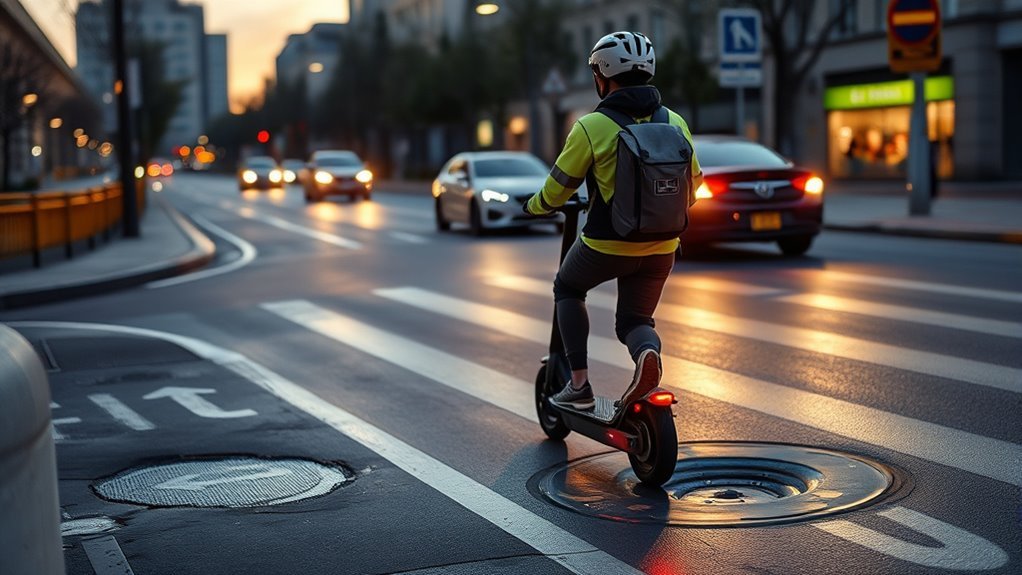
Are electric scooters safe? They can be a practical way to travel short distances, but crashes can cause broken bones, head injuries, and other serious trauma. Small wheels, sudden acceleration, traffic, and uneven roads create risks that riders often underestimate.
Understanding those risks helps you decide who should ride, where riding is allowed, and what precautions matter most.
Quick Answer
Electric scooters carry a real risk of serious injury, particularly for children and inexperienced riders. The American Academy of Pediatrics recommends that children under 16 should not ride motorized scooters. Older riders can reduce risks by wearing helmets, maintaining their scooters, using permitted routes, avoiding distractions, and riding at appropriate speeds.
Last checked: September 28, 2026. Dates and figures were verified against official sources.
Disclosure: As an Amazon Associate I earn from qualifying purchases. Some links on this page are affiliate links, at no extra cost to you.
Are E-Scooters Safe for Kids and Teens?
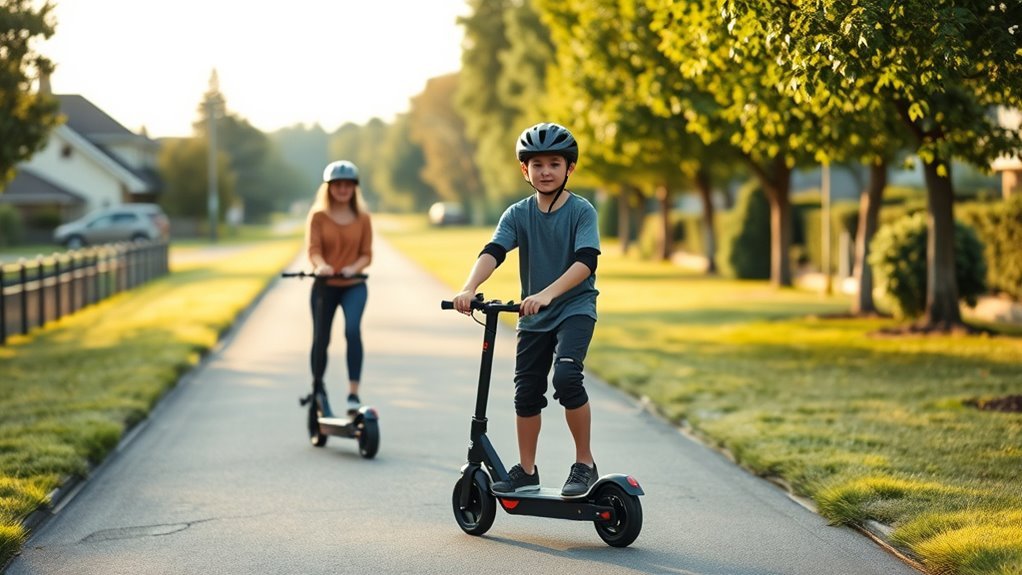
Electric scooters are not recommended for children under 16. Young riders may struggle with rapid acceleration, braking, traffic decisions, and unexpected obstacles.
The American Academy of Pediatrics (AAP) advises that children younger than 16 should not operate or ride motorized scooters.
This recommendation applies even when a younger child appears confident on a traditional kick scooter.
Why Are Younger Riders at Greater Risk?
Many electric scooters can reach 15–20 mph. At these speeds, hitting a pothole, curb, or vehicle can cause a serious injury.
Children must also manage several tasks at once: steering, braking, watching traffic, judging distance, and maintaining balance.
Riding after dark or during busy school commutes adds traffic exposure and visibility problems.
Common injuries include:
- Cuts, scrapes, and facial injuries.
- Wrist, arm, and leg fractures.
- Concussions and other head injuries.
- More severe injuries following motor vehicle collisions.
For younger children, consider walking, cycling, or a properly sized non-motorized scooter with suitable protective equipment instead.
These alternatives still require supervision and safety precautions, but they do not introduce the same motor-driven acceleration.
Can Teenagers Aged 16 and Older Ride Safely?
Older teenagers may ride where local laws permit, but reaching the minimum legal age does not automatically make someone ready.
Before allowing a teenager to ride, assess whether they can:
- Start, stop, and turn without losing control.
- Recognize traffic hazards and follow road rules.
- Use both brakes correctly, where fitted.
- Keep both hands on the handlebars.
- Avoid distractions and make safe decisions independently.
Practice should begin in a permitted, open area away from moving traffic. A parent or guardian should also review the scooter’s instructions and maximum rider weight.
What Makes E-Scooter Crashes So Dangerous?
Electric scooter crashes can cause serious injuries because riders stand upright on a relatively small platform with limited protection.
Unlike occupants of a car, riders have no surrounding structure to absorb an impact. A sudden stop can throw someone forward onto the pavement or into traffic.
What Do Electric Scooter Injury Statistics Show?
U.S. injury research shows that electric scooter crashes are a significant public safety concern.
A 2026 U.S. Consumer Product Safety Commission report estimated 380,000 emergency department visits associated with electric scooters from 2017 through 2024.
The report also identified 206 reported electric scooter-related fatalities during that period. Fatality reporting remains incomplete and may change as additional cases are recorded.
Another study published in JAMA Network Open estimated 56,847 U.S. electric scooter injuries in 2022 and approximately 189,517 injuries from 2017 through 2022.
These are national estimates based on injury surveillance data, not a count of every scooter crash. Different studies also use different reporting periods and methods.
What Causes the Most Dangerous Crashes?
Several factors can turn an otherwise ordinary ride into an emergency.
- Motor vehicle collisions: Cars and trucks can cause severe injuries when drivers fail to notice scooter riders or misjudge their speed.
- Loss of control: Sudden acceleration, hard braking, and sharp turns can throw a rider off balance.
- Road defects: Potholes, loose gravel, drainage covers, and raised pavement can destabilize small wheels.
- Distractions: Texting, checking directions, or listening to loud music reduces awareness and reaction time.
- Poor visibility: Darkness and inadequate lighting make it harder for riders and drivers to notice each other.
- Mechanical problems: Worn brakes, damaged tires, loose handlebars, and steering faults can cause unexpected loss of control.
In the CPSC’s 2024 electric scooter injury follow-up study, 11% of injured people reported that a distraction may have contributed to their crash.
The same study found that 20% reported possible visibility problems, while 32% were carrying or holding something when injured.
These findings highlight why route choice, clear visibility, and keeping both hands available matter.
How to Prevent E-Scooter Injuries
You can reduce electric scooter injury risks by combining protective equipment, routine inspections, and careful riding habits.
No single precaution prevents every crash. However, checking your equipment and adjusting your riding to road conditions can help you avoid common hazards.
1. Wear the Right Helmet and Safety Gear
Wear a properly fitted helmet on every ride, even when traveling a short distance.
A helmet helps absorb impact energy and can reduce the severity of head injuries. However, no helmet guarantees protection against every concussion or traumatic brain injury.
According to the CPSC’s 2024 injury follow-up study, only 18% of injured electric scooter riders were wearing helmets.
That figure describes the study’s injured riders, not the helmet-use rate among all scooter users.
For lower-speed scooter riding, select an appropriate helmet that meets applicable safety standards. The CPSC bicycle helmet guidance explains federal helmet requirements and proper labeling.
Your helmet should sit level on your head, fit snugly, and have its chin strap securely fastened.
Additional protective equipment includes:
- Closed-toe shoes with good traction.
- Elbow and knee pads.
- Reflective clothing or accessories when visibility is poor.
- Appropriate gloves for improved grip and hand protection.
Replace a helmet after a significant impact, even when damage is not obvious.
2. Inspect Your Scooter Before Riding
A quick inspection can reveal problems before they cause a crash.
- Check the brakes: Confirm that they engage smoothly and stop the scooter effectively.
- Inspect the tires: Look for damage, excessive wear, and incorrect pressure.
- Check the handlebars: Make sure they are secure and the steering moves normally.
- Inspect the frame: Look for cracks, loose components, or unusual movement around the folding mechanism.
- Test the throttle: Confirm that it responds normally and returns correctly when released.
- Check the lights: Make sure the headlight, rear light, and any other required equipment work.
Do not ride if a brake, tire, handlebar, or steering component appears damaged.
The CPSC micromobility safety guidance also recommends following manufacturer instructions for charging and using approved batteries and chargers.
Never use a scooter with a damaged battery or a battery pack modified by unqualified personnel.
3. Choose Safer Routes and Riding Conditions
Use permitted bike lanes where available and avoid high-speed traffic whenever possible.
Do not assume sidewalks are legal or suitable for electric scooters. Local rules differ, and riding near pedestrians creates collision risks.
For better control:
- Reduce speed near intersections, driveways, and crowded areas.
- Approach bumps, potholes, and uneven pavement slowly.
- Avoid sudden steering movements and abrupt braking.
- Keep both hands on the handlebars while moving.
- Do not carry another person unless the scooter is specifically designed and legally approved for passengers.
- Never ride while impaired by alcohol, drugs, or medication that affects alertness.
Avoid riding during heavy rain, on icy pavement, or when visibility is too poor to identify hazards safely.
Wet roads can reduce traction and increase stopping distance.
4. Learn How Your Scooter Accelerates and Brakes
Electric scooters do not respond exactly like bicycles or traditional kick scooters.
Practice gentle acceleration and controlled braking before riding around traffic.
Keep your knees slightly bent and distribute your weight naturally over the deck. This can help you respond to minor surface changes without making abrupt movements.
Leave enough space ahead to stop without sudden braking.
What E-Scooter Rules and Helmet Laws Apply?
Electric scooter laws vary by state, city, and sometimes the specific route you use.
Rules may cover minimum age, helmet requirements, speed limits, sidewalks, bike lanes, roadway access, and passenger restrictions.
The following table explains the main requirements riders should understand.
| Rule | Risk | What you should do |
|---|---|---|
| Age limits | Injury and possible penalties | Confirm the legal minimum age and follow pediatric safety recommendations. |
| Sidewalk restrictions | Pedestrian collisions and violations | Ride only where local rules permit. |
| Roadway restrictions | Exposure to faster vehicles | Use approved streets and bike lanes. |
| Helmet requirements | Head injuries and possible penalties | Wear an appropriate helmet on every ride. |
| Speed limits | Loss of control and violations | Follow local speed limits and slow further when conditions require. |
| Local updates | Unexpected rule changes | Review official local requirements before riding in a new area. |
New York City Electric Scooter Rules
New York City provides a useful example of how detailed local scooter regulations can be.
Under the NYC Department of Transportation’s electric scooter rules:
- The riding speed limit is 15 mph.
- Electric scooters may use bike lanes.
- They may use streets with posted speed limits of 30 mph or lower.
- Sidewalk riding is prohibited.
- Helmets are required for riders aged 16 and 17.
- Helmets are recommended for all riders.
These rules apply to New York City. They should not be treated as nationwide requirements.
What About Pennsylvania’s Proposed Helmet Requirements?
Pennsylvania has also considered legislation addressing electric scooter safety.
Senate Bill 1008, introduced during the 2025–2026 legislative session, proposes rules covering low-speed electric scooters.
The proposal would prohibit operation by people under 16 and require helmets for riders under 18, including those aged 16 and 17.
As of September 28, 2026, the bill’s published status remained referred to the Senate Transportation Committee. These proposed requirements should not be confused with enacted statewide law.
Always distinguish between an age recommendation, a rental company’s policy, and a legally enforceable requirement.
When Should You Get Medical Help After a Crash?
Get medical attention after an electric scooter crash if you experience head injury symptoms, significant swelling, severe pain, or difficulty moving an injured body part.
Some injuries are obvious immediately. Others, particularly concussions, may become noticeable hours or days later.
Warning: Call 911 or seek emergency care immediately after a head injury if the person has repeated vomiting, a worsening headache, seizures, increasing confusion, weakness, slurred speech, loss of consciousness, or difficulty staying awake. These may indicate a serious brain injury.
Signs of a Possible Concussion
A concussion is a brain injury caused by a blow or jolt to the head or body.
According to the CDC’s concussion guidance, symptoms can include:
- Headache or pressure in the head.
- Nausea or vomiting.
- Dizziness or balance problems.
- Blurred vision or sensitivity to light.
- Confusion, poor concentration, or memory problems.
- Unusual tiredness or changes in sleeping patterns.
If you suspect a concussion, stop riding and seek medical assessment. Do not return to the scooter while symptoms remain or before a healthcare professional has advised that it is safe.
When Should You Suspect a Fracture or Other Serious Injury?
A broken bone may cause severe pain, swelling, deformity, or difficulty moving or bearing weight.
Seek prompt medical assessment if you notice these symptoms after a crash.
Also seek urgent evaluation after a collision with a motor vehicle, a severe impact, or an injury involving the neck or spine.
Do not try to straighten a visibly deformed limb.
Note: A healthcare professional should assess suspected concussions, fractures, and other significant injuries. An online safety guide cannot determine the severity of an individual injury.
What Should You Do Immediately After a Crash?
- Move away from traffic if you can do so without worsening an injury.
- Check yourself and anyone else involved for serious injuries.
- Call emergency services if someone is seriously hurt or shows dangerous head injury symptoms.
- Avoid unnecessary movement if a neck or spinal injury is suspected.
- Seek medical care for concerning symptoms, even if they develop later.
Do not continue riding a scooter that may have suffered structural, steering, or braking damage during the crash.
Frequently Asked Questions
What Are the Risks of Electric Scooters?
Electric scooters can cause cuts, fractures, concussions, facial injuries, and other serious trauma. Collisions with vehicles, falls, poor road surfaces, excessive speed, and loss of control are important hazards. Wearing protective equipment and following traffic rules can reduce risk, but no riding method eliminates it.
How to Avoid Death Wobble on an E-Scooter?
Reduce the risk of speed wobble by keeping both hands on the handlebars, maintaining correct tire pressure, and avoiding sudden steering movements. If the scooter begins shaking, ease off the throttle and slow down smoothly without abrupt braking. Stop and inspect the tires, wheels, handlebars, and steering assembly before continuing. Do not ride if instability persists.
What Age Should a Kid Get an Electric Scooter?
The American Academy of Pediatrics recommends that children under 16 should not ride motorized scooters. For older teenagers, check local age restrictions and assess their riding skills, judgment, and ability to follow traffic rules. A helmet and suitable protective equipment remain essential.
Are Scooters Good for Autistic Kids?
Non-motorized scooters may offer enjoyable movement and opportunities to practice balance and coordination for some autistic children. Suitability depends on the child’s individual abilities, comfort, and safety needs. Autism alone does not determine riding ability. The recommendation against motorized scooters for children under 16 still applies. Ask a pediatrician or occupational therapist for individualized advice when needed.
Conclusion
Electric scooters can be useful for short trips, but their convenience does not remove the risk of serious injury. Children under 16 should not ride motorized scooters, according to pediatric safety guidance.
For older riders, the essentials are straightforward: wear a helmet, inspect your scooter, follow local laws, and choose routes that limit traffic exposure.
Take every crash seriously, particularly when a head injury is possible. Riding safely means recognizing when conditions are unsuitable and knowing when to stop.
Sources
- American Academy of Pediatrics: Recommended minimum riding age, common injuries, and safety practices.
- U.S. Consumer Product Safety Commission, 2026 Micromobility Report: National injury estimates, reported fatalities, helmet use, and crash characteristics.
- JAMA Network Open, Injuries With Electric vs Conventional Scooters and Bicycles: U.S. electric scooter injury estimates for 2017–2022.
- CPSC Micromobility Information Center: Scooter inspections, safe charging, and battery precautions.
- CPSC Bicycle Helmet Guidance: Helmet standards, labeling, and replacement considerations.
- New York City Department of Transportation: Electric scooter speed, roadway, sidewalk, and helmet requirements.
- Pennsylvania General Assembly, Senate Bill 1008: Proposed age restrictions, helmet requirements, and legislative status.
- CDC HEADS UP, Signs and Symptoms of Concussion: Concussion symptoms and emergency warning signs.
