
Last Updated on August 25, 2026 by Caleb Warren
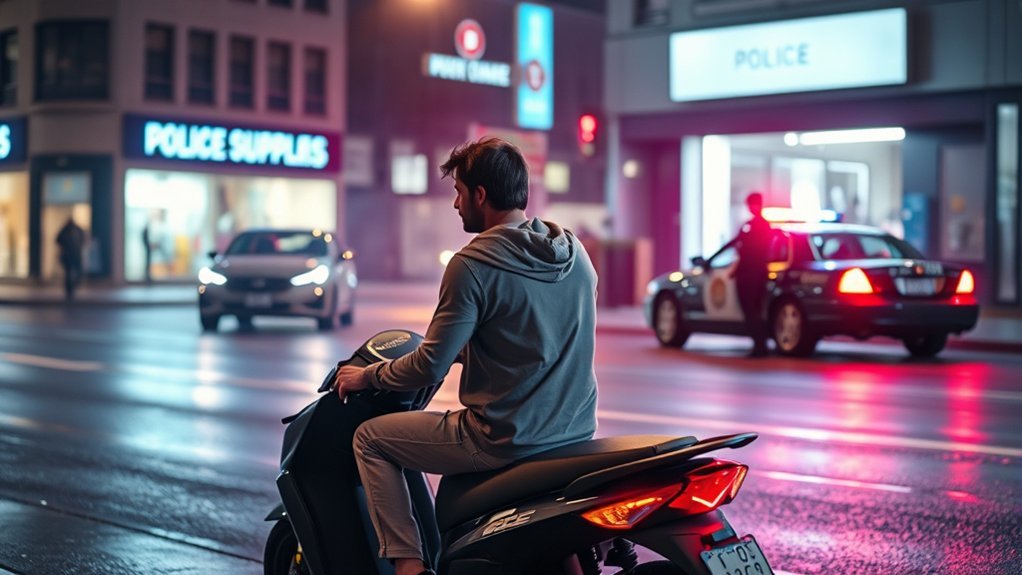
Yes, you can be charged with a DUI (Driving Under the Influence) while riding an electric scooter if you operate it while impaired by alcohol or drugs. In states like Florida, traffic codes define e-scooters as vehicles, making riders subject to the standard 0.08% Blood Alcohol Concentration (BAC) limit, criminal misdemeanor charges, hefty monetary fines, mandatory community service, and potential driver’s license suspension.
Quick Answer
Riding an electric scooter while intoxicated can lead to a DUI arrest in most jurisdictions. Under statutes like Florida’s F.S. § 316.193, an e-scooter is legally classified as a vehicle. An impaired rider faces a criminal record, fines from $500 to $1,000, up to 6 months in jail, mandatory probation, and a driver’s license suspension of at least six months.
Key Takeaways
- Legal Definition: Most state statutes define a “vehicle” broadly to include motorized and electric micromobility devices operated on public roadways.
- Legal Limit: A BAC of 0.08% or higher triggers a per se DUI, but visible impairment or unsafe riding can lead to arrest at any level.
- Driver’s License Impact: A DUI conviction on an e-scooter can result in the court-ordered suspension or revocation of your standard motor vehicle driver’s license.
- Alternative Charges: If DUI statutes do not apply in a specific jurisdiction, officers frequently file charges for public intoxication, reckless endangerment, or disorderly conduct.
- Implied Consent: Refusing a chemical breath or blood test after a lawful arrest can trigger an automatic administrative driver’s license suspension.
Legal Disclaimer: This guide provides general informational analysis of traffic and impaired driving laws. It does not constitute formal legal advice. If you are facing criminal charges, consult a licensed criminal defense attorney in your jurisdiction.
Disclosure: As an Amazon Associate I earn from qualifying purchases. Some links on this page are affiliate links, at no extra cost to you.
Can You Get a DUI on an Electric Scooter?
Many riders mistakenly view dockless rental e-scooters (such as Lime, Bird, or Spin) as safe alternatives to driving home after drinking. However, operating an electric scooter while intoxicated carries the same criminal consequences as driving a passenger car in many states.
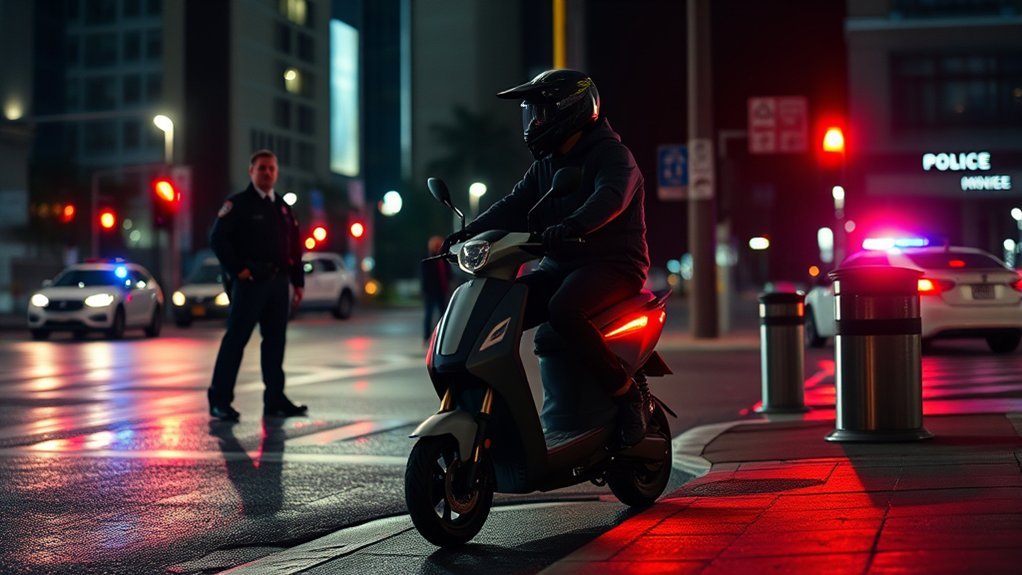
When you ride on a public street, bike lane, or public sidewalk, your legal obligations mirror those of any motorist. Law enforcement officers actively patrol entertainment districts and downtown corridors for erratic micromobility operation. If an officer observes swerving, failure to yield, riding against traffic, or a collision, they possess reasonable suspicion to conduct a traffic stop and initiate a formal DUI investigation.
Warning: You do not need to register an e-scooter or hold a special motorcycle endorsement to receive a DUI. A conviction attaches directly to your permanent criminal record and criminal driving history.
How Florida Law Defines E-Scooters as Vehicles
The foundation of an electric scooter DUI in Florida rests on statutory definitions within the Florida Uniform Traffic Control Law. Under Florida Statute § 316.003, a “vehicle” is defined as:
“Every device in, upon, or by which any person or property is or may be transported or drawn upon a highway, except personal delivery devices, mobile carriers, and devices used exclusively upon stationary rails or tracks.”
Furthermore, Florida Statute § 316.2128 establishes that electric micromobility devices and motorized scooters have all the rights and duties applicable to the rider of a bicycle. Under Florida judicial precedent, bicycles and motorized scooters are explicitly categorized as vehicles for the purpose of the state’s DUI statute, Florida Statute § 316.193.
Because the DUI statute requires only that an individual drive or be in “actual physical control” of a vehicle while impaired, prosecutors do not need to prove you were operating an automobile to secure a conviction.
State-by-State E-Scooter DUI Laws
How an impaired e-scooter ride is prosecuted depends on how each state’s penal and vehicle codes define “motor vehicle,” “vehicle,” or “micromobility device.”
| State | Statute / Classification | DUI Penalty Severity | Driver’s License Impact |
|---|---|---|---|
| Florida | F.S. § 316.193 (Vehicle) | Full Misdemeanor DUI ($500–$1,000 fine, up to 6 months jail) | Mandatory 6-month to 1-year court suspension |
| California | Cal. Veh. Code § 21221.5 | Specific Non-Moving Infraction ($250 fine maximum) | No automatic license points or suspension (unless under 21) |
| Texas | Tex. Penal Code § 49.04 | Public Intoxication (Class C) unless classified under motor vehicle | Generally unaffected unless charged with general motor DWI |
| New York | NY VTL § 1192 & § 114-a | Reckless endangerment, disorderly conduct, or municipal citation | Depends on municipal code enforcement and local jurisdiction |
What Happens After an E-Scooter DUI Stop?
If an officer initiates a stop while you are operating an electric scooter, the encounter follows standard impaired driving investigative procedures established by the National Highway Traffic Safety Administration (NHTSA):
- Reasonable Suspicion Stop: Officers document observable indicators of impairment, such as riding on pedestrian-only plazas, weaving erratically between lanes, running red lights, or falling from the deck.
- Initial Observations: The officer checks for physical signs of intoxication, including the smell of alcohol, bloodshot eyes, slurred speech, and fumbling with identification.
- Standardized Field Sobriety Tests (SFSTs): You may be requested to perform physical coordination evaluations (Horizontal Gaze Nystagmus, Walk-and-Turn, and One-Leg Stand).
- Probable Cause Arrest: If the officer determines your normal faculties are impaired, you will be placed under arrest, handcuffed, and transported to a testing facility or county jail.
- Chemical Testing: At the station, you will be directed to submit to an evidentiary chemical breath, blood, or urine test to measure exact BAC.
Pro Tip: In most states, roadside field sobriety coordination tests (SFSTs) are voluntary. While you must provide identifying information and comply with lawful detention orders, you have the right to politely decline roadside physical agility exercises without criminal penalty.
Implied Consent and Breathalyzer Testing
Under Implied Consent Laws (such as Florida Statute § 316.1932), operating any vehicle upon public roadways implies consent to submit to an approved chemical breath, urine, or blood test once a lawful DUI arrest has occurred.
Refusing an evidentiary chemical test after arrest carries severe administrative and evidentiary consequences:
- Automatic Administrative Suspension: In Florida, a first refusal results in a mandatory 1-year administrative driver’s license suspension; a second refusal is an independent first-degree misdemeanor resulting in an 18-month suspension.
- Consciousness of Guilt Evidence: Prosecutors can introduce your refusal at trial as evidence that you knew you were intoxicated.
- Warrant for Blood: In crashes involving serious bodily injury or death, law enforcement may obtain a search warrant to draw blood forcibly.
Florida E-Scooter DUI Penalties Breakdown
A DUI conviction on an e-scooter under Florida Statute § 316.193 results in the exact same mandatory criminal sentencing guidelines as driving a car intoxicated.
| Sanction Level | First Offense | Second Offense (Within 5 Yrs) | Aggravated Factors (BAC ≥ 0.15% / Crash) |
|---|---|---|---|
| Monetary Fine | $500 to $1,000 | $1,000 to $2,000 | $1,000 to $4,000+ |
| Jail Exposure | Up to 6 months | Up to 9 months (10-day mandatory min.) | Up to 9–12 months |
| License Revocation | 6 months to 1 year | 5-year minimum revocation | Extended court-ordered revocation |
| Community Service | 50 hours mandatory | Discretionary / Additional terms | 50+ hours mandatory |
| Probation & Education | Up to 1 yr total (combined with jail) + DUI School | 1-year probation + Level II DUI School | Substance abuse evaluation & treatment |
| Ignition Interlock | Optional (Judicial discretion) | Mandatory at least 1–2 years | Mandatory minimum 6 months (even on 1st offense) |
Will an E-Scooter DUI Affect Your Driver’s License?
Yes. A common misconception is that because an e-scooter does not require a driver’s license to operate, a conviction cannot impact your regular motor vehicle driving privileges. This is incorrect.
When you are convicted of DUI in criminal court under statutes like Florida’s § 316.193, the presiding judge is legally required to order the Department of Highway Safety and Motor Vehicles (FLHSMV) to revoke or suspend your driver’s license. The suspension applies to all motor vehicles you are licensed to drive.
Reinstatement Requirements
Regaining full driving privileges after an e-scooter DUI requires completing standard state reinstatement procedures:
- Enrollment and Completion of DUI School: Completion of an approved 12-hour (first offense) or 21-hour (multiple offense) course and any recommended psychosocial substance abuse evaluations.
- Payment of Reinstatement & Court Fees: Paying all court-ordered fines, mandatory administrative restoration fees ($130+), and clerk costs.
- SR-22 or FR-44 High-Risk Insurance: In states like Florida and Virginia, DUI convictions require filing proof of high-limit liability insurance (such as an FR-44 certificate requiring $100k/$300k/$50k coverage) maintained continuously for up to 3 years.
- Ignition Interlock Installation: Installing a certified breathalyzer device on your primary passenger automobile if mandated by court order or high BAC thresholds.
Common Legal Defenses for Electric Scooter DUI Charges
Defending against an e-scooter DUI involves strategies distinct from typical passenger vehicle cases:
- Challenging the Definition of “Vehicle”: In jurisdictions with ambiguous statutory language distinguishing “electric personal assistive mobility devices” from motorized vehicles, defense counsel can challenge whether the device qualifies under the DUI statute.
- Operation on Private Property: DUI statutes generally apply to public highways, roads, and publicly accessible property. If the scooter was operated on private, gated residential land without public access, charges may be challenged.
- Inherent Instability vs. Intoxication: Small-wheeled e-scooters are notoriously unstable over potholes, curbs, and wet asphalt. Defense attorneys frequently demonstrate that swerving or minor falls were caused by road hazards and equipment flaws rather than physical impairment.
- Flawed Field Sobriety Testing: Standardized roadside coordination tests are designed and validated specifically for individuals walking on flat pavement without pre-existing balance fatigue. The physical exertion and vibration of riding a scooter can mimic fatigue or poor coordination.
- Breathalyzer Calibration & GERD Errors: As in motor vehicle cases, breath testing instruments must adhere to rigorous monthly maintenance logs, calibration checks, and 20-minute continuous observation periods.
Other Charges for Riding While Impaired
Even in jurisdictions where prosecutors face hurdles charging an e-scooter rider under standard vehicle DUI statutes, law enforcement can pursue severe alternative misdemeanor and criminal citations:
| Criminal Charge | Factual Basis & Trigger | Typical Sanctions |
|---|---|---|
| Public Intoxication / Disorderly Intoxication | Being visibly intoxicated in a public venue to the degree that you endanger public safety or cause a public disturbance (F.S. § 856.011). | Fines up to $500, up to 60 days in jail, criminal misdemeanor record. |
| Reckless Endangerment / Reckless Driving | Operating the scooter with willful or wanton disregard for the safety of pedestrians, cyclists, or motorists. | Misdemeanor criminal prosecution, license points, mandatory restitution. |
| Civil Negligence / Battery | Crashing into a pedestrian while impaired, causing fractures, concussions, or property damage. | Personal civil liability, punitive damages (auto/homeowners insurance typically denies coverage). |
How to Stay Safe Before You Ride
Preventing an arrest, traumatic head injury, or costly civil lawsuit comes down to proactive planning before you consume alcohol:
- Use Rideshare or Designated Drivers: Always plan transportation in advance. An Uber, Lyft, taxi, or designated driver costs a fraction of the average $10,000+ total price of a DUI arrest and defense.
- Never Treat E-Scooters as Walk-Home Alternatives: Standing on a motorized platform moving at 15–20 mph requires rapid reflexes, balanced inner-ear equilibrium, and precise motor control—the exact neurological functions alcohol degrades first.
- Wear a Certified Helmet: Head trauma accounts for the majority of severe e-scooter hospitalizations. Wear an approved bicycle or micromobility helmet whenever riding.
- Obey Local Municipal Ordinances: Many cities prohibit riding on sidewalks or enforce mandatory curfews and geofenced speed reductions in entertainment districts during nighttime hours.
Frequently Asked Questions
Can you lose your driver’s licence for riding an electric bike or e-scooter drunk in the UK?
Yes. Under the UK Road Traffic Act 1988 (Section 4), riding a mechanically propelled vehicle while unfit through drink or drugs on a road or public place is an offense. For e-scooters (which are categorized as motor vehicles in the UK), a conviction can result in a mandatory driving disqualification (license loss), substantial financial penalties, and even imprisonment.
In what states can you get a DUI on a bicycle or e-scooter?
You can be charged with a DUI on a bicycle or e-scooter in states where DUI laws apply to “vehicles” rather than strictly “motor vehicles.” States that actively prosecute cycling and scootering DUIs include Florida, California, Oregon, Washington, and Ohio. States like Texas generally charge impaired cyclists under public intoxication statutes rather than standard motor DWI.
What is the most common penalty for a first-time electric scooter DUI?
For a first-offense e-scooter DUI in states like Florida, common penalties include a $500 to $1,000 fine, 50 hours of mandatory community service, up to 1 year of probation, required completion of an approved DUI education course, and a 6-month to 1-year driver’s license suspension.
Can I legally ride a privately owned electric scooter in the UK?
No. In the UK, it is currently illegal to ride privately owned e-scooters on public roads, cycle lanes, or pavements. They can only be legally operated on private land with the landowner’s express permission. The only electric scooters permitted on public roads in the UK are government-backed rental trial schemes.
Does auto insurance cover accidents or DUI damages on an electric scooter?
Generally, no. Standard personal auto insurance policies exclude coverage for two-wheeled motorized vehicles not listed on the policy declaration. Furthermore, homeowner and renter liability policies typically exclude intentional illegal acts and motorized vehicles. If you cause injury while riding drunk, you are personally liable for all medical bills and property damages.
Sources
- Florida Legislature — Florida Statute § 316.003: Uniform Traffic Control Definitions
- Florida State Senate — Florida Statute § 316.193: Driving Under the Influence Penalties & Provisions
- California Legislative Information — California Vehicle Code § 21221.5: Operation of Motorized Scooter Under the Influence
- National Highway Traffic Safety Administration (NHTSA) — Standardized Field Sobriety Testing Guidelines & Protocol
- UK Legislation Government Portal — UK Road Traffic Act 1988: Mechanically Propelled Vehicles Regulations
Conclusion
Riding an electric scooter while intoxicated is not a harmless shortcut—in Florida and many other jurisdictions, it is a criminal act with consequences identical to driving a car under the influence. A single impaired ride can result in handcuffs, thousands of dollars in fines, a permanent criminal record, and the loss of your driver’s license. If you have consumed alcohol or drugs, leave the scooter parked and choose rideshare or public transit to protect your future, your finances, and the safety of everyone on the road.
