
Last Updated on September 26, 2026 by Daniel Globe
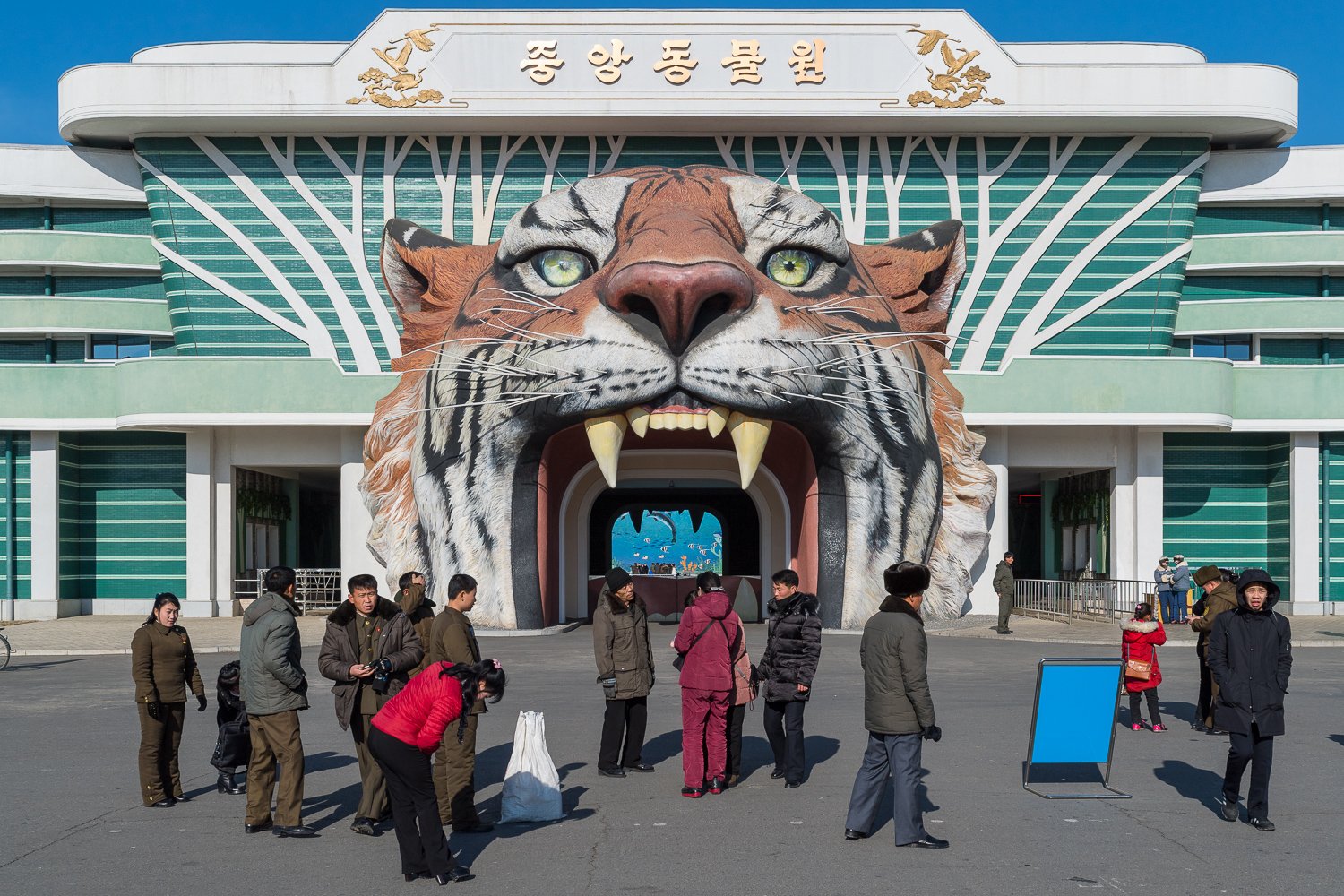
Most national zoos are known for their animals. Pyongyang Central Zoo is also known for the diplomatic gifts, trained animal acts, and public appearances connected to North Korea’s leadership. Set near Taesong Mountain in the capital, it offers an unusual look at how a zoo can serve several purposes at once.
Quick Answer
Pyongyang Central Zoo, also called Korea Central Zoo, opened in 1959. It is known for animals presented as diplomatic gifts, including elephants and dogs, and for historic acts involving a smoking chimpanzee. Its history also raises animal welfare questions. Some widely repeated stories are documented; others remain allegations or refer to events that never went ahead.
What Is Pyongyang Central Zoo, and When Did It Open?
Pyongyang Central Zoo opened in April 1959 at the foot of Taesong Mountain. The Academy of Korean Studies identifies it as North Korea’s largest zoo and describes animal exhibits, an aquarium, a veterinary hospital, and an area for animals received as gifts.
The zoo has often been described as housing roughly 5,000 animals. That figure should not be mistaken for a verified current count: the Academy’s reference describes approximately 4,000 animals in an earlier account, and published totals differ by date.
An Associated Press report from 2016 says the zoo began with 50 badgers, according to its official history. The site underwent a major renovation beginning in 2014 and reopened in 2016. Alongside more familiar exhibits, visitors could see a dog pavilion and signs explaining which animals had been presented as gifts.
How Did Animal Gifts Become Part of the Zoo’s Identity?
Diplomatic animal gifts have shaped the collection since its early years. Rather than treating an elephant or bird solely as a zoo acquisition, exhibits have also identified the person or country that presented it.
Elephants and pandas from the zoo’s early years
Vietnamese leader Ho Chi Minh donated elephants in 1959. Zoo accounts say their descendants continued to live there years later. Historical accounts also describe two pairs of giant pandas arriving from Beijing Zoo, beginning in the 1960s, although the precise transfer dates and the claim that none remained after 1980 need stronger documentation.
Exchanges with Japan and South Korea
Accounts of an exchange with a Kyoto zoo in the 1980s say water deer and wolves went to Japan, while a llama and a red kangaroo came to Pyongyang. The specific exchange has not been confirmed here against a primary zoo record.
The better-documented dog exchange took place around the 2000 inter-Korean summit. South Korean President Kim Dae-jung presented Kim Jong Il with Jindo dogs named Peace and Unification. Kim Jong Il gave the South a pair of Pungsan dogs in return, as a contemporary summit report described. The Jindo pair reportedly later had puppies. The direction of the gifts matters: the Jindos went north, and the Pungsans went south.
The Zimbabwe shipment that did not go ahead
Not every proposed animal transfer became an arrival. In 2010, Zimbabwe planned to send wildlife captured around Hwange National Park to North Korea, including two young elephant calves. Conservation groups objected, particularly over the calves’ separation from their mothers and the proposed captive conditions.
The shipment was canceled. Elephant conservation organization ElephantVoices reported that the calves were placed in specialist care and other captured animals were released or relocated within Zimbabwe. The proposed transfer should not be listed as a completed delivery to Pyongyang Central Zoo.
The Russian animal gift in 2024
The gift tradition continued in November 2024. Russia sent more than 70 animals and birds from Moscow Zoo to Pyongyang, including a lion, bears, yaks, ducks, and cockatoos. The animals traveled by plane with zoo personnel and other officials, according to the Associated Press’s account of the transfer.
North Korean state reports have continued to highlight gifted animals. Such announcements document an arrival or presentation, but they do not, by themselves, establish how an animal fares over time.
Which Animals Made Pyongyang Central Zoo Famous?
Its best-known resident may be Azalea, also called Dallae, a chimpanzee filmed smoking cigarettes. Reports from 2016 described trainers lighting cigarettes for her or providing a lighter. The act attracted international attention, but it should be understood as a documented historical performance, not a confirmed attraction available today.
An Associated Press account of Azalea described the smoking behavior and the public reaction. Later accounts indicated that the smoking act was stopped, although its present status cannot be independently confirmed from current visitor observations.
Other reported acts included a dog using an abacus, monkeys playing basketball, and doves taking part in a figure-skating-style routine. Older accounts also describe a parrot trained to repeat praise for Kim Il Sung. These reports help explain the zoo’s reputation for spectacle; they should not be presented as a current performance schedule.
The zoo’s dog pavilion was another unusual feature. In 2016, visitors could see breeds commonly kept as pets alongside Korea’s Pungsan dog. Signs identified several dogs as gifts to, or from, members of the country’s leadership.
Why Is the Zoo Closely Associated With North Korea’s Leaders?
The zoo has long been used for official visits and public displays of donated animals. Its gift labels preserve a record of exchanges involving foreign leaders and North Korea’s ruling family.
After Kim Il Sung died in 1994, his pet dogs were reportedly transferred to the zoo. State media later publicized Kim Jong Il visiting the grounds in 2008. Kim Jong Un and his wife have also appeared during publicized zoo visits, including around the renovated facility’s opening.
These appearances establish the zoo’s place in official public life. They do not establish the motives behind any particular visit, nor do they provide an independent measure of animal welfare.
What Animal Welfare Concerns Have Been Reported?
The zoo’s unusual acts and gift history have also prompted questions about care, breeding, and the use of animals for entertainment. It is worth separating evidence about particular animals and past events from claims about the entire zoo today.
Amur leopards and uncertain breeding records
The Amur leopard, also called the Far Eastern leopard, is critically endangered in the wild. A published genetic conservation study discussed ten leopards brought from Pyongyang to European zoos and said reliable information about their origins was lacking.
That gap matters because conservation breeding depends on knowing which animals are related and whether they belong to the intended population. Historical accounts have also raised concerns about inbreeding and reported physical or reproductive abnormalities in Pyongyang-linked leopard lines. Those specific allegations should not be treated as a verified diagnosis of the zoo’s current animals without breeding and veterinary records.
Allegations of staged animal fights
A 2006 report described a North Korean film said to show caged animals of different species being provoked into fighting. The report has been repeated in accounts of the zoo, but the original film and evidence identifying the staff responsible have not been independently established here.
If animals were deliberately made to fight, that would be a serious welfare concern. The distinction is that a reported film is not, on its own, proof of a particular zoo employee’s conduct.
Accounts of underfed performing animals
Another circulating visitor account describes zebras as extremely thin and says animals were still made to perform bicycle tricks. The underlying firsthand account could not be independently located, so these details remain unverified rather than established observations of present conditions.
The smoking-chimpanzee footage, by contrast, provides direct evidence of a particular trained act in 2016. Neither that footage nor older visitor descriptions can show what every enclosure looks like now.
Can Tourists Visit Pyongyang Central Zoo?
The zoo is a known attraction in Pyongyang, but access for foreign visitors depends on North Korea’s entry rules and whether a permitted itinerary includes it. Limited tourism activity in 2025 did not amount to unrestricted access to the country or the zoo.
No reliable current public admission price, daily opening schedule, or general foreign-visitor access arrangement could be confirmed for the zoo. Avoid treating an older tour itinerary as proof that an individual visit can be booked today.
For U.S. readers, the U.S. State Department advises against travel to North Korea. U.S. passports cannot be used for travel to, in, or through the country without special validation, which is granted only in limited circumstances.
How Have Outside Visitors Described the Zoo?
Outside accounts vary by year and by what a visitor was allowed to see. Some older guidebook descriptions were sharply critical of the exhibits, while reporting from the renovated zoo in 2016 described new facilities and a busy dog pavilion.
That difference is a reason to date every observation. An account from before the renovation is useful history, but it cannot stand in for a current inspection.
A separate caution concerns rumors. Speculation in 2025 that people at a North Korean attraction were paid actors concerned the Wonsan-Kalma coastal resort. It is not verified evidence that ordinary visitors at Pyongyang Central Zoo were actors. Claims about staged scenes need to be tied to the correct place and supported by more than speculation.
The Bottom Line
Pyongyang Central Zoo is more than a collection of animal enclosures. Its documented history brings together diplomatic gifts, distinctive exhibits, official visits, and unresolved welfare questions.
The useful way to understand it is to keep those strands separate: confirm the dates and transfers, treat reported performances as historical unless shown otherwise, and distinguish evidence of animal care from both official publicity and unverified visitor stories.
Sources
- Academy of Korean Studies: Opening date, location, and historical zoo description.
- Associated Press, via CBS News: Early history, gift animals, renovation, and dog pavilion.
- Los Angeles Times: Direction and names of the 2000 summit dog gifts.
- Associated Press: Russia’s November 2024 animal transfer.
- Associated Press, via Los Angeles Times: Azalea’s documented smoking act.
- ElephantVoices: Cancellation of the proposed Zimbabwe shipment and care of the elephant calves.
- Comptes Rendus Biologies: Genetic conservation research on Pyongyang-derived leopards.
- Der Standard: Location and context of the separate 2025 tourist rumor.
- U.S. Department of State: Travel advisory and U.S. passport restrictions.

