
Last Updated on November 4, 2026 by Daniel Globe
Few sights match a volcano up close, whether it is lava fountaining into the night sky or a quiet crater steaming above a sea of clouds. The good news is that several of the world’s most famous volcanoes are easy to visit, with paved roads, marked trails and official viewing areas.
This guide covers the best places to see volcanoes, from active eruptions in Hawaiʻi and Iceland to Italy’s legendary peaks, Indonesia’s Mount Bromo, Costa Rica’s Arenal and the Yellowstone caldera. For each one you will learn what you can actually see, the current access rules as of late 2026, and when to go.
Quick Answer
The best places to see volcanoes are Hawaiʻi Volcanoes National Park for Kīlauea’s lava fountains, Iceland’s Reykjanes Peninsula, Italy’s Etna, Stromboli and Vesuvius, Indonesia’s Mount Bromo, Costa Rica’s Arenal and Yellowstone in the US. Activity changes quickly, so check the official volcano observatory and park alerts before you go and always stay in designated viewing areas.
Key Takeaways
- Kīlauea in Hawaiʻi has been erupting in short, spectacular fountaining episodes, viewed from overlooks along Crater Rim Drive.
- Iceland’s Reykjanes Peninsula remains at an elevated alert level, with another eruption considered likely but impossible to time.
- In Italy, Vesuvius crater tickets are sold online only, Etna needs an authorized guide above about 2,500 m, and Stromboli hikes are limited to guided groups.
- Mount Bromo entry must be booked online in advance, and Arenal’s summit is off-limits to hikers.
- Volcanic gas, falling tephra and unstable ground are the main hazards. Never cross closure lines.
Hawaiʻi Volcanoes National Park, USA
If you want to see lava, start here. Kīlauea, on Hawaiʻi Island, has been erupting in episodes inside Halemaʻumaʻu crater, with bursts of lava fountaining that can last hours before the volcano pauses to recharge. During episode 55 on 17 October 2026, the tallest fountain reached about 720 feet (220 m). As of 31 October, the eruption was paused and the USGS Hawaiian Volcano Observatory forecast the next episode for 3–10 November 2026, with the alert level at Advisory.
The eruption itself is in a closed area of the park, but overlooks along Crater Rim Drive give excellent views. The National Park Service highlights Uēkahuna, Kīlauea Overlook, Kūpinaʻi Pali and Keanakākoʻi as viewing areas.
- Go early or late. Parking lots can fill by 10 am, and the glow is most dramatic after dark.
- Check before you drive. Look at the USGS webcams and daily update, since an episode may last only a few hours.
- Pack properly. Bring a headlamp, rain jacket, warm layers, long sleeves and eye protection against tephra (fine volcanic glass).
- Watch air quality. Volcanic gas can be hazardous near vents, especially for people with heart or breathing problems.
Hawaiʻi’s weather and crowds vary by season, so read our best time to travel to Hawaii guide and our tips on what to wear hiking in Hawaii before you go.
Iceland: Reykjanes Peninsula and Inside a Volcano
Iceland sits on the Mid-Atlantic Ridge, and since 2021 the Reykjanes Peninsula near Keflavík Airport has produced a string of fissure eruptions. The most recent episode along the Sundhnúkur crater row began in July 2025. In its 27 October 2026 update, the Icelandic Met Office said magma continues to accumulate beneath Svartsengi, an eruption remains the most likely outcome, and past warning times have ranged from about 20 minutes to just over four hours. The area is at alert level orange, and Grindavík remains in a considerable hazard zone.
If an eruption starts during your trip, authorities decide whether any viewing areas open. Follow their instructions, do not drive into closed zones and expect conditions to change by the hour.
Þríhnúkagígur: go inside a dormant volcano
For a guaranteed volcano experience, the Inside the Volcano tour at Þríhnúkagígur lowers you into a magma chamber about 213 m (700 ft) deep. The volcano last erupted around 4,000 years ago. It is in the Bláfjöll mountains, roughly 20 to 30 minutes’ drive from Reykjavík, followed by a hike of about 3 km across a lava field. Tours run only in summer, generally May to October.
Plan around daylight and weather with our guide to the best time to travel to Iceland, and if you are visiting in winter, combine volcanic landscapes with the aurora using our northern lights timing guide.
Italy: Etna, Stromboli and Vesuvius
Italy has Europe’s most famous volcanoes, and each offers a very different experience.
Mount Etna, Sicily
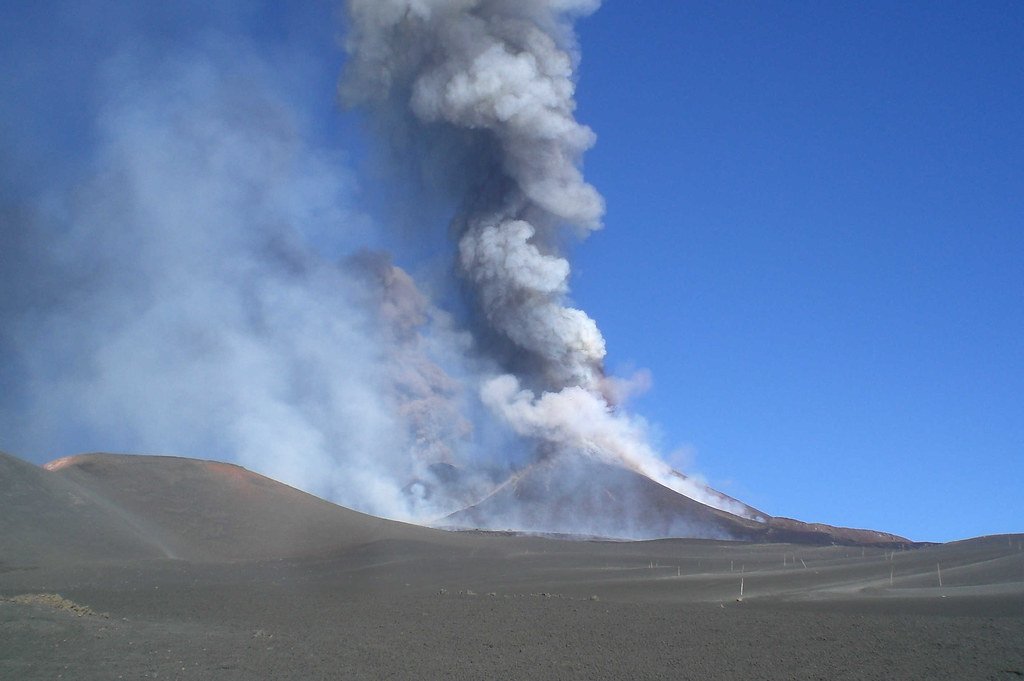
Etna is Europe’s highest active volcano and erupts frequently. You can reach the upper slopes from two bases: Rifugio Sapienza (about 1,910 m) on the south side, served by a daily bus from Catania, and Piano Provenzana (about 1,800 m) on the north side. A cable car climbs from Rifugio Sapienza to around 2,500 m. Above that height you must be with an authorized volcanological guide, and the summit craters are often closed during periods of activity. April, May, September and October offer the most comfortable hiking weather.
Stromboli, Aeolian Islands
Stromboli has erupted almost continuously for centuries, throwing small bursts of lava from its summit craters. Hiking rules are set by local ordinance and change with activity. In recent seasons, guided groups have been allowed up to observation terraces at about 400 m, while the summit area has been off-limits to the public. Book with a licensed volcanological guide and confirm the current limit before you travel.
Mount Vesuvius, near Naples
Vesuvius, the volcano that buried Pompeii and Herculaneum in 79 AD, is the easiest of the three to visit. The Gran Cono trail to the crater rim is managed by Vesuvius National Park, and tickets are sold online only, for timed entry slots. Opening hours vary by season, from 9:00–15:00 in winter months to 9:00–18:00 in July and August. Access closes automatically on days with orange-level weather alerts, and tickets for closed slots are refunded.
Mount Bromo, Indonesia
Mount Bromo, in East Java’s Bromo Tengger Semeru National Park, is famous for sunrise views of its smoking crater rising out of a vast caldera floor, often called the Sea of Sand. Most visitors ride a jeep before dawn to a viewpoint, then cross the caldera and climb steps to the crater rim.
Entry must be booked online through the national park’s official portal, and there are no gate sales. A daily visitor cap applies, so popular sunrise dates can sell out. A wildfire closed the park from 8 August 2026 until it reopened on 20 August, a reminder to check status shortly before you travel and to follow fire rules such as no campfires or discarded cigarettes.
Arenal Volcano, Costa Rica
Arenal’s near-perfect cone towers over La Fortuna and Lake Arenal. It erupted in 1968 after centuries of quiet and is now in a resting phase. You cannot climb it: hiking to the summit is prohibited because of gas and steam, and nearby Cerro Chato is also closed. Instead, walk the national park’s trails, such as the Coladas de Lava (Lava Flow) trail to a viewpoint over old flows, then soak in one of La Fortuna’s volcanic hot springs. Clouds often hide the summit, so go early in the day; February to April and September to October are good times to visit.
Yellowstone Caldera, USA
Yellowstone is a volcano you experience through its plumbing rather than its lava. The heat from its magma system powers the park’s famous geysers, steaming vents and colorful hot springs. The USGS keeps Yellowstone at a Normal alert level, but small hydrothermal explosions do happen. One destroyed part of the Biscuit Basin boardwalk in July 2024, and another small explosion struck the same basin in June 2026. Biscuit Basin remains closed, and everywhere else you must stay on boardwalks and marked trails, since the crust near hot springs can be thin and the water is scalding.
Mount Fuji, Japan
Japan’s iconic peak is an active volcano that has been quiet for centuries. You can admire it from the Fuji Five Lakes area year-round or climb it in summer. On the popular Yoshida Trail, the 2026 season ran from 1 July to 10 September, with a fee of 4,000 yen per person, an equipment check at the 5th Station and an overnight gate closure from 14:00 to 03:00 for climbers without a mountain hut booking. Check the official Mt. Fuji climbing site for next season’s rules.
Volcano Destinations at a Glance
| Destination | Status | What you can see | Best time |
|---|---|---|---|
| Kīlauea, Hawaiʻi | Erupting in episodes | Lava fountains and crater glow from overlooks | Year-round; check eruption updates |
| Reykjanes, Iceland | Elevated alert | Fresh lava fields; eruptions when they occur | Summer for Inside the Volcano (May–Oct) |
| Etna, Sicily | Frequently active | Upper slopes, craters with a guide | April–May, September–October |
| Stromboli, Italy | Persistently active | Guided hikes to about 400 m | Check current ordinances |
| Vesuvius, Italy | Quiet | Crater rim walk | Year-round, timed tickets |
| Mount Bromo, Indonesia | Active | Sunrise over the caldera, crater rim | Book online in advance |
| Arenal, Costa Rica | Resting | Cone views, lava-flow trails, hot springs | February–April, September–October |
| Yellowstone, USA | Normal alert | Geysers and hot springs | Late spring to early fall |
| Mount Fuji, Japan | Quiet | Summit climb or lake views | July–early September to climb |
How to Visit Volcanoes Safely
- Use official sources. Check the USGS volcano notices for Hawaiʻi and Yellowstone, the Icelandic Met Office for Iceland, and park or civil protection notices in Italy and Indonesia on the day you go.
- Respect closures. Rope lines and barriers mark gas, cliff collapse and hidden cracks that you cannot see.
- Mind the gas. Sulfur dioxide and volcanic smog can trigger breathing problems; leave if you feel unwell.
- Protect your eyes and lungs. Glasses and a dust mask help with tephra and ash.
- Hire licensed guides where they are required, such as Etna’s high slopes and Stromboli.
- Plan for weather. Summits are often colder, windier and cloudier than the towns below.
Frequently Asked Questions
What are the best places to see volcanoes?
Top choices are Hawaiʻi Volcanoes National Park for Kīlauea’s lava fountains, Iceland’s Reykjanes Peninsula and the Þríhnúkagígur magma chamber, Italy’s Etna, Stromboli and Vesuvius, Indonesia’s Mount Bromo, Costa Rica’s Arenal, Yellowstone and Mount Fuji. Hawaiʻi gives you the best odds of seeing lava from a safe, official viewpoint, while Vesuvius and Arenal are the easiest to visit without special preparation.
What is the most famous volcano in Italy?
Mount Vesuvius is Italy’s most famous volcano because its eruption in 79 AD buried Pompeii and Herculaneum. You can walk the Gran Cono trail to its crater rim with a timed ticket bought online. Mount Etna in Sicily is Italy’s most active and Europe’s highest active volcano, and Stromboli in the Aeolian Islands is known for its near-constant small eruptions.
Can you see lava in Hawaii right now?
Kīlauea has been erupting in separate fountaining episodes inside Halemaʻumaʻu crater, with pauses of days or weeks between them. As of 31 October 2026 the eruption was paused, and the USGS forecast the next episode for 3–10 November 2026. Check the USGS Hawaiian Volcano Observatory updates and park webcams the day you go, and view from the official overlooks along Crater Rim Drive.
Is it safe to visit Iceland during a volcanic eruption?
Most of Iceland is unaffected by Reykjanes eruptions, and flights and tours usually continue normally. The risk is concentrated near the Sundhnúkur crater row and Grindavík, which remain in hazard zones. If an eruption begins, only enter areas that authorities have opened, follow closures and expect conditions to change quickly. Check the Icelandic Met Office for the latest hazard assessment before you travel.
Can you hike to the top of Mount Etna?
You can hike Etna’s upper slopes, but above about 2,500 m you must be accompanied by an authorized volcanological guide, and the summit craters are often closed when the volcano is active. Most visitors start at Rifugio Sapienza on the south side, take the cable car to around 2,500 m, then continue on foot or by 4WD with a guide when conditions allow.
Can you climb Arenal Volcano?
No. Hiking to Arenal’s summit is prohibited because of toxic gases and hot steam, and the neighboring Cerro Chato is also closed. You can still get great views from trails in Arenal Volcano National Park, such as the Lava Flow trail, and from private reserves around La Fortuna. Go early in the day for the best chance of a cloud-free summit.
Sources
- USGS Hawaiian Volcano Observatory – Kīlauea notice, 31 October 2026 – Episode 55 details, eruption pause, episode 56 forecast and hazards.
- National Park Service – Hawaiʻi Volcanoes eruption viewing – Viewing areas, parking, gear and safety advice.
- Icelandic Met Office – Situation on the Reykjanes Peninsula – Magma accumulation, alert level, warning times and Grindavík hazard zone.
- Vesuvius National Park – Il Gran Cono – Online-only tickets, timed slots, seasonal hours and weather closures.
- Lonely Planet – What to know before hiking Mt Etna – Guide requirement above 2,500 m, starting points, cable car and best months.
- USGS Yellowstone Volcano Observatory – July 2026 update – Normal alert level, June 2026 Biscuit Basin explosion and closure.
- Official Mt. Fuji Climbing site – Yoshida Trail 2026 – Climbing season dates, 4,000 yen fee, gate hours and equipment check.
