
Last Updated on September 10, 2026 by Daniel Globe
Keep your electric scooter battery between 20% and 80% for daily use, and charge it with the manufacturer’s charger in temperatures from 10°C to 30°C. Store it at about 50% charge in a cool, dry place if you won’t use it for a while. Inspect the pack regularly for swelling, corrosion, or loose terminals, and clean it gently with a damp cloth. Smooth riding habits can stretch battery life even further — and because lithium-ion batteries carry real fire risk if mishandled, a few safety habits matter just as much as charging habits.
Quick Answer
Charge your e-scooter battery between 20% and 80% with the original charger, keep temperatures between 10°C and 30°C, store it around 50% when idle, and never leave it charging unattended or overnight. Ride smoothly and inspect the pack often for swelling or corrosion.
Key Takeaways
- Keep daily charge between 20% and 80%; avoid frequent full charges and deep drains.
- Use only the manufacturer’s charger, at room temperature, and never charge unattended or while sleeping.
- Store the battery at roughly 50% charge in a cool, dry place if you won’t ride for weeks.
- Buy and maintain a scooter certified to UL 2272 for battery and electrical-system safety.
- Never throw a lithium-ion battery in the trash or curbside recycling — take it to a hazardous-waste or battery recycling center.
Disclosure: As an Amazon Associate I earn from qualifying purchases. Some links on this page are affiliate links, at no extra cost to you.
What Electric Scooter Battery Basics Matter Most?
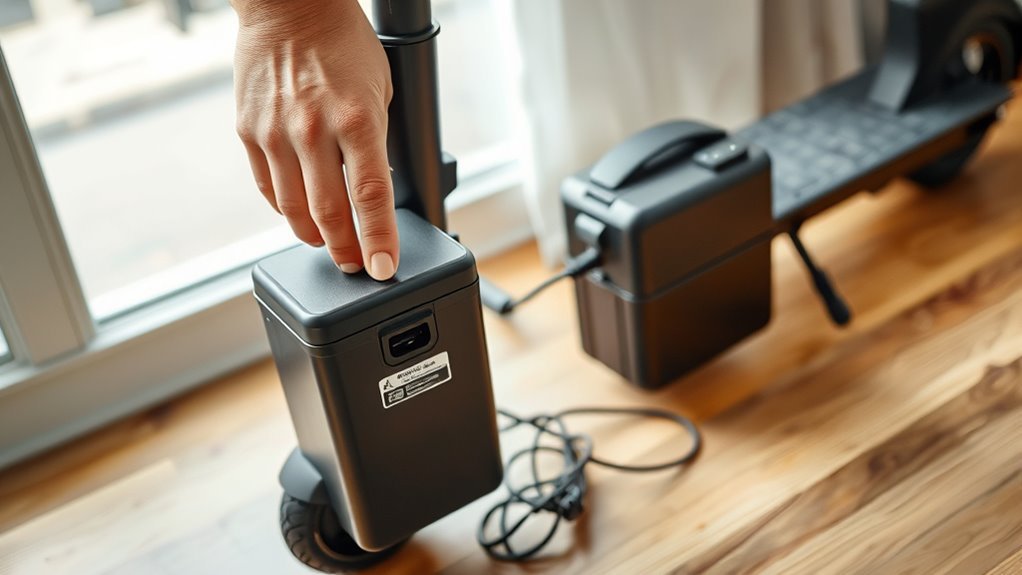
Because battery care starts with how the pack is built and used, you should know that most electric scooters rely on lithium-ion batteries, which are light, energy-dense, and typically last 300 to 1,000 charge cycles depending on quality and how they’re charged. According to Battery University’s research on lithium-based batteries, cells charged to a full 4.20V per cell typically deliver 300–500 cycles, while capping the charge lower can roughly double or triple that figure — which is exactly why the 20–80% habit below matters so much. You get the best battery lifespan when you keep charge between 20% and 80%, because deep drains and constant 100% fills stress the cells. This chemistry gives you strong energy density, so your scooter can deliver useful range without excess weight. Still, real-world output depends on rider weight, terrain, and how hard you push the motor. Uphill routes and heavier loads pull more current and reduce range faster. You should also inspect the pack often: look for swelling, corrosion, loose terminals, or dirt that could interrupt power flow. Clean contacts and damage checks protect performance and keep your ride reliable.
How Should You Charge an Electric Scooter Battery?
Charge your electric scooter battery with the manufacturer’s charger, or a fully compatible aftermarket one, to protect the pack and keep charging safe. Charge it at room temperature, ideally between 10°C and 30°C, because these ideal temperatures reduce cell stress and support stable performance. Never charge below 0°C, since cold charging can create chemical imbalance and permanent damage. Watch the charging frequency: keep everyday use between 30% and 80% when possible, and don’t leave it plugged in after it reaches full charge. Disconnect the charger immediately to limit heat buildup and preserve battery life. If you ride infrequently, fully charge the battery every few months to recalibrate the pack and keep capacity available.
Warning: Never charge your scooter unattended, overnight, or while sleeping. The U.S. Consumer Product Safety Commission logged at least 208 micromobility fire or overheating incidents and 19 related deaths from January 2021 through November 2022 alone. Charge on a hard, non-flammable surface away from exits, and stop using any battery that feels hot, swells, or smells odd — move it outside immediately and contact the manufacturer.
Is Your Scooter Battery Certified for Safety?
Before you worry about charging habits, confirm the scooter itself meets a real safety standard. In the U.S., UL 2272 is the standard that covers the complete electrical system of stand-up electric scooters — battery pack, charger, motor, and wiring — tested together under real-world conditions, including overcharge and short-circuit testing. A scooter without this certification hasn’t been independently tested for these failure modes, so look for the UL 2272 mark on the battery compartment or product label before you buy, and only use a charger and replacement battery pack approved by the original manufacturer.
What’s the Best Way to Store Your Scooter Battery?
When you’re not riding for a while, store your scooter battery at about 50% charge so it doesn’t sit fully drained or fully topped off for long periods. This battery storage approach limits deep discharge and preserves capacity.
| Condition | Target |
|---|---|
| Charge level | 50% |
| Temperature | 20°C–25°C |
| Humidity | Low |
| Sunlight | Avoid |
| Surface | Nonmetallic |
Keep the pack in a cool, dry place under stable temperatures; those are the best conditions for long-term health. Avoid high humidity, direct sunlight, and extreme swings, because they accelerate degradation and waste energy. Don’t place the battery on metal surfaces, which can encourage unwanted discharge. Check the charge periodically during storage, and top it up if it drops below the recommended minimum.
How Do You Clean and Inspect the Battery?
Before you clean the battery, disconnect it and put on protective goggles and gloves to reduce the risk of shocks or acid exposure. Then use a soft, damp cloth to wipe the casing and remove dust or grime without stressing seals. Don’t use harsh chemicals; they can weaken the housing and compromise protection. As part of your battery maintenance routine, inspect the terminals closely for green or white buildup. If you spot corrosion, use a wire brush to clean the contact points until they’re clear, because clean terminals support efficient current flow. Check the battery for swelling, cracks, dents, or leaks every time you service it. These signs can point to internal damage that needs professional attention.
Pro Tip: Photograph your terminals when the scooter is new so you have a clean baseline to compare against later — early corrosion is much easier to spot when you know what “normal” looks like.
Which Riding Habits Help the Battery Last Longer?
Your riding habits have a direct impact on battery life, so smooth inputs matter. Accelerate and brake gradually, keep a steady pace, and you’ll cut energy waste. On smooth terrain, your scooter draws less current, especially if you avoid steep climbs and repeated stops. If you can, choose eco mode; it trims power output and helps shorter trips use less charge.
| Habit | Battery effect | Best move |
|---|---|---|
| Gradual starts | Lower strain | Roll on throttle gently |
| Steady speed | Better efficiency | Avoid rapid surges |
| Light load | Less drain | Don’t exceed weight limits |
| Eco mode | Extended range | Use it for routine rides |
Ride deliberately: minimize jolts, plan routes with smoother terrain, and carry only what you need. That discipline preserves range now and reduces wear over time.
How Do You Safely Dispose of an Old Scooter Battery?
A worn-out, swollen, or damaged lithium-ion battery cannot go in the trash or a standard curbside recycling bin — the risk of a fire during collection or processing is too high. Take it instead to a household hazardous waste (HHW) collection center or a certified battery recycler, and call ahead to confirm they accept lithium-ion packs. Never sell, give away, or attempt to disassemble a hazardous or recalled battery yourself.
Note: If your scooter was ever exposed to water, dropped hard, or has swelling anywhere on the pack, treat it as damaged and stop charging it. Report faulty batteries to the CPSC at SaferProducts.gov.
Troubleshooting Common Battery Problems
If your scooter suddenly won’t charge, check the charger cable, the wall outlet, and the port itself for debris or damage before assuming the pack has failed. A battery that once held a full charge but now drains unusually fast has likely lost capacity through normal aging — this is expected after hundreds of cycles, not necessarily a defect. If the scooter shuts off unexpectedly under load, the battery management system (BMS) may be protecting the pack from an unsafe condition; let it rest and cool before trying again. Persistent charging failures, unusual heat, odd smells, or a pack that won’t hold any charge at all should go to the manufacturer or an authorized repair center rather than a DIY fix.
When Should You Replace Your Scooter Battery?
Plan to replace the battery once you notice a sharp drop in range that cleaning and proper charging habits don’t fix, visible swelling or deformation, or repeated shutdowns even on flat ground. Most riders see noticeable capacity loss somewhere in the 300–500 charge cycle range if the pack is regularly charged to 100%, later if you stick to the 20–80% habit described above. Always replace with a manufacturer-approved pack — mismatched aftermarket batteries are a common cause of the fires described earlier in this guide.
Frequently Asked Questions
How to Keep an E-Scooter Battery Healthy?
Keep it healthy with smart charging habits: stay between 20% and 80%, use the manufacturer’s charger, avoid heat and cold extremes, store it near 50% when idle, and inspect terminals regularly to extend battery lifespan.
Can You Use WD-40 on an Electric Scooter?
No — avoid WD-40 near electrical connections, since it can attract dust and interfere with contacts over time. Use an electronics-safe contact cleaner or silicone lubricant instead for practical, controlled maintenance.
How Do I Keep My Battery 100% Healthy?
You can’t keep it at 100% health forever, since all lithium-ion batteries degrade with use — but you can maximize lifespan with disciplined habits: stay between 20–80%, charge at room temperature, use the original charger, and inspect terminals regularly.
Should I Charge My Electric Scooter to 100%?
Not usually. Save a full charge for right before a longer ride, and keep everyday charging closer to 30%–80%. Unplug as soon as it reaches full charge to limit time spent at peak voltage.
Is It Safe to Charge My E-Scooter Overnight or While I’m Asleep?
No. The CPSC specifically advises against charging micromobility devices unattended or while sleeping, since a fault is far harder to catch and respond to. Charge during the day, on a hard surface, somewhere you’ll notice if something goes wrong.
How Do I Dispose of an Old or Damaged Scooter Battery?
Take it to a household hazardous waste collection site or a certified battery recycler — never a regular trash or curbside recycling bin. Damaged or swollen batteries are a fire risk during normal waste handling.
Conclusion
By following these battery care basics, you’ll extend your scooter’s range and service life. Charge it before it drops too low, store it at about 50% in a cool, dry place, and inspect the terminals regularly for corrosion or damage. For example, if you ride daily and keep the battery between 20% and 80%, you’ll typically slow wear better than letting it fully drain. Just as important: buy a UL 2272-certified scooter, charge it only where you can keep an eye on it, and retire or recycle the battery properly once it starts showing real signs of wear. Small habits like these can prevent both a costly battery replacement and a genuinely dangerous situation.
Sources
- UL Solutions — Personal e-Mobility Evaluation, Testing and Certification — backs the UL 2272 certification guidance
- U.S. Consumer Product Safety Commission — Safety Standards for Battery-Powered Products — backs the fire incident and fatality data
- Battery University — BU-808: How to Prolong Lithium-based Batteries — backs the charge-voltage and cycle-life guidance
- U.S. Consumer Product Safety Commission — E-Scooter and E-Bike Injuries Report — backs the charging-safety and injury-trend guidance
