Last Updated on September 27, 2026 by Caleb Warren
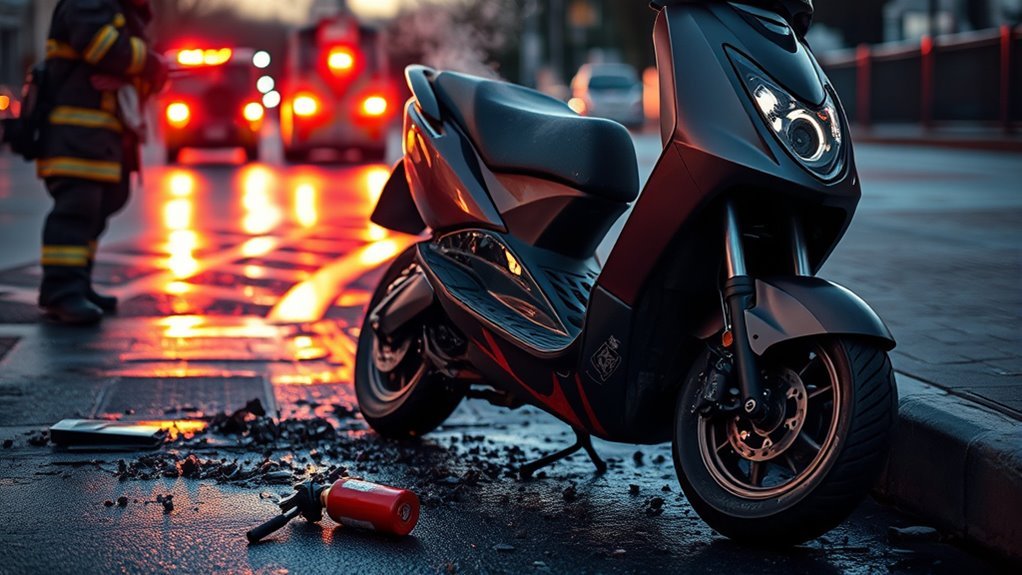
Can electric scooter batteries explode? Yes, although most batteries work safely when manufactured and used correctly. A failing lithium-ion battery can release intense heat, flammable gases, flames, and toxic smoke. Understanding the causes and warning signs helps you reduce the risk and respond safely.
Quick Answer
Electric scooter batteries can explode or catch fire when damaged cells enter thermal runaway. Common triggers include physical damage, overheating, defective batteries, and incompatible chargers. Use approved components, inspect your battery regularly, and never charge while sleeping. If the battery starts smoking or releasing gas, evacuate immediately and call emergency services.
Disclosure: As an Amazon Associate I earn from qualifying purchases. Some links on this page are affiliate links, at no extra cost to you.
What Causes Scooter Battery Fires?
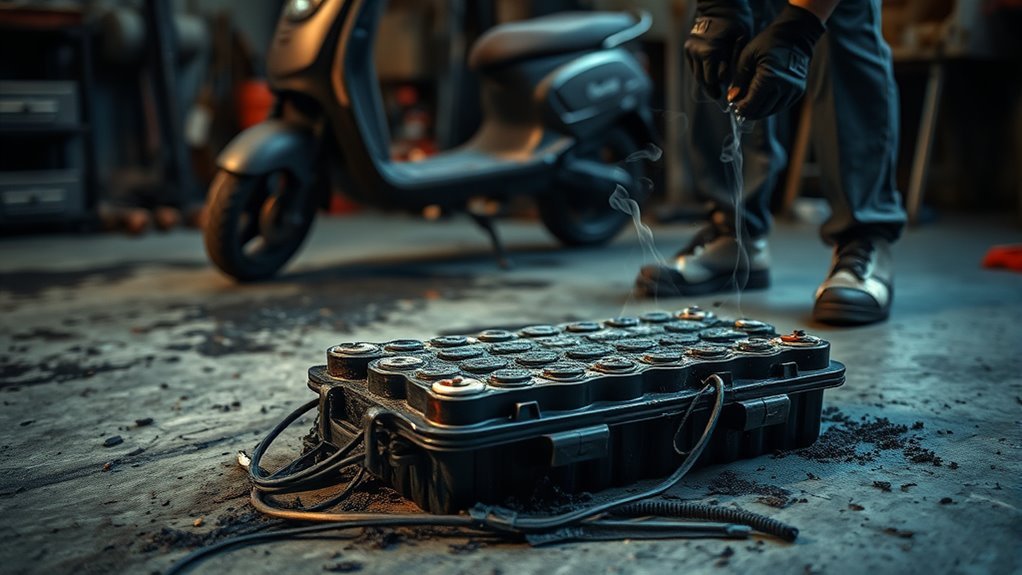
Electric scooter battery fires usually begin when a cell develops an internal fault, overheats, or suffers damage. The resulting heat can trigger thermal runaway, a reaction that may spread from one cell to others inside the battery pack.
During thermal runaway, cells release heat and potentially flammable gases. The pack may vent, rupture, ignite, or cause nearby materials to catch fire.
The main causes include:
- Overcharging: A faulty charger or charging control system may push cells beyond their safe limits.
- Physical damage: Crashes, drops, crushing, and punctures can damage internal cell components.
- Incompatible chargers: Incorrect voltage, charging behavior, or poor communication with the battery can create dangerous conditions.
- Short circuits: Damaged insulation, faulty wiring, or compromised internal separators can cause uncontrolled current flow.
- Excessive heat: High temperatures can accelerate battery degradation and contribute to failure.
- Poor-quality cells or assembly: Manufacturing defects and inadequate protection systems can increase the likelihood of a dangerous fault.
According to the UK government’s electric scooter battery safety guidance, damaged batteries can catch fire without warning. Unauthorized modifications can also increase electrical loads and overheating risks.
A battery management system helps monitor charging, temperature, and electrical conditions. However, it cannot guarantee protection against every defect or physical failure.
How Common Are Electric Scooter Battery Fires?
Battery fires are a documented hazard, but available incident counts cannot establish the probability that an individual scooter will catch fire.
For example, the UK Office for Product Safety and Standards recorded 39 reported e-scooter fires in 2024. Of those incidents, 16 occurred while charging, 16 occurred when the scooter was not charging, and seven had unknown charging status.
These figures come from the government’s 2024 e-bike and e-scooter fire report.
The figures demonstrate an important point: a defective battery may fail even when it is disconnected from its charger. They do not provide a failure rate per scooter sold or used.
How Can You Identify a Safer Scooter Battery?
Look for an electric scooter whose electrical system has been independently certified to an applicable safety standard.
For personal electric scooters, UL 2272 covers electrical drive systems, including battery and charger combinations. UL 2271 applies to batteries used in light electric vehicles.
The UL Solutions personal e-mobility certification program explains these electrical safety evaluations.
Certification reduces uncertainty about product testing, but it does not make a battery fireproof. Check that the certification applies to the complete product or relevant component, rather than relying only on advertising claims.
Avoid homemade packs, batteries assembled from used cells, and unauthorized modifications. Replacement batteries should be approved for your exact scooter model.
How to Spot a Damaged Scooter Battery
A damaged scooter battery may show visible changes or unusual behavior before it fails. Inspect the casing and charging components regularly, particularly after a crash or hard impact.
Warning signs include swelling, excessive heat, chemical odors, leaking, corrosion, and unusual charging behavior.
| Sign | What You’ll Notice | Risk |
|---|---|---|
| Swelling | Bulging or distorted casing | Internal cell failure |
| Heat | Unusually high temperature | Overheating or developing failure |
| Odor | Strong chemical or burning smell | Possible cell damage or venting |
Other warning signs include:
- Cracks, dents, or damage to the battery housing.
- Corrosion or visible leakage around battery connections.
- Hissing, popping, or cracking sounds.
- Charging that takes much longer than usual or stops unexpectedly.
- Failure to reach a full charge.
- Flickering displays, unexpected shutdowns, or controls that stop responding.
Electrical symptoms can have other causes, but you should not dismiss them when they occur alongside battery damage or unusual heat.
A slightly warm battery during normal operation is not automatically defective. However, a battery that becomes extremely hot, changes shape, or produces an unusual smell needs immediate attention.
Stop using and charging a battery that shows signs of damage. Do not puncture it, open its casing, or attempt to repair individual cells yourself.
If the battery appears stable and is not smoking, contact the manufacturer or a qualified service provider for assessment. Never reconnect a suspect battery merely to see whether the problem has disappeared.
How to Charge Your Scooter Battery Safely
Safe charging begins with the correct charger, a suitable location, and regular monitoring. Your scooter’s manufacturer specifies the compatible charging equipment and operating limits.
The Consumer Product Safety Commission warns against incompatible universal chargers, even when their connectors physically fit a scooter.
Follow these steps:
- Inspect the battery and charger. Check the housing, cable, plug, and charging port for damage, moisture, and corrosion.
- Allow the battery to cool. If you have just finished an intensive ride, let the battery return to a normal temperature before charging.
- Choose a safe location. Use a hard, flat, nonflammable surface in a ventilated area, away from curtains, bedding, paper, and other combustible materials.
- Connect the approved charger. Use the charger supplied with your scooter or a replacement specifically approved by its manufacturer.
- Stay present while charging. Watch for unusual heat, odor, swelling, or changes in charging behavior.
- Disconnect after charging. Follow the manufacturer’s charging instructions and unplug the charger when the charge cycle is complete.
Do not charge your scooter overnight, while sleeping, or when nobody is home. Avoid covering the battery or charger, using damaged electrical outlets, or running charging cables through areas where they could be damaged.
Plug the charger directly into a suitable wall outlet rather than using an extension cord or overloaded power strip.
What Temperature Is Safe for Charging?
Charge only within the temperature range specified for your scooter’s battery. Different battery models can have different charging limits.
As general guidance, the US Fire Administration advises against charging lithium-ion batteries below 32°F (0°C) or above 105°F (40°C).
If your scooter manufacturer specifies a narrower range, follow that range instead.
Do not charge a freezing battery immediately after bringing it indoors. Allow it to reach a suitable charging temperature naturally.
Likewise, avoid charging a battery that has become very hot from riding or exposure to direct sunlight.
How to Store an E-Scooter Battery Safely
Store your electric scooter battery in a cool, dry location away from direct sunlight and flammable materials. Room temperature is generally preferable, but the manufacturer’s storage limits take priority.
Safe storage matters even when the battery is disconnected from its charger.
Use these precautions:
- Keep the battery away from heaters, radiators, direct sunlight, and extremely hot vehicles.
- Avoid excessively cold or damp storage areas.
- Keep the scooter away from paper, fabric, fuel, and other combustible materials.
- Never store it where it blocks a doorway, hallway, stairway, or emergency exit.
- Check for swelling, corrosion, leaks, and physical damage during prolonged storage.
- Follow the manufacturer’s recommendations for battery charge level and periodic maintenance during extended storage.
The FDNY lithium-ion battery safety guidance recommends keeping these devices at room temperature and away from anything flammable.
Where suitable, a separate garage or shed can provide a safer storage location than a bedroom or escape route. However, the space must still meet the battery’s environmental requirements.
A fire-resistant battery storage bag or box should never be treated as a guarantee against thermal runaway. Such products do not replace safe storage, correct charging, or early detection of battery damage.
If the battery is removable, follow the manufacturer’s instructions before disconnecting or storing it separately.
What to Do If Your Scooter Battery Overheats
If your scooter battery becomes unusually hot, stop using it immediately. A battery that continues heating, begins hissing, or releases smoke may be developing a serious internal failure.
Your response depends on whether the battery shows mild warning signs or has begun releasing gas, smoke, or flames.
Warning: If a scooter battery is smoking, venting gas, or burning, do not touch, carry, open, or attempt to extinguish it yourself. Leave the area immediately, warn others, and call 911 in the US or your local emergency number. Battery fires can develop rapidly and release toxic smoke.
If the Battery Is Hot but Not Smoking
- Stop riding and switch off the scooter.
- If it is charging, disconnect the charger only if you can do so safely without touching an overheated component.
- Keep people, pets, and combustible materials away from the scooter.
- Do not handle or move the battery if doing so could expose you to heat, gas, or a sudden fire.
- Contact the manufacturer or an authorized service provider for instructions.
If the device is stable and can be moved without risk, relocating it away from combustible materials may reduce exposure. However, do not attempt this if the battery is extremely hot, making unusual noises, or showing signs of venting.
If the Battery Starts Smoking or Burning
Do not attempt to inspect the pack or carry the scooter outdoors. A failing battery may release hot gases or ignite without giving you enough time to react.
- Leave the immediate area.
- Warn everyone nearby and activate the fire alarm if available.
- Close doors behind you when safe to help limit smoke and fire spread.
- Call emergency services from a safe location.
- Remain outside and wait for firefighters.
Do not re-enter the building or attempt to handle the battery after the visible flames stop. Damaged cells can remain hazardous, and firefighters should determine when the area is safe.
Never open, puncture, or modify a damaged battery. Do not assume that pouring water on it or using a household extinguisher will make it safe to approach.
What Should You Do With a Damaged Battery?
A battery that has swollen, leaked, overheated abnormally, or suffered significant damage should not return to normal use without professional assessment.
Contact the manufacturer for replacement and handling instructions. If replacement is necessary, use a battery approved for your scooter model.
Do not put a lithium-ion battery in household trash or ordinary curbside recycling. It can retain enough energy to start a fire during collection or processing.
The US Environmental Protection Agency’s lithium-ion battery disposal guidance recommends specialized recycling and manufacturer guidance for damaged batteries.
For a damaged or recalled pack, tell the recycling facility about its condition before bringing it in. Do not assume that a standard retail battery collection box accepts hazardous or damaged scooter batteries.
Note: If you suspect internal battery damage, arrange an assessment through the manufacturer or a qualified battery service provider. Never attempt cell-level repairs or bypass the battery management system.
Frequently Asked Questions
How Likely Is an Electric Scooter to Catch Fire?
There is no reliable per-scooter probability from the figures cited here. UK regulators recorded 39 reported e-scooter fires in 2024, but that count does not include the number of scooters in use, so it cannot show your individual risk.
Are E-Scooter Batteries Safe?
Most e-scooter batteries operate safely when they are compatible, undamaged, and charged correctly. A Singapore hospital case series described a 20-fold rise in known burn injuries from personal mobility device fires since 2016; it did not measure the chance that any one scooter will burn.
What Is the Likelihood of a Lithium Battery Exploding?
There is no single verified explosion percentage for all lithium scooter batteries. A failed cell can vent hot, flammable gases, rupture, and ignite; damage, heat, faulty packs, and mismatched chargers raise the risk.
Do Electric Scooters Burst if Overheat?
An overheating scooter does not always burst, but a failing pack can enter thermal runaway and release flames or hot gases. Stop use; if it smokes, hisses, or vents, leave immediately and call emergency services rather than touching or moving it.
Conclusion
Electric scooter batteries can explode or catch fire, particularly when damaged, defective, overheated, or charged with incompatible equipment.
Choose certified equipment, use approved chargers, inspect the battery regularly, and store it away from combustible materials. Treat swelling, unusual heat, chemical odors, and charging problems as reasons to stop using the scooter.
Most importantly, never try to handle a smoking or burning battery. Leave the area and contact emergency services.
Sources
- UK Department for Transport — Battery Safety for E-Scooter Users: Causes of battery fires, warning signs, charging, storage, and damaged battery handling.
- UK Office for Product Safety and Standards — Fires in E-Bikes and E-Scooters, 2024: Reported scooter fire incidents and charging status.
- UL Solutions — Personal E-Mobility Testing and Certification: Electrical safety certification and applicable standards.
- US Consumer Product Safety Commission — Universal Charger Safety Warning: Charger compatibility and safe charging practices.
- US Fire Administration — Battery Fire Safety: Temperature guidance and general lithium-ion battery precautions.
- FDNY — Lithium-Ion Battery Safety Tips: Storage, charging, warning signs, and fire prevention.
- US Environmental Protection Agency — Used Lithium-Ion Batteries: Safe disposal, recycling, and damaged battery precautions.
- Electric Scooter Battery Detonation: A Case Series and Review of Literature: Clinical findings on personal mobility device battery fires and related burn injuries.