
Last Updated on September 27, 2026 by Caleb Warren
Are electric scooter batteries safe? Most are designed for everyday use, but their lithium-ion cells can become dangerous if damaged, charged incorrectly, or exposed to extreme conditions. Understanding the warning signs and using compatible equipment can help you avoid battery fires and expensive damage.
Quick Answer
Electric scooter batteries are generally safe when properly manufactured, certified, charged, and maintained. However, damaged lithium-ion cells, incompatible chargers, and poor storage can cause overheating or fire. Choose a certified scooter, use its approved charger, and stop using the battery if you notice swelling, leaking, unusual heat, odors, or smoke.
Last checked: September 28, 2026. Dates and figures were verified against official sources.
Key Takeaways
- Look for third-party certification to UL 2272 for the scooter’s electrical system.
- A charger that physically fits your scooter is not necessarily compatible with its battery.
- Never charge while sleeping, and keep the scooter away from exits and combustible materials.
- A battery can fail after impact damage, even if its outer casing appears normal.
- If a battery starts smoking or burning, evacuate and call emergency services rather than trying to move it.
Disclosure: As an Amazon Associate I earn from qualifying purchases. Some links on this page are affiliate links, at no extra cost to you.
How Safe Are Electric Scooter Batteries?
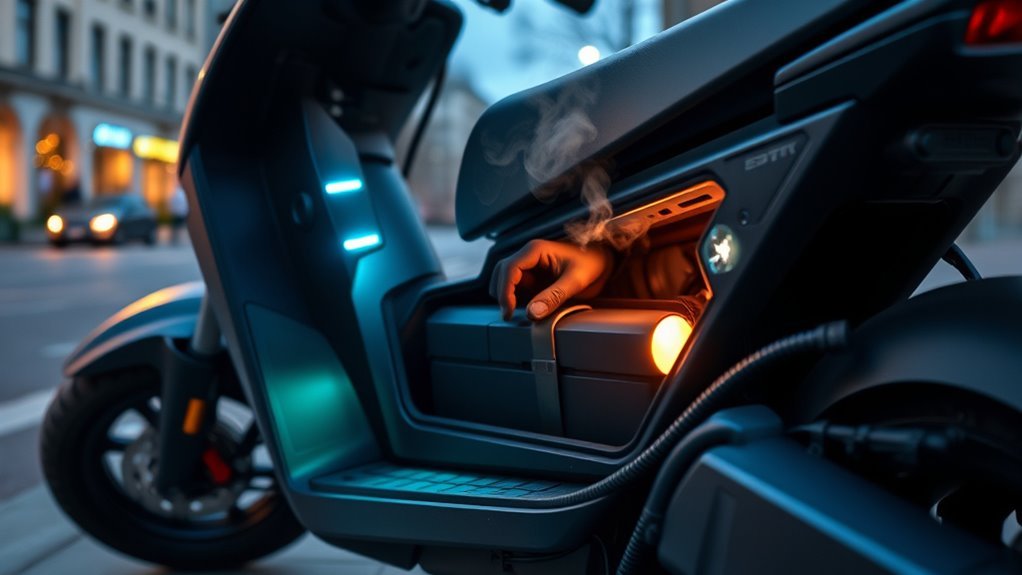
Electric scooter batteries are generally safe during normal use when the battery, charger, and electrical system are properly designed and maintained. However, no rechargeable battery is completely free of risk.
Lithium-ion technology stores substantial energy in a relatively small, lightweight pack. This allows scooters to offer useful riding range without the weight of older battery designs.
The main concern is that damaged or defective cells can release stored energy as intense heat.
The New York City Fire Department reported 268 fires caused by lithium-ion batteries in 2023, many involving e-bikes.
This figure includes lithium-ion battery incidents beyond electric scooters. It does not establish the probability that an individual scooter will catch fire.
Your practical safety priorities are straightforward:
- Choose a scooter with independently certified electrical components.
- Use the charger supplied or approved by its manufacturer.
- Inspect the battery after crashes, drops, or unusual impacts.
- Keep the scooter away from excessive heat, moisture, and combustible materials.
- Stop using any battery that shows signs of damage or abnormal behavior.
Following these precautions reduces avoidable risks while helping preserve battery performance and service life.
Why Electric Scooter Batteries Catch Fire
Electric scooter batteries can catch fire when internal damage, electrical faults, or excessive heat destabilize their lithium-ion cells.
The most serious failure mechanism is thermal runaway. This happens when heat-producing reactions inside a cell become self-sustaining and can spread to neighboring cells.
A failing pack may release hot gases, ignite surrounding materials, or rupture its casing.
Common Causes of Battery Fires
- Overcharging: Faulty charging controls or incompatible equipment may allow cells to exceed their safe voltage limits.
- Physical damage: Crashes, drops, punctures, or crushing can damage internal cell structures.
- Poor manufacturing: Defective cells, inadequate insulation, and weak electrical protection increase failure risk.
- Excessive heat: Direct sunlight, hot storage areas, or charging outside permitted temperatures can stress the battery.
- Electrical faults: Short circuits, damaged wiring, moisture intrusion, and loose connections can cause overheating.
- Unauthorized modifications: Battery rebuilding, incompatible replacements, or changes that increase electrical demand may compromise protective systems.
A damaged battery may appear normal immediately after an accident. Internal damage can develop into a failure later, including while the scooter is parked.
If the battery has experienced a serious impact, stop using and charging it until a qualified technician or the manufacturer has assessed it.
How Lithium-Ion Scooter Batteries Work
Lithium-ion scooter batteries store energy through chemical reactions that move lithium ions between two electrodes.
In a common cell design, the negative electrode is graphite, while the positive electrode uses a lithium-containing metal oxide. An electrolyte allows lithium ions to travel between them.
A separator keeps the electrodes apart to prevent an internal short circuit.
During discharge, lithium ions move through the cell while electrons flow through the external circuit, supplying electrical power to the scooter’s motor.
Charging reverses this process and restores stored energy.
What Protects the Battery?
Individual cells are connected into a larger battery pack controlled by a battery management system, or BMS.
Depending on the design, this system monitors cell voltage, charging current, and temperature. It can also provide protection against overcharging, excessive discharge, and certain electrical faults.
Some systems balance cell voltages to help the pack charge more evenly.
These protections reduce risk, but they cannot guarantee safety after severe physical damage, manufacturing defects, or improper modifications.
Warning Signs Your Scooter Battery Is Failing
A failing scooter battery may show physical damage, unusual heat, chemical odors, charging problems, or electrical instability.
Some warmth during normal charging is expected. However, a battery that becomes extremely hot, swells, leaks, or produces unusual sounds needs immediate attention.
| Sign | Risk | Action |
|---|---|---|
| Swelling or bulging | Internal damage or rupture | Stop using and charging |
| Excessive heat or odor | Overheating or fire | Disconnect power if safe |
| Leaks or corrosion | Cell or electrical failure | Stop use; seek professional assessment |
| Hissing or cracking | Possible internal failure | Keep clear and seek assistance |
| Smoke or flames | Active fire | Evacuate and call emergency services |
Other warning signs include unexpectedly short riding range, longer charging times, failure to charge fully, or intermittent power.
Flickering displays and unresponsive controls may indicate a battery problem, but they can also result from wiring, controller, or connection faults.
Do not assume the battery is safe simply because the scooter still operates.
Never open, puncture, crush, or attempt to rebuild a damaged lithium-ion battery yourself.
Best Charging Practices for Scooter Safety
Safe charging starts with compatible equipment, a suitable location, and someone present to recognize problems.
The US Consumer Product Safety Commission advises owners to remain present while charging and never charge micromobility devices while sleeping or away from home.
Use Manufacturer Charger
Use the original charger or a replacement specifically approved for your scooter and battery.
The charging system must match the battery’s required voltage, current, and control characteristics. A matching connector alone does not establish compatibility.
| Check | Why it matters | Action |
|---|---|---|
| Charger model | Matches specified electrical requirements | Use the supplied or approved unit |
| Plug source | Reduces connection and electrical faults | Use a suitable wall outlet |
| Charging setup | Allows heat to dissipate | Keep the surrounding area clear |
In September 2024, the CPSC issued a specific warning about universal micromobility chargers.
Between January 1, 2023, and May 16, 2024, the agency received 156 reports of fire and thermal incidents involving these chargers.
If your original charger is lost or damaged, contact the scooter manufacturer for an approved replacement rather than selecting one based only on connector shape.
Unplug After Full Charge
Disconnect the charger when the battery reaches full charge, following the manufacturer’s instructions.
A functioning battery management system normally controls charging, but you should not rely on it as a reason to leave the scooter connected indefinitely.
Use this charging routine:
- Inspect the charging port, cable, and battery casing for visible damage.
- Allow a hot battery to cool after riding before connecting the charger.
- Place the scooter in a dry, ventilated location away from combustible materials.
- Connect the approved charger according to the manufacturer’s instructions.
- Remain awake and present while charging.
- Disconnect the charger when charging is complete.
Do not cover the charger or battery during charging. Avoid overloaded outlets, damaged extension cords, and charging equipment with exposed wiring.
Never charge a battery that is swollen, leaking, unusually hot, or suspected of having internal damage.
Safe Scooter Storage Indoors and Outdoors
Store your electric scooter in a cool, dry location with adequate ventilation and separation from combustible materials.
The safest practical location is one that limits temperature extremes, protects against moisture, and does not obstruct your escape route.
Indoor Storage
Choose a suitable garage, shed, or designated storage space when available. Keep the scooter away from heaters, curtains, furniture, paper, and other materials that can burn.
The UK Department for Transport’s electric scooter battery safety guidance recommends avoiding storage and charging in escape routes or communal areas of shared buildings.
Make sure your home has working fire detection and that everyone knows how to leave safely in an emergency.
A fire-resistant battery container may provide additional protection when specifically suitable for the battery and its intended use. However, do not assume that a bag or box can contain every lithium-ion battery fire.
Outdoor Storage
Keep the scooter sheltered from rain, standing water, direct sunlight, and extreme temperatures.
A weather-resistant cover can protect a parked scooter, but allow the scooter to cool first. Never charge it beneath a cover that traps heat.
Avoid damp storage areas and inspect the charging port for moisture before connecting power.
For long-term storage, follow the manufacturer’s recommended battery charge level and maintenance schedule.
Do not assume every scooter should be stored fully charged or completely discharged.
What to Do If Your Scooter Battery Overheats
If your battery becomes unusually hot, stop using or charging the scooter immediately. Your next action depends on whether the battery is simply overheating or already showing signs of an active fire.
Smoke, flames, violent hissing, or rapidly worsening conditions require evacuation rather than hands-on inspection.
Warning: If the battery starts smoking, venting gases, or burning, do not touch it or attempt to carry the scooter outside. Evacuate immediately, close doors if safe, and call 911 in the United States or your local emergency number. Stay out until emergency responders confirm the area is safe.
Stop Charging Immediately
If the battery becomes abnormally hot but is not smoking or burning, disconnect charging power only if you can do so safely.
Switch off the scooter and avoid direct contact with the battery casing.
Watch for these escalating warning signs:
- Rapidly increasing heat
- Visible swelling or casing distortion
- Strong chemical or burning odors
- Hissing, cracking, or popping sounds
- Smoke or escaping vapor
Do not attempt to open the pack, remove individual cells, or repair internal connections.
A damaged battery should remain out of service until the manufacturer or a qualified battery technician determines the appropriate next step.
Move To A Safe Area
If the scooter is not smoking or burning, move it away from people and combustible materials only when doing so presents no danger to you.
Do not handle a swollen, leaking, ruptured, or dangerously hot battery.
If movement is unsafe, keep your distance and leave the area.
According to Fire and Rescue NSW, lithium-ion battery incidents can release toxic and flammable gases, and a battery may reignite after an apparent fire has stopped.
Do not attempt to fight a developing battery fire unless emergency responders direct you to do so.
After the immediate danger has passed, contact the manufacturer for safe handling, inspection, or replacement instructions.
Why Certified Batteries and Chargers Matter
Third-party safety certification helps establish that a scooter’s electrical system or battery has been evaluated against recognized safety requirements.
Certification reduces risk, but it does not guarantee that a device cannot fail or catch fire.
For electric scooters sold in the United States, the most relevant standards include:
- UL 2272: Covers electrical systems for personal e-mobility devices, including electric scooters.
- UL 2271: Covers batteries used in light electric vehicle applications.
- UL 2849: Covers electrical systems for electric bicycles rather than ordinary stand-up electric scooters.
UL Solutions explains these micromobility certification standards and the testing of battery systems, electrical components, and charger combinations.
When buying a scooter, check for a genuine certification mark and confirm that the certification applies to the actual product model.
A manufacturer’s statement that a product was tested to a standard is not necessarily the same as independent certification.
For replacement batteries, choose a pack specifically approved for your scooter. Avoid modified packs, reused cells, and batteries rebuilt by unqualified technicians.
Also inspect electrical connectors for damage, corrosion, looseness, or signs of overheating.
Note: If you suspect internal battery damage, contact the manufacturer or a qualified repair technician. Never treat an apparently normal charging indicator as proof that a damaged battery is safe to use.
How to Dispose of a Damaged Electric Scooter Battery
Damaged electric scooter batteries require specialized handling because they can still contain enough energy to cause a fire.
Never place lithium-ion batteries in household garbage or ordinary curbside recycling.
The US Environmental Protection Agency recommends separate battery recycling or household hazardous waste collection.
For a battery that is not damaged, protect exposed terminals with nonconductive tape or isolate the battery according to the recycling facility’s instructions.
For a damaged, swollen, leaking, or recalled pack:
- Stop using and charging it.
- Contact the manufacturer for handling and return instructions.
- Tell the recycling facility that the battery is damaged before transporting it.
- Follow the facility’s special packaging and collection requirements.
Do not dismantle a sealed scooter battery merely to prepare it for recycling.
If the battery is overheating, smoking, or otherwise unstable, treat the situation as an emergency rather than attempting to transport it yourself.
Frequently Asked Questions
What Are the Chances of an Electric Scooter Catching Fire?
Electric scooter battery fires are a real risk, but there is no reliable universal probability for an individual scooter. Fire statistics often combine e-scooters, e-bikes, and other lithium-ion devices. Battery quality, certification, physical condition, and charging practices all affect risk. A damaged or improperly charged battery deserves particular caution.
Is It Safe to Keep an E-Bike Battery in the House?
Yes, an undamaged e-bike battery can generally be stored indoors when you follow the manufacturer’s instructions. Choose a cool, dry location away from combustible materials and escape routes. Use its approved charger, remain present during charging, and avoid charging overnight. Never store a battery showing serious failure symptoms in an occupied living area.
Are Scooters Good for Autistic Kids?
A non-motorized scooter may suit some autistic children who enjoy movement and activities that involve balance and coordination. Individual sensory, motor, and safety needs vary. Choose appropriate equipment, provide supervision, and use a properly fitted helmet. The American Academy of Pediatrics advises that children under 16 should not ride motorized scooters.
What Is the Safest Battery for an Electric Scooter?
Choose a high-quality battery approved for your specific scooter and independently certified to an applicable safety standard. Look for a properly designed battery management system with voltage and temperature protection. Battery chemistry alone does not guarantee safety. The complete pack, charging system, manufacturing quality, and proper use all matter.
Conclusion
Electric scooter batteries can provide safe, reliable transportation when you use certified equipment and follow proper charging and storage practices.
Before your next ride, inspect the battery casing, charging port, and electrical connections. Use the approved charger and never ignore swelling, unusual heat, chemical odors, or charging problems.
If you suspect battery damage, stop using the scooter and arrange professional assessment. If smoke or flames appear, evacuate immediately and contact emergency services.
Sources
- New York City Fire Department — Lithium-Ion Battery Safety: Supports the 2023 fire statistics and battery hazard information.
- US Consumer Product Safety Commission — Micromobility Information Center: Supports safe charging, approved replacement batteries, and general scooter safety.
- CPSC — Universal Charger Safety Warning: Supports charger compatibility guidance and reported thermal incidents.
- UL Solutions — Micromobility Device Testing and Certification: Explains UL 2272, UL 2271, UL 2849, and electrical system certification.
- UK Department for Transport — Battery Safety for E-Scooter Users: Supports charging, storage, damaged battery, and fire prevention guidance.
- Fire and Rescue NSW — Battery Fire Emergency Guidance: Supports emergency response, toxic smoke warnings, and reignition risks.
- US Environmental Protection Agency — Used Lithium-Ion Batteries: Supports recycling, disposal, and handling precautions.
- American Academy of Pediatrics — Why Children Should Not Ride E-Scooters: Supports the child safety guidance in the FAQ.
