
Last Updated on September 10, 2026 by Daniel Globe
You’ll usually find an electric scooter’s battery under the deck, inside a protected compartment, or sometimes in the stem or rear frame. To check it, power off the scooter, remove the access panel with a Phillips screwdriver, and lift the cover straight off. Trace the wires carefully and disconnect any plugs gently. Battery placement affects stability, weight balance, and ride feel, and there’s more to know about safe access and maintenance.
Quick Answer
On most electric scooters, the battery sits under the deck in a screwed-down compartment that keeps the center of gravity low for better stability. Some models place it inside the stem or, less often, near the rear wheel. Power off the scooter and check your manual before opening any panel.
Key Takeaways
- Most electric scooters keep the battery under the deck to lower the center of gravity and improve stability.
- Some models tuck the battery into the stem for a sleeker profile, or occasionally near the rear wheel for a different weight balance.
- Accessing the battery normally means powering off the scooter, removing a screwed panel, and gently disconnecting the wiring.
- Fastener type and count vary by model — check your manual instead of assuming a standard screw pattern.
- Lithium-ion battery packs carry real fire and shock risks, so always charge them under supervision with the original charger.
- A well-maintained lithium battery typically lasts 300 to 1,000 charge cycles, or roughly 2 to 5 years, depending on usage and care.
Disclosure: As an Amazon Associate I earn from qualifying purchases. Some links on this page are affiliate links, at no extra cost to you.
Where Is the Electric Scooter Battery?
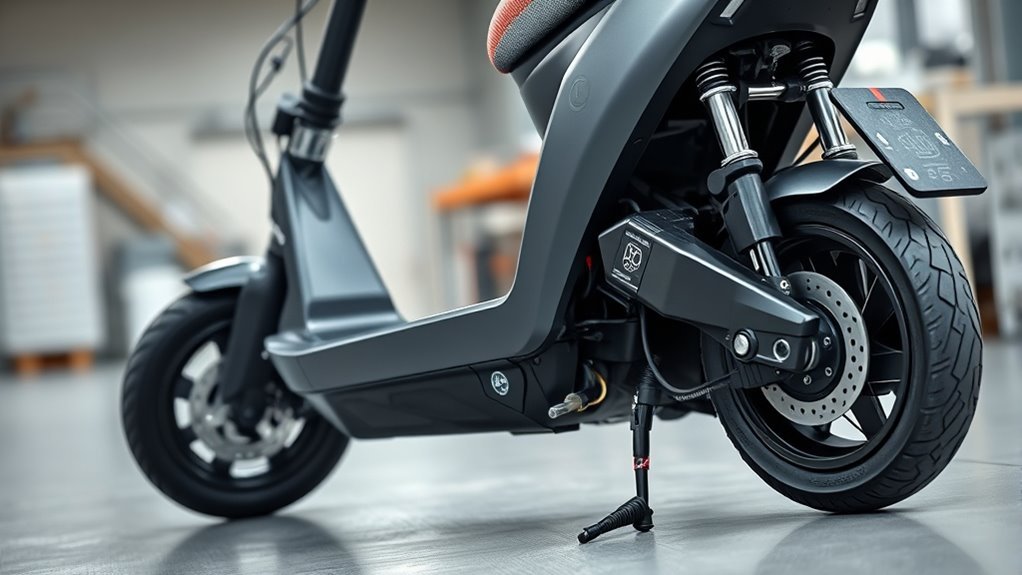
Usually, the battery in an electric scooter sits under the deck, where it helps keep the center of gravity low for better stability and handling. You’ll find this layout on many models because it supports balance, traction, and a cleaner ride. In some models, manufacturers integrate the battery into the stem to keep the frame sleek, but that can make access harder when you need service or replacement. A less common design places the battery above the rear wheel, which can shift weight and change performance. To locate your electric scooter battery, read the user manual and inspect removable panels or compartments — manufacturers publish this layout because UL 2272, the safety standard for personal e-mobility electrical systems, expects the battery compartment to be clearly identifiable and protected. Treat the battery as a critical system: keep it charged correctly, avoid physical damage, and follow maintenance steps so it lasts longer and keeps your rides efficient and safe.
Note: Before ordering a replacement battery, check your scooter’s manual or the label on the old pack for its voltage (V) and amp-hour (Ah) rating. Installing a pack with the wrong specifications can damage the controller or void your warranty.
Common Battery Locations on Electric Scooters
Battery placement varies by manufacturer, but three layouts cover the vast majority of consumer scooters: under the deck, inside the stem, and — less commonly — near the rear wheel. Each layout changes access, weight balance, and ride handling, so it’s worth confirming your scooter’s design before you start removing anything.
Under Deck Placement
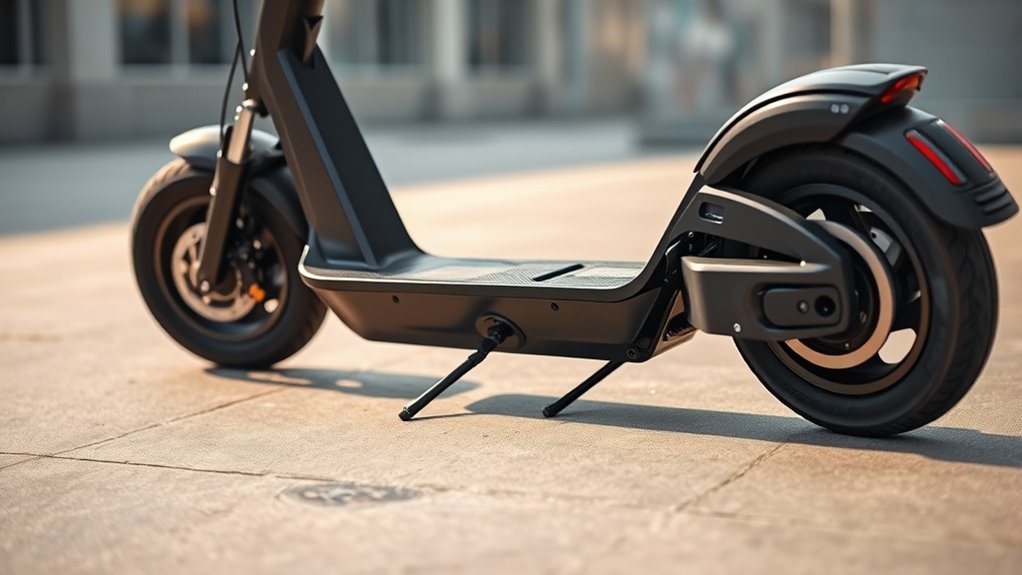
The battery pack on most electric scooters sits beneath the deck. This is the layout you’ll find on the widest range of brands and price points because it keeps mass low and centered, which translates directly into steadier handling at speed and less top-heavy sway when cornering.
| Benefit | Effect |
|---|---|
| Low center of gravity | Better control |
| Centered battery weight | Smoother handling |
| Protected compartment | Less exposure |
| Clean, dry access | Longer service life |
To inspect it, remove the screwed panel and follow your manual. Keep the compartment clean and dry, because moisture can shorten battery life and hurt performance.
Stem And Rear Mounts
Beyond the deck, some electric scooters place the battery in the stem or at the rear of the frame. A stem-mounted battery gives you a clean profile and easier packaging, but maintenance can be harder because access isn’t as direct — you’re often removing more trim to reach it. Rear-mounted batteries are rarer and serve specific weight-distribution goals, but they can shift balance in a way that changes how the scooter tracks and turns. Whichever mount your scooter uses, inspect it before assuming it matches another model — layouts differ enough between brands that guessing can mean opening the wrong panel.
Why Battery Placement Affects Ride Quality
Battery placement shapes how an electric scooter feels and responds because it changes the center of gravity and overall weight distribution. A low-mounted pack supports sharper handling and calmer ride dynamics. If the pack rides too high, you’ll notice a top-heavy feel, less control, and more effort in turns. Manufacturers place batteries to tune acceleration, braking, and maneuverability, so the scooter stays responsive without sacrificing comfort.
| Placement | Effect | Result |
|---|---|---|
| Low | Lower center | Steadier ride |
| High | Top-heavy feel | Less control |
| Centered | Balanced mass | Smooth handling |
| Rear-heavy | Shifted load | Slower response |
That balance matters for safety, too — better placement reduces the odds of tipping or losing control, which matters most on uneven pavement or at higher speeds.
Find the Battery Under the Deck
Since most batteries live under the deck, that’s the first place to check. Locate the underside panel and identify the screws or clips that secure it before you reach for a tool — some panels use a simple fastener pattern, others hide screws under rubber grommets or stickers.
Under-Deck Access Points
You’ll usually reach the pack through an access panel on the deck’s underside. Good deck maintenance keeps this straightforward: look for a lid secured by screws, then check that the compartment stays clean and dry, since moisture and grit can shorten battery life. When you open the area, examine the battery for wear, loose connections, or corrosion. If you spot damage — swelling, a burnt smell, discoloration — stop and have it serviced by a professional rather than continuing the teardown yourself.
Removing Deck Panels
Once you’ve confirmed the battery sits under the deck, the next step is removing the panel. Use a Phillips screwdriver and back out the screws holding the lid; the exact number and type of fasteners vary by model, so check your manual rather than assuming a standard pattern. Lift the panel carefully, then inspect for connector plugs before pulling anything free. Disconnect the connectors gently — don’t yank on wires — before loosening the battery mount itself. Remove the remaining screws, then lift the battery straight out to avoid stressing the harness. Work methodically, and always follow your user manual for exact fastener locations and safety steps.
Warning: Lithium-ion battery packs can catch fire or explode if punctured, crushed, or short-circuited. Never pry the pack apart, keep metal tools away from exposed terminals, and stop immediately if you notice swelling, unusual heat, or a chemical smell. The U.S. Consumer Product Safety Commission recommends only ever handling and charging these batteries under direct supervision.
Check the Stem and Frame for Hidden Batteries
Check the stem and frame first if the under-deck panel comes up empty, since many electric scooters hide the battery inside these sections to keep the design clean and improve weight distribution. You’ll often find the pack integrated into the stem, which supports a low center of gravity and sharper handling while letting manufacturers preserve a slim profile without exposing components. To inspect it, look for hidden compartments, removable panels, screws, or latches that suggest an access point. If a panel’s present, you may need to unscrew it before you can reach the battery. Don’t force parts apart; use the user manual to confirm the exact location and removal steps for your model. Some frames use similar concealment near the head tube or rear fender, so check adjacent body sections too.
Look for Rear-Mounted Battery Designs
Some scooters place the battery behind the deck, above or near the rear wheel, so look there if the stem and underside don’t reveal it. This rear-mounted layout is less common, but you’ll see it on models tuned for a specific rear weight bias. It can change handling dynamics, so expect a different ride feel than with under-deck packs.
- Check the rear deck housing for a sealed battery case or access panel.
- Watch for extra mass over the rear axle, which may improve traction.
- Note any top-heavy sensation, since stability and maneuverability can shift.
You’ll usually feel the center of gravity move backward, which can make the scooter feel more planted under power but less neutral in turns. For precise identification, consult the user manual — it’ll confirm whether the rear-mounted design is intentional and how the pack is integrated.
How to Access the Battery Safely
Before you open the scooter, power it off completely to avoid electrical hazards. Then check the manual and locate the battery compartment, usually under the deck or inside the stem. Use a Phillips screwdriver to remove the panel screws, then lift the cover straight off. Trace the wires, unplug the connectors gently, and don’t force any fit.
At a Glance
| Time Required | 10–15 minutes for a basic inspection |
| Difficulty | Beginner to intermediate |
| Tools Needed | Phillips screwdriver (some models require a Torx or Allen key — check your manual) |
| Cost | Free to inspect; roughly $30–$150+ for a replacement battery pack, depending on model |
| Step | Tool | Goal |
|---|---|---|
| Power off | None | Cut current |
| Remove panel | Phillips screwdriver | Open access |
| Disconnect battery | Hands | Separate connectors |
If your model differs, follow the manufacturer’s layout exactly. After service, replace the cover, tighten the screws, and check function before riding. These steps help you work cleanly, protect the pack, and avoid damage.
Battery Care Tips After You Find It
Once you’ve located the battery, keep the compartment clean and dry by inspecting it regularly for dust or moisture, since both can hurt performance and cause damage over time. Look for a UL 2272 certification label on the scooter itself — it means the electrical system, battery, and charger were independently tested for fire and shock hazards.
Fires linked to lithium-ion batteries in e-scooters, e-bikes, and hoverboards have been drawing growing attention from fire departments — which is why supervised, manufacturer-approved charging matters as much as where the battery physically sits.
Pro Tip: Keeping your battery roughly between 20% and 80% charge for everyday storage — rather than routinely running it to empty or leaving it topped off at 100% — is one of the simplest ways to slow long-term capacity loss.
- Charge only with the original or a manufacturer-certified charger, and follow the manual’s guidelines. Don’t overcharge; steady charging preserves cell health and reduces failure risk.
- Keep the battery away from extreme heat or cold. Temperature stress cuts lifespan, weakens output, and can make the pack less reliable.
- Check the pack for swelling, leaks, or other wear signs. If you spot damage, have it replaced promptly instead of continuing to use a failing battery.
Stay disciplined with these checks, and you’ll keep your scooter dependable, efficient, and safe.
Frequently Asked Questions
Where is the battery located on an electric scooter?
Most electric scooters keep the battery under the deck, though some place it in the stem or, less often, above the rear wheel. Power the scooter off before opening any panel, and check your manual for the exact access point on your model.
What is the average life of an e-scooter battery?
A typical lithium-ion e-scooter battery lasts about 300 to 1,000 full charge cycles, or roughly 2 to 5 years, with higher-quality packs landing toward the top of that range. You’ll extend it by charging regularly, avoiding heat and deep drains, and storing it around 50% charge if it will sit unused for a while.
How do I restart a scooter battery that won’t respond?
Power the scooter off, disconnect the battery, wait 10–15 seconds, then reconnect and test. This simple reset resolves many minor glitches, but if the battery still won’t hold a charge or the scooter won’t power on, treat it as a sign of deeper battery or wiring wear and have it inspected rather than repeating the reset.
What is the main problem in electric scooters?
The most common issue is battery reliability: charging faults, overheating, and gradual capacity loss cut range and, in worst cases, create fire risk. Monitoring heat, avoiding overcharging, using only the manufacturer’s charger, and choosing a UL 2272-certified scooter go a long way toward keeping range and safety intact.
Is it safe to charge an electric scooter battery overnight?
No — fire safety officials specifically advise against unsupervised or overnight charging of lithium-ion micromobility batteries. Charge on a hard, non-flammable surface, stay nearby while it charges, and unplug it once it’s full rather than leaving it connected while you sleep.
Conclusion
Now that you know where your scooter’s battery is likely hidden, you can inspect it with the precision of a mechanic and the caution of a seasoned rider. Whether it sits under the deck, inside the stem, or near the rear wheel, the battery is the power source that keeps your machine moving — and, because it’s a lithium-ion pack, it deserves careful handling as well as curiosity. Treat it well, follow your manual, charge it under supervision, and it’ll serve you reliably for years.
Sources
- U.S. Consumer Product Safety Commission — Micromobility Information Center — charging safety and lithium-ion battery fire-risk guidance
- UL Standards & Engagement — E-mobility Devices — UL 2272 electrical system certification for personal e-mobility devices
- Apollo Scooters — Electric Scooter Battery Lifespan & How to Extend It — typical lithium-ion charge-cycle lifespan
