Last Updated on September 10, 2026 by Daniel Globe
Your electric scooter battery drains fast when you ride hard, stop and start often, carry extra weight, or use low tire pressure. Cold weather can cut usable capacity by up to 30%, while heat accelerates long-term battery wear. Old or poorly maintained batteries, loose wiring, corroded connectors, and faulty chargers also waste power. Check tire inflation, load limits, and temperature first — then work through the checks below to isolate exactly what’s cutting your range.
Quick Answer
Electric scooter batteries drain fast due to aggressive riding, cold or hot weather, low tire pressure, overloading, an aging battery pack (past 300–500 charge cycles), or a faulty charger, wiring, or controller. Check tire pressure, temperature, and connections first — they’re the most common and easiest fixes.
Key Takeaways
- Cold weather can cut usable battery capacity by roughly 20–30%; heat above 86°F (30°C) accelerates long-term wear instead.
- Hard acceleration, frequent braking, and hills increase current draw far more than steady, moderate speeds.
- Underinflated tires and overloading raise rolling resistance, forcing the motor to work harder and drain faster.
- Batteries typically last 300–500 charge cycles (about 2–3 years of regular use) before capacity drops meaningfully.
- Faulty chargers, loose wiring, and controller issues can drain a battery even while the scooter sits parked.
Disclosure: As an Amazon Associate I earn from qualifying purchases. Some links on this page are affiliate links, at no extra cost to you.
Why Is My Electric Scooter Battery Draining So Fast?
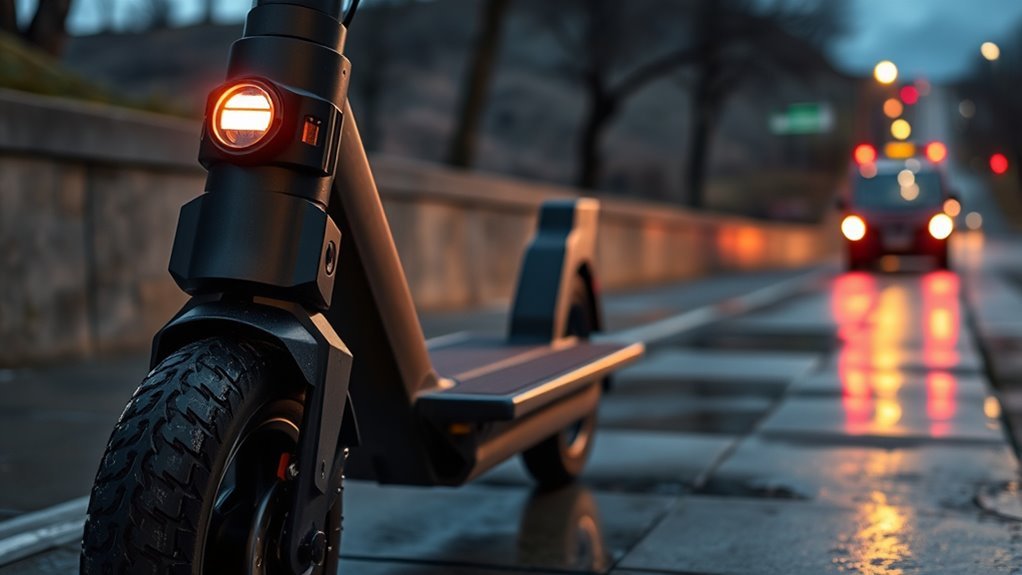
Your electric scooter battery drains fast when the scooter has to work harder than normal. If you accelerate hard and brake often, you force the motor to pull more current, which cuts energy efficiency. If you overload the deck beyond its rated capacity, you increase rolling resistance and strain the battery, so range drops faster. Temperature also matters: cold air can reduce usable capacity by roughly 20–30% near freezing, while sustained heat above 86°F (30°C) shortens the battery’s long-term cycle life.
Poor maintenance compounds the problem. Low tire pressure raises drag, and faulty wiring or corroded connectors waste power before it reaches the motor. Charging habits matter too — keeping charge levels roughly between 20% and 80%, and avoiding full discharges, helps preserve capacity over time. When you ride with measured inputs, respect load limits, and maintain the electrical system, you cut unnecessary drain and keep more of the scooter’s rated range.
Quick Checks for Electric Scooter Battery Drain
Start with the fastest diagnostic checks: inspect the battery connections for corrosion or looseness, since poor contact can interrupt power delivery and make the scooter drain faster than it should. These checks are basic maintenance, and they can reveal a fault you can correct without replacing components. Next, verify tire pressure weekly — underinflated tires increase rolling resistance, so the motor works harder and the battery empties sooner. Then confirm you aren’t exceeding the manufacturer’s load limit, since excess weight strains the pack and speeds up depletion. Keep the scooter away from extreme heat or cold when possible, since temperature stress can temporarily reduce output and shorten effective range.
Note: A simple way to confirm real degradation is to run the same route at the same load and temperature, then compare the percentage used against a ride from when the scooter was new. A consistent 15–20% or greater drop in range under identical conditions points to genuine battery wear rather than a one-off environmental factor.
Riding Habits That Cut Electric Scooter Range
Your riding pattern directly affects battery draw: rapid starts, hard stops, and frequent high-speed bursts increase motor load and cut range. You can reduce consumption by holding a steady speed and using eco mode, which lowers current demand over the course of a ride. Hills, rough terrain, and heavy loads raise resistance and strain the system, so they drain the battery faster than flat, light-duty riding.
Rapid Starts And Stops
Rapid starts and frequent stop-and-go riding drain an electric scooter battery much faster than steady cruising. Twisting the throttle hard raises current draw sharply, converting more stored energy into heat instead of motion, and each abrupt launch shortens range. Braking often forces the motor to recover from repeated speed changes, which increases depletion. You can reduce this by riding with smoother inputs: accelerate gradually, release the throttle early, and brake gently. In dense traffic, eco mode limits power spikes and helps manage energy more efficiently, which means less wasted power, better preserved range, and a scooter that’s ready for more miles.
Steady Speed Benefits
Maintaining a steady speed considerably reduces battery drain because the motor doesn’t have to repeatedly spike output during hard accelerations and decelerations. Holding a consistent pace lowers current surges, reduces thermal stress, and improves discharge efficiency. This directly extends range by letting the drivetrain operate in a narrower, more efficient power band. Eco mode helps by smoothing throttle response, and planning routes with fewer stops and longer uninterrupted stretches lets the motor cruise instead of cycling through wasteful speed changes — helping you cover more distance on the same charge.
Hills And Heavy Loads
Hills drain a battery much faster because the motor works harder against gravity, raising power draw and shortening range. The effect is strongest when you accelerate hard or brake sharply on an incline, since those transients spike current demand — keeping speed steady on climbs reduces wasted energy. Heavy cargo or a passenger increases load on the motor, which must sustain higher torque, so the battery depletes faster. If your scooter has eco mode, use it on climbs and with added weight to limit consumption.
A single hard acceleration from a stop can draw several times more current than the same distance covered at a steady, moderate speed — which is why stop-and-go city riding often empties a battery faster than a longer, steadier highway-adjacent commute.
How Battery Age Reduces Scooter Range
As your scooter battery ages, its usable capacity drops, which directly reduces range. Lithium-ion packs typically deliver 300–500 charge cycles before significant capacity loss sets in, so battery lifespan isn’t endless. Past roughly 2–3 years of regular use, capacity can fall below 70%, and you’ll feel faster depletion during rides. Age also raises internal resistance, making power delivery less efficient and weakening acceleration.
- Watch for rapid percentage drops.
- Compare today’s range with earlier rides under similar conditions.
- Check battery stats in your scooter’s companion app, if it has one.
- Replace the pack when degradation becomes consistent rather than occasional.
Monitoring these metrics lets you catch wear early instead of being surprised by it. An aging battery won’t just shorten distance; it can also make the scooter feel less responsive under load. Acting early helps you avoid sudden cutoffs and keeps your range predictable.
Pro Tip: If your scooter’s battery management system (BMS) supports it, a full charge-discharge cycle every few weeks — rather than always partial-charging — helps the BMS recalibrate its percentage readings, so the displayed charge level stays accurate as the pack ages.
Weather and Temperature Effects on Battery Life
Cold weather can cut a scooter battery’s usable capacity by roughly 20–30% near freezing, because the internal chemistry slows and resistance rises. Sustained heat above 86°F (30°C) doesn’t cause an immediate range drop the way cold does, but it accelerates long-term cell aging. To protect battery life, store and charge the scooter in stable, moderate conditions and avoid extremes in either direction.
Cold Weather Capacity Loss
When temperatures drop toward or below freezing, a lithium-ion battery can temporarily lose roughly 20–30% of its usable capacity, so it drains noticeably faster in winter. Slowed chemistry raises internal resistance, cutting voltage under load and reducing range. You can manage this with a few habits:
- Store the scooter in a climate-controlled space when possible.
- Let the battery warm to room temperature before riding or charging.
- Monitor battery health for cold-induced performance dips.
- Expect temporary capacity loss in the cold, not permanent failure.
This loss is usually temporary rather than a sign of a failing battery — capacity typically recovers once the pack warms back up. Cold weather does, however, expose an already-weak battery faster, so it’s a good time to run the range check described earlier.
Heat Damage Risks
Heat affects a battery differently than cold: instead of an immediate capacity drop, sustained exposure above 86°F (30°C) accelerates long-term aging. Battery University’s testing found that operating a lithium-ion cell at 30°C instead of a moderate room temperature cuts cycle life by about 20%, and at 40°C the loss rises to around 40%. Store the scooter in a cool, shaded space — roughly 68–77°F (20–25°C) — and avoid hot cars, direct sun, and sealed garages, especially while charging.
Warning: Sustained high heat mainly accelerates normal capacity fade rather than causing sudden failure. However, if a battery pack ever appears swollen, deformed, punctured, or unusually hot to the touch, stop using and charging it immediately and have it inspected or replaced — a damaged lithium-ion cell can pose a genuine fire risk that normal heat exposure does not.
Tire Pressure, Weight, and Motor Strain
Underinflated tires raise rolling resistance, so the motor has to work harder and draw more power — this can meaningfully cut usable range if PSI isn’t maintained. Disciplined tire maintenance reduces drag, preserves range, and keeps performance responsive. Check pressure routinely; low PSI often shows up as sluggish acceleration and higher energy use per mile.
- Inflate tires to the manufacturer’s spec before rides.
- Verify weight distribution to avoid overloading one side.
- Remove unnecessary cargo to lighten motor demand.
- Ride smoothly — hard launches and steep climbs spike current draw the most.
Exceeding the rated load makes the motor strain harder and the battery deplete faster. Correct inflation and a lighter load together reduce wasted energy and give you more consistent control over remaining range.
Charging, Wiring, and Controller Problems
Faulty charging components, damaged wiring, and a failing controller can quietly drain a scooter’s battery even when it’s parked. Start by verifying the charger: if it doesn’t match the manufacturer’s spec, it may leave cells partially charged and force repeated top-offs. Then inspect the wiring for frayed insulation, loose terminals, and corroded connectors, since these defects create parasitic losses that waste energy.
| Fault | Effect |
|---|---|
| Bad charger | Incomplete charge |
| Loose wiring | Power leak |
| Controller malfunction | Excess draw |
| Corroded connector | Idle drain |
A controller malfunction typically shows up as abnormal current draw during riding or standby. A functioning BMS helps regulate delivery, limit inefficiency, and flag faults early. Replacing damaged parts — rather than just the battery — often restores range and stops recurring drain. If a scooter is still losing charge rapidly after all of the checks above, and it’s out of warranty, weigh professional diagnosis or a battery replacement against the cost of a new scooter, since packs more than 2–3 years old are often the more economical fix.
Frequently Asked Questions
Why is my electric scooter running out of battery so fast?
Battery life drops fast when aging cells, cold weather, heavy loads, aggressive riding, poor tire pressure, or weak charging habits increase energy demand. You can improve range by maintaining components, moderating speed, and keeping tire pressure at spec.
How to make 20% battery last 2 hours?
Hold a lower, steady speed (around 15 mph), use eco mode, keep tires at the recommended PSI, and avoid heavy loads or hard acceleration. These steps raise ride efficiency and reduce power draw, stretching a small remaining charge further.
How do I fix a battery that’s draining very fast?
Check tires, temperature, and connections first, since they’re the most common causes. Then apply smarter charging habits — keep charge roughly between 20% and 80%, avoid heat extremes, and ride smoothly — to stop unnecessary drain.
How long should an e-scooter battery last?
Most e-scooter batteries last 2–3 years, or roughly 300–500 charge cycles, with well-maintained packs reaching 800–1,000 cycles. Charging habits, load, terrain, and temperature all affect real-world lifespan.
Conclusion
If your scooter battery drains fast, you can usually trace the leak to a few culprits: hard riding, low tire pressure, cold weather, aging cells, or a fault in the charging or controller system. Think of range like water in a cracked bucket — small losses add up fast. By checking each variable methodically, starting with tire pressure, temperature, and connections, you can isolate the weak point, restore efficiency, and keep your scooter running closer to its true range.
Sources
- Battery University: Discharging at High and Low Temperatures — backs the cycle-life impact of elevated temperatures (20% loss at 30°C, 40% at 40°C).
- Large Battery: Lithium Batteries Discharging at High and Low Temperatures — backs the 20–30% capacity loss figure near 0°C and the recommended operating temperature range.
- RELiON: Using Lithium Batteries in Cold Weather — backs the explanation of reduced ion mobility and capacity behavior in cold conditions.
- Wikipedia: Capacity Loss (Lithium-ion Batteries) — backs general capacity fade behavior over charge cycles and temperature dependence.